










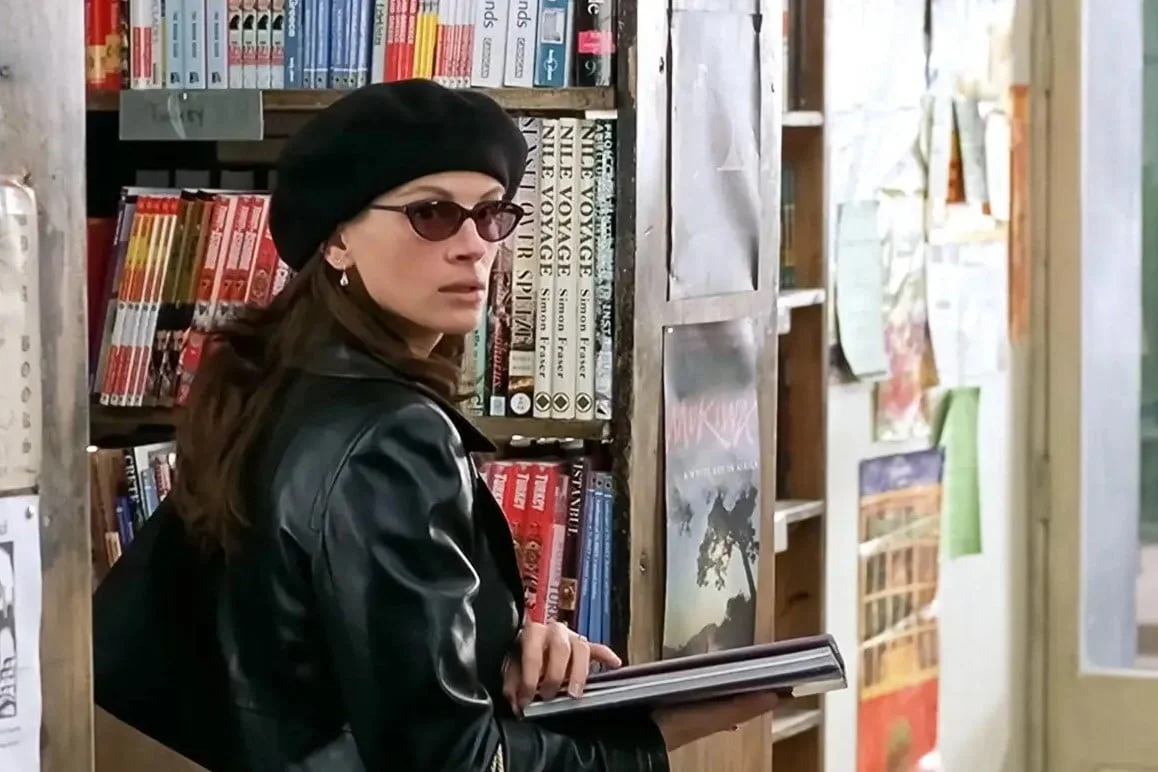
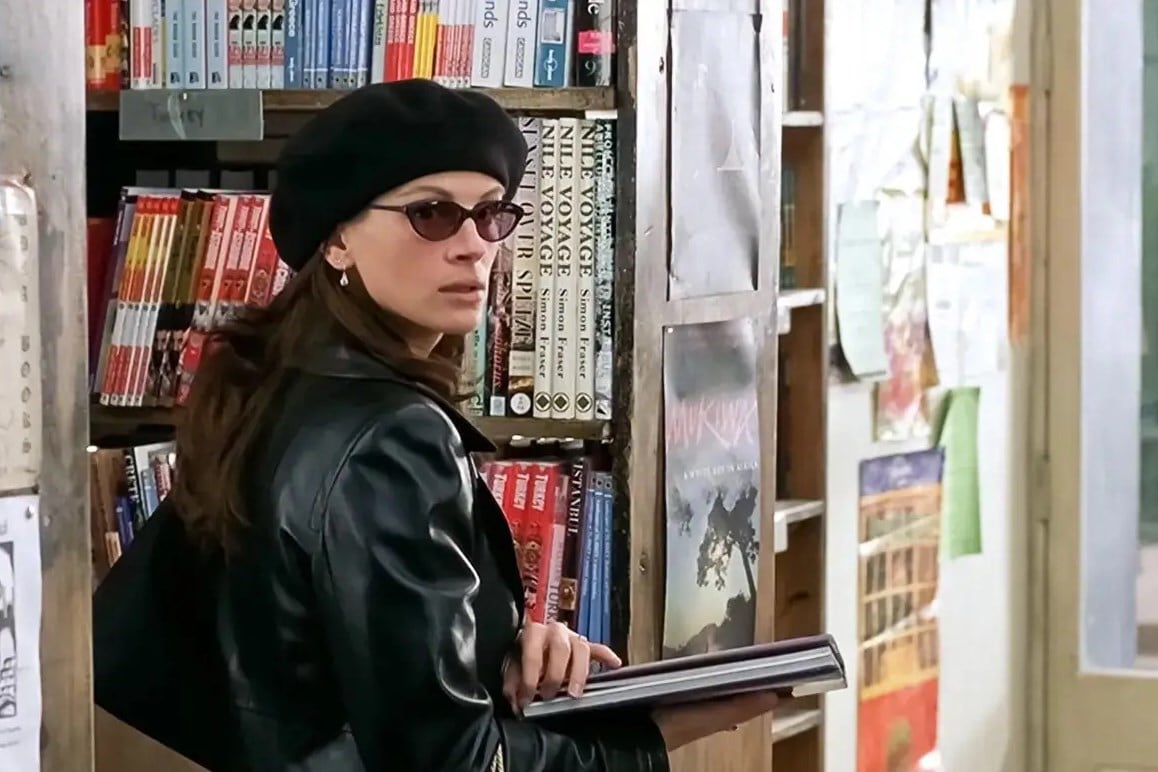
The romantic ideal of serendipitous encounters among towering stacks of literature has long permeated modern culture, serving as a foundational trope in cinematic touchstones from Notting Hill to You’ve Got Mail. In these narratives, a chance brush of hands while reaching for the same niche paperback or an unexpected shared glance across a quiet aisle instantly catalyzes a profound connection. While this picturesque scenario rarely materializes in everyday life, the cultural cachet of bonding over literature remains extraordinarily potent. Recent public fascination with high-profile literary romances—such as Dua Lipa and Callum Turner bonding over shared reading material—alongside online discourse surrounding "performative men" wielding copies of canonical texts, underscores a persistent societal desire to intellectualize romance.
Capitalizing on this enduring intersection of literature and affection, brand strategist Emily Segal and Co-Star CEO Banu Guler launched Readme in September 2024. Designed explicitly for individuals whose primary love language is the written word, the platform enters a crowded digital ecosystem characterized by rising user disillusionment. As niche wellness and lifestyle dating applications proliferate to counter mainstream swiping fatigue, Readme attempts to pivot away from superficial visual matching by treating language as the fundamental baseline of human compatibility.
The Anatomy of a Literary Algorithm
Unlike traditional platforms that rely primarily on geographic proximity, shared hobbies, or performative profile curation, Readme approaches matchmaking through a diagnostic 25-part psychological and literary assessment. Rather than simply pairing users with identical reading lists or matching based on overt signaling of high-culture tastes, the platform’s onboarding process evaluates how individuals relate to language, self-expression, and interpersonal dynamics.
The assessment comprises a mixture of introspective inquiries—such as prompts regarding an individual’s relationship with their own writing and self-identified personal shortcomings—alongside comparative selections between literary excerpts. Users are asked to weigh distinct prose and poetry styles against one another, evaluating the emotional resonance of varying rhetorical devices. Margaret Atwood’s exploration of visceral emotional states, for instance, is juxtaposed against the rhythmic, incisive critiques of contemporary critics like Peter Schjeldahl.
Upon completing the assessment, users are mapped across three distinct psychological axes: how they experience desire, how they articulate it, and how they intellectualize it. This mapping categorizes profiles into one of twelve distinct archetypes. Rather than serving as an exclusionary filter for discovery, these archetypes provide psychological scaffolding once a connection is established. When users mutually match, the application reveals their respective archetypes, accompanied by behavioral insights and a calculated percentage of psychological similarity.
Background, Chronology, and the Genesis of Readme
The conceptual framework for Readme originated from the collaborative history of its founders. Segal, a recognized trend forecaster and author of the 2020 culture-and-technology novel Mercury Retrograde, initially crossed paths with Co-Star chief executive Banu Guler through the literary exploration of astrology. While early adopters of Co-Star frequently petitioned for an integrated dating function, Guler resisted, maintaining that astrology alone offered an insufficient foundation for romantic compatibility.
Extended discussions between the two executives ultimately revealed a shared consensus regarding the markers of genuine intimacy. They noted that traditional dating platforms fostered a transactional, disposable culture that alienated modern singles. Conversely, profound relational milestones—such as exchanging favorite volumes, sharing underlined passages of poetry, or scanning a partner’s bookshelf on the morning after a first encounter—represented authentic vulnerability.
This realization guided the development timeline through early 2024, culminating in the platform’s public debut in September. In structuring the application, the founders consciously rejected the "Letterboxd-for-lovers" model of performative bibliography. By discouraging users from compiling static lists of top-ten favorite books for public display, Readme sought to eliminate the posturing typical of modern digital profiles, focusing instead on internal cognitive and linguistic structures.
The Broader Crisis of Digital Romance
Readme’s market entry coincides with an unprecedented structural crisis within the online dating industry. For over a decade, major conglomerates such as Tinder, Hinge, and Bumble have dominated the market, optimizing their interfaces for rapid engagement through gamified swiping mechanisms. However, this optimization has incurred significant psychological costs for the consumer base.
According to a comprehensive 2024 survey conducted jointly by Forbes Health and OnePoll, an overwhelming 79 percent of Gen Z dating-app users reported experiencing mental and emotional exhaustion directly attributable to platform utilization. This phenomenon, widely documented as "swipe fatigue," stems from the depersonalization of human interaction, endless decision paralysis, and the superficiality of image-based profiles that fail to convey authentic personality traits.
Industry analysts note that Readme’s emergence aligns with a historical precedent of text-based and niche matchmaking services. From the classified personals published in The New York Review of Books since 1968 to the detailed, essay-driven profiles popularized by early-web platforms like Nerve.com in the early 2000s, alternative matchmaking systems have periodically emerged to serve populations alienated by mainstream superficiality. By providing a multidimensional psychological picture of a user through linguistic affinity, Readme attempts to address the precise vacuum left by algorithmic fatigue.
Industry Implications and Future Outlook
While Readme’s thesis posits that the written word possesses a unique capacity to facilitate genuine human connection, the platform faces significant operational hurdles typical of early-stage, highly specialized applications. Scaling a niche product in a market dominated by multi-billion-dollar parent companies requires maintaining user retention despite a narrower total addressable market. Furthermore, the reliance on high-friction onboarding—requiring users to complete a lengthy, intellectually demanding questionnaire—demands a high degree of intrinsic motivation from consumers accustomed to instantaneous gratification.
Nevertheless, industry observers suggest that the rise of hyper-niche, values-driven dating applications signals a broader shift in consumer behavior. As younger demographics increasingly prioritize emotional safety, intellectual alignment, and mental well-being over sheer volume of potential matches, platforms that offer specialized community spaces are uniquely positioned to capture loyal cohorts.
Even for cynical users who navigate the digital landscape with skepticism, proponents argue that the platform functions as an effective cultural discovery engine. By exposing users to unfamiliar texts, poetry, and linguistic perspectives, the application delivers intrinsic value regardless of its immediate romantic outcomes. As Segal emphasizes, language and literature remain fundamental conduits of the human spirit, serving not necessarily as the exclusive metric for modern romance, but as a deliberate and thoughtful starting point for contemporary connection.