










Every September, Apple’s product announcement event serves as the primary bellwether for the consumer technology industry, and the September 2026 keynote was no exception. As the company outlined its roadmap for the coming year, it officially unveiled the Apple Watch Ultra 4, positioning the device as its premier smartwatch offering for 2027. Since the inception of the Ultra line in 2022, Apple has adopted a philosophy of iterative refinement, prioritizing reliability, material integrity, and deep integration with its proprietary health ecosystem over radical, high-risk redesigns. The Ultra 4 represents the current zenith of this evolutionary trajectory, offering a suite of hardware and software upgrades that enhance its utility for both extreme athletes and the health-conscious consumer.
A Chronology of the Ultra Evolution
To understand the positioning of the Ultra 4, one must look back at the development timeline that established the series as a dominant force in the high-end wearable market. The original Apple Watch Ultra, launched in 2022, was a significant departure from the standard Apple Watch aesthetic, introducing a ruggedized, 49mm titanium chassis designed to survive harsh environments.

In 2023, the Ultra 2 refined the internal processing power, introducing the S9 SiP (System in Package) and enabling on-device Siri processing and the "Double Tap" gesture. The 2025 release of the Ultra 3 solidified the watch’s reputation as a legitimate sports and diving instrument, further optimizing battery efficiency and display brightness. Now, the Ultra 4 arrives in 2026 with a focus on deep-data analytics and advanced audio processing, marking the fifth year of Apple’s specialized watch strategy. Each iteration has kept the core physical dimensions constant, ensuring that the vast ecosystem of bands and accessories remains cross-compatible, a strategic choice that fosters brand loyalty among long-term users.
Material Engineering and Physical Specifications
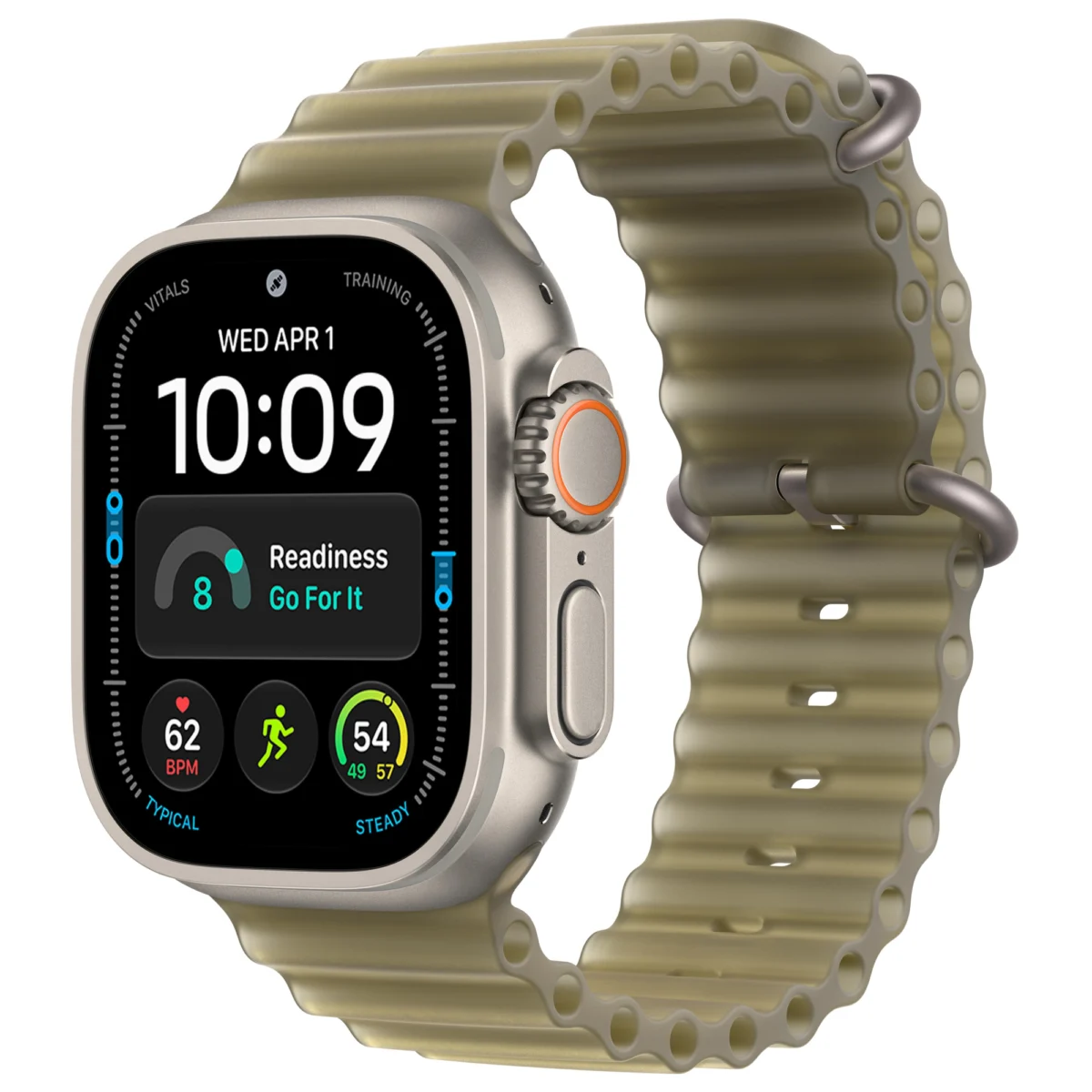
Externally, the Apple Watch Ultra 4 remains remarkably consistent with its predecessors. It retains the signature 49mm case crafted from grade 5 titanium, available in both natural and black DLC (Diamond-Like Carbon) finishes. The choice of material is deliberate; grade 5 titanium offers an optimal strength-to-weight ratio, essential for a device intended for high-impact activities. The display remains protected by a flat sapphire crystal, which houses the Always-On Retina display, capable of hitting peak brightness levels that ensure readability in direct, high-altitude sunlight or deep underwater environments.
While the exterior silhouette remains familiar, the most significant physical modification is found on the device’s underside. The caseback has been engineered to accommodate a heavily overhauled Health Sensing System. According to technical specifications provided during the launch, this sensor array is capable of performing Heart Rate Variability (HRV) measurements at a frequency 60 times higher than that of the Ultra 3. This increase in data density allows for more precise longitudinal health tracking, providing users with a more granular view of their physiological recovery and stress states. Furthermore, the watch retains its 100-meter water resistance rating, maintaining its certification as a high-functioning dive computer suitable for recreational scuba diving up to 40 meters.

The S11 Chip and the Dawn of Audio Intelligence
The internal engine driving these improvements is the newly announced S11 chip. Built on a 64-bit dual-core architecture, the S11 is optimized specifically for edge computing, allowing for more complex tasks to be performed locally on the watch rather than relying on a connection to the iPhone.
A standout feature of the S11 is the introduction of "Audio Intelligence." This capability leverages machine learning to process ambient sound in real time. For the average user, this manifests as "Siri Recap," a feature that can record, process, and transcribe conversations or meetings, providing high-level summaries directly on the wrist. For users with auditory impairments, the implications are more profound: the watch can actively monitor the environment for critical sounds—such as emergency sirens, fire alarms, or the sound of a crying infant—and deliver haptic or visual alerts, significantly enhancing the wearer’s situational awareness.
The battery performance continues to be a primary metric for potential buyers. The Ultra 4 delivers a standard 50-hour battery life under normal use, extending to 84 hours when operating in Low Power Mode. This efficiency gain, despite the added processing burden of the S11 chip, highlights Apple’s focus on power management optimization.

Advancements in Health Analytics
The integration of "Health Age" and "Readiness" scores represents a shift in how Apple positions its health-tracking features. Rather than simply presenting raw data, the Ultra 4 uses Apple Intelligence to synthesize metrics—such as sleep quality, HRV, resting heart rate, and historical activity levels—into actionable insights. The "Readiness" score, in particular, acts as a barometer for physical exertion, offering users recommendations on whether to push for a high-intensity workout or prioritize rest and recovery. This move aligns the Apple Watch Ultra 4 more closely with dedicated fitness trackers from competitors like Garmin and Whoop, catering to an audience that demands more than just step counting.
Market Context and Consumer Accessibility
Despite the significant internal upgrades and the integration of advanced AI-driven features, Apple has maintained the entry price point of the Ultra 4 at $799 USD. This pricing strategy is indicative of a market-share-first approach, where the company aims to solidify the Ultra series as the standard-bearer for premium smartwatches.
The aesthetic customization options have also been updated to reflect current design trends. The band lineup, which includes the Trail Loop, Ocean Band, Alpine Loop, and the premium Titanium Milanese Loop, now features a refreshed color palette. The Trail Loop is now offered in sophisticated shades such as Dark Umber, Sand, and Burgundy. The Alpine Loop follows suit with Desert, Dark Olive, and Burgundy options. Perhaps most striking is the update to the Ocean Band, which now utilizes a translucent silicone material available in Translucent Gray, Kelp, and Black, offering a modernized, high-tech aesthetic that differentiates the 2026 models from previous years.

Industry Implications and Future Outlook
The launch of the Apple Watch Ultra 4 underscores a broader trend in the wearable technology sector: the movement from "passive monitoring" to "proactive assistance." By embedding advanced health diagnostics and audio-processing capabilities directly into the wrist-worn device, Apple is attempting to reduce the user’s dependence on the smartphone for daily tasks.
Industry analysts suggest that the emphasis on "Readiness" scores and "Audio Intelligence" is a response to the growing demand for personalized, health-focused data that is easy to interpret. As the line between professional medical devices and consumer wearables continues to blur, the Ultra 4 serves as a benchmark for how hardware manufacturers can balance complex data collection with user-friendly interfaces.
Furthermore, the decision to keep the price steady suggests that Apple views the Ultra line as a critical pillar of its "Services and Wearables" growth strategy. By ensuring that the device remains accessible to the existing high-end consumer base while providing enough feature differentiation to encourage upgrades, Apple is effectively insulating its market share against competitors.

In conclusion, the Apple Watch Ultra 4 is a testament to the power of incremental progress. While it may not represent a complete reinvention of the product category, its refined sensor array, superior processing power via the S11 chip, and new AI-driven health and audio features make it a formidable device. As it reaches consumers in late 2026, the watch is positioned not just as a tool for athletes, but as a comprehensive health and communication companion that defines the standard for what users should expect from a flagship wearable in the coming year.