






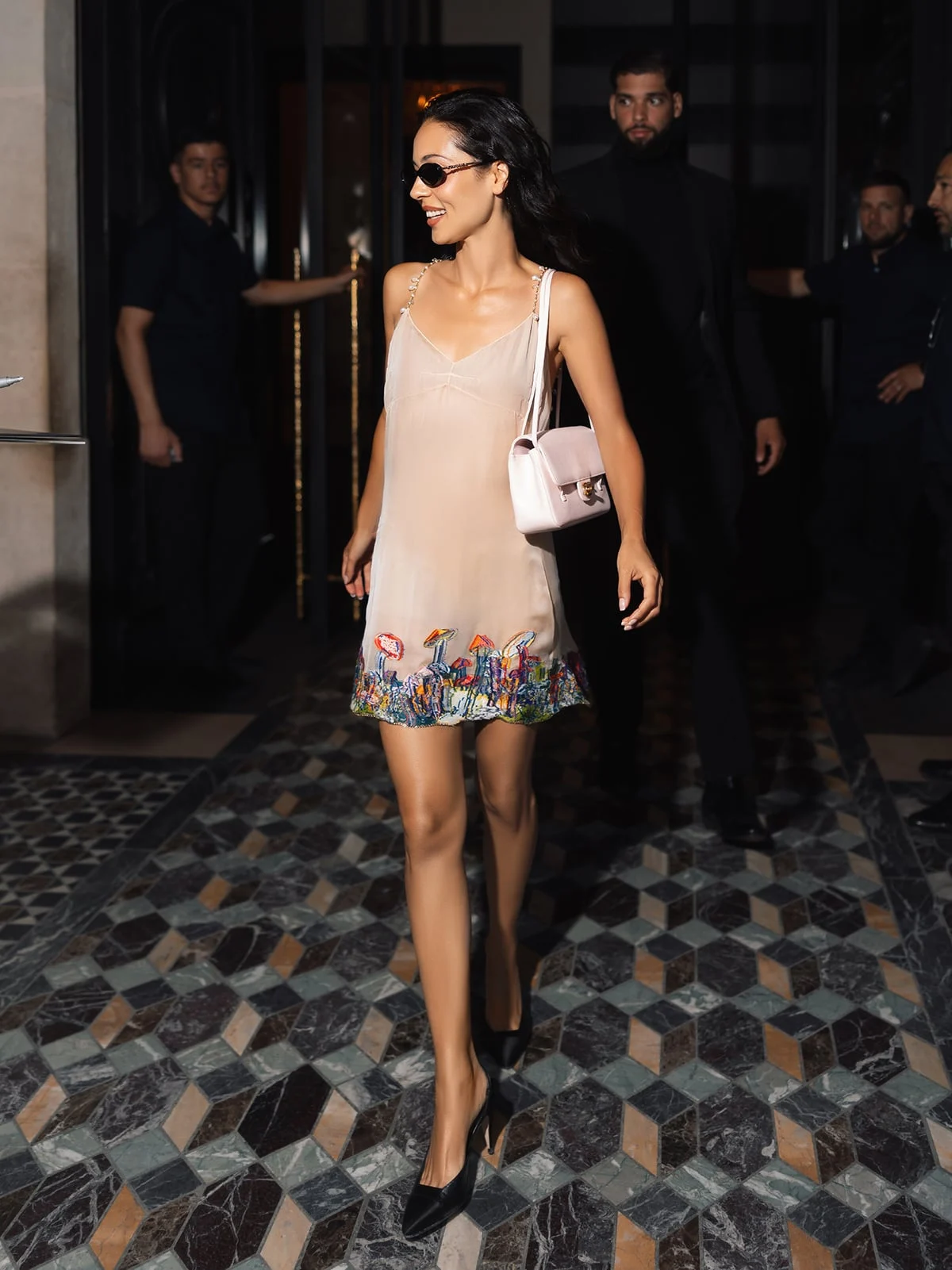
Alexa Demie Redefines Chanel Haute Couture Aesthetic at Paris Fashion Week Fall 2026. The Euphoria actress, long recognized as a significant figure in the intersection of contemporary television and high-fashion editorial, made a dual-pronged impression during the Chanel Fall 2026 Haute Couture presentation in Paris. While her appearance on the front row of the official show featured a traditional, sleek black gown—a hallmark of the French maison’s "safe" and classic elegance—it was her subsequent appearance leaving her hotel that captured the attention of industry analysts and fashion historians alike. Demie’s choice to wear a modified version of a Chanel Spring 2026 Haute Couture ensemble highlighted a growing trend among celebrity ambassadors: the strategic "editing" of runway looks to better align with personal brand identity and environmental conditions.
The Evolution of the Chanel Spring 2026 Look
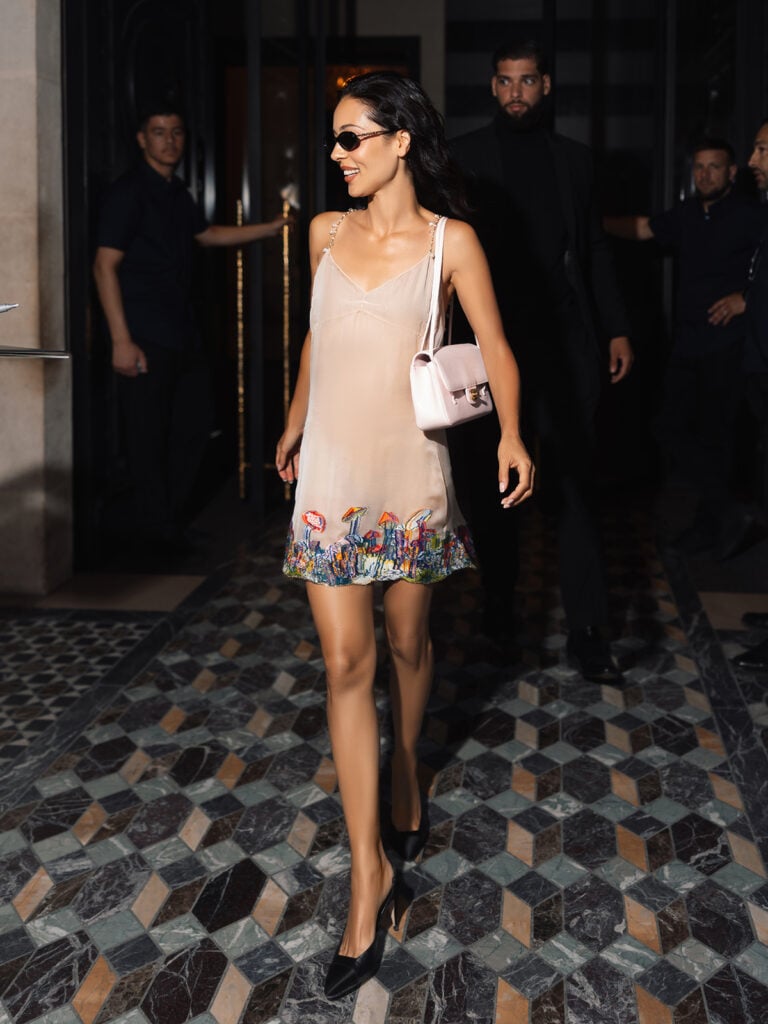
The garment in question originated from the Chanel Spring 2026 Haute Couture collection, a series that initially garnered a spectrum of critical responses for its complex layering and heavy accessorizing. On the runway, Look 10 was presented as a multi-piece ensemble, characterized by a structured jacket and a tiered, layered skirt that obscured much of the base garment’s intricate detail. In a departure from the designer’s original runway styling, Demie opted to "strip back" the look, wearing only the pastel sheer muslin slip dress.
This specific piece is defined by its whimsical yet meticulous embroidery featuring colorful mushroom motifs, a recurring theme in recent botanical-inspired haute couture. By removing the jacket and the secondary skirt layers, Demie transformed a high-concept runway piece into a lighter, more accessible mini dress. This move not only showcased the fundamental craftsmanship of the slip dress itself but also signaled a shift in how Haute Couture is consumed and styled by a younger generation of Hollywood elite.

Chronology of the Paris Appearance
The sequence of events surrounding Demie’s appearance follows the typical trajectory of a high-profile brand ambassador during Paris Fashion Week.
- The Official Presentation: Demie arrived at the Chanel Fall 2026 Haute Couture show wearing a floor-length, understated black dress. This look was designed to maintain the formal decorum of the front row, where ambassadors often serve as a backdrop to the new collection being unveiled.
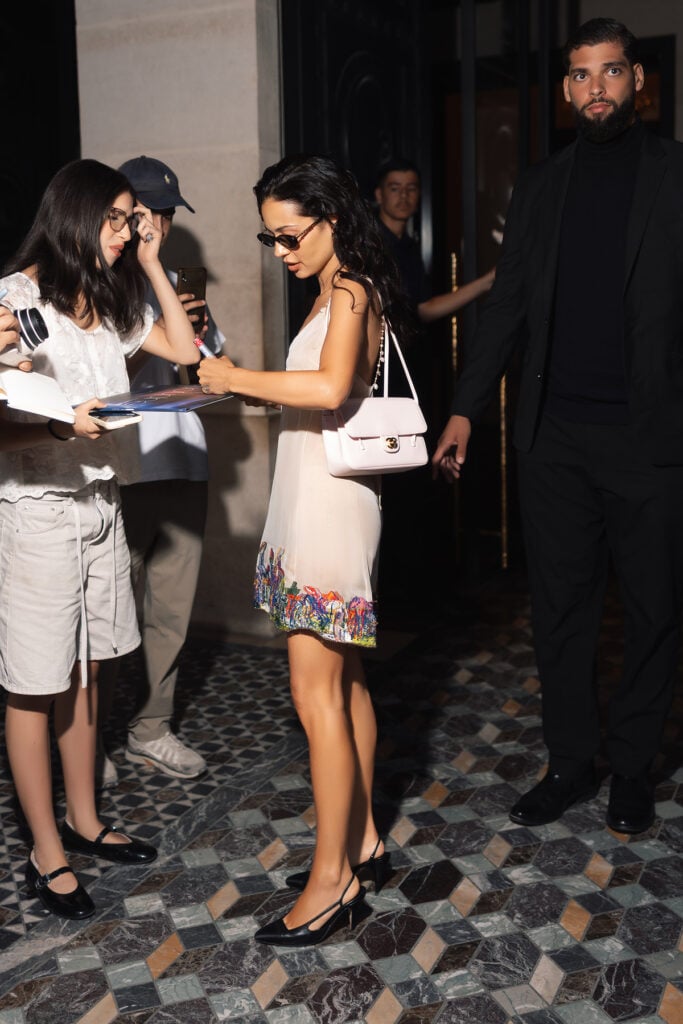
- The Hotel Departure: Following the conclusion of the official show, Demie returned to her hotel for a scheduled wardrobe change. It was upon her exit to greet fans and photographers that she debuted the modified Spring 2026 look.
- Environmental Adaptation: The choice of the sheer muslin dress coincided with a documented heatwave in Paris. With temperatures soaring above the seasonal average, the removal of heavy couture layers was both a stylistic and a practical necessity.
- Accessory Integration: To complete the ensemble, Demie utilized classic Chanel accessories, including a signature handbag and black pumps. While the footwear choice adhered to the house’s traditional color palette, it provided a sharp contrast to the airy, pastel nature of the embroidered muslin.
Technical Analysis of Haute Couture Craftsmanship
Haute Couture is defined by the Chambre Syndicale de la Haute Couture through rigorous standards of hand-craftsmanship and bespoke fitting. The dress worn by Demie represents the "deceptive simplicity" of the craft. Unlike the sculptural and avant-garde constructions seen in the works of Robert Wun or the technical, experimental silhouettes of Balenciaga under Demna, this Chanel piece relies on the "petits mains" (the specialized artisans) for its value.
The use of muslin, a fine-weave cotton fabric, serves as a delicate canvas for the embroidery. In the context of the Spring 2026 collection, the mushroom motifs were achieved through hundreds of hours of needlework, utilizing silk threads and micro-beading to create a three-dimensional effect. Industry data suggests that a single slip dress of this caliber can require anywhere from 150 to 300 hours of labor, excluding the time spent on the discarded jacket and skirt components. By wearing the base layer in isolation, Demie highlighted the meticulous finish of the sheer fabric and the precision of the embroidery, which are often lost in the visual noise of a fully layered runway look.
The Strategic Value of "Editing" Runway Looks
The practice of modifying runway looks for public appearances is a strategic tool used by stylists to modernize heritage brands. Alexa Demie is not the first ambassador to employ this tactic. Margot Robbie, another prominent face of Chanel, has recently been seen reinterpreting runway ensembles by removing extraneous accessories or heavy outerwear.
This trend serves several functions:
- Personalization: It allows the wearer to project a unique identity rather than appearing as a direct "carbon copy" of a runway model.
- Brand Modernization: By simplifying complex couture, the brand appears more versatile and relevant to a contemporary audience that prioritizes "effortless" luxury over rigid formality.
- Visual Clarity: Critics often argue that runway shows are designed for theatrical impact, whereas street-style appearances require a more streamlined silhouette to translate well in paparazzi photography and social media formats.
In Demie’s case, the "editing" of the Spring 2026 look revealed a garment that was arguably more successful as a standalone piece than as part of the original layered ensemble. This suggests that the strength of the collection may lie in its individual components rather than its collective styling.
Broader Impact on the Luxury Market and Sustainability
The decision to wear a "previous season" couture piece (Spring 2026) during a Fall 2026 event also reflects a subtle shift in the luxury market’s approach to seasonality. As the fashion industry faces increasing pressure to address sustainability and the longevity of garments, high-profile figures wearing archival or semi-recent collections reinforces the idea that Haute Couture is an investment in art rather than a disposable trend.
Furthermore, the focus on the "Paris heatwave" as a factor in styling choices highlights the growing influence of climate on the fashion calendar. Designers and ambassadors are increasingly forced to reconcile the heavy fabrics of traditional couture with the reality of rising global temperatures. Demie’s muslin dress serves as a prototype for "thermal-conscious couture"—garments that maintain high artisanal value while offering the breathability required for modern environmental conditions.
Reactions and Industry Implications
While Chanel has not issued an official statement regarding Demie’s specific styling choices, the house’s continued partnership with the actress suggests a high level of trust in her creative direction. Fashion analysts have noted that Demie’s ability to "make the look her own" is a key reason for her success as a brand representative. She bridges the gap between the traditional, often conservative, history of Chanel and the edgy, youth-centric aesthetic of the "Euphoria generation."
The choice of black pumps, though criticized by some for being visually "heavy" against the sheer pastel fabric, remains a steadfast adherence to the Chanel DNA. The black-and-pastel combination is a classic trope of the house, dating back to Gabrielle "Coco" Chanel’s own penchant for contrasting light and dark elements.
Conclusion: The Future of the Brand-Ambassador Dynamic
Alexa Demie’s appearance in Paris confirms that the role of the brand ambassador has evolved from a passive mannequin to an active collaborator. By selectively choosing which elements of a Haute Couture look to present, Demie acted as an editor, showcasing the inherent beauty of the craftsmanship while tailoring the silhouette to the moment’s needs.
As the Fall 2026 Haute Couture season continues, the industry will likely see more instances of this "reductive styling." The success of Demie’s mushroom-embroidered slip dress proves that in the world of high fashion, sometimes the most powerful statement is made by what is left behind, rather than what is added. This approach not only honors the work of the artisans but also ensures that the legacy of Haute Couture remains vibrant and adaptable in a rapidly changing cultural and environmental landscape.