








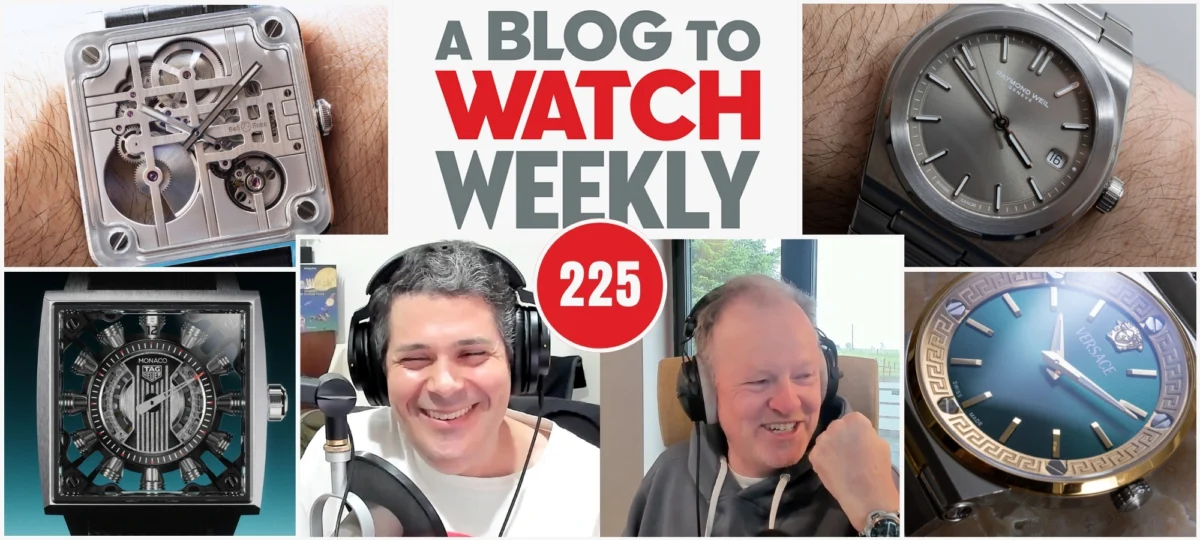
The latest episode of aBlogtoWatch Weekly, a flagship video series dedicated to authentic watch conversations, has premiered on the official aBlogtoWatch YouTube channel, promising a robust discussion of current horological developments and industry narratives. Airing every Friday, this week’s installment features hosts Rick and Ariel navigating a lively dialogue, exploring a spectrum of new releases, enduring trends, and the ever-evolving landscape of watch design and consumer preference. The absence of usual co-hosts David and Ripley allowed for a more free-flowing, and at times, delightfully off-kilter conversation that delves into the core of what makes the watch world tick.
The Integrated Bracelet Enigma: Raymond Weil’s New Offering Under Scrutiny
Central to this week’s discussion is the new Raymond Weil offering, which has prompted a significant question within the enthusiast community: does this newcomer represent a genuinely compelling integrated bracelet watch, or is it merely another brand succumbing to a prevailing trend? The integrated bracelet design, characterized by its seamless integration of the watch case and bracelet, has experienced a resurgence in popularity over the past decade, drawing inspiration from iconic models of the 1970s and 80s. Brands across the spectrum, from heritage giants to independent newcomers, have been exploring this aesthetic, aiming to capture the market’s renewed interest in sporty, elegant, and cohesive timepieces.
The debate surrounding the Raymond Weil model highlights a broader industry phenomenon. While integrated bracelets offer a distinct visual appeal and often a comfortable wearing experience, the saturation of this market segment raises questions about originality and genuine innovation versus market responsiveness. Rick and Ariel’s analysis likely probes the specific design elements of the Raymond Weil, its build quality, movement specifications, and price point in relation to established players in the integrated bracelet arena. The critical examination aims to discern whether the brand has successfully carved out its own niche or is simply following a well-trodden path. This discussion is particularly relevant given the historical context of integrated bracelet watches, which were once a hallmark of high-end sports watches from brands like Audemars Piguet (Royal Oak) and Patek Philippe (Nautilus), and later became more accessible through models like the Tissot PRX. The current wave sees even more brands, from entry-level to luxury, adopting this design language.
The Rise of Micro-Rotors and Familiar Formulas
Beyond the integrated bracelet, the episode delves into other significant trends shaping the contemporary watch industry. The increasing prevalence of micro-rotor movements is another key talking point. These compact automatic movements, where the winding rotor is significantly smaller and often hidden beneath the movement bridges, allow for slimmer watch profiles and more aesthetically pleasing open-worked or dial-side complications. Brands are increasingly leveraging micro-rotor technology not only for its functional benefits but also as a marker of horological sophistication and a point of differentiation. The discussion likely explores which brands are excelling in this area and whether the adoption of micro-rotors is becoming a standard feature in certain market segments or remains a more exclusive proposition.
Furthermore, Rick and Ariel examine the dichotomy between brands that are diligently pursuing familiar, proven formulas and those that are boldly venturing into uncharted territory. This observation speaks to the strategic decisions brands make in response to market demand, brand heritage, and their own creative ambitions. While some brands find success by refining and reinterpreting their most iconic designs and successful categories, others seek to capture attention and market share through radical departures and novel concepts. The conversation likely touches upon the inherent risks and rewards associated with each approach, considering factors such as brand identity, consumer loyalty, and the potential for market disruption. For instance, brands like Rolex have built their empire on refining existing, highly successful models, while others, like MB&F, are built on pushing the boundaries of avant-garde design.

Bell & Ross and TAG Heuer: Artistic Endeavors and Mechanical Curiosities
The episode also highlights specific brand initiatives that illustrate these broader trends. Bell & Ross’s recent foray into modern art-inspired design, particularly with its cubist-leaning release, is presented as an example of a brand pushing creative boundaries. This approach suggests a strategic move to broaden its appeal beyond its traditional aviation and military-inspired aesthetics. By collaborating with artists or drawing inspiration from art movements, Bell & Ross aims to inject a fresh perspective into its collections, potentially attracting a new demographic of watch buyers who appreciate design innovation and artistic expression. This artistic pivot could also be seen as an attempt to elevate the brand’s profile and create more conversation-driving pieces.
In contrast, TAG Heuer’s new Monaco Speed, with its unusual jumping hour display, is explored as a fascinating mechanical curiosity. The Monaco line, already iconic for its square case and association with motorsports, takes a novel turn with this complication. A jumping hour, where the hour numeral instantaneously flips over at the top of the hour, offers a unique and visually engaging way to read the time, deviating from the traditional sweeping minute and hour hands. The discussion likely dissects the practicality and appeal of such a complication in a sports watch context, questioning whether it adds genuine utility or serves primarily as a horological talking point. This particular innovation might resonate with collectors seeking something distinct and technically interesting within a well-established model.
The Enduring Appeal and Confusion of Square Watches
The conversation then broadens to encompass the perennial discussion around square watches. These timepieces, while possessing a distinctive aesthetic that stands out from the ubiquitous round watch, often elicit a mixed response. Some enthusiasts champion their architectural appeal and vintage charm, citing iconic examples like the Cartier Tank or the aforementioned TAG Heuer Monaco. Others find them less practical or aesthetically challenging compared to their circular counterparts. Rick and Ariel’s debate on whether square watches deserve more appreciation or more confusion is a testament to their enduring divisive nature in the market and offers a platform to discuss the subjective elements of watch design and personal preference. The historical context of square watches, from early art deco designs to modern interpretations, adds depth to this segment of the conversation.
A Glimpse into the Chaotic Side of Watch Enthusiasm
Interspersed with these more structured discussions on industry trends and specific releases, the episode reveals the characteristically unscripted and engaging nature of aBlogtoWatch Weekly. The hosts, Rick and Ariel, find themselves veering into more personal and anecdotal territory, touching upon topics such as the seemingly trivial yet passionately debated issue of sleeping with watches on, the practicalities of lume visibility in the dead of night (3 am), and the growing frustrations with artificial intelligence (AI) in various aspects of life, including potentially in the watch industry. These moments, while seemingly tangential, provide a relatable and authentic glimpse into the minds of passionate watch enthusiasts, highlighting the diverse range of considerations and personal quirks that accompany the hobby.
The mention of Bell & Ross potentially needing a "big Hollywood moment" suggests a broader contemplation of how brands can leverage cultural touchstones to enhance their visibility and desirability. While not a direct discussion of a specific release, it touches upon the symbiotic relationship between the watch industry and popular culture, where product placement and celebrity endorsements can significantly influence brand perception and sales. This speculative thought underscores the multifaceted strategies brands employ to capture public attention in a crowded marketplace.
Ultimately, this episode of aBlogtoWatch Weekly, driven by the dynamic between Rick and Ariel, encapsulates the spirit of authentic watch conversations. It offers a blend of insightful analysis of current industry trends, critical examination of new releases, and the candid, often humorous, reflections that define the watch enthusiast community. The episode promises an engaging and informative viewing experience for anyone with an interest in the intricate world of horology, demonstrating that even in the face of evolving trends and technologies, the passion for watches and the conversations surrounding them remain as vibrant and compelling as ever. The inclusion of the YouTube video player directly within the article provides immediate access for readers to experience the discussion firsthand, reinforcing the platform’s commitment to multimedia content integration.