






The global push toward a circular economy reached a significant milestone on March 31, 2026, as the Swiss-Swedish technology giant ABB announced the signing of a Memorandum of Understanding (MoU) with Syre, a Swedish textile impact company backed by H&M Group and Vargas Holding. The agreement outlines a comprehensive framework for collaboration aimed at accelerating the development of Syre’s first large-scale textile-to-textile recycling plant, located in the Gia Lai province of Vietnam. By combining ABB’s world-class automation, electrification, and digital solutions with Syre’s innovative recycling technology, the partnership seeks to address one of the most pressing environmental challenges in the fashion and textile industries: the dependency on virgin polyester.
This strategic alliance is designed to explore how advanced industrial technologies can optimize the production of circular polyester at scale. As the textile industry faces increasing pressure from both regulators and consumers to reduce its carbon footprint, the Syre-ABB collaboration represents a critical step in transitioning from experimental pilot programs to robust, industrial-grade manufacturing. The proposed facility in Vietnam is expected to serve as a blueprint for future plants worldwide, signaling a shift in how the global supply chain manages textile waste.
The Strategic Framework for Circular Polyester
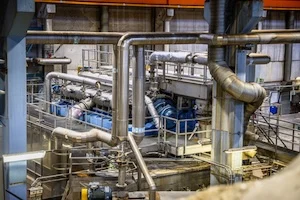
The MoU establishes a structured approach for ABB and Syre to investigate the integration of cutting-edge systems into the Vietnam plant. Central to this exploration is the use of ABB’s distributed control systems (DCS), which allow for the seamless management of complex industrial processes. In a textile-to-textile recycling environment, maintaining precise chemical balances and temperature controls is essential for ensuring the quality of the final recycled polyester (rPET) chips.
Beyond automation, the collaboration will delve into ABB’s electrification portfolio. Modern recycling plants require significant energy inputs, and the partnership aims to ensure that the Gia Lai facility operates with maximum energy efficiency. This includes the implementation of digital industrial software that can monitor power consumption in real-time, identify bottlenecks, and suggest optimizations to reduce operational costs and environmental impact.
The technical teams from both companies are scheduled to work in parallel with the detailed engineering phase of the Vietnam project. This synchronized approach ensures that the digital and electrical infrastructure is "baked into" the plant’s design from the ground up, rather than being retrofitted later. This strategy is expected to significantly reduce the time required to reach full production capacity once construction is complete.
Bridging the Gap in the Textile Value Chain
Polyester remains the most widely used fiber in the global textile industry, accounting for more than 50 percent of all fiber production. Historically, however, the vast majority of polyester has been produced using fossil-based feedstocks, specifically petroleum-derived ethylene glycol and terephthalic acid. While "recycled polyester" has become common in retail, most of it is currently derived from recycled PET bottles (rPET) rather than used clothing.
The challenge with "bottle-to-textile" recycling is that it creates a one-way path; once the polyester is turned into a garment, it almost inevitably ends up in a landfill or an incinerator at the end of its life. Syre’s mission is to close this loop by enabling "textile-to-textile" recycling. By taking old garments and industrial textile waste and breaking them down into their molecular components, Syre can produce new, high-quality polyester that is indistinguishable from virgin material.
The partnership with ABB is intended to solve the scalability issue that has long plagued textile-to-textile recycling. While the chemistry for such processes has existed for years, doing it at a multi-ton, industrial scale requires the kind of sophisticated process control that ABB specializes in.
Vietnam as a Strategic Hub for Sustainable Manufacturing
The selection of Gia Lai province in Vietnam for Syre’s first major plant is a calculated strategic move. Vietnam is currently one of the world’s largest exporters of textiles and garments, serving as a primary manufacturing hub for major global brands. By placing the recycling facility in close proximity to existing garment manufacturing clusters, Syre can minimize the logistics and carbon costs associated with transporting textile waste.
The Gia Lai facility is designed to process post-consumer textile waste as well as pre-consumer industrial waste. In the current manufacturing landscape, a significant percentage of fabric is lost during the cutting and sewing process. By capturing this waste locally and converting it back into raw material, the project aims to create a regional circular ecosystem.
Construction of the Vietnam plant is targeted to commence in 2027, following the completion of the engineering and technological assessment phases currently being supported by ABB. Once operational, the plant is expected to contribute significantly to Vietnam’s "Green Growth" strategy, which seeks to modernize the country’s industrial base through sustainable technology.
A Chronology of Innovation: Syre’s Rapid Development
The partnership with ABB marks the latest chapter in Syre’s rapid ascent within the "impact tech" sector. Since its public launch in early 2024, the company has moved with remarkable speed to validate its business model and technology.
- 2024: Syre was established with the backing of H&M Group and Vargas Holding, the latter of which is known for launching successful green industrial ventures like Northvolt (batteries) and H2 Green Steel. The company quickly established an R&D facility and a pilot production line in Mebane, North Carolina.
- 2025: The company achieved a major technical milestone by successfully scaling its process to multi-ton production of circular PET chips. This phase proved that the textile-to-textile process could maintain the physical properties required by high-end fashion and performance apparel brands.
- 2026: The signing of the MoU with ABB signals the transition from pilot-scale validation to global industrial deployment.
This timeline reflects a broader trend in the climate-tech industry, where "first-of-a-kind" (FOAK) commercial plants are being fast-tracked through strategic partnerships with established industrial players.
Technical Integration and Process Optimization
ABB’s role in the Vietnam project extends beyond the provision of hardware. The collaboration will focus heavily on digital twins and advanced analytics. By creating a digital replica of the recycling process, engineers can simulate various scenarios to find the most efficient way to handle different types of textile blends.
One of the greatest hurdles in textile recycling is the complexity of modern fabrics, which often contain blends of polyester, cotton, and elastane. Syre’s technology is designed to isolate the polyester, but the efficiency of this separation depends on precise process variables. ABB’s digital software will provide the granular data needed to refine these processes in real-time, ensuring that the output meets the stringent quality standards required for new yarn spinning.
"This agreement reflects ABB’s role in supporting emerging industrial applications where automation and electrification can enable greater resource efficiency," stated Wilson Monteiro, Global Business Line Manager for Pulp, Paper and Fiber at ABB. "Together with Syre, we will explore how our experience in fiber processing, chemicals, and advanced process industries can be applied to polyester recycling."
Industry Statements and Collaborative Vision
The leadership of both organizations has emphasized that the scale of the climate crisis requires a level of collaboration that transcends traditional vendor-client relationships. For Syre, the partnership provides the industrial "muscle" needed to convince global brands that circular polyester can be delivered reliably and at volume.
"As we now move into full industrial deployment, partnerships like this become critical," said Dennis Nobelius, CEO of Syre. "Industrializing textile-to-textile recycling is a complex undertaking, and while strong customer demand is essential, it must be matched with best-in-class industrial partners. ABB brings exactly the depth of expertise and execution capability needed; they are a cornerstone of the industrial ecosystem we are building."
From ABB’s perspective, the partnership is an opportunity to expand its footprint in the "green" fiber market. As traditional industries like pulp and paper undergo digital transformations, the emergence of textile recycling represents a major new vertical for ABB’s Process Industries division.
Environmental Impact and the Transition to Circularity
The environmental implications of the Syre-ABB project are substantial. Conventional polyester production is an energy-intensive process that releases significant amounts of CO2 and relies on finite fossil resources. By contrast, circular polyester produced through textile-to-textile recycling is estimated to have a significantly lower carbon footprint.
Furthermore, the project addresses the growing global waste crisis. Current estimates suggest that the equivalent of one garbage truck of textiles is landfilled or burned every second. By creating a high-value end market for used polyester, Syre and ABB are providing an economic incentive to improve waste collection and sorting infrastructure globally.
The success of the Vietnam plant will be measured not just by its output, but by its ability to reduce the "material rift"—the gap between the amount of material extracted from the earth and the amount that is successfully returned to the production cycle.
Future Projections for the Global Textile Industry
The collaboration comes at a time of shifting regulatory landscapes, particularly in the European Union and North America. New directives, such as the EU’s Strategy for Sustainable and Circular Textiles, are expected to mandate minimum levels of recycled content in garments and implement Extended Producer Responsibility (EPR) schemes.
As these regulations take effect, the demand for high-quality recycled polyester is projected to skyrocket. Syre aims to capture a significant portion of this market by establishing a global network of recycling plants. The Vietnam facility is intended to be the first of many, with the company eyeing additional sites in other major textile manufacturing regions.
The partnership between ABB and Syre serves as a powerful signal to the market that the technology for a circular textile industry is no longer a distant prospect. By leveraging the power of industrial automation and digital intelligence, the two companies are building the infrastructure necessary to make sustainable fashion the global standard. As construction approaches in 2027, the industry will be watching closely to see how this fusion of Swedish innovation and Swiss engineering transforms the fabric of the global economy.