










Ugo Bienvenu, the 38-year-old French illustrator and filmmaker, has rapidly become a significant voice in contemporary cinema, particularly following the Oscar nomination for Best Animated Feature for his directorial debut, Arco. This recognition catapults Bienvenu, whose previous work included a discreet yet pivotal role as a hand double on Mia Hansen-Løve’s 2014 drama Eden, onto the global stage. His journey from providing the artistic hands for Félix de Givry’s character in Eden to helming a critically acclaimed animated feature underscores a unique trajectory in filmmaking, rooted deeply in the visual arts and an unwavering belief in the power of imagination.
The announcement of Arco‘s Oscar nomination has been met with significant industry buzz, amplified by a chorus of high-profile endorsements. Natalie Portman, who not only produces the film but also lends her voice to a key character, has been a vocal champion, participating in post-screening Q&A sessions alongside acclaimed director Alfonso Cuarón, who serves as moderator. The film has garnered effusive praise from figures such as director Brady Corbet, while Thomas Bangalter of the iconic electronic duo Daft Punk declared it the "best film he’s ever seen." Perhaps most tellingly, cinematic legend Steven Spielberg extended a personal letter of appreciation, a rare commendation that speaks volumes about Arco‘s profound impact. Bienvenu notes with pride that these luminaries approach Arco not merely as an animated film, but as a compelling cinematic work in its own right, transcending genre classifications.
From Graphic Novels to Global Acclaim: Bienvenu’s Artistic Foundation
Bienvenu’s artistic foundation is firmly established in the realm of illustration and graphic novels, a discipline he has pursued for 15 years, including the acclaimed 2019 work System Preference, which introduced the character of Mikki, later to be a central figure in Arco. This background profoundly shapes his filmmaking philosophy. He posits that drawing is a "direct link with the unconscious," a principle he believes is essential for any animation director. His creative process is an iterative dance between drawing and writing, prioritizing visual storytelling. "Cinema is about images," Bienvenu asserts, arguing that directors who cannot draw often struggle to translate textual narratives into compelling visuals. For him, the storyboard, conceived through drawing, is the true blueprint for a film, a sentiment he connects to the legendary Akira Kurosawa, whose films famously originated from his detailed storyboards. This stands in stark contrast to the conventional industry practice of financing animation purely based on a script, a method Bienvenu finds creatively limiting.
The collaboration for Arco itself has roots in Bienvenu’s earlier, more unassuming role. He met Félix de Givry, the actor he doubled for in Eden, on the set of the Mia Hansen-Løve film. This serendipitous meeting blossomed into a creative partnership, with both Bienvenu and de Givry sharing writing credits for Arco. The subtle influence of the Eden experience, particularly its connection to the electronic music scene and Daft Punk, can be discerned in Arco‘s robot-heavy, technologically advanced vision of the future, adding a layer of contemporary cultural resonance to its sci-fi aesthetic.
"Arco": A Nuanced Vision of a Near Future
Arco transports audiences to 2075 Earth, presenting a future that is neither overtly utopian nor wholly dystopian, but rather a complex tapestry of both peril and potential. The narrative centers on Iris (voiced by Romy Fay), a 10-year-old girl navigating a world where human connection is increasingly mediated by technology. Her workaholic parents are present only as holograms during dinner, their physical absence compensated by Mikki, an android nanny (voiced by Natalie Portman and Mark Ruffalo), who performs both manual and emotional labor. Even in schools, talking computers have replaced human educators. This depiction of 2075 is, as Bienvenu describes, an "exaggerated version of 2026," drawing parallels between the film’s futuristic elements and current societal trends: Mikki embodies the rise of AI, while the omnipresent holograms mirror today’s reliance on Zoom and virtual communication. It’s a world grappling with "indifference," where genuine human interaction is increasingly rare.
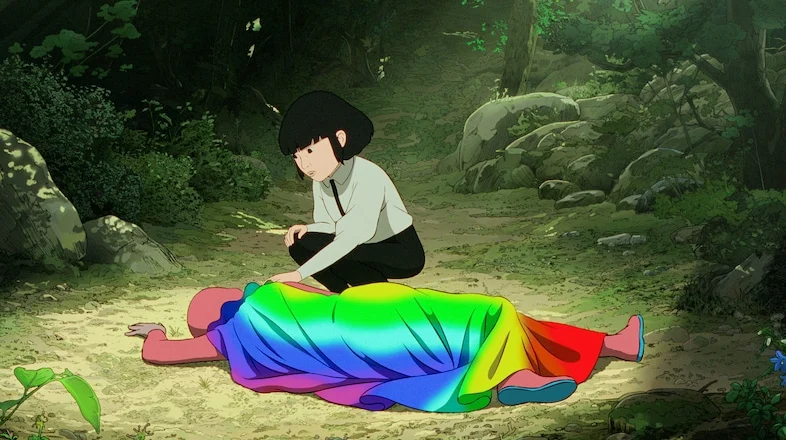
The catalyst for change arrives with Arco (Juliano Krue Valdi), a 9-year-old boy who has traveled back in time from the distant year 2932. His arrival introduces an element of profound wonder and urgency into Iris’s technologically saturated existence. The plot thickens with the introduction of three eccentric conspiracy theorists, voiced by Will Ferrell, Andy Samberg, and Flea, who are determined to prove the existence of time travel. This pursuit sets off a series of dynamic action sequences, fully leveraging the animated medium: Arco soaring through clouds with a rainbow-colored cape, robots chasing the children through a room filled with simulated dinosaurs, and the stark, molten red streets painted by raging wildfires—a visceral representation of unchecked climate change.
Bienvenu’s approach to science fiction is distinctive. He deliberately eschews meticulous explanations for complex scientific concepts like time travel, arguing that audiences readily accept the functionalities of a smartphone without understanding its intricate workings. He recounts a revealing exchange with a producer who insisted that anything unexplainable should be cut from the film. Bienvenu, however, came to a crucial realization: "everything I couldn’t understand, had to be in the movie, because it was deeper than me." This philosophy underpins his broader critique of contemporary filmmaking, where he believes too many directors rely on the "conscious part of their brain," resulting in predictable narratives. He likens it to "watching someone do IKEA furniture in front of you," where "you know what the next shot will be." Instead, Bienvenu champions the embrace of unconscious thoughts and intuitive storytelling, allowing for a more profound and imaginative cinematic experience.
Artistic Lineage and the "France’s Studio Ghibli" Mantle
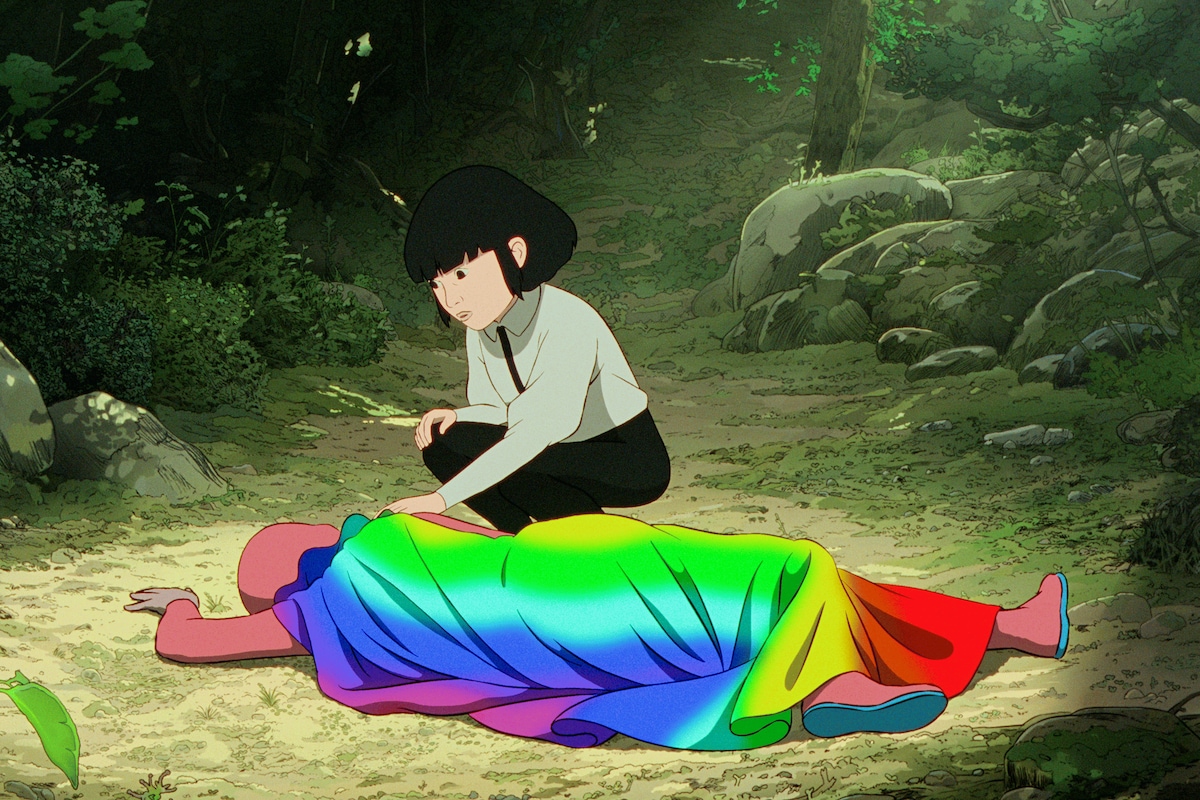
The 2D animation of Arco possesses a distinct hand-crafted quality, a direct reflection of Bienvenu’s extensive background in drawing. The visual style, with its vibrant palette and expressive character designs, immediately conjures a sense of nostalgia while feeling utterly contemporary. Bienvenu openly cites influences from classic animation, particularly old Disney movies and the revered Japanese auteur Hayao Miyazaki. It is no surprise then that critics have repeatedly drawn parallels between Arco and the works of Studio Ghibli, often labeling it "France’s version of Studio Ghibli."
This comparison is one Bienvenu embraces, noting several overlaps: the conspicuous lack of gratuitous violence, the pervasive role of the unconscious mind in narrative and character development, and the intricate interplay between humans and nature. These thematic pillars are hallmarks of Ghibli’s celebrated filmography, which has captivated global audiences for decades with its profound storytelling and breathtaking animation. The comparison places Arco within a lineage of animated films that prioritize emotional depth, ecological awareness, and universal human experiences.
Bienvenu reflects on this recognition: "I’ve been working for 15 years in this style, and nobody in France has told me about Miyazaki. They told me I was like Moebius." He notes the irony, understanding that Miyazaki himself was influenced by the legendary French comic artist Jean Giraud, known as Moebius, thereby completing a cyclical artistic influence. This connection adds another layer of cultural richness to Arco‘s aesthetic, bridging French and Japanese artistic traditions. Bienvenu expresses genuine honor at the Ghibli comparison, acknowledging Miyazaki as "one of the best artists ever," and views the "box" of such a comparison as "the best box ever." This acceptance underscores his commitment to creating animation that resonates on a deeper, more universal level, much like his Japanese counterparts.
Universal Appeal and a Call to Imagination
One of Arco‘s most striking achievements is its ability to appeal to audiences of all ages. Bienvenu observes that both children and adults respond to the film with similar emotional resonance. He believes that traditional children’s stories often underestimate the intelligence of young audiences. "Children are so intelligent, and most of the time we make them stupid by telling them bad stories, thinking they can’t understand things," he states. He recalls his own childhood aversion to adults who would "lie" to him, informing his desire for Arco to be a film that speaks truthfully to children. The film carries a powerful message: "The world isn’t good now, but we can build a better one. Our imagination makes things better." This message of hope and empowerment, delivered through a visually stunning and emotionally rich narrative, is central to the film’s universal appeal.
Throughout the interview, Bienvenu’s emphasis on "imagination" is constant, serving as a philosophical anchor for both his creative process and his worldview. This conviction leads him to an impassioned critique of artificial intelligence (AI) and the pervasive influence of digital technology on human thought. He argues that storytelling, at its core, emanates from human emotions and experiences, something AI, reliant on data and algorithms, cannot replicate. "Everybody has an imagination, and it makes life better," he asserts, humorously adding, "When you pee, you imagine. When you cook, you imagine."
His concern extends to the constant digital distractions of modern life. He laments how smartphones interrupt moments of introspection and creative thought. "When we’re bored and having an idea, our phone rings," he observes, contrasting this with a past when people could delve into "the cave of our subconscious, finding ideas." Bienvenu’s call to action is clear: "We really have to stop doing all this shit with AI and phones, and go back to our inner selves." This is not merely a personal preference but a profound statement about the preservation of human creativity and the cultivation of imagination in an increasingly automated and digitally saturated world.
The Broader Implications and Future Trajectory
Arco‘s Oscar nomination is a significant moment not only for Ugo Bienvenu but also for French animation, which continues to carve out a distinct identity on the international stage. While France has a rich history of animated features, including previous Oscar nominees and winners, Arco‘s unique aesthetic and thematic depth signal a fresh wave of innovation. The film’s success could inspire a new generation of animators to embrace 2D techniques and prioritize artistic vision over conventional commercial formulas. In an era dominated by 3D animation, Arco‘s triumph reinforces the enduring power and beauty of hand-drawn artistry.
The critical and industry reception for Arco positions Bienvenu as a formidable new voice in global cinema. His ability to attract such high-caliber talent and receive commendations from legendary figures like Spielberg and Bangalter indicates a widespread recognition of his unique talent and the film’s profound resonance. As Arco continues its theatrical run in UK cinemas and potentially expands its global reach, its message of hope, imagination, and the critical importance of human creativity will undoubtedly continue to spark conversation and inspire audiences worldwide. Bienvenu’s uncompromising artistic vision, coupled with his philosophical stance on imagination in the digital age, sets a compelling precedent for the future of animated storytelling.