










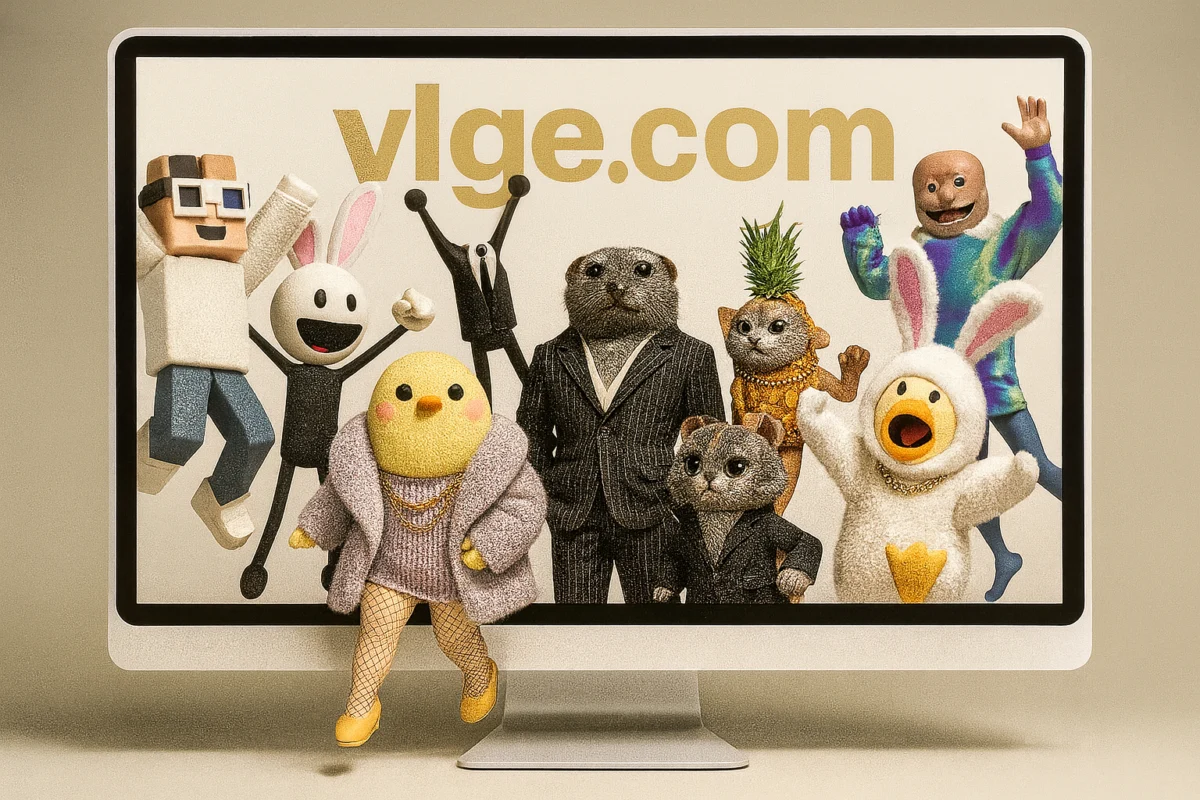
The global fashion industry is currently undergoing a structural transformation as digital-first environments begin to supersede traditional physical runways in terms of reach, engagement, and sustainability. Evelyn Mora, a visionary entrepreneur who recognized the inherent inefficiencies and environmental costs of large-scale fashion shows early in her career, has positioned her platform, VLGE, at the center of this evolution. Since its launch in 2021, VLGE has functioned as a sophisticated gaming and immersive-world-building platform designed specifically for brands seeking to navigate the complex landscape of the metaverse. By providing a suite of tools that allow for the creation of interactive content and gamified environments, VLGE is fundamentally altering the consumer journey, moving beyond static e-commerce toward a future defined by immersive brand storytelling.
On Thursday, VLGE reached a significant milestone by announcing the launch of World Fashion Week, an ambitious initiative that will see 50 distinct fashion brands debut their own shoppable digital worlds. This event is not merely a digital mirror of a traditional fashion week but a strategic bridge designed to facilitate the entry of creators and brands into massive gaming ecosystems like Roblox. By leveraging VLGE’s proprietary technology, these brands can now bypass the traditional technical and financial barriers associated with world-building, signaling a new era of democratized access to the "youth frontier" of digital commerce.
The Genesis of VLGE and the Sustainability Mandate
Evelyn Mora’s transition into the digital world-building space was born out of a realization regarding the limitations of the physical fashion industry. Despite an increasing rhetorical focus on sustainability, the logistics of hosting international fashion weeks—involving global travel for thousands of attendees, the construction of temporary sets, and the massive energy consumption of lighting and production—remain fundamentally at odds with environmental goals. Mora identified that while designers were innovating with eco-friendly fabrics and ethical supply chains, the medium through which they showcased their work remained outdated.
VLGE was conceived as a solution to this paradox. By shifting the "event" from a physical location to a digital one, brands could drastically reduce their carbon footprint while simultaneously reaching a global audience that far exceeds the capacity of any physical venue. The platform allows brands to build their own bespoke "worlds," which can then be populated with interactive content, mini-games, and virtual showrooms. This shift represents more than just a change in venue; it is a change in the nature of brand-consumer interaction. Instead of being passive observers of a runway show, consumers become active participants in a brand’s narrative, engaging with products in a space that rewards exploration and play.
Overcoming the Technical Barriers to Entry
One of the primary obstacles for traditional brands attempting to enter the gaming space has been the steep technical curve and the prohibitive costs associated with custom development. Building a presence on a platform like Roblox, which boasts over 70 million daily active users, typically requires specialized knowledge of Luau (Roblox’s coding language) and a significant investment in specialized talent. Industry data suggests that for a brand to hire an external agency to develop a custom world on Roblox, the costs can range from $10,000 to over $100,000, with development timelines often stretching over several months.
VLGE addresses these pain points by offering a no-code, real-time building interface. According to Mora, the platform makes world-building "instant, affordable, scalable, and interoperable." This allows designers and marketing teams to build immersive environments across browsers and export them directly to Roblox without needing a background in software engineering. This "instant launch" capability is a critical value proposition, as it allows brands to react to cultural trends and seasonal shifts with the same speed they might use to update a social media feed or a traditional website. Furthermore, VLGE’s compatibility extends beyond Roblox; it is currently compatible with Unreal Engine and is developing integration for Meta’s Horizon Worlds, ensuring that the assets created on the platform remain relevant across multiple digital ecosystems.
The Strategic Importance of Roblox and Gen Z Engagement
The decision to prioritize Roblox as a primary destination for VLGE-powered worlds is a calculated response to shifting consumer demographics. For Gen Z and the emerging Gen Alpha, gaming platforms are no longer just for entertainment; they are primary social hubs and shopping destinations. Research indicates that young consumers are increasingly spending their "social hours" within these immersive environments, and their digital identity—often expressed through avatars—is as significant to them as their physical appearance.
By bridging the gap between e-commerce and gaming, VLGE enables brands to meet these consumers where they already reside. The 50 brands participating in World Fashion Week are leveraging this "shopper-tainment" model to create environments where users can not only view digital collections but also purchase items directly within the game. This seamless integration of commerce and gameplay reduces friction in the sales funnel and fosters a sense of community and brand loyalty that traditional advertising struggles to replicate. Mora noted that Roblox has become fashion’s most powerful "youth frontier," and VLGE’s mission is to provide the infrastructure that makes this frontier accessible to brands of all sizes, not just those with massive corporate budgets.

Financial Backing and Institutional Validation
The potential of VLGE has not gone unnoticed by the investment community or the traditional fashion establishment. To date, the company has raised a total of $5 million in capital, a figure that reflects strong confidence in the scalability of its business model. The investor roster is particularly notable for its mix of legacy wealth and industry heavyweights. Backers include Lammot J. du Pont, a member of the prominent du Pont family, as well as the L’Oréal Group, the world’s largest cosmetics company.
Perhaps most significantly, the British Fashion Council has also provided support, signaling that even the most traditional arbiters of fashion recognize the necessity of digital evolution. VLGE has already successfully executed projects for high-profile clients such as Lancôme, Charlotte Tilbury, and Vogue Scandinavia. These collaborations have served as a proof of concept, demonstrating that luxury and high-street brands can maintain their aesthetic integrity while operating within a gamified framework. The success of these early activations has paved the way for the large-scale rollout of World Fashion Week.
Business Model and the Future of Gamified "E-tail"
To ensure broad adoption, VLGE has implemented a tiered pricing structure designed to accommodate everyone from independent creators to global enterprises. The platform offers four tiers: a "Freemium" model for beginners, followed by paid tiers tailored for individual creators, small businesses, and large-scale enterprises. This tiered approach is essential for democratizing the digital fashion space, allowing emerging designers to compete on the same digital stage as established houses.
Looking ahead, Mora’s vision for VLGE extends into the realm of "phygital" commerce—the intersection of physical and digital goods. The platform plans to launch a dedicated online "e-tail" store that will serve as a marketplace for both physical garments and 3D digital assets. These 3D assets will be interoperable, meaning a consumer could purchase a digital jacket for their Roblox avatar and potentially receive a physical version of the same item, or vice versa. This dual-revenue stream model addresses the growing market for "skins" and digital accessories, which is already a multi-billion-dollar industry within the gaming world.
Analytical Implications for the Global Fashion Industry
The launch of World Fashion Week via VLGE represents a pivotal moment in the industry’s timeline. It suggests that the "Metaverse" is moving past its initial hype cycle and entering a phase of practical, utility-driven application. For brands, the implications are three-fold:
First, the move toward digital world-building offers a solution to the "sustainability crisis" of the fashion calendar. If a significant portion of brand engagement can be moved to digital spaces, the need for resource-intensive physical events diminishes. This aligns with global ESG (Environmental, Social, and Governance) mandates that many fashion conglomerates are now required to meet.
Second, the democratization of tech tools means that the barrier to entry is no longer capital, but creativity. When a small business can launch a Roblox world for a fraction of the traditional cost, the competitive landscape shifts. Success will be determined by how well a brand can tell an interactive story, rather than how much they can spend on a physical venue in Paris or Milan.
Third, the integration of commerce into gaming environments signifies a permanent shift in retail. The "shoppable world" model suggests that the future of the internet is not a series of flat pages, but a series of interconnected 3D spaces. VLGE is positioning itself as the infrastructure provider for this new internet—the "Shopify of the Metaverse."
As Evelyn Mora stated, this movement is about more than just fashion; it is about the underlying infrastructure that will power the next generation of commerce. By providing the tools for brands to build, scale, and monetize their presence in immersive worlds, VLGE is not just following a trend—it is defining the parameters of how the next generation will discover, interact with, and purchase the products they love. The 50-brand activation for World Fashion Week is likely just the beginning of a broader migration of the $1.7 trillion global fashion industry into the digital realm.