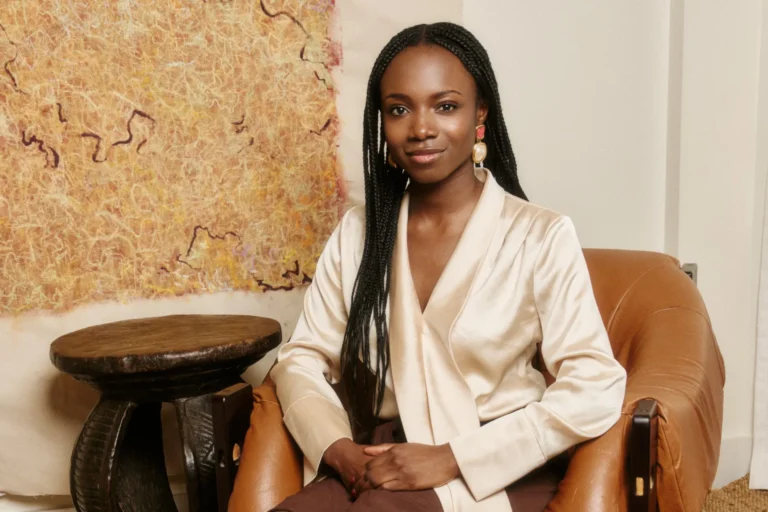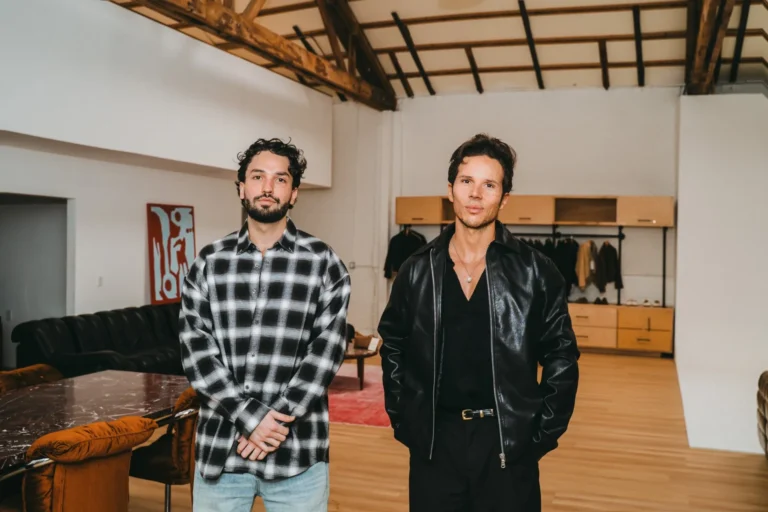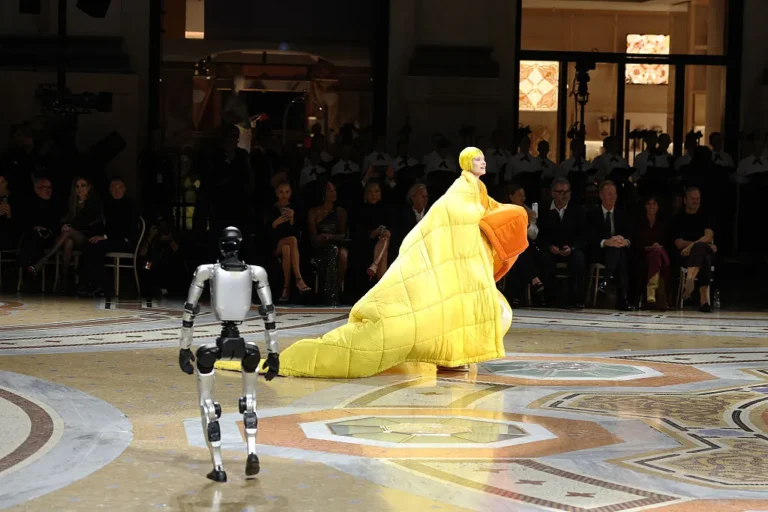












The intersection of high fashion and generative artificial intelligence reached a new milestone this Saturday as designer Kate Barton unveiled her latest collection at New York Fashion Week. This presentation, however, transcended the traditional runway format through a strategic collaboration with Fiducia AI and IBM. By integrating a multilingual AI agent built on the IBM watsonx platform and hosted on IBM Cloud, Barton provided attendees with a high-tech "portal" into her creative vision. This activation allowed guests to interact with the collection in real-time, utilizing a visual AI lens to identify specific garments, ask questions in multiple languages via voice or text, and engage in photorealistic virtual reality try-ons.
The partnership represents a significant shift in how luxury brands approach the "phygital" space—the blending of physical and digital environments. While many labels have utilized AI for backend logistics or content generation, Barton’s approach places the technology directly in the hands of the consumer, aiming to deepen the narrative of the collection rather than simply automating the aesthetic.
The Technological Architecture: Orchestrating the AI Experience
At the core of the New York Fashion Week activation was a sophisticated technological stack provided by Fiducia AI and IBM. Ganesh Harinath, the founder and CEO of Fiducia AI, noted that the primary challenge of the project was not merely the tuning of the AI models, but the complex orchestration required to make the experience seamless for a live audience. The system utilized IBM watsonx, a data and AI platform designed for enterprise-grade applications, alongside IBM Cloud and IBM Cloud Object Storage.
The visual AI lens serves as a computer vision tool capable of recognizing the unique silhouettes and textures of Barton’s new collection. When a guest pointed a device at a piece, the AI identified the garment and retrieved relevant metadata, such as fabric composition, design inspiration, and availability. Furthermore, the multilingual capabilities ensured that the global audience at New York Fashion Week could interact with the agent in their native tongues, breaking down the traditional barriers of the fashion industry.
The photorealistic virtual try-on (VTO) feature utilized the processing power of IBM Cloud to render garments onto digital avatars in real-time. This technology is increasingly viewed as a solution to one of the fashion industry’s most pressing economic issues: the high rate of returns in e-commerce. By providing a more accurate representation of how a garment drapes and fits, VTO systems are projected to reduce return rates by as much as 30% in the coming years, according to industry analysts.
A Chronology of Innovation: Barton’s Digital Evolution
Kate Barton’s foray into artificial intelligence is not a sudden pivot but the latest step in a calculated trajectory toward digital integration.
- Early Adoption and Prototyping (Pre-2024): Barton established a reputation for playing with the "real and the unreal," often using technology to aid in the prototyping of complex, sculptural garments that traditional methods struggled to execute.
- Initial AI Experiments (September 2024): During the previous season, Barton began a collaboration with Fiducia AI to experiment with AI-generated models and marketing imagery. This phase focused on testing the creative boundaries of the technology and gauging audience reaction to AI-integrated fashion media.
- The NYFW 2025 Activation: The current collection marks the transition from static AI imagery to interactive, production-grade AI agents. This move shifted the focus from the creator’s use of AI to the consumer’s experience of it.
- Future Normalization (2028-2030): Looking forward, Ganesh Harinath predicts that AI will be fully normalized within the fashion industry by 2028. By 2030, he anticipates that AI will be an embedded operational core for retail, moving from a front-end "feature" to a fundamental business infrastructure.
Supporting Data: The Economic Case for AI in Fashion
The integration of AI into the fashion cycle is backed by significant economic projections. According to a recent report by McKinsey & Company, generative AI could add between $150 billion to $275 billion to the apparel, fashion, and luxury sectors’ profits over the next three to five years. While much of this value is expected to come from supply chain optimization and design assistance, consumer-facing applications like Barton’s are crucial for brand differentiation.
Data from the retail technology sector suggests that interactive experiences significantly increase consumer engagement. Brands that implement augmented reality (AR) or AI-driven virtual try-ons see a 94% higher conversion rate compared to those that do not, as these tools provide consumers with the confidence needed to make high-value luxury purchases.
Furthermore, the multilingual aspect of Barton’s AI agent addresses a growing market need. With the global luxury market increasingly reliant on consumers in Asia and the Middle East, the ability to provide instant, accurate product information in multiple languages is no longer a luxury but a functional requirement for international growth.

Official Perspectives: Tech as a Tool for Human Craft
The philosophy behind the Barton-Fiducia-IBM collaboration is rooted in the idea that technology should augment, rather than replace, human creativity. Barton told TechCrunch that she views technology as a tool for expanding the world around the clothes, creating moments of "curiosity" and "double takes" that enhance the storytelling of a collection.
"Today, tech is a tool for expanding the world around the clothes, how they are presented, and how people enter the story," Barton stated. She emphasized that she is not interested in technology used to "erase people." Instead, she advocates for a future where there is clear discourse regarding licensing, credit, and a shared understanding that human creativity is the essential element that makes fashion worth wearing.
Ganesh Harinath echoed this sentiment, noting that while many brands are experimenting with AI at the surface level—such as through basic chatbots or internal productivity tools—the true differentiator lies in assembling the right partners to operationalize the technology responsibly.
Dee Waddell, the Global Head of Consumer, Travel, and Transportation Industries at IBM Consulting, highlighted the strategic advantage of this integration. Waddell noted that when product intelligence and consumer engagement are connected in real-time through platforms like watsonx, AI moves from being a novelty feature to a "growth engine" that drives measurable competitive advantage.
Industry Analysis: Reputational Risk and the "Website Parallel"
Barton’s observation that many brands are currently using AI "quietly" in operations rather than publicly highlights a period of reputational caution within the industry. There is a palpable tension between the efficiency gains offered by AI and the potential backlash from consumers who value the "human touch" of luxury fashion.
Barton drew a historical parallel to the early days of the internet, when established fashion houses were hesitant to launch websites for fear of diluting their brand exclusivity. Over time, the question shifted from "should we be online?" to "is our online presence any good?" Barton suggests that AI is currently in a similar transition phase. The brands that will succeed are those that move beyond "AI for AI’s sake" and find ways to use the technology to heighten craft and deepen the consumer experience.
The risk of "avoidance"—using AI to cut costs by removing human artisans or models—is a primary concern for the industry. However, Barton argues that audiences are discerning and can tell the difference between "invention" (using AI to create something new) and "avoidance" (using AI to replace human effort).
Broader Impact and the Future of the Fashion Experience
The Kate Barton presentation at New York Fashion Week serves as a case study for the future of the industry. As AI becomes more routine, the focus will likely shift from the technology itself to the quality of the "orchestration" and the ethics of its deployment.
The implications for the broader retail sector are profound. If AI agents can accurately identify garments and facilitate virtual try-ons in a high-pressure environment like a fashion show, the technology is more than ready for mainstream retail environments. This could lead to "smart" dressing rooms in flagship stores that provide styling advice, real-time inventory checks, and instant language translation for international tourists.
Ultimately, the Barton-Fiducia-IBM collaboration suggests that the most compelling future for fashion is not one of total automation. Instead, it is a future where new tools are used to bring more people into the fashion experience without "flattening" the human creators who remain at the heart of the industry. As the technology matures toward the 2030 horizon predicted by Harinath, the success of AI in fashion will be measured not by the complexity of its algorithms, but by its ability to enhance the ancient human tradition of storytelling through clothing.