






The 79th annual Cannes Film Festival reached its formal conclusion on Saturday, May 23, 2026, with a closing ceremony that emphasized the enduring intersection of high-caliber cinema and avant-garde fashion. Among the most anticipated arrivals at the Palais des Festivals was Isabelle Huppert, the venerable French actress whose presence has become a cornerstone of the festival’s identity over several decades. For the final red carpet of the 2026 season, Huppert diverged from her established sartorial patterns, opting for a custom creation by the Spanish luxury house Loewe, a move that signaled a departure from her frequent collaborations with Balenciaga earlier in the festival cycle.
The Architectural Composition of the Loewe Ensemble
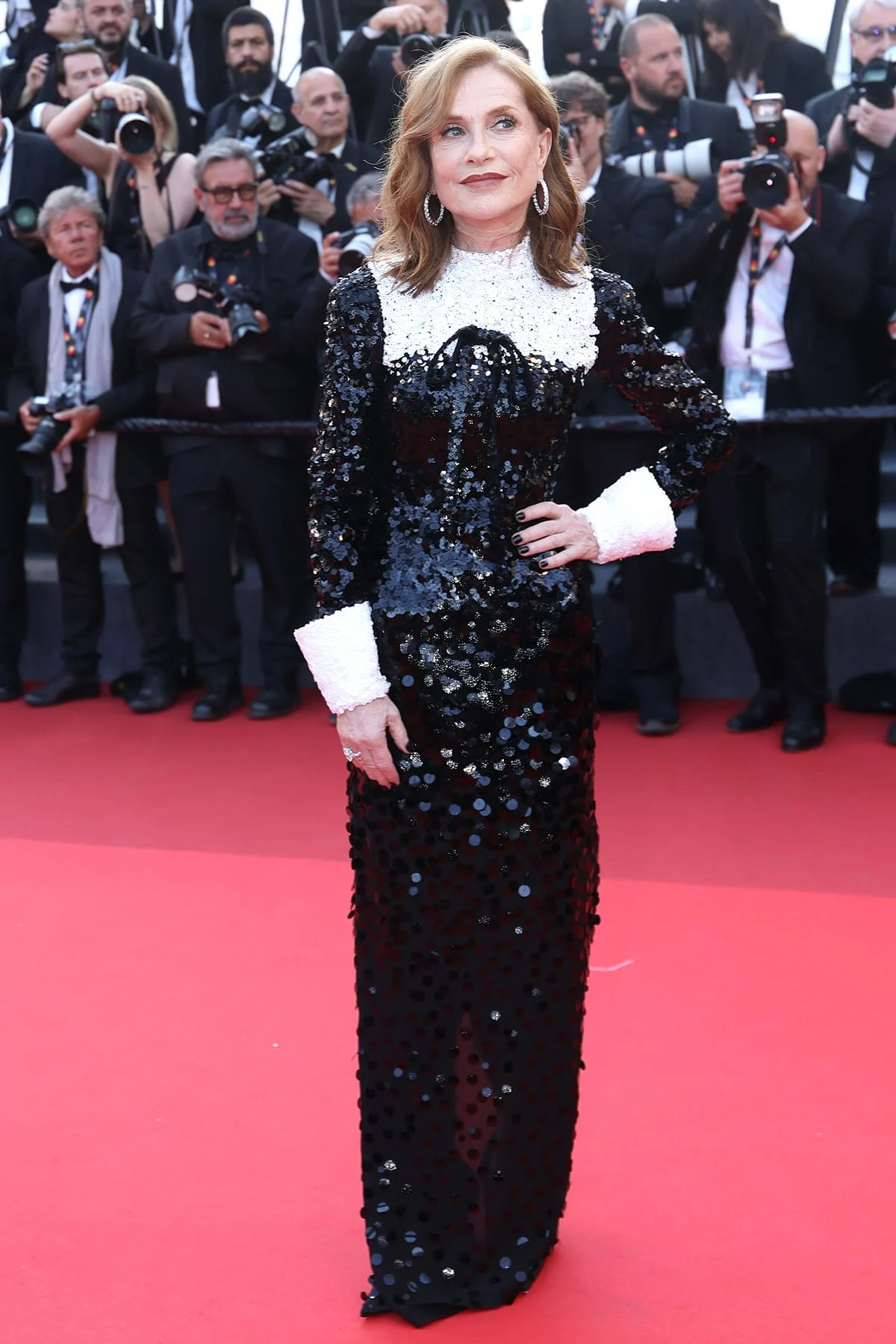
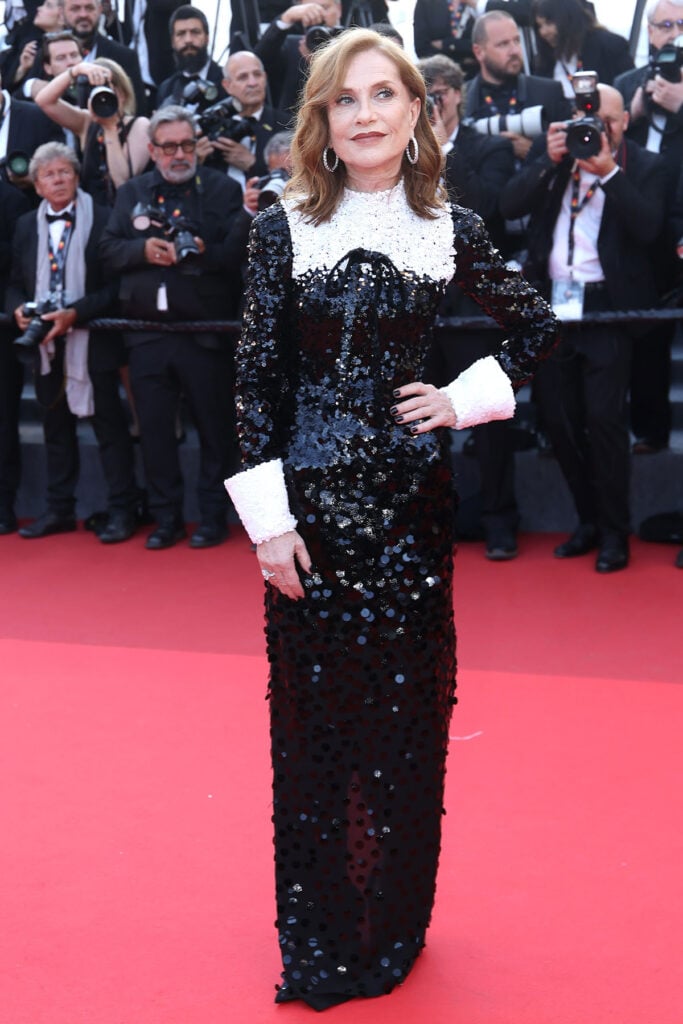
The garment selected for Huppert’s final appearance was a floor-length black sequinned gown that balanced traditional evening glamour with the intellectual rigor often associated with Loewe’s creative director, Jonathan Anderson. The dress featured a distinctive white bib collar and matching cuffs, elements that drew immediate comparisons to historical clerical or academic attire. However, the technical execution of the piece ensured it remained within the realm of contemporary high fashion.
The gown was characterized by subtle sculpting through the midsection and hips, providing a structured silhouette that countered the fluid movement of the sequins. A soft neck bow served to bridge the contrast between the stark white poplin of the collar and the deep obsidian shimmer of the main body. Industry observers noted that the choice reflected Huppert’s long-standing preference for "intellectual fashion"—clothing that prioritizes silhouette, texture, and conceptual depth over conventional red-carpet tropes of transparency or overt ornamentation.
To complement the Loewe design, Huppert wore high jewelry from Chopard, the official partner of the Cannes Film Festival. The inclusion of Chopard pieces is a standard for high-profile attendees, given the brand’s historic role in crafting the Palme d’Or and its "Red Carpet Collection," which is debuted annually during the 12-day event. The styling was overseen by Jonathan Huguet, Huppert’s long-time collaborator, who has been instrumental in shaping her status as a global fashion icon.
A Chronological Shift in Brand Alliances
Throughout the 2026 Cannes Film Festival, Huppert’s wardrobe choices were a subject of significant analysis by fashion critics and market researchers. Historically, Huppert has served as a primary muse for Balenciaga under the creative direction of Demna. Her appearances in the brand’s "pantaboots" and oversized silhouettes have defined her red-carpet persona in recent years.

During the initial days of the 2026 festival, expectations were high for a series of Balenciaga looks. While she did represent the house at several photocalls, her decision to close the festival in Loewe—a brand under the LVMH conglomerate—rather than a Kering-owned label like Balenciaga, suggests a strategic diversification of her fashion partnerships. This shift is particularly notable given the competitive landscape of luxury sponsorships during major cultural events like Cannes, where brand visibility can translate into millions of dollars in Earned Media Value (EMV).
The 2026 Cannes Film Festival in Context
The closing ceremony on May 23 marked the end of a 12-day marathon that saw the premiere of 22 films in the Main Competition. The 2026 edition of the festival was characterized by a strong return to European auteurism, with a particular focus on the evolution of French cinema—a field in which Huppert remains a dominant force.
Huppert’s role at Cannes has evolved significantly since her debut. A two-time winner of the Best Actress award (for Violette Nozière in 1978 and The Piano Teacher in 2001) and a former President of the Jury (2009), her attendance is more than a celebrity appearance; it is a validation of the festival’s artistic prestige. In 2026, although not in competition with a new feature film, Huppert attended as a representative of the cinematic establishment, participating in several masterclasses and honorary events prior to the closing night.
Economic Impact and the "Cannes Effect" on Luxury Brands
The choice of Loewe for the closing ceremony carries substantial economic implications. Data from previous festivals indicates that the "Cannes Effect" can increase a brand’s digital search volume by as much as 40% in the 48 hours following a major red-carpet appearance. For Loewe, a brand that has seen rapid growth under Jonathan Anderson by appealing to an art-focused demographic, Huppert is an ideal ambassador.
According to luxury market analysts, the synergy between Huppert and Loewe leverages "cultural capital." Unlike younger influencers who may drive immediate sales of entry-level luxury goods like handbags or eyewear, Huppert’s endorsement solidifies a brand’s standing among high-net-worth individuals and the global intellectual elite. The 2026 closing ceremony look, which avoided the "costume" pitfalls of the nun-like aesthetic through precise tailoring and material choice, served as a case study in how heritage brands can modernize their image through strategic celebrity alignment.
Industry Reactions and Stylistic Analysis
Fashion historians and critics attending the festival noted the "austere glamour" of the look. "Isabelle Huppert has reached a stage in her career where she no longer needs to compete with the sheer volume or brightness of younger stars," noted one senior fashion editor. "The Loewe gown was a masterclass in restraint. By incorporating the white bib and cuffs, the look referenced a certain French intellectualism—the ‘bluestocking’ tradition—while the sequins ensured it met the formal requirements of the Palais des Festivals."
Stylist Jonathan Huguet’s decision to move toward Loewe for the finale was praised for its unpredictability. In a landscape where many red-carpet appearances are governed by rigid multi-year contracts, the flexibility to choose a garment that reflects the specific mood of the closing night is seen as a mark of Huppert’s unique autonomy within the industry.
The Role of Chopard in the Final Presentation
The jewelry selected for the evening was part of Chopard’s 2026 Red Carpet Collection, which reportedly focused on sustainable luxury and "Fairmined" gold. As a long-standing partner of the festival, Chopard’s involvement ensures that the aesthetic standards of the closing ceremony remain consistent. For Huppert, the jewelry was kept relatively understated to allow the architectural details of the Loewe collar to remain the focal point. This balance is critical in high-stakes photography, where the interplay of light on sequins and gemstones can often lead to visual clutter.
Broader Implications for the Future of Red Carpet Fashion
Huppert’s appearance at the 2026 closing ceremony underscores several emerging trends in the intersection of film and fashion:
- The Pivot to "Quiet" Eccentricity: As "quiet luxury" evolves, it is being replaced on the red carpet by "intellectual eccentricity"—looks that are modest in coverage but complex in construction and reference.
- The Decline of Brand Monogamy: While long-term contracts still exist, there is a growing trend of "prestige hopping," where top-tier actors work with different houses for different phases of a festival to maximize their stylistic range.
- The Sustainability of the Image: By choosing a gown that emphasizes timelessness over trend-driven elements (like the 2020s obsession with "naked dresses"), Huppert and Huguet are contributing to a more sustainable model of celebrity dressing that prioritizes longevity and artistic merit.
Conclusion of the 79th Festival
As the lights dimmed on the 2026 Cannes Film Festival, the image of Isabelle Huppert in Loewe remained one of the evening’s defining visuals. The festival concluded with the awarding of the Palme d’Or, but the cultural conversation extended beyond the winners to the icons who continue to shape the festival’s narrative. Huppert’s choice to close the event in a Spanish label, while maintaining her quintessentially French sensibilities, served as a fitting end to a festival that celebrated the globalized nature of modern cinema.
The 2026 festival proved that even after decades in the spotlight, Isabelle Huppert remains capable of surprising the industry, proving that the red carpet is not merely a runway for promotional material, but a stage for performance art in its own right. Her collaboration with Loewe and Chopard on this final night will likely be referenced in future retrospectives of her style, marking a moment of evolution for one of cinema’s most enduring figures.