








A discernible shift is underway in the world of body art, moving beyond traditional motifs and ephemeral trends towards a more cerebral form of self-expression. Intricate, diagrammatic designs – ranging from scientific flowcharts and mathematical equations to complex Venn diagrams and psychological models – are increasingly being etched onto skin, signalling a fascinating evolution in tattoo aesthetics. This phenomenon is not merely a fleeting fad but appears deeply intertwined with broader cultural currents, particularly the omnipresence of "visualized thinking" that has permeated digital spaces, from the curated boards of Pinterest to the analytical deep-dives on Substack and the engaging carousels of Instagram.
The Emergence of Diagrammatic Body Art
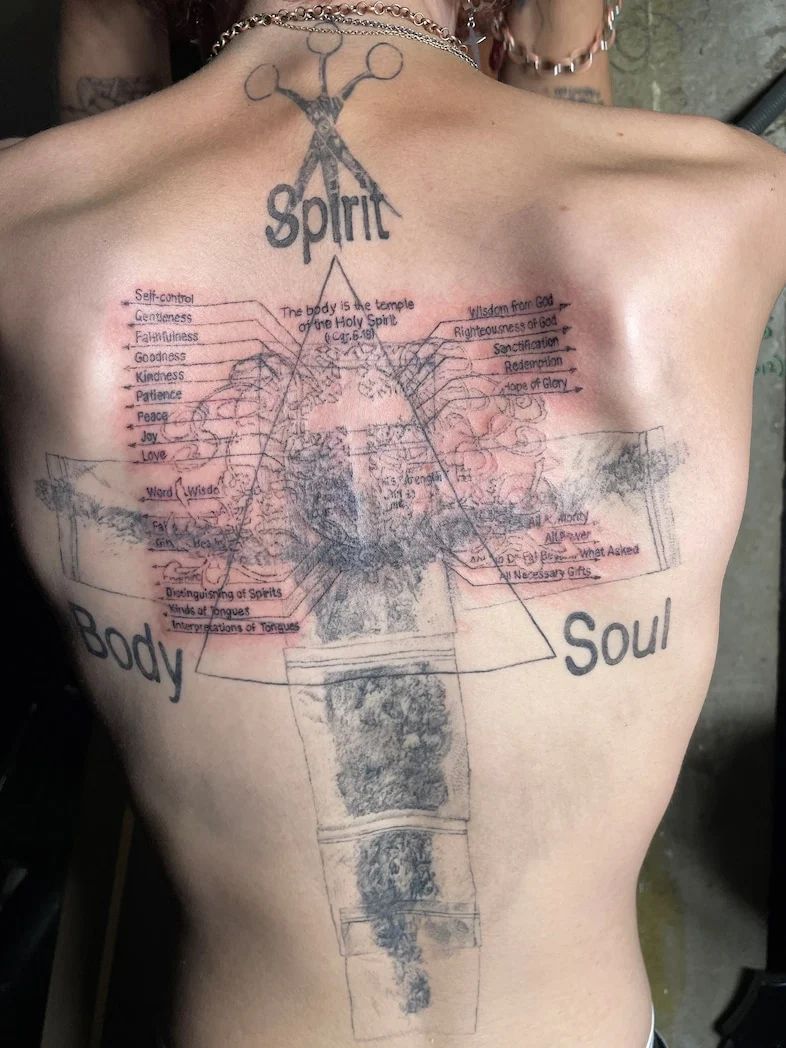
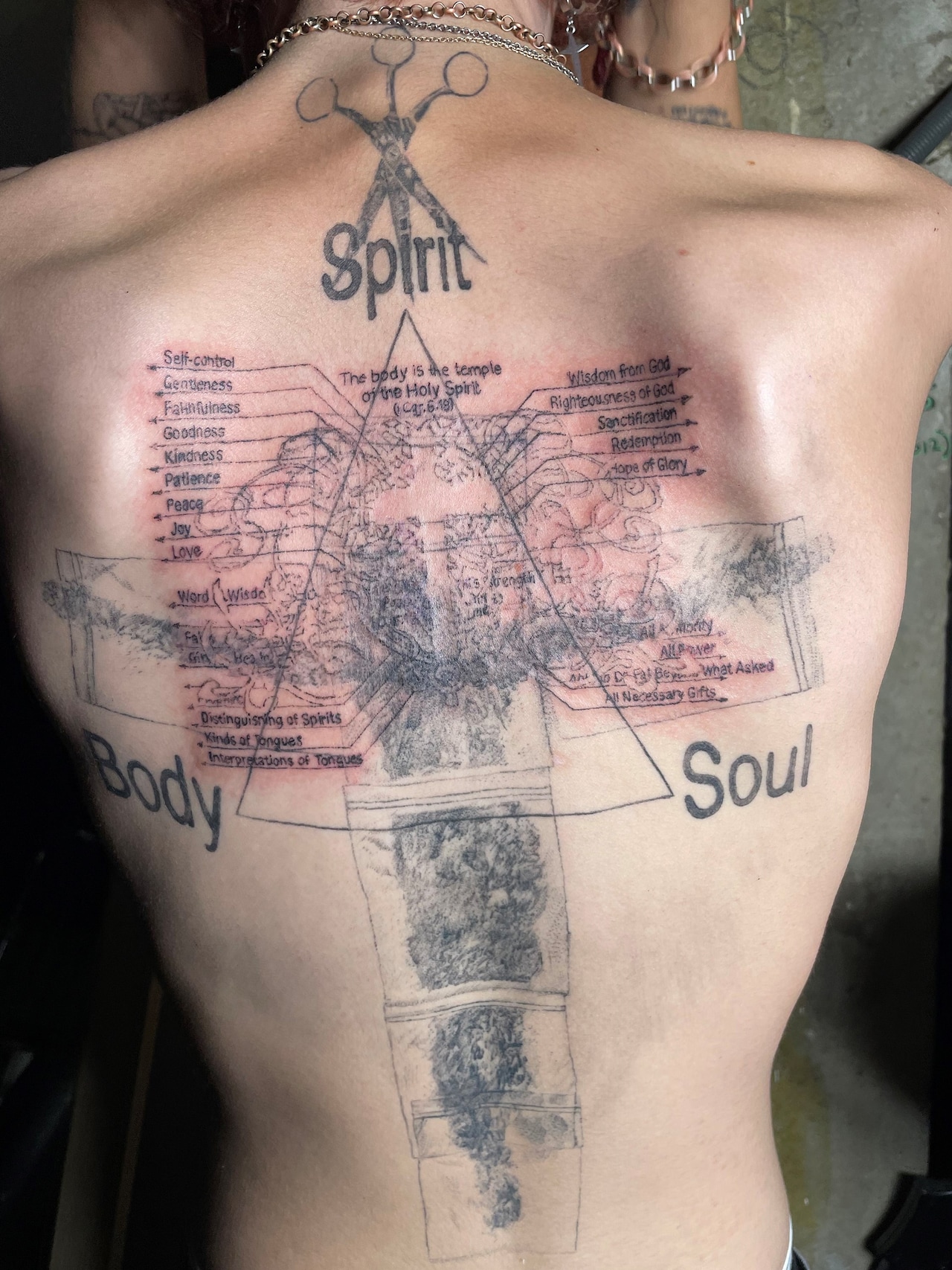
The visual landscape of social media feeds, particularly within the tattoo community, now regularly features freshly inked skin adorned with axes, arrows, and interconnected structures. These designs often employ fine lines to depict systems-based models, mapping everything from the intricacies of the human condition to abstract philosophical concepts. This influx of intellectualized body art is readily observable by practitioners within the industry. Deven, an East London-based tattoo artist renowned for her minimalist yet profound work, attests to this burgeoning trend. Her recent commissions include a circular diagram representing the genetic code and a triangular mapping of the spirit, body, and soul – designs that vividly illustrate this new aesthetic direction.
"Although abstract patterns and diagrammatic tattoos have always existed, there’s been a noticeable increase in people wanting these kinds of designs," Deven explains. "I’ve had people asking to add structural elements into my existing flash designs, while others have sent me diagrammatic images to incorporate into their tattoos." Her observations underscore a fundamental shift in client preferences, moving towards designs that invite interpretation and intellectual engagement rather than immediate recognition.
This current trend stands in stark contrast to some of the more immediately legible tattoo styles that have dominated in recent years. Post-pandemic, there was a surge in demand for "cutesy characters" and nostalgic designs, reflecting a collective yearning for comfort and simplicity. Simultaneously, the rise of "meme tattoos" demonstrated a fascination with ironic, internet-humour-driven body art, often characterized by its transient relevance. Diagrammatic tattoos, however, represent a departure from these more whimsical or overtly humorous styles. They deliberately eschew directness, instead offering a canvas for meaning to be constructed, pondered, and interpreted, rather than simply spelled out. This intellectual turn suggests a deeper engagement with the medium, where the body becomes a site for complex thought and personal philosophy.
The Broader Cultural Context of Visualized Thinking
The popularity of these diagrammatic tattoos is not an isolated phenomenon; it mirrors a wider societal gravitation towards visualized thinking as a means of processing information. In an era often characterized by the "rise of AI slop" – a term describing the proliferation of easily generated, often superficial or context-lacking visual content – there’s a growing need for tools that impose order and clarity. Charts, Venn diagrams, flowcharts, and other complex illustrations, traditionally confined to academic papers or technical manuals, have found new life as aesthetic signifiers across various digital platforms. They offer a perceived antidote to information overload, a way to distill complex ideas into digestible, structured formats.
This cultural backdrop is crucial for understanding the appeal of diagrammatic tattoos. In an increasingly precarious and complex world, individuals are actively seeking ways to maintain cognitive structure and personal balance. The appeal of these visual frameworks lies in their inherent ability to help chart progress, impose logic on chaotic realities, and ultimately make some sense of the overwhelming flow of information and experiences. By imprinting these structures onto their bodies, individuals are perhaps seeking a permanent anchor for their internal quest for order and understanding.
Beyond Aesthetics: The Quest for Meaning
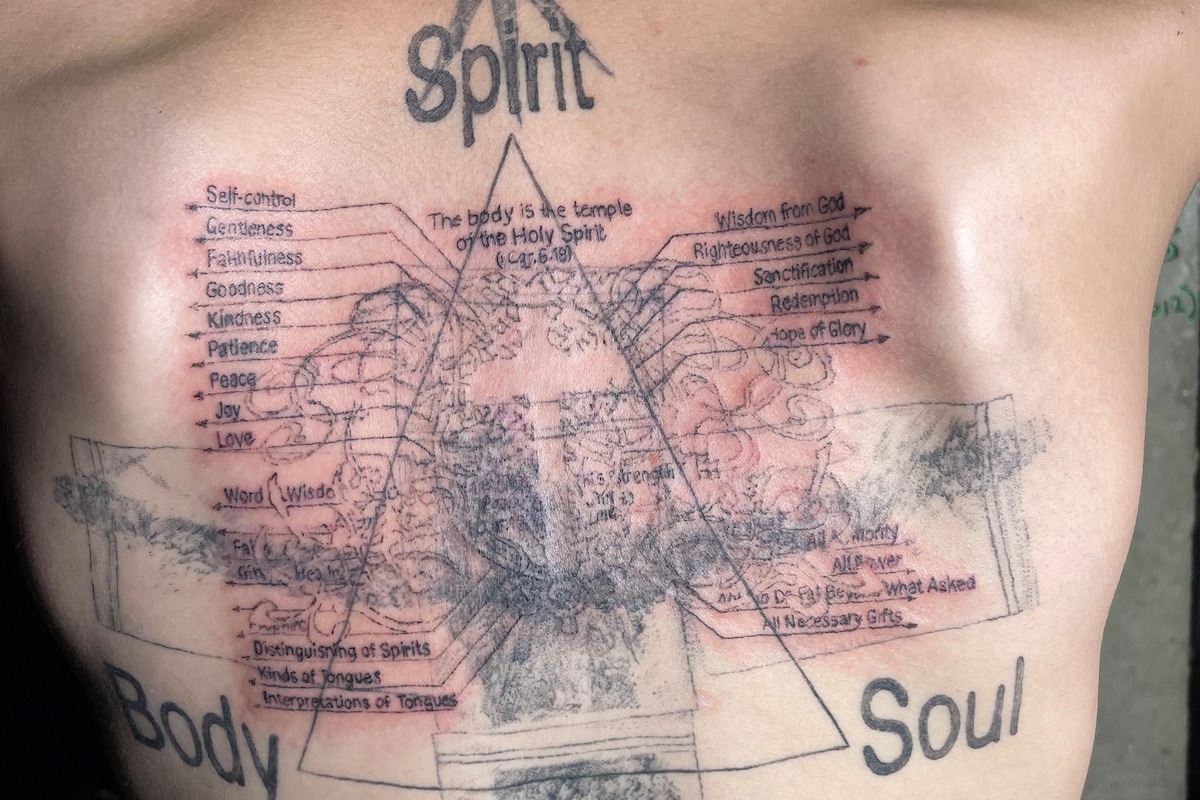
Many of these diagrammatic tattoos transcend mere visual appeal, delving into profound philosophical or spiritual realms. They often depict alternative states of existence, intricate models of selfhood, or pathways to enlightenment. Examples include handpoked designs showing a body ascending through fine-line quadrants, or triangular mappings delineating the dimensions of self-existence. These designs are not merely decorative; they serve as deeply personal roadmaps or reflections of an individual’s worldview.
Deven finds particular resonance in these types of designs. "I’m not Christian, however I think many of the keywords within those diagrams, like ‘self-control,’ ‘gentleness,’ and ‘faithfulness’ reflect values that are universally aspirational in order to live a sincere and fulfilling life," she articulates. This perspective highlights how these diagrams, regardless of their specific origin, often tap into shared human aspirations for self-improvement and ethical living. They function as constant, visible reminders of personal principles and life goals.
This spiritual dimension echoes a previously observed trend: the rise of religious aesthetic tattoos among young people, which Dazed explored last year. In that context, contributors often spoke of iconography serving as a powerful reminder of faith or a guide for living. The current surge in diagrammatic tattoos appears to be a contemporary translation of this same spiritual quest, but expressed through systematic frameworks rather than traditional, overtly symbolic imagery. Instead of a crucifix or a deity, a person might opt for a flowchart illustrating the path to mindfulness, or a diagram depicting the interconnectedness of cosmic forces. This shift suggests a more personalized, analytical, and perhaps less dogmatic approach to spiritual and philosophical inquiry.
A Shifting Tattoo Landscape: Evolution and Industry Growth
The broader context of the tattoo industry’s evolution also plays a significant role in this trend. Once largely confined to subcultures and associated with rebellion, tattoos have undergone a remarkable mainstreaming over the past few decades. The global tattoo market has witnessed consistent growth, expanding into a multi-billion dollar industry. This widespread acceptance has not only increased the sheer volume of tattooed individuals but has also broadened the artistic scope and thematic diversity available. Advancements in tattooing techniques, particularly in fine-line work and precision, have made it possible to execute the intricate details required for complex diagrams and charts, pushing the boundaries of what can be permanently inscribed on the skin.
This growing acceptance and technical capability have created fertile ground for more esoteric and intellectually driven designs. As tattoos become less about shock value and more about personal narrative and aesthetic sophistication, clients and artists alike are exploring new avenues for expression that resonate with contemporary intellectual and philosophical inclinations.
The Impact of AI and Digital Culture on Image Value
The dialogue around AI’s influence in creative fields, including tattooing, also provides a crucial lens through which to understand the appeal of diagrammatic designs. The discussion around whether AI tools can assist artists and clients in developing tattoo concepts is ongoing. More profoundly, AI’s capacity to generate "endless, frictionless visuals" has begun to alter how images are perceived and valued in culture. When any image can be rendered instantly and perfectly by an algorithm, there’s a risk that the intrinsic value derived from the human process, material intention, and unique artistic fingerprint might diminish.
In this context, diagrammatic tattoos stand out precisely because they demand a different kind of interpretive labor. Unlike easily digestible images, these designs often require an "extra application of knowledge" from the observer to fully unlock their meaning. They invite, and often necessitate, intellectual engagement. This inherent requirement for interpretation acts as a counter-narrative to the superficiality sometimes associated with AI-generated content. It imbues these tattoos with a perceived depth and authenticity that resists the instantaneous consumption prevalent in the digital sphere, marking them as deliberate expressions of considered thought.
The Aestheticization of Thinking and the Pursuit of Knowledge
This trend is also indicative of a broader prioritization of knowledge and the aestheticization of thinking among younger generations. In a world saturated with information, often curated by algorithms, intellectualism is increasingly positioned as an antidote. It represents a resistance to "AI slop," content saturation, and the perceived "dulling effects of being too heavily online." To embrace complex diagrams and charts as body art is, in a sense, to make a public declaration of one’s engagement with critical thought, intellectual curiosity, and a pursuit of deeper understanding.
It feels natural that these cultural currents would eventually manifest in personal choices as permanent as tattoos. The body becomes a canvas for demonstrating one’s commitment to mental acuity, philosophical exploration, and the nuanced understanding of complex systems. It’s a statement against passive consumption, opting instead for active engagement with ideas.
The Paradox of Authenticity: Signaling vs. Sincerity
The rise of these intellectual tattoos naturally introduces questions about their reception and underlying motivations. Is the wearer genuinely deeply engaged with the ideas represented, or are they drawn to the social currency of graphs and dense-looking texts – a form of "intellectual signaling"? Within the broader discourse around intellectualism, similar aesthetic choices have often been met with accusations of "signaling" or "poser" behaviour, implying a lack of genuine commitment behind the visible display.
However, as Rayne Fisher-Quann eloquently argues in her essay "Poser Ethics," identity is not necessarily insincere or false simply because it is performed. Much of the discomfort surrounding aesthetic or performative identities stems from a tendency to conflate visibility with inauthenticity. In reality, identity itself is often forged and solidified through visible gestures and external expressions. Tattooing, in this context, stands as one of the most permanent and visible ways that identity is proclaimed and embodied.
Therefore, diagrammatic tattoos exist within this same fascinating ambiguity. Whatever the specific intention – whether a profound personal commitment to a philosophical model or an aesthetic appreciation for structured thought – their increasing popularity speaks volumes about the kinds of designs resonating now. They signify a cultural moment where the appearance of intellectual engagement, or at least the suggestion of it, holds significant appeal. These designs encourage a second look, a moment of contemplation, and a deeper dive into their potential meanings, challenging both the wearer and the observer to think beyond the surface.
Conclusion: A Reflection of Modern Self-Expression
The proliferation of diagrammatic and intellectual tattoos is a compelling indicator of evolving self-identity in the 21st century. Far from being mere decorative embellishments, these designs are complex cultural artifacts that reflect a generation’s quest for meaning, structure, and intellectual grounding amidst the digital age’s chaos. They represent a significant move towards complex, personal narratives inscribed permanently on the body, pushing the boundaries of traditional tattoo aesthetics and challenging conventional notions of intellectual display.
Ultimately, these tattoos are more than skin deep; they are tangible manifestations of an ongoing cultural conversation. They embody a desire for depth, clarity, and thoughtful engagement in a world often criticized for its superficiality. The body, in this context, transforms into a dynamic canvas for cognitive and philosophical exploration, making the rise of diagrammatic tattoos a profound commentary on contemporary self-expression and the enduring human search for understanding.