




In mid-March, a compelling new figure emerged on Instagram feeds, captivating audiences with an undeniable charisma and a distinctive sartorial vision. Rachel Ojuromi, a 22-year-old creative force from Lagos, Nigeria, swiftly became a viral sensation through her innovative "fit check" videos. These clips transcend mere outfit displays, offering a vibrant commentary on contemporary African youth culture, sustainable fashion, and the boundless creativity thriving despite limited resources. Ojuromi’s work, deeply rooted in the bustling energy of her native Lagos, not only showcases her unique style but also champions a broader movement through her platform, The Process Africa, dedicated to spotlighting and valuing young creatives across the continent.
The Phenomenon of the Viral "Fit Check"
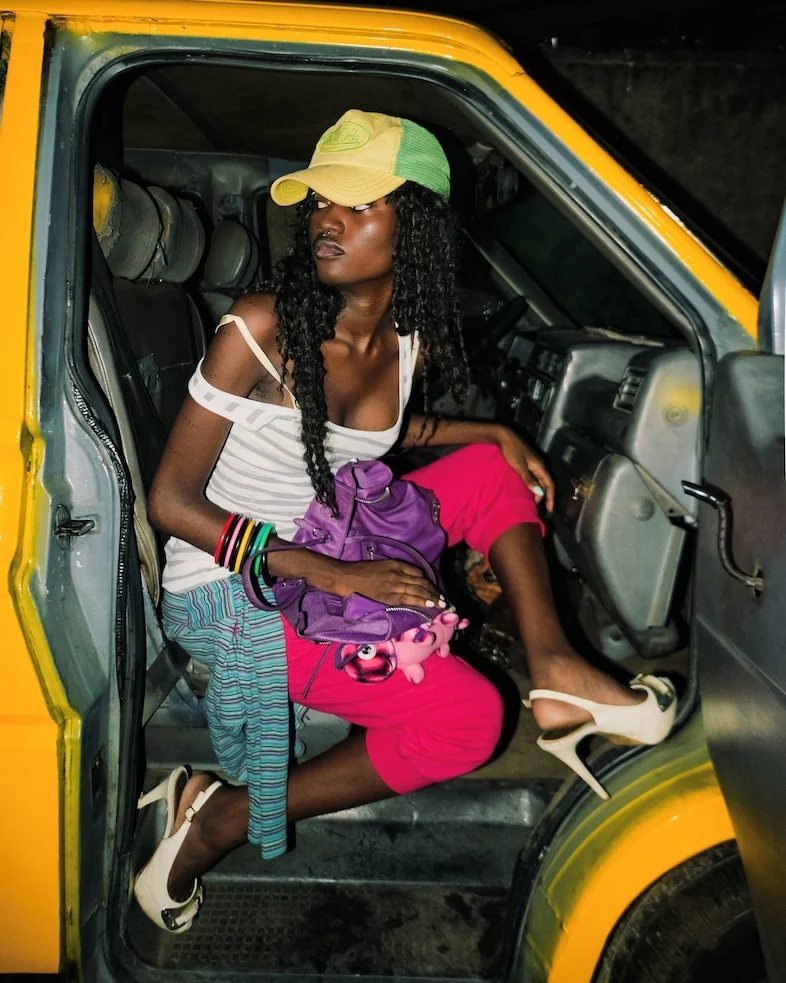
Ojuromi’s initial viral video immediately halted scrolling thumbs, presenting a meticulously styled yet authentically Lagosian scene. Dressed in violet capris cut just below the knee, a lime green halter top knotted at the front, strappy slingbacks, and a striped jumper casually slung around her waist, she stomped through the vibrant streets of Lagos. The video chronicled her everyday activities: a visit to a grocery store, picking up onions from the local market, gracefully head-carrying a basket of bananas, before being whisked away on the back of a truck – a quintessential Lagosian mode of transport. This debut piece, styled in collaboration with her close friend and designer, Debby Fasingha, was lauded for its ingenious fusion: "2006 it-girl meets 2010s maximalism by way of classic Nollywood."
The success of this initial video was not an isolated incident but the precursor to a series of visually arresting "fit checks." Ojuromi consistently demonstrates a keen eye for eclectic styling, blending nostalgic elements with a fresh, contemporary sensibility. In subsequent clips, her fashion repertoire expanded to include faded jeans paired with a slick biker jacket while shopping for traditional geles, or an ironic weed leaf snapback complemented by chunky wedged trainers. Another video captured her skateboarding in sunshine yellow cut-offs, carrying a crimson electric guitar, while a pink pixie crop and white tank top paid homage to Rihanna’s iconic courtside look from 2014. Her signature aesthetic embraces neon colour-blocking, exposed bras, and numerous early 2000s references, often incorporating pieces custom-made by Fasingha, highlighting a collaborative and deeply personal approach to fashion. This distinctive visual language quickly resonated with a global audience, eager for authentic narratives emerging from Africa.
The "fit check" phenomenon itself has exploded on social media platforms like Instagram and TikTok, becoming a powerful tool for self-expression and trend dissemination. What distinguishes Ojuromi’s videos is their narrative depth; they are not just about clothes but about context, culture, and the everyday lived experience in Lagos. This approach offers a refreshing counter-narrative to often one-dimensional portrayals of African life, instead showcasing a vibrant, fashionable, and dynamic youth culture that is both globally aware and locally rooted. The high engagement rates and widespread sharing of her content underscore a significant demand for such authentic, culturally rich storytelling in the digital sphere.
The Genesis of a Style Icon: From Personal Style to Public Platform
Rachel Ojuromi’s journey into the spotlight was not a calculated ascent but an organic evolution driven by genuine creativity and a deep connection to her roots. Born and raised in Lagos, Nigeria, Ojuromi, at 22, embodies the spirit of the city, stating, "Lagos is honestly such a big part of who I am – it’s in everything I do." Her career path currently includes an operations internship at Alamode, grounding her creative pursuits in practical experience.
The idea for her viral "fit check" videos emerged somewhat serendipitously. A close confidant, Tolu Oye, suggested she wear a beautiful Meji Meji shirt for a video, recognizing its alignment with Ojuromi’s inherent style. However, Ojuromi’s artistic integrity led her to pause, unwilling for the video to appear "basic or underthought." She waited until she could present something truly compelling, a testament to her commitment to authentic self-expression. "And then it just happened," she recounts. "I made [the first video] and it took off." This spontaneous explosion of creativity, coupled with meticulous execution, became the blueprint for her subsequent successes.
Interestingly, Ojuromi’s ascent ran parallel to that of Diya Joukani, whose Mumbai-based fashion reels also gained viral traction. Despite the striking similarities in their approach – showcasing vibrant street style against the backdrop of their respective cities – Ojuromi was initially unaware of Joukani’s work due to phone storage limitations that prevented her from using TikTok. Upon discovering the comparison through a friend, Ojuromi expressed admiration, noting the "beautiful" coincidence of two young women in completely different cities arriving at such similar creative expressions simply by being themselves. This parallel evolution highlights a broader global trend of young creatives leveraging digital platforms to articulate localized fashion narratives, demonstrating a universal language of style and authenticity.
The Unbreakable Bond: Collaboration as the Cornerstone of Creativity
A significant factor behind Ojuromi’s distinctive aesthetic and the production quality of her videos is her robust creative network, particularly her enduring partnership with best friend and designer, Debby Fasingha. "I work with my best friend and honestly one of the greatest designers out there, Debby Fasingha," Ojuromi proudly states. Their collaboration is deeply rooted in a shared history and mutual passion for fashion, forged over years of joint exploration.
Their bond extends beyond professional collaboration into a rich personal history. Ojuromi recounts their long-standing tradition of "going to the market and thrifting, sitting and watching runway shows together." This shared experience forms the authentic wellspring from which their video concepts flow. The "fit check" videos, therefore, are not merely curated content but a natural extension of their collective appreciation for style and design, an organic effort to "share everything we’ve seen and loved with everyone else." This authenticity is palpable, lending a genuine feel to their work. Many of the looks showcased are drawn directly from their personal wardrobes, while others are bespoke creations by Fasingha, illustrating her integral role in shaping the visual identity of Ojuromi’s brand.
Ojuromi’s network extends further, encompassing individuals who are not merely "industry contacts" but "her people." This includes Odey Ikpa, who skillfully captures every frame of her videos; Whak and Mo Nyong, her closest confidants; and Abdullahi Ali, another valued friend and collaborator. This emphasis on genuine relationships over transactional connections is a core philosophy for Ojuromi. She passionately believes that young creatives often underestimate the true value of a network, which, in her view, "isn’t about who’s the most connected or the most famous, but about finding your people who believe in the vision as deeply as you do." This ethos fosters an environment of mutual support, shared vision, and unbridled creativity, proving that strong community bonds are as crucial as talent in navigating the creative landscape.
Championing Local and Sustainable Fashion: The Yaba Market Influence
Central to Rachel Ojuromi’s style narrative and her broader message is her fervent advocacy for local and sustainable fashion, epitomized by her reliance on Lagos’s iconic Yaba Market. "First and foremost, a massive shout out to Yaba Market," she declares. "Half of what you’re seeing in those videos is thrifted from there, and I’ve been going there since forever." The market, a sprawling hub of secondhand clothing, textiles, and accessories, is a cultural institution in Lagos, representing a vibrant ecosystem of resourcefulness and unique style. For Ojuromi, witnessing a global audience appreciate garments sourced from Yaba is "the most beautiful thing."
This appreciation for thrifted fashion aligns with a growing global movement towards sustainability, but in the Nigerian context, it also speaks to a long-standing tradition of economic ingenuity and a preference for unique, often high-quality, pre-loved items. Yaba Market, and similar thrift markets across Nigeria, are crucial not only for their affordability but also for their diverse offerings, allowing individuals to cultivate distinct personal styles outside the confines of mass-produced fast fashion.
Beyond brick-and-mortar markets, Ojuromi also champions the burgeoning online thrift community. She gives a "huge love to the Instagram thrift store girlies," specifically mentioning Hemntzang, The Stunner Vintage, and Thrift Genius. These digital platforms have revolutionized thrifting, making it significantly more accessible to a wider audience, including those who might not frequent physical markets. By spotlighting these entrepreneurs, Ojuromi underscores their vital role in democratizing fashion and promoting sustainable consumption practices among Nigerian youth. This network of thrifters, combined with Debby Fasingha’s custom designs, forms the backbone of Ojuromi’s striking and socially conscious wardrobe, proving that high fashion can be both accessible and environmentally responsible.
"The Process Africa": Empowering the Next Generation of Creatives
Beyond her personal brand and captivating style, Rachel Ojuromi is deeply committed to a larger mission: empowering young African creatives through her platform, The Process Africa. Established three years ago, the platform’s core mission is unequivocal: "to make sure every young African creative knows that they are valued." This valuation extends beyond the visible successes – "not just in the end result, or the viral moment or the finished collection, but the process itself."
The Process Africa celebrates the journey of creative development, recognizing that the path to becoming an artist, designer, filmmaker, or visual artist is often fraught with challenges, particularly in contexts with limited resources. Ojuromi identifies a critical gap in the narrative surrounding African creatives, noting that "so many young African creatives are out here doing incredible things and not being told that their stories matter." Her platform aims to rectify this, providing a space where these stories are heard, celebrated, and validated.
This initiative is deeply personal for Ojuromi, tracing back to a childhood dream. She recalls telling people at age 10 that she would "adopt kids from every single African country." She views The Process Africa as a manifestation of that same dream, albeit in a different form. It is about "creating a safe space for all the cool kids across Africa so that no matter what craziness is going on around them, they know if they call me, I’m coming." This commitment is not merely rhetorical; Ojuromi actively opens her home as a physical hub for creatives to sleep, socialize, and work. Her "Finsta," @rachelshouse, showcases images of young artists collaborating and simply "hanging out," highlighting the communal and supportive environment she fosters. Her home also serves a practical purpose, doubling as a much-needed location for shoots in Lagos, where finding suitable spaces can be challenging.
The Process Africa addresses a crucial need for infrastructure, mentorship, and community within the burgeoning African creative scene. By focusing on the "process," Ojuromi de-emphasizes the often-glamorized end product, instead highlighting the perseverance, learning, and collaborative spirit that underpin creative endeavors. This platform is not just about fashion; it’s about fostering a self-sustaining ecosystem where African talent is nurtured, recognized, and empowered to tell its own stories on its own terms.
Lagos: The Heartbeat of Her Message
Lagos, Nigeria, is more than just a backdrop for Rachel Ojuromi’s videos; it is an intrinsic character in her narrative, a wellspring of inspiration, and the very essence of her message to the world. Her work is a powerful testament to the city’s vibrant culture, its resilience, and its undeniable influence on her identity. Through her videos, Ojuromi seeks to convey a profound truth about Lagos and, by extension, about African youth at large: "That you can have a voice and share your work with the world regardless of the resources you have."
This message directly confronts preconceived notions and stereotypes about creativity and opportunity in Africa. Ojuromi articulates a clear stance against being underestimated: "We aren’t just silly kids who know nothing." Instead, she asserts that "there are kids in Africa absorbing the exact same influences as everyone else, caring just as deeply about art and fashion, just without all the resources." This statement is a call to global recognition, emphasizing that a lack of material resources does not equate to a lack of talent, vision, or passion.
Lagos itself is a crucible of creativity, a megacity renowned for its dynamic fashion scene, the global phenomenon of Nollywood (the Nigerian film industry), and its groundbreaking music. Yet, creatives often navigate significant infrastructural challenges, from unreliable power to limited access to formal training and funding. Ojuromi’s work serves as a beacon of hope and a practical demonstration that ingenuity can overcome these hurdles. Her powerful declaration, "Despite that, we can make the world shake with what we have," is an empowering mantra for every aspiring African creative. She implores, "I hope every African kid takes this seriously and sees that this is a moment," underscoring the collective potential of African youth to shape global cultural narratives. Her videos are not just fashion statements; they are declarations of cultural pride, resilience, and boundless potential emanating from one of Africa’s most influential cities.
Fashion Roots, Evolution, and Future Impact
Rachel Ojuromi’s inherent connection to fashion can be traced directly to her upbringing. She credits her mother as her "entire background in fashion," describing her as "incredibly stylish" and consistently involved in selling clothes and accessories. This early exposure, coupled with her mother’s deliberate efforts to keep abreast of fashion culture through magazines and books, meant that Ojuromi was constantly immersed in the world of style. "It was never really a conscious decision to get into fashion, it just always has been around me. It’s kind of all I’ve ever known," she reflects. This organic absorption of fashion culture laid the groundwork for her distinctive aesthetic and her effortless command of style.
Despite her rising profile, Ojuromi maintains a steadfast authenticity. Her previous feature in Dazed as one of the "Coolest Kids at Lagos Fashion Week SS24" serves as a testament to her consistent ethos. During that event, she made a deliberate choice to wear only thrifted pieces and items from her personal wardrobe, aiming to "prove that the heavy brands were irrelevant and that true style was all that mattered." The fact that this commitment to authentic, resourceful styling led to her being recognized by a prestigious international publication speaks volumes about the power of her message. As she succinctly puts it, "And then that girl ended up in Dazed. I think that says everything."
Rachel Ojuromi’s emergence as a style icon and cultural advocate signifies more than just a fleeting viral moment. Her work, deeply interwoven with the fabric of Lagos and championed through The Process Africa, is a powerful catalyst for change. She is not only redefining what it means to be fashionable but also reshaping perceptions of African youth culture globally. Her emphasis on authenticity, collaboration, sustainable practices, and community empowerment offers a compelling model for future generations of creatives. As the world increasingly looks to Africa for cultural innovation, Ojuromi stands as a testament to the continent’s vibrant creativity, proving that with genuine vision and a strong network, one can indeed "make the world shake" from anywhere. Her journey is a compelling narrative of how local narratives, when shared authentically, can achieve global resonance and inspire profound societal impact.