








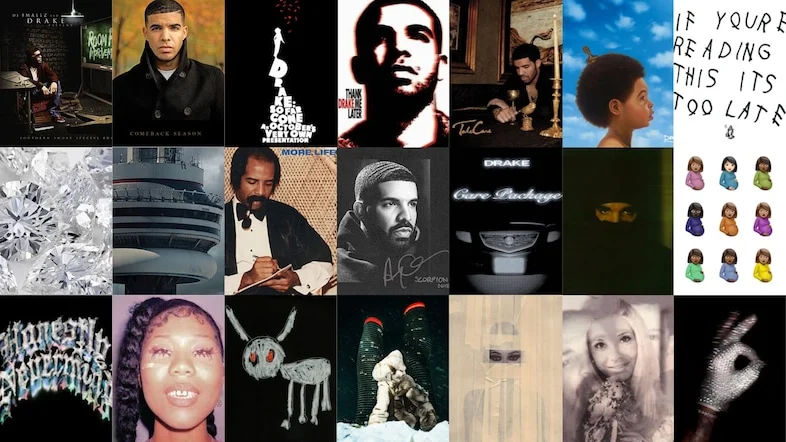
Drake, born Aubrey Graham, has undeniably produced some of the 21st century’s most defining anthems. Tracks like "God’s Plan," "Started from the Bottom," "Headlines," "One Dance," "Hotline Bling," and "Passionfruit" have not only dominated airwaves and streaming platforms but have also shaped cultural moments. Yet, the sheer volume of his output, often characterized by albums featuring dozens of tracks, presents a challenge to consistent quality, leading to a critical discourse around the artist’s editorial judgment. This analysis delves into Drake’s full body of work, from his formative mixtapes to his most recent—and even hypothetically future—releases, examining their individual merits, commercial performance, critical reception, and lasting cultural impact.
The Genesis: Early Mixtapes and the Road to Mainstream Acclaim
Drake’s journey into the music industry began far from the global superstardom he now commands. His initial forays into hip-hop showcased a raw talent still finding its voice, often drawing from established sounds while hinting at the genre-bending artist he would become.
21. ROOM FOR IMPROVEMENT (2006)
Drake’s 2006 mixtape debut, Room For Improvement, serves as a stark reminder of his humble beginnings. Released while he was still primarily known for his role as Jimmy Brooks on the Canadian teen drama Degrassi: The Next Generation, this project is a sonic artifact of its time, yet paradoxically, feels dated even for 2006. The production, featuring contributions from Texas’s DJ Smallz, is often hampered by poor mixing and distracting narration. While it offers a glimpse into Drake’s early fascination with Southern hip-hop, a stylistic thread that would weave through the first half of his career, its overall execution makes it a challenging listen for contemporary audiences. Its title, in retrospect, perfectly encapsulates its standing as a foundational but underdeveloped work.
20. COMEBACK SEASON (2007)
Following his debut, Comeback Season (2007) marked a slight, but noticeable, step forward. Despite its title, suggesting a return to form, the project predates Drake’s mainstream breakthrough. It is, however, the first of his releases to offer genuinely listenable material. This mixtape finds Drake honing his lyrical skills, delivering "lyrical miracle"-style verses over a collection of pre-existing instrumentals from revered producers like 9th Wonder, J Dilla, and Kanye West. While a significant departure from the polished sound that would later define him, Comeback Season stands as a respectable hip-hop mixtape in its own right, showcasing a nascent artist with burgeoning potential.
19. THANK ME LATER (2010)
Drake’s official studio album debut, Thank Me Later, arrived with significant anticipation following the success of So Far Gone. Released in 2010, it was poised to be a pop-crossover phenomenon but largely missed the mark on delivering era-defining mainstream hits. Instead, it leaned into a more introspective, "hipster rap" aesthetic, characterized by lines that reflected a nascent artist grappling with fame. Influenced by the emotional vulnerability of Kanye West’s 808s & Heartbreak and Kid Cudi’s Man On The Moon, tracks like "Find Your Love" and "Over" explored themes of love and newfound celebrity. While not as universally acclaimed as his later works, Thank Me Later remains a valuable record for its raw honesty and its position as a stepping stone to his signature sound. It debuted at number one on the Billboard 200, selling 447,000 copies in its first week, signaling his commercial arrival despite mixed critical reviews regarding its perceived lack of focus.
The Breakthrough Era: Defining a Generation
The late 2000s and early 2010s saw Drake solidify his unique blend of rapping and singing, carving out a distinct lane that would soon make him one of the most influential artists globally.
18. SO FAR GONE (2009)
Often regarded as Drake’s most underrated project, So Far Gone (2009) was a pivotal moment in his career and the evolution of mixtapes. Despite its somewhat uninspired B-movie artwork, the mixtape’s confessional songwriting was groundbreaking, drawing comparisons to the emotional depth found in Kanye West’s 808s & Heartbreak released the previous year. Tracks like "The Calm" offered unprecedented insights into Drake’s turbulent home life and his relentless ambition. This era presented a Drake who questioned the value of wealth and fame if it meant isolation, a stark contrast to the more materialistic themes that would later emerge. So Far Gone blurred the lines between mixtape and album, contributing to the shift in how the industry and audiences perceived these projects – from casual collections to serious bodies of work. It peaked at number 6 on the Billboard 200, a remarkable achievement for a commercially released mixtape.
17. TAKE CARE (2011)
Widely considered Drake’s magnum opus, Take Care (2011) represents a quantum leap in his artistic development and remains a high watermark in his discography. The album masterfully blends woozy, atmospheric hip-hop with melancholic R&B, creating a sound that was both innovative and deeply resonant. It featured a star-studded roster of collaborators, including Rihanna, The Weeknd, and Kendrick Lamar, each delivering career-defining performances. "Headlines" and "Marvins Room" became instant classics, defining the emotional landscape of early 2010s hip-hop. The album’s cultural impact was immense, even popularizing the ubiquitous phrase "YOLO" (You Only Live Once). Its influence extends into contemporary music, with artists like fakemink crediting "Headlines" for inspiring foundational drum patterns in the UK Ug rap scene. Take Care debuted at number one on the Billboard 200, selling 631,000 copies in its first week, and earned Drake his first Grammy Award for Best Rap Album.
16. NOTHING WAS THE SAME (2013)
Nothing Was The Same (2013) stands as a landmark, marking the last Drake album before his continuous stylistic reinvention in pursuit of sustained relevance. It captured Drake at a point where his material ambitions and lyrical prowess felt genuinely compelling. Tracks such as "Started From The Bottom," "Hold On, We’re Going Home" (a collaboration with Majid Jordan, recognized as one of the finest ballads of the 21st century), and "Pound Cake" showcased a confident artist at the peak of his early powers. The album’s commercial success was significant, debuting at number one on the Billboard 200 and solidifying Drake’s status as a dominant force in music. Critically, it was praised for its cohesion and its continued exploration of themes of fame, wealth, and relationships, maintaining a balance that would become harder to achieve in later, more expansive projects.
The Era of Dominance: Trap, Global Sounds, and Commercial Zenith
Mid-decade, Drake cemented his status as a global pop culture icon, experimenting with new sounds and expanding his reach across genres and continents, often through strategic collaborations.
15. IF YOU’RE READING THIS IT’S TOO LATE (2015)
If You’re Reading This It’s Too Late (2015) marked the decisive arrival of "trap Drake," a significant shift after years of drawing inspiration from Houston’s Southern hip-hop scene. This project showcased some of Drake’s most potent rapping, particularly on tracks like "Legend," "Energy," and "6 God," the latter featuring an iconic instrumental sampling Donkey Kong Country 2: Diddy Kong’s Quest. The mixtape’s unannounced release created a frenzy, further solidifying the trend of artists dropping full projects with minimal lead time. It also played a crucial role in redefining mixtapes as serious, commercially viable bodies of work, rather than just informal collections. IYRTITL debuted at number one on the Billboard 200, underscoring its commercial power despite its mixtape designation.
14. WHAT A TIME TO BE ALIVE (2015)
Drake’s first major collaborative album, What A Time To Be Alive (2015), saw him team up with Atlanta’s Future, further entrenching his foray into trap music. This project was instrumental in catapulting producer Metro Boomin to mainstream recognition. While Future often outshined Drake on individual tracks, the album as a whole was a landmark trap release. Its lead single, "Jumpman," became an inescapable anthem, defining a moment in the genre. The album’s success, debuting at number one on the Billboard 200, highlighted Drake’s ability to adapt and thrive within different subgenres, leveraging his platform to amplify other artists and sounds.
13. VIEWS (2016)
Views (2016) represented a commercial peak for Drake, featuring two of his most iconic global hits: "One Dance" (featuring Wizkid and Kyla) and "Hotline Bling." "One Dance" notably contributed to the mainstream Western introduction and popularization of Afrobeats, while "Hotline Bling" became a ubiquitous cultural phenomenon and meme generator. Despite these stratospheric highs, the album’s sprawling 18-track length initiated the critical conversation around "Drake Bloat." Many tracks outside the singles were perceived as lacking the same energy or distinctiveness, leading to a sense of monotony. The album’s softer, R&B-infused tracks, including the Rihanna-featuring "Too Good," often failed to captivate audiences as much as its dance-oriented counterparts. Views spent 13 non-consecutive weeks at number one on the Billboard 200 and became Drake’s first album to surpass one billion streams on Apple Music.
12. MORE LIFE (2017)
Presented as a "playlist" rather than a traditional album, More Life (2017) showcased Drake’s immersion in UK culture and global sounds. Following the success of "One Dance," he delved deeper into Afrobeats, dancehall, and UK grime, featuring artists like Skepta, Giggs, and Jorja Smith. This intentionally loose, "vibes-based" approach allowed for manic oscillations between R&B, trap, grime, and Afrobeats, reflecting Drake’s evolving identity as a global popstar rather than solely a rapper. Tracks like "Passionfruit" and "Get It Together" (featuring Black Coffee and Jorja Smith) demonstrated his pop sensibilities, becoming popular anthems. More Life debuted at number one on the Billboard 200, becoming his seventh consecutive chart-topping album, and further expanded his international appeal while bringing significant global attention to the UK grime scene.
11. SCORPION (2018)
Scorpion (2018) arrived amidst significant public scrutiny, following his highly publicized beef with Pusha T, which exposed personal details about his life. The double album, split between rap and R&B, showcased both career highs like "God’s Plan," "In My Feelings," "Nonstop," and "Nice For What," alongside critically panned tracks such as "Ratchet Happy Birthday." The album epitomized the "Drake Bloat" phenomenon, with its excessive length often overshadowing its strong moments. When distilled, Scorpion offered a moody, conflicted trap-R&B project, catching Drake "in his feelings" in ways that resonated. It debuted at number one on the Billboard 200, breaking streaming records, but its overall critical reception was mixed, with many arguing that a more concise tracklist would have elevated its standing significantly.
The Later Years: Experimentation, Discourse, and Sustained Output
In recent years, Drake has continued his prolific output, navigating evolving hip-hop trends, personal controversies, and an increasingly vocal critical landscape, sometimes with mixed results.
10. CARE PACKAGE (2019)
Care Package (2019) is a compilation album, collecting previously unreleased tracks and singles from 2010 to 2016. While it offered fans a convenient collection of sought-after songs, its nature as a compilation rather than new material placed it lower in his discography rankings. It served primarily as a filler project, lacking the thematic cohesion or artistic ambition of his studio albums. Despite this, it debuted at number one on the Billboard 200, demonstrating the enduring demand for Drake’s music, even for archival releases.
9. DARK LANE DEMO TAPES (2020)
Released during the early stages of the COVID-19 pandemic, Dark Lane Demo Tapes (2020) showcased Drake’s continued experimentation. This mixtape notably departed from his staple producers 40 and Boi-1da, venturing into rage and lo-fi hip-hop sounds. While some critics found his "Toosie Sliding" persona and extensive code-switching across different regional slangs (Florida, New York, London) to be "insufferably cringe," the project did offer moments of undeniable catchiness. "Toosie Slide" became a TikTok sensation, proving Drake’s continued ability to create viral moments. DLDT debuted at number two on the Billboard 200, highlighting its commercial strength as a non-album project.
8. CERTIFIED LOVERBOY (2021)
Certified Loverboy (2021) arrived as a highly anticipated album, embracing a "Marmite" reception—some loved its self-aware, meme-driven persona, while others criticized its perceived self-indulgence and vacuousness. The album’s kitschy "Previously on…" narration and its caricature of Drake’s womanizing image leaned into existing meme culture. Sonically, it acted as a microcosm of modern Drake, featuring a blend of hip-hop-R&B anthems interspersed with ventures into rage and Afrobeats. However, like many of his post-Views projects, its substantial length contributed to issues of replayability and perceived bloat, despite its massive commercial success, debuting at number one on the Billboard 200 and breaking streaming records.
7. HONESTLY, NEVERMIND (2022)
Honestly, Nevermind (2022) marked a refreshing and unexpected stylistic pivot for Drake, largely eschewing his signature rap and R&B for a focus on house and Baltimore club music. As one of his rare solo albums under an hour in length, and featuring some of the most distinctive production in his discography (with only one feature), it offered a significant departure from his usual sound. The album’s lead single, "Sticky," showcased this new direction, receiving both praise for its innovation and criticism for its stark contrast to fan expectations. Despite the polarizing reception, Honestly, Nevermind debuted at number one on the Billboard 200, demonstrating Drake’s willingness to experiment and his audience’s readiness to follow.
6. HER LOSS (2022)
A collaborative effort with 21 Savage, Her Loss (2022) saw Drake adopt a more aggressive, almost sidekick role to 21 Savage’s monotone rap delivery. While the album benefited from stellar production by Atlanta legend Metro Boomin and Lil Yachty, it suffered from repetition and, more significantly, controversy. Drake’s lyrical jabs, particularly on "Circo Loco" which seemed to reference Megan Thee Stallion’s shooting, drew widespread condemnation. This project also coincided with a perceived "far-right backsliding" in Drake’s public image, including alignments with figures like streamer Adin Ross. Despite the controversies, Her Loss debuted at number one on the Billboard 200, highlighting the commercial power of the collaboration.
5. FOR ALL THE DOGS (2023)
For All The Dogs (2023) continued Drake’s trend of lengthy albums, leading to questions about his lyrical inspiration. A sprawling 64-bar-plus verse on the SZA collaboration "Slime You Out" exemplified a perceived struggle for fresh material. The album also garnered attention for the inclusion of a verse from Drake’s then-five-year-old son, Adonis, on a track that controversially discussed violence. While offering glimpses of Drake’s signature style, the album’s overall reception was mixed, with many critics pointing to its excessive length and thematic inconsistencies as hindering its impact. It debuted at number one on the Billboard 200, maintaining his impressive chart record.
The Speculative Future: A Glimpse into Hypothetical Releases
Within the context of the intense listening experiment, the original author delves into albums hypothetically released in the near future, offering a speculative look at Drake’s evolving sound and ongoing challenges. These projects, imagined as part of the author’s concentrated listening experience, highlight persistent themes in Drake’s career.
4. $OME $EXY $ONGS 4 U (2025)
This hypothetical 2025 release is described as 77 minutes of Drake-R&B, emerging after a fictional rap beef loss to Kendrick Lamar. The project is characterized by moments of cringeworthy lyrical attempts, notably Drake’s Spanish rapping on "Meet Your Padre." While largely criticized for its length and generic nature, the track "Nokia" is singled out for its catchy, Nokia ringtone-sampling groove, suggesting a rare moment of creative spark amidst the bloat.
3. HABIBTI (2026)
Another hypothetical 2026 release, Habibti, is presented as a collection of generic Drake-R&B throwaways, notable for its controversial appropriation of Arabic language and its perceived contribution to an "Inshallah epidemic." Despite being Drake’s shortest hypothetical record, it reportedly drones on, making it as unlistenable as his earliest work. The inclusion of a feature from Qendresa is noted as a cool, albeit insufficient, redeeming quality.
2. MAID OF HONOUR (2026)
This speculative 2026 project is framed as an album of club demos, erratically shifting between Jersey Club, afrobeats, and deconstructed dancehall reminiscent of Popcaan. While described as light-hearted fun that encourages listeners to "switch your brain off," it features moments like Sexyy Redd’s interpolation of the Cha-Cha Slide. The album’s standout is a feature from the hitherto-undiscovered rapper Iconic Savvy, suggesting Drake’s continued role in spotlighting new talent, even in his hypothetical future projects.
1. ICEMAN (2026)
In stark contrast to its hypothetical counterparts, Iceman (2026) is presented as a genuinely strong Drake album. The production is lauded as excellent, delivering a diverse sonic palette ranging from lo-fi hip-hop and rage to West Coast rap (courtesy of P-Lo) and UK Ug-style distortion (courtesy of Wraith9), with minimal Drake-R&B. Crucially, this hypothetical album finds Drake with something meaningful to say, reflecting on a period of crisis following a fictional feud with Kendrick Lamar and, paradoxically, his increasing inability to self-reflect. Iceman is posited as a project that, in time, listeners could potentially separate from the "dead weights" of its accompanying releases.
The "Drake Stimulus Package" and Broader Implications
Beyond his album rankings, Drake’s influence extends significantly through what has been colloquially termed the "Drake Stimulus Package." This phenomenon refers to his consistent track record of featuring budding artists on his projects, propelling them to massive audiences and often lucrative careers. Just recently, hypothetically, Molly Santana saw her listenership skyrocket from 500,000 to 9.7 million thanks to a feature on Iceman, reportedly earning $500,000 for the collaboration. Other notable beneficiaries of this "Drake-a-Wish foundation" include Jorja Smith, Wizkid, The Weeknd, and 21 Savage, among dozens more whose careers received a significant boost from his co-sign.
While critics occasionally frame these collaborations as a form of "culture-vulturing," where Drake leverages diverse artists and sounds to maintain his relevance, an alternative perspective views him as a "hip-hop Willy Wonka." In this analogy, he offers young talents a "golden ticket" to the OVO Factory, sharing a slice of his substantial wealth and platform. This role underscores his unparalleled power within the industry, capable of shaping careers and influencing musical trends simply by association.
Concluding Analysis: Legacy and the Path Forward
Drake’s discography, sprawling across two decades, presents a complex narrative of artistic evolution, commercial dominance, and ongoing critical debate. From the raw promise of his early mixtapes to the global pop ubiquity of his mid-career hits and the genre-fluid experimentation of his later projects, Drake has consistently pushed boundaries while simultaneously grappling with the pitfalls of prolific output. The central tension in his legacy remains the balance between undeniable hits and the perceived "bloating" that often accompanies his albums.
His enduring presence, despite fluctuations in critical reception and personal controversies, is a testament to his singular ability to connect with a massive global audience. The sheer volume of his work, combined with his strategic collaborations, has made him an indelible force in contemporary music. If Drake can rediscover the editorial precision and introspection evident in early masterpieces like Take Care, and apply it to his future projects, he stands a chance of solidifying his legacy not just as a hitmaker, but as an artist whose entire body of work commands consistent respect. The time for such reflection and refinement, as the hypothetical future suggests, is still within his grasp.