








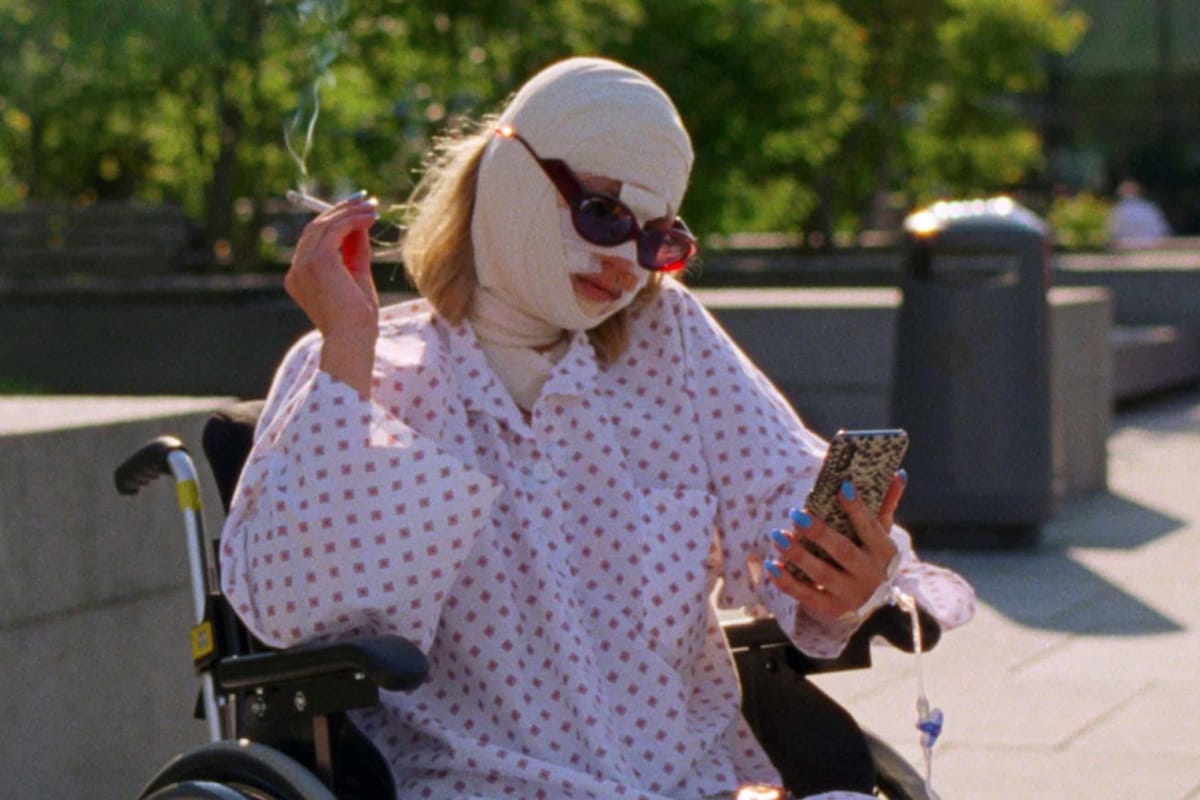
Sarah Wang’s debut novel, New Skin, plunges readers into a contemporary narrative that critically examines the complex interplay of beauty ideals, intergenerational immigrant experiences, and the pervasive influence of reality television. The story opens in a stark hospital waiting room, a setting that immediately grounds the reader in the consequences of protagonist Fanny Feng’s relentless pursuit of cosmetic alteration. Here, Fanny, a first-generation immigrant from Taiwan, undergoes leech therapy on her "botched nose," a vivid and unsettling image that underscores the extremes to which she has gone. She is accompanied by her daughter, Linli, the novel’s primary voice, who has been compelled to return to Los Angeles after years of estrangement due triggered by her mother’s escalating medical complications from repeated plastic surgeries.
Author Sarah Wang deftly paints a portrait of Fanny’s face as a "battleground of warring ideals," a canvas perpetually altered by "the differing aesthetic goals of myriad doctors." Linli observes her mother’s face, "entirely immobile from years of Botox injections," a poignant symbol of a landscape "constantly shifting" yet paradoxically frozen. This initial scene sets the tone for a novel that uses the highly visible and often controversial world of cosmetic enhancement as a lens to explore deeper issues of identity, agency, and the elusive nature of the American Dream.
The Descent into Cosmetic Addiction and Its Ripple Effects
Fanny Feng’s addiction to cosmetic procedures is not merely a superficial pursuit of vanity; it is depicted as a profound and years-long obsession that has led her deep into Los Angeles’s unregulated underground beauty industry. Here, she has sought and received illegal treatments of various kinds, further compounding the risks and disfigurement. These extreme measures have not only reshaped Fanny’s physical appearance to the point of being "beyond recognition" but have also profoundly damaged her relationship with Linli. The daughter grapples with a fundamental inability to comprehend her mother’s consuming fixation on image, leading to a chasm of misunderstanding and pain between them.
The narrative takes a dramatic turn when Fanny secures a coveted spot on America’s Beauty Extreme, a fictional reality television program designed to showcase individuals suffering from botched plastic surgeries, with the ultimate prize being reconstructive surgery. This opportunity initially appears to be a lifeline, a chance for Fanny to rectify the physical and perhaps emotional "wrongs" of her past. However, as the story unfolds, it becomes increasingly evident that the reality show, much like many of Fanny’s elective treatments, is a deceptive facade, presenting itself as one thing while delivering something entirely different—and far more complex—than Fanny had anticipated.
Beyond the Surface: A Deeper Societal Critique
While New Skin is replete with references to exotic beauty treatments like "stem cell placenta injections" and "infrared bionic laser pulsing," Sarah Wang’s novel transcends a simplistic critique of the wellness industry or mere vanity. Wang’s true preoccupation lies in leveraging beauty and its extreme manifestations as a powerful vehicle for exploring profound themes: individual agency, the construction of identity, and the often-harsh realities inherent in the pursuit of the American Dream. The novel positions itself not as a superficial examination of cosmetic trends, but as a robust inquiry into the societal pressures and personal motivations that drive individuals to seek extreme transformations.
Authorial Intent: Sarah Wang on Inspiration and Context
In a recent interview, Sarah Wang shed light on the genesis of her debut novel, describing its core inspiration as deeply rooted in her Los Angeles upbringing. "I grew up in LA, and I think plastic surgery was in the air in some way," Wang remarked, acknowledging the pervasive, though evolving, presence of cosmetic procedures in the region. She noted that during her youth, plastic surgery was largely confined to Hollywood circles and an older demographic, characterized by a "classic, Joan Rivers pulled face." However, for Wang, the novel’s essence extends beyond the mere physical. She explains that New Skin is fundamentally "about the idea of what happens when somebody who you’re closest to in the world betrays you in some way." The surface of the face, therefore, becomes a potent metaphor for the "most familiar face in the world becoming unrecognisable," prompting existential questions about how one reconciles such a profound sense of betrayal, particularly from a parent, from an early age.
The Reality of Fictional Extremes: Researching the Beauty Landscape
Wang’s depiction of arcane and futuristic beauty treatments, from "salmon skin DNA treatment" to various sci-fi sounding injections, raises questions about the line between reality and fiction. The author confirms that while her world is not directly involved in these procedures, extensive research was undertaken. "It’s pretty easy nowadays because there’s so many (coming from Korea, it seems) of all these innovative, new technologies and treatments," Wang noted, referencing a friend’s experience with a "salmon skin DNA treatment" in Korea as an initial spark for her research.
Despite this factual grounding, Wang emphasizes that much of the novel’s specific procedures are fictionalized, with names changed to avoid direct replication of real-world practices. This approach allowed her to maintain creative license while still reflecting the "sci-fi and futuristic and unbelievable" nature of many contemporary and emerging treatments. This inherent absurdity, Wang suggests, perfectly aligns with the "absurdist nature of my book," allowing her to explore extreme themes without being strictly bound by journalistic accuracy for every procedure.
The Mother-Daughter Bond: A Complex Tapestry of Love and Pain
A central pillar of New Skin is the intricate mother-daughter relationship between Fanny and Linli. Wang, having grown up with a single mother, brings a deeply personal understanding to this dynamic. She describes it as an "intensely close, and also intensely too close relationship." This enmeshment, while often depicted as painful and potentially restrictive, preventing the characters from "expanding their world beyond the confines of this intense house," is also portrayed with a nuanced appreciation for its inherent beauty and uniqueness. Wang hopes readers will perceive that despite the obvious struggles, there is a profound depth to their connection, characterized by how well they "know and love each other." This complex portrayal challenges simplistic notions of dysfunctional relationships, revealing the enduring, if complicated, bonds of family.
The American Dream Reimagined: Generational Shifts in Immigrant Aspirations
Beyond the personal dramas, New Skin serves as a powerful exploration of the immigrant experience, particularly the paradoxes embedded within the pursuit of the American Dream. Wang asserts that the book is, "above and beyond all, an immigrant story." She highlights that immigrant narratives are not monolithic, each carrying a distinct set of concerns and difficulties.
Fanny, as a first-generation immigrant, embodies a particular perspective where physical appearance and beauty are perceived as a form of "meritocracy." For her, and for other first-generation characters like Ami, the belief is that "If I look good, if I look a certain way, then I can achieve all these things." This perspective reflects a historical understanding of social mobility, where outward presentation could be seen as a key to acceptance and success in a new land. This often meant conforming to perceived Western beauty standards, sometimes to extreme degrees.
Linli, representing the second generation, holds a markedly different set of priorities. She "doesn’t really care about how she looks," instead valuing "purpose and education" above all else. Wang clarifies that her intention is not to declare one generational approach "right" or "wrong," but rather to illustrate the divergent concerns that arise from different lived experiences and historical contexts within immigrant families. This generational divide underscores the evolving nature of the American Dream itself, from a more tangible, image-driven pursuit to a more introspective quest for meaning and intellectual fulfillment.
Challenging "Good Girl" Narratives: The Power of Extremity
Wang deliberately gravitates towards writing about "extremes" as a conscious counter-narrative to prevalent "immigrant good girl narratives" in fiction and media. For too long, she argues, there has been an unspoken expectation for immigrant characters to "be good," to "behave," and to adhere to a path of quiet conformity as a prerequisite for success or acceptance. Wang, who has personally "rebelled against that in my own life," explicitly sought to subvert these expectations in New Skin.
Her characters are intentionally designed to be "ugly," "extreme," and "loud." This deliberate choice grants them the "agency to behave any way that anyone else does in fiction and in real life." By allowing her characters to make mistakes, to be flawed, and to defy conventional expectations, Wang challenges the notion that immigrants should be held to an exceptional standard of perfection. This is a powerful statement against the double standards often applied to marginalized communities, advocating for a universal right to human fallibility and the messy complexities of existence.
Reality TV: A Stage for Acceptance and Disobedience
The inclusion of reality television, specifically America’s Beauty Extreme, serves as another critical layer of "extremity" within the novel. Wang describes reality TV as the perfect arena to push her narrative boundaries. Instead of Fanny retreating in shame due to her disfigurement, the reality show offers an inverted path: "What if she not only went on TV to show her face but also, in that strange, surreal world of reality TV and performance, ironically finds community and some kind of acceptance through this extreme form?"
This narrative choice speaks to the paradoxical nature of reality television, where vulnerability and perceived flaws are often commodified, yet can also, unexpectedly, forge connections and foster a sense of belonging among participants and even viewers. It highlights the blurred lines between exploitation and empowerment, public spectacle and personal healing, that characterize much of modern media. The show becomes a crucible for Fanny’s journey, forcing her to confront her choices on a very public stage.
A Political Novel: Bearing Witness and Protesting Assimilation
Ultimately, Sarah Wang views New Skin as a deeply political novel, an act of "disobedience" and "protest." Drawing from her teaching philosophy, which emphasizes writing as an act of "bearing witness," Wang uses the seemingly sensational backdrop of reality TV and plastic surgery to illuminate a constellation of "deeper issues." These include the pressures of assimilation, the pervasive realities of poverty and debt, the emergence of non-nuclear family structures, and the profound human need for community and healing.
Wang’s ambition is clear: she wants readers to be drawn in by the "botched plastic surgery" but to "stay for all the other deeper issues." This invitation speaks to the novel’s capacity to transcend its immediate premise, transforming a story about physical alteration into a rich tapestry of social commentary. New Skin challenges readers to look beyond the surface, both of its characters and of contemporary society, to grapple with the complex forces that shape identity, belonging, and the enduring quest for self-acceptance in a world obsessed with outward appearances.
The novel’s timely release coincides with growing public discourse around beauty standards, the ethics of cosmetic procedures, and the psychological impact of social media and reality television on self-image. It adds a crucial voice to the ongoing conversation about the immigrant experience, particularly in how it intersects with the pressures to conform, succeed, and define oneself in a new cultural landscape. By presenting characters who defy easy categorization and embrace their own forms of "ugliness" and "extremity," Wang offers a refreshing and vital contribution to contemporary literature, asserting the right to imperfection and the power of fiction as a tool for political and social critique.