







The 79th annual Cannes Film Festival continued its high-profile slate of screenings this evening with the world premiere of La Vie D’Une Femme, also titled Teenage Sex and Death at Camp Miasma. Among the primary cast members in attendance was Hannah Einbinder, the Emmy-nominated actress and comedian, who arrived at the Palais des Festivals following a busy day of promotional obligations. Her appearance on the red carpet marked a significant moment in her burgeoning relationship with high-fashion houses, as she stepped out in a custom creation by the French luxury label Celine. The evening’s events followed an earlier afternoon photocall where Einbinder joined co-star Gillian Anderson to represent the film, a project that has generated substantial buzz within the industry for its unconventional narrative and stylistic choices.
The Evolution of the Day: From Photocall to Premiere
Hannah Einbinder’s day at the Cannes Film Festival was structured around two distinct public appearances, a standard itinerary for lead actors promoting a feature film. The day began with a formal photocall for Teenage Sex and Death at Camp Miasma, an event typically characterized by a more relaxed, "smart-casual" dress code compared to the evening’s black-tie requirements. For the afternoon session, Einbinder opted for a look by Alaïa, which was noted by fashion observers for its sharp tailoring and contemporary edge. This initial appearance set a high bar for the evening, as the transition from the daylight photocall to the nighttime premiere is often used by stylists to demonstrate a client’s range and the brand’s versatility.
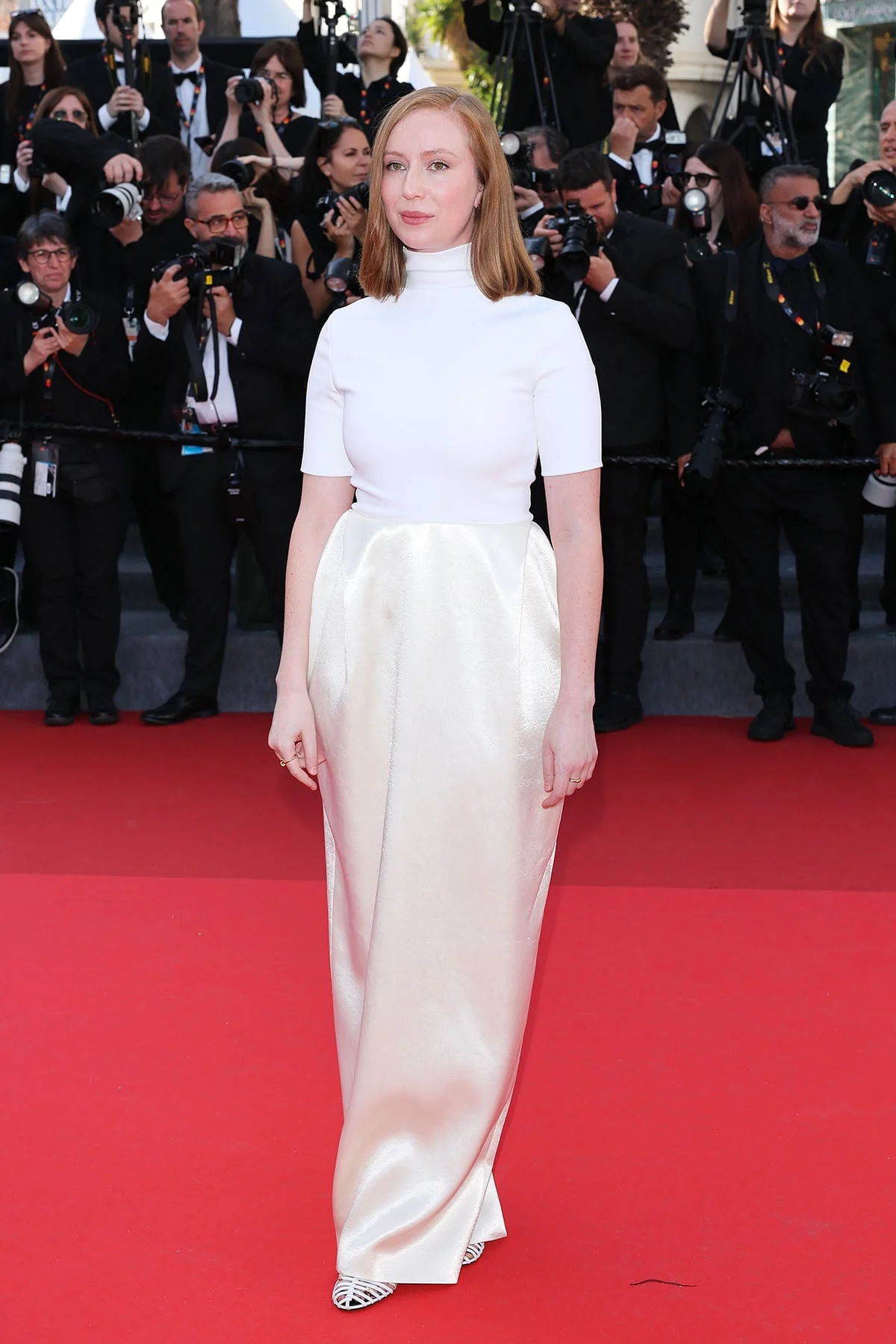
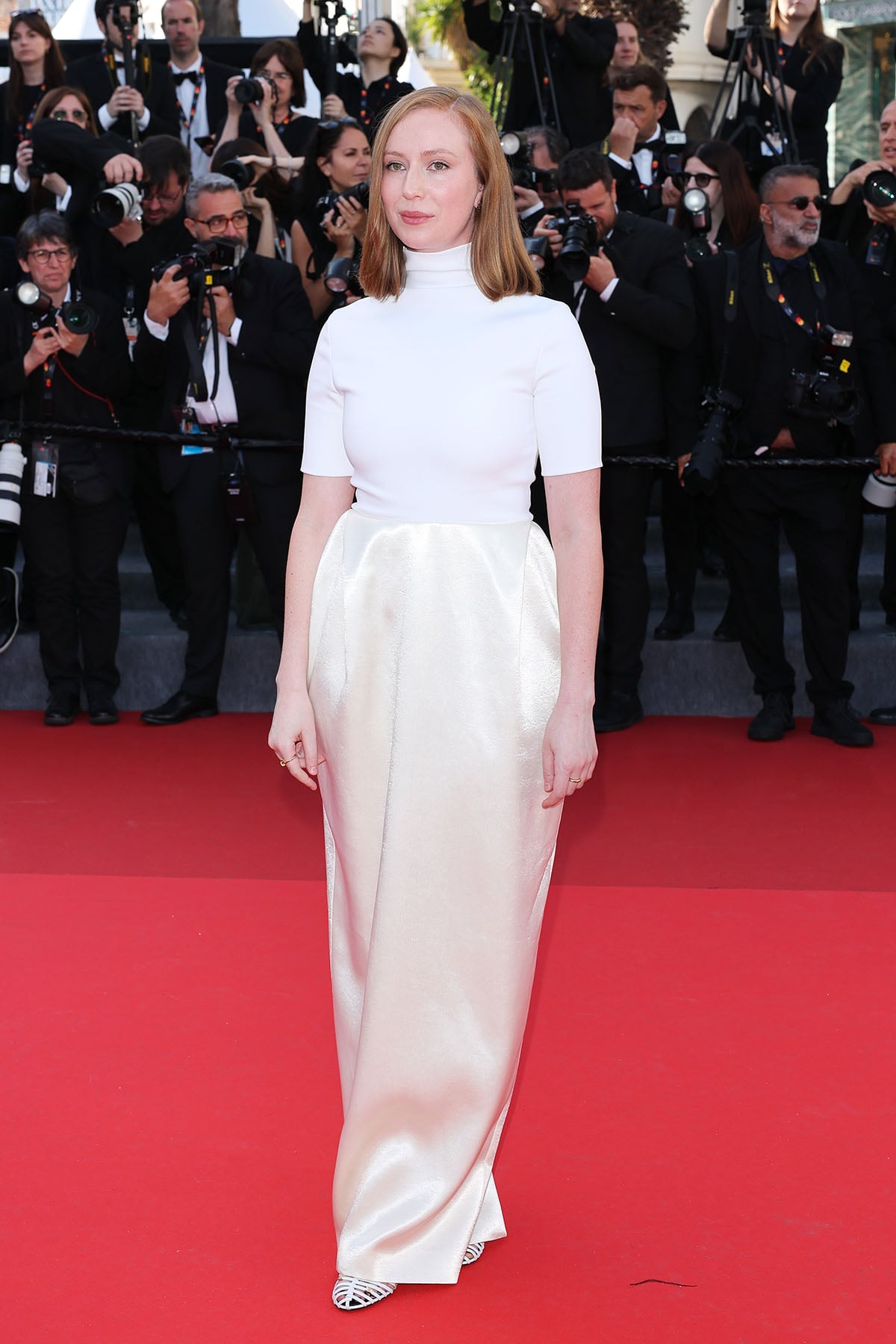
As the sun set over the Croisette, the atmosphere shifted toward the formal rigor of the Grand Théâtre Lumière. The evening premiere of a major competition or feature film at Cannes is governed by a strict protocol that has remained largely unchanged for decades. For women, this traditionally entails floor-length gowns and high heels, though modern interpretations have increasingly pushed the boundaries of these expectations. Einbinder’s choice for the evening—a custom white high-neck gown by Celine—was a direct response to this environment, though its execution sparked immediate discussion among fashion critics and industry analysts regarding its suitability for such a prestigious stage.
Technical Analysis of the Custom Celine Design
The gown, designed under the creative direction of Hedi Slimane for Celine, featured a minimalist aesthetic that prioritized clean lines and a monochromatic palette. The ensemble was composed of two primary elements: a fitted, high-neck bodice with short sleeves and a voluminous, high-waisted floor-length skirt. The choice of a stark white fabric was intended to provide a crisp, modern contrast to the traditional red carpet, a tactic often employed to ensure a garment stands out in high-contrast photography.
However, upon closer inspection, the technical execution of the garment drew scrutiny. In the realm of custom haute couture and high-end ready-to-wear, the primary objective is a flawless fit tailored to the wearer’s specific proportions. In Einbinder’s case, the silhouette appeared to suffer from misjudged proportions. The waistline of the skirt was positioned exceptionally high, which analysts suggest may have been a functional adjustment to compensate for an over-long hemline. This elevation of the waist altered the visual center of the look, creating a truncated appearance in the torso.
Furthermore, the choice of a jersey-style or high-stretch fabric for the top gave the look a degree of informality. While Celine is renowned for blending Parisian chic with rock-and-roll sensibilities and casual elements, the "T-shirt" aesthetic of the bodice was perceived by some as a departure from the "A-game" expectations typically reserved for a Cannes lead actress. The juxtaposition of a casual-leaning top with a formal ball skirt is a difficult balance to strike, and in this instance, the consensus among observers was that the polished finish expected of a custom Celine piece was not fully realized.
Historical Context and Design Influences
The silhouette debuted by Einbinder at the premiere was not entirely unprecedented in the annals of modern fashion. Industry experts immediately drew comparisons to the landmark Spring 2011 collection designed by Raf Simons for Jil Sander. That collection was famous for its "maximalist minimalism," which paired bright, neon-colored floor-length skirts with simple, often white, cotton T-shirts or tank tops. The Simons-era Jil Sander look redefined red carpet dressing by proving that casual silhouettes could be elevated through fabric quality and dramatic volume.
The Celine look worn by Einbinder appears to be a direct descendant of this aesthetic lineage. However, where Simons’ 2011 collection succeeded through the intentionality of its contrasts, the Celine interpretation faced challenges in its translation to a custom red-carpet gown. Earlier in the season, similar silhouettes from other designers had been seen on actresses such as Simone Ashley; however, those were often off-the-rack or modified runway pieces. Because Einbinder’s look was a custom commission, the expectations for precision in the "fit-and-flare" ratio were significantly higher. The failure to achieve a seamless integration between the top and the skirt highlighted the risks involved in bringing "elevated casual" to the most formal red carpet in the world.
The Role of the Stylist: Jamie Mizrahi’s Vision
The ensemble was curated by Jamie Mizrahi, a prominent stylist known for her work with A-list celebrities including Adele, Jennifer Lawrence, and Riley Keough. Mizrahi has built a reputation for creating looks that feel authentic to her clients’ personalities while maintaining a high standard of editorial sophistication. For Einbinder, who has rapidly transitioned from the stand-up comedy circuit to the forefront of prestige television and film, the collaboration with Mizrahi is a key component of her brand identity.
Mizrahi’s strategy for Einbinder at Cannes appeared to be one of understated elegance—a "quiet luxury" approach that avoided the heavy embellishments and sequins often seen at the festival. While the Alaïa look from the afternoon was widely praised for its alignment with Einbinder’s sharp, intellectual persona, the evening’s Celine choice was viewed as a rare misstep in an otherwise successful partnership. The decision to opt for a high-neck, modest silhouette was likely an attempt to project a sophisticated, demure image, but the technical issues with the skirt’s height and length overshadowed the stylistic intent.
The Broader Impact: Celine at Cannes
Celine, under the leadership of Hedi Slimane, has a storied history of delivering iconic moments at the Cannes Film Festival. The brand usually excels in creating slim-fitting, sequined, or sharply tailored looks that lean into a 1970s Parisian glamour. The departure from this signature style into a more voluminous, two-piece-adjacent gown represents an experimental phase for the house’s red-carpet division.
The reception of Einbinder’s gown serves as a case study in the importance of "occasion-appropriateness" in celebrity dressing. For a lead actress at a premiere, the red carpet is not just a photo opportunity but a marketing tool for the film itself. The visual narrative presented by the cast influences the film’s perceived prestige and "star power." While Einbinder’s talent is undisputed, the fashion choices made at Cannes are documented and archived as part of the festival’s historical record. Analysts noted that while the Celine gown might have been a strong contender for a daytime photocall or a less formal awards luncheon, it struggled to meet the monumental requirements of a Grand Théâtre Lumière premiere.
Chronology of the Event and Industry Reactions
The timeline of the evening began at approximately 6:30 PM local time when the first cars arrived at the red carpet. Einbinder arrived shortly after her co-stars, navigating the throng of international photographers. Social media and fashion blogs began analyzing the look within minutes of the first images being transmitted by wire services like Getty Images.
The reaction from the fashion community was mixed. On one hand, some praised the bravery of choosing a minimalist, non-traditional gown in an environment often saturated with "naked dresses" and heavy embroidery. On the other hand, the critique of the garment’s proportions was nearly universal among professional reviewers. Comparisons to the earlier Alaïa look were frequent, with many suggesting that the daytime outfit possessed the "premiere energy" that the evening look lacked.
Implications for Future Red Carpet Appearances
As Hannah Einbinder continues her ascent in Hollywood, her fashion choices will remain under intense scrutiny. The Cannes Film Festival is often considered the "Olympics of Fashion," where the stakes are at their highest. This experience with Celine is likely to inform future collaborations, emphasizing the need for rigorous tailoring and a clearer distinction between "casual-chic" and "gala-formal."
The film Teenage Sex and Death at Camp Miasma, meanwhile, continues its festival run with scheduled screenings in various international markets. The conversation surrounding the film remains robust, bolstered by the strong performances of its cast. While the fashion discourse provides a secondary layer of engagement for the public, the primary focus remains on the artistic merits of the production.
In conclusion, the debut of the custom Celine gown by Hannah Einbinder at the Cannes Film Festival serves as a reminder of the complexities involved in high-stakes red carpet dressing. It highlights the delicate balance between brand identity, stylist vision, and the physical realities of garment construction. As the festival concludes, this moment will be analyzed as part of the broader trend toward minimalist red carpet fashion, serving as both an inspiration and a cautionary tale for future custom designs.