









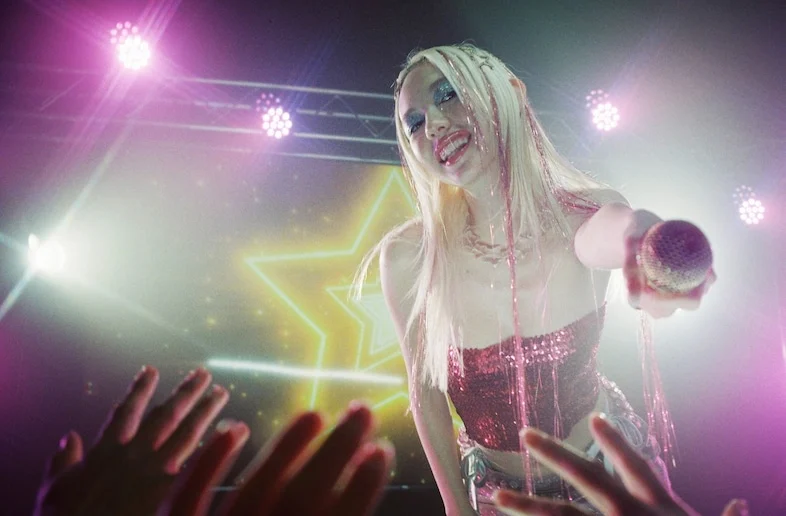
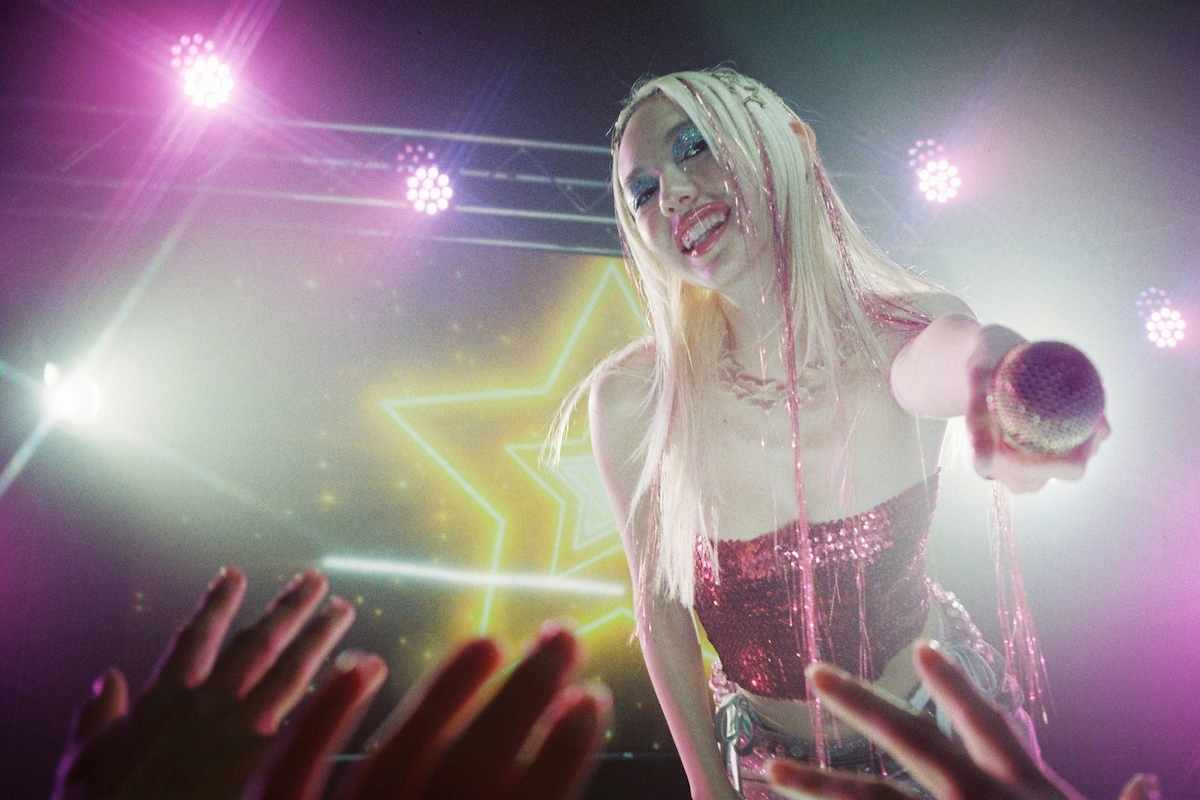
Celebrated photographer and director Petra Collins, renowned for her intimate portraits of pop culture’s biggest names and her distinctive music video collaborations with artists like Olivia Rodrigo, Carly Rae Jepsen, and Cardi B, has unveiled her latest artistic endeavor: STAR. Published by Rizzoli, this ambitious photo book delves into the complex, often chaotic world of pop celebrity and its symbiotic relationship with fandom, offering a poignant, allegorical commentary on the ephemeral nature of modern stardom. Through a meticulously crafted narrative centered on two fictional musical acts – the solo artist Ashley and the teen idol group Siren8 – Collins reimagines the archetypal journey of ascent, decline, and subsequent mystique that defines many public figures in the entertainment industry.
Collins’s work on STAR is not merely an artistic exploration but a culmination of her unique vantage point, having spent years at the vanguard of pop culture, capturing its glittery facade and underlying tensions. Her intimate access to superstars has provided an unparalleled education in the mechanics of fame, its manufactured glamour, and the intense scrutiny that accompanies it. This firsthand experience fuels STAR, allowing it to resonate with an authenticity born from observation, even as it navigates a fictional landscape. The book’s release marks a significant moment in Collins’s evolving career, signaling a return to her foundational artistic instincts while engaging with the profound cultural shifts that have redefined celebrity in the 21st century.
Petra Collins: A Career Forged in Pop Culture’s Lens
Petra Collins emerged as a distinctive voice in photography and visual arts in the early 2010s, quickly establishing a signature aesthetic characterized by its dreamy, hyper-feminine, and often melancholic sensibility. Born in Toronto, Canada, Collins’s early work garnered attention for its raw, unfiltered portrayal of youth, female adolescence, and burgeoning sexuality, often imbued with a nostalgic, vintage filter. Her photographs, frequently self-portraits or images of her close-knit circle of friends, resonated deeply with a generation navigating identity in an increasingly digital world. This "soft grunge" or "neo-romantic" style became instantly recognizable, influencing countless visual artists and fashion campaigns.
Her career trajectory rapidly accelerated, moving from independent zines and online platforms to high-profile collaborations with major fashion houses like Gucci and leading publications such as Vogue and Dazed. Collins transitioned seamlessly into directing, lending her unique visual language to music videos that became cultural touchstones. Her collaborations with artists like Selena Gomez, Lil Yachty, and particularly Olivia Rodrigo (for the critically acclaimed "Good 4 U" and "Brutal" videos) cemented her status as a director capable of translating contemporary anxieties and aesthetics into compelling visual narratives. Her directorial style often blends surrealism with a grounded emotionality, echoing the dreamlike quality of her still photography. This extensive background, observing the inner workings of the music industry and the carefully constructed personas of its stars, forms the bedrock of STAR.
Deconstructing Stardom: The Genesis of STAR
STAR is more than a collection of photographs; it’s a multi-layered narrative presented through a collage of visual and textual elements. The book positions the reader within the gaze of fans and, more unsettlingly, stalkers, offering a fragmented yet immersive experience of celebrity obsession. Interspersed with striking images of performances and promotional shoots are candid, often voyeuristic, elements such as handwritten letters, snippets of conversations, and intimate diary entries. This mosaic approach intentionally blurs the lines between reality and fiction, private and public, inviting the reader to piece together the story of Ashley and Siren8, and by extension, the broader narrative of fame.
The book’s aesthetic is a deliberate and potent evocation of the early 2000s, a period Collins describes as formative. This era, predating the ubiquitous smartphone and the hyper-curated social media presence, holds a particular nostalgia for many. Collins crystallizes this period through specific visual cues: glittery eyeshadow, camisoles, bows, glossy lips, the tangible presence of DVDs, and the personalized charm of corkboard collages. These elements are not mere stylistic choices but narrative devices, transporting the reader to a time when fan engagement, while fervent, operated through different channels. The stylistic parallels drawn to cinematic works like Sofia Coppola’s The Virgin Suicides, HBO’s controversial series The Idol, and the satirical musical comedy Girls5eva (albeit "sans raunchy jokes," as Collins notes) highlight the cultural touchstones that inform STAR‘s exploration of feminine vulnerability, exploitation, and the often-comedic absurdities of pop stardom. However, unlike The Idol‘s explicit sensationalism or Girls5eva‘s comedic lens, STAR aims for a more nuanced, allegorical examination of the mechanisms of fame.
Crucially, STAR is less concerned with the intricacies of the music industry itself and more with the overarching "clout and craze of fame." It functions as an allegory for the "throwaway nature of pop cultural figures," a commentary on the rapid consumption and equally rapid discarding of public idols in a society perpetually hungry for the next sensation. This theme resonates strongly in an era where social media accelerates both rise and fall, making celebrity more accessible yet often more precarious. To further immerse the audience in its early 2000s thematic, Collins collaborated with her partner to create an accompanying soundtrack, meticulously "scoring" the book "page-for-page, like scoring a movie." In a charmingly anachronistic move, this audio companion is available on CD, reinforcing the nostalgic journey back to a pre-streaming era of music consumption.
The Artist’s Evolution: From Instinct to Intention
During a recent Zoom interview from her Los Angeles home, Petra Collins, clutching a distinctive Roswell mug, articulated the philosophical underpinnings of her artistic journey and how they culminated in STAR. She spoke of an arc that saw her return to the "most instinctual and most childlike process" of her early career. "When you start, it’s your most instinctual and most childlike process, because you’re just learning," she reflected. This early freedom, characterized by shooting horizontally "like frames from a movie," was momentarily sidelined as she adapted to the demands of the fashion industry, which often necessitated a vertical frame. For STAR, the deliberate decision to revert to horizontal framing was paramount, designed to make the book feel like "flipping through stills of film." This seemingly simple technical choice carries profound narrative weight, shaping the viewer’s experience and reinforcing the cinematic ambition of the project.
This return to foundational principles extended to the production of STAR. Collins sought to emulate the lean, intimate style of her beginnings, where she worked without a large crew, "placing my subjects into environments and just capturing them." The production mirrored that of an "indie film," with no elaborate sets constructed, and all scenes shot entirely on location. Her directorial approach with the cast was similarly hands-off: "I just gave them a little bit of an idea of the story, and then let them go." This methodology aligns with her self-perception as a "documentarian, but documenting the world that I’ve created," a statement that perfectly encapsulates her unique blend of staged artistry and perceived authenticity. It speaks to her ability to construct intricate narratives and then capture them with an almost vérité sensibility, allowing for an organic unfolding within her designed parameters.
The Perils of Proximity: Fame, Fandom, and Isolation
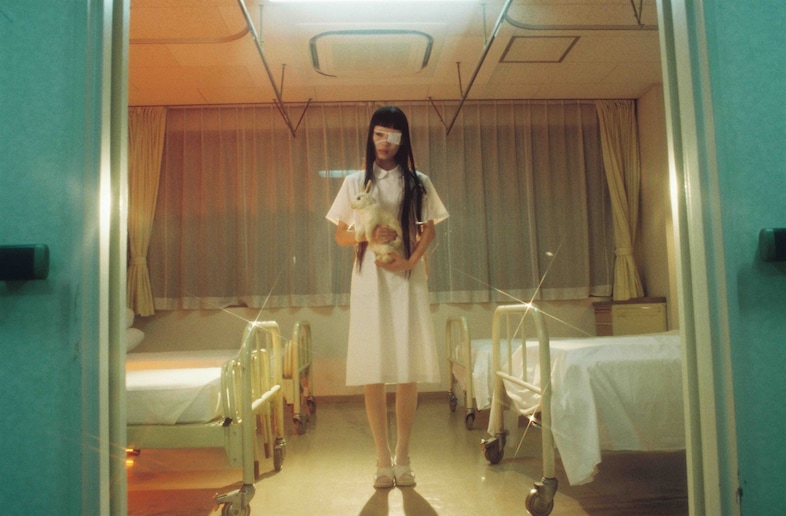
STAR‘s allegorical core delves deeply into the psychological impact of fame, both on the celebrated and their devotees. Collins describes the camera’s point of view in the book as "God-like, where it could be anybody telling this story: the pop star, a fan, a stalker." This omniscient, yet ambiguous, perspective underscores the blurred boundaries that characterize modern celebrity culture. While Collins asserts there were "no specific references to people," the narrative is undeniably shaped by her observations of how fans interact with their idols and how these "parasocial aspects" profoundly influence a public figure’s relationship with the world.
The concept of parasocial relationships – one-sided emotional bonds formed between media consumers and public figures – is central to STAR. Collins highlights the "mental journey that one can spin out on" when these relationships intensify, leading to obsession. She vividly recalls growing up in "tabloid culture," a phenomenon that, while intrusive, pales in comparison to the current landscape. "Now, it’s become even worse, where there’s no privacy and no boundary with fans," she laments, referring to the era of social media where direct, often unfiltered, access blurs the lines of appropriate engagement. This erosion of privacy contributes to the pervasive sense of isolation experienced by those in the spotlight, a theme STAR explores with palpable empathy. The book’s ultimate focus is not on individual personalities but on "that experience of what fame can do," portraying it as a powerful, often destructive force that consumes and reshapes individuals. This exploration aligns with a growing public discourse around the mental health toll of celebrity, amplified by documentaries and personal accounts from figures like Britney Spears and Billie Eilish.
Crafting Authenticity: Collaborating with Icons
Having photographed a multitude of high-profile individuals, Collins offers unique insights into the delicate art of portraying those "who arrive with pre-existing cultural power." She acknowledges the inherent "false narratives" that often precede a celebrity, and the immense "power behind the camera that you can dictate the narrative of this person." Her approach, however, is one of collaborative respect. "I’m very lucky that I’m able to have a conversation before and ask what they’re looking to emote, or what they’re looking to show the world," she explains. This dialogue-driven method transforms the photoshoot from a potentially exploitative encounter into a shared creative endeavor.
A standout example of this collaborative ethos is her acclaimed 2022 shoot with Nicole Kidman for Time magazine. Collins recounts an initial vision that pivoted when Kidman expressed discomfort, illustrating the importance of artist-subject trust. "I obviously had been a fan of hers for years – few people take my breath away that I am nervous to be around. But she just had such an amazing aura and had a strong idea of how she wanted to be photographed, and we were able to do this really intimate, beautiful portrait." The resulting images, featuring Kidman in a Miu Miu nurse’s dress, captured on the ground, were widely celebrated for their vulnerability and striking originality. Collins emphasizes the reciprocal benefit of this approach: "I really try to put into practice – and I think a lot of artists should put into practice – listening to your subject, and then you get the best result, because you also want the subject to be happy with the images, or to celebrate the images." This philosophy distinguishes her work, allowing her to "create these images that people haven’t necessarily seen," providing a fresh perspective on well-known faces, rather than reducing them to generic fashion archetypes.
Cinematic Inspirations and the Power of Ambiguity
Beyond still photography, Collins has a deep-seated passion for film, which she sees as her primary "education." She is currently working on a film project, though details remain under wraps. Her cinematic influences, however, offer a glimpse into her narrative approach. She cites Canadian director Atom Egoyan, particularly his 1994 film Exotica, as a significant inspiration. Collins admires films that are "very withholding" and possess "a lot of ambiguity to the story." Exotica, with its interwoven narratives of trauma and sexual assault, achieves its power through suggestion rather than explicit declaration, allowing the viewer to construct their own interpretations.

This preference for ambiguity extends to her appreciation for horror films that thrive on unseen threats, such as The Blair Witch Project. "It’s amazing not seeing what the monster is; it’s stronger when someone creates it in their mind," she posits. This principle directly informs STAR, where the "monster" of fame and obsession is left largely to the reader’s imagination, making the experience more potent and personal. In an age "where we’re inundated with images and information," Collins advocates for storytelling that encourages active engagement. "It’s really nice to be told a story where you can think for yourself," she concludes, emphasizing the value of creative space for interpretation in a world saturated with predefined narratives. This perspective underscores a broader artistic resistance to the passive consumption of media, advocating for a return to more imaginative and intellectually stimulating forms of engagement.
Beyond the Lens: Community, Craft, and Creative Respite
Collins also offered a candid look into her personal media consumption and her search for community in a post-pandemic world. Acknowledging the overwhelming nature of constant visual input, she confessed, "Sometimes I feel like I never want to see another image ever again, because it’s just so much." Her media diet oscillates between intense periods of movie-watching – a self-imposed "one movie a night" regimen when her schedule permits – and listening to podcasts like What Went Wrong, which dissects the challenging realities of film production. She admits to a love-hate relationship with platforms like TikTok, frequently deleting and reinstalling the app due to its impact on her mental well-being and visual fatigue.
Her journey also reflects a broader societal yearning for connection. Having once initiated a "digital photography collective," Collins now expresses a profound "craving – I think everyone’s craving – community." She actively seeks out unconventional avenues for this, including attending niche gatherings like doll conventions, specifically mentioning the United Federation of Doll Clubs. "Maybe I can insert myself into these older systems of community," she mused, highlighting a desire for tangible, shared interests. She finds joy in "creative communities that are really interested in one thing and making something," valuing the collaborative spirit and shared enthusiasm.
This extends to her personal passion for crafting. Collins, who has a collection of Blythe dolls she enjoys customizing, also revealed her dedication to making "Putz houses" – miniature, often glitter-dusted, decorative structures. "I love, love, love crafting. It goes back to DIY culture," she enthused, describing it as a vital "joy" that exists "in between everything." Crucially, these creative pursuits are entirely divorced from commercial pressures. "It has nothing to do with any type of monetisation; it’s something just for joy, and so there’s no pressure," she explained. This commitment to unadulterated creative expression serves as a powerful counterpoint to the high-stakes, image-driven world of her professional career, offering a vital space for authentic self-expression and community building.
STAR, published by Rizzoli, is available now, offering a compelling visual and narrative journey through the intoxicating and often perilous landscape of pop celebrity, as seen through the singular vision of Petra Collins. The book not only cements her status as a vital contemporary artist but also serves as a timely reflection on our collective fascination with fame and its intricate dance with identity, public perception, and the enduring human need for connection.