










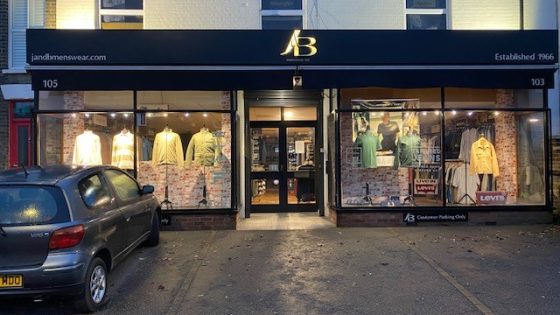
East Anglia-based J&B Menswear owner Darren Hoggett has issued a compelling call to the government, urging a significant increase in support for small businesses as the venerable out-of-town fashion independent marks its impressive 60th anniversary. The milestone, celebrated on May 1, 2026, serves as both a testament to enduring entrepreneurial spirit and a stark reminder of the mounting pressures faced by independent retailers across the United Kingdom. Hoggett’s plea underscores a critical juncture for the retail sector, particularly for family-run enterprises that form the backbone of local economies and contribute significantly to community identity.
Six Decades of Style: J&B Menswear’s Enduring Legacy
J&B Menswear first opened its doors in 1966, a period of burgeoning consumerism and evolving fashion trends. Founded on principles of quality, personal service, and a keen eye for style, the independent menswear retailer quickly carved out a niche for itself in East Anglia. Over sixty years, it has navigated numerous economic shifts, changing consumer preferences, and the relentless march of retail innovation, from the rise of department stores to the advent of online shopping. Its continued presence in an out-of-town location speaks to a dedicated customer base and a business model that prioritizes a unique, curated shopping experience over high-street foot traffic.
The longevity of J&B Menswear is a remarkable achievement in an industry characterized by intense competition and rapid obsolescence. From the Mod era of the 1960s, through the disco fever of the 70s, the power dressing of the 80s, the casualisation of the 90s, and into the diverse fashion landscape of the 21st century, J&B Menswear has consistently adapted its offerings while retaining its core identity. This adaptation has not merely been about stocking new brands but understanding the evolving lifestyle and sartorial needs of its clientele. The 60th anniversary is not just a celebration of a business; it’s a celebration of a community institution that has dressed generations.
The Urgent Call for Enhanced Government Support
Darren Hoggett’s call for government intervention is rooted in the very real and escalating challenges confronting independent retailers today. While celebrating a significant milestone, the sentiment is tempered by the precarious economic environment. Hoggett highlighted several key areas where government support is critically needed:
- Business Rates Reform: Often cited as a crippling burden, particularly for brick-and-mortar stores, business rates are perceived by many independents as disproportionate and outdated. Hoggett advocates for a fundamental overhaul of the system, suggesting a shift towards a more equitable taxation model that better reflects a business’s actual profitability and ability to pay, rather than solely property value.
- Energy Cost Subsidies: The dramatic spikes in energy prices over recent years have significantly inflated operating costs for businesses. Independent retailers, lacking the bulk purchasing power of larger chains, are particularly vulnerable. Targeted subsidies or relief schemes are crucial to help absorb these shocks and prevent closures.
- Support for Digital Transformation: While J&B Menswear has thrived as a physical store, the necessity of an online presence is undeniable. Government programs to assist small businesses with e-commerce development, digital marketing skills, and cybersecurity investments could level the playing field against larger online competitors.
- Access to Affordable Financing: Securing loans or investment can be challenging for small businesses, especially those without extensive collateral or a long track record of rapid growth. Simplified access to government-backed loan schemes or grants could facilitate investment in inventory, staff training, and store improvements.
- Rent Relief and Lease Flexibility: Negotiations with landlords can be difficult, especially in a challenging retail climate. Government guidance or incentives for landlords to offer more flexible lease terms and rental agreements could provide much-needed breathing room for independents.
Hoggett emphasized that without such interventions, many more independent businesses, despite their heritage and community value, risk succumbing to economic pressures. He stressed that these businesses are not merely commercial entities but vital components of local economies, providing employment, contributing to local taxes, and offering unique consumer choices that large chains cannot replicate.
The Broader Landscape: Challenges Facing Independent Retailers
J&B Menswear’s situation is emblematic of the wider struggles facing independent retailers across the UK. Data from the Federation of Small Businesses (FSB) consistently highlights the precarious position of SMEs, which account for 99.9% of the UK’s 5.5 million private sector businesses. While they employ 16.7 million people and have a combined annual turnover of £2.4 trillion, their survival rates are under constant threat.
The past decade has seen a significant decline in the number of independent shops on high streets and in market towns. Factors contributing to this decline include:
- Online Competition: The relentless growth of e-commerce, accelerated by the pandemic, has fundamentally altered consumer shopping habits. While some independents have successfully integrated online sales, many struggle with the technical expertise, marketing spend, and logistical infrastructure required to compete with digital giants.
- Rising Operating Costs: Beyond business rates and energy, independents face increasing costs for staffing (minimum wage increases), supply chain logistics, insurance, and compliance with regulations. These cumulative costs erode already thin profit margins.
- Shifting Consumer Behaviour: Consumers are increasingly value-conscious and convenience-driven. While independent stores offer unique products and personalised service, they often cannot match the price points or instant gratification offered by large retailers or online platforms.
- Lack of Access to Capital: Small businesses often find it harder to secure financing for expansion, innovation, or even just to weather downturns compared to larger corporations with established credit lines and diverse revenue streams.
- Staffing Shortages and Skill Gaps: Recruitment and retention of skilled staff, particularly in retail, have become more challenging, leading to increased wage pressures and operational difficulties.
These challenges are not new, but their intensity has escalated, making the call for government support more urgent than ever. The British Retail Consortium (BRC) has also repeatedly lobbied for business rates reform and a more supportive environment for physical retail, recognising its critical role in local economies.
A Chronology of Resilience and Adaptation
1966: The Founding Vision
J&B Menswear opens its doors, likely a reflection of post-war prosperity and a growing interest in distinctive men’s fashion beyond utilitarian needs. It establishes itself as a destination for quality clothing.
1970s-1980s: Navigating Economic Shifts and Evolving Styles
The business survives periods of economic uncertainty, including oil crises and recessions, by maintaining strong customer relationships and adapting its stock to reflect changing fashion trends, from wide lapels to tailored suits. It cements its reputation for personalised service.
1990s-2000s: The Rise of Chain Stores and Early E-commerce
As larger retail chains expand and the internet begins to emerge, J&B Menswear focuses on its unique selling proposition: expert advice, niche brands, and a welcoming in-store experience that mass-market retailers often lack. The decision to operate as an ‘out-of-town’ independent proves strategic, offering easier access and parking for customers seeking a specific retail experience.
2010s: Intensified Online Competition and High Street Decline
The proliferation of e-commerce platforms and fast fashion intensifies pressure on traditional retailers. Many independent stores struggle, leading to numerous closures. J&B Menswear continues to rely on its established customer base and reputation for quality and service, perhaps beginning to explore a nascent online presence or digital engagement with customers.
2020-2022: The Pandemic and Economic Aftershocks
The COVID-19 pandemic presents unprecedented challenges, forcing temporary closures and accelerating the shift to online shopping. J&B Menswear, like many independents, faces severe disruption but demonstrates resilience through community support and agile adaptation to health guidelines. The post-pandemic recovery is marked by supply chain issues, inflation, and soaring energy costs.
2026: The 60th Anniversary and a Call to Action
Celebrating six decades in business, J&B Menswear stands as a testament to perseverance. However, the current economic climate prompts owner Darren Hoggett to use this milestone not just for celebration but as a platform to advocate for systemic change and greater government support for the independent retail sector.
Economic Impact and Broader Implications
The plight of businesses like J&B Menswear extends far beyond individual shop owners. Independent retailers are crucial drivers of local economies. They often source products locally, employ local residents, and contribute to the unique character of their towns and regions. A decline in independent businesses can lead to:
- Job Losses: Small businesses are significant employers, and their closure directly impacts local employment.
- Reduced Local Spending: Money spent at local independents is more likely to be recirculated within the local economy, supporting other local businesses.
- Homogenisation of High Streets: The loss of unique independents often results in high streets dominated by chain stores, leading to a loss of distinctiveness and local character.
- Reduced Innovation and Choice: Independents often act as incubators for new brands and trends, offering products that larger chains might overlook. Their decline can stifle consumer choice and market innovation.
- Community Disintegration: Local shops often serve as community hubs, fostering social interaction and a sense of belonging. Their absence can diminish community cohesion.
The government’s response to calls like Hoggett’s has significant implications for the future landscape of UK retail and local economies. While the government frequently reiterates its commitment to supporting SMEs, the effectiveness and reach of existing schemes are often questioned by business owners on the ground. Initiatives such as the "Levelling Up" agenda include aspirations to regenerate high streets, but these efforts often require direct, tangible support for the businesses that populate these spaces.
Industry bodies such as the British Independent Retailers Association (BIRA) and the Federation of Small Businesses (FSB) have consistently advocated for policies that create a more favourable environment for independents. Their proposals often echo Hoggett’s sentiments, focusing on business rates reform, access to finance, and support for digital adoption. They argue that a thriving independent sector is not just good for business owners but essential for a vibrant, diverse, and resilient national economy.
The Future of Independent Retail: Adapt, Innovate, Advocate
For businesses like J&B Menswear to thrive in the next sixty years, a multi-faceted approach is required. Internally, adaptation and innovation remain key. This includes:
- Enhancing the In-Store Experience: Creating unique, memorable, and personalised shopping experiences that cannot be replicated online. This might involve bespoke tailoring services, personal styling appointments, or community events.
- Strategic Online Integration: Developing a robust online presence that complements the physical store, offering click-and-collect options, local delivery, and engaging digital content that showcases products and brand values.
- Niche Specialisation: Further refining product offerings to cater to specific tastes or segments, ensuring a distinctive appeal.
- Community Engagement: Deepening ties with the local community through partnerships, local events, and active participation in local initiatives.
Externally, the collective voice of independent retailers, amplified by figures like Darren Hoggett, is crucial for influencing policy. Continued advocacy for fundamental reforms in areas like business taxation, energy costs, and digital support will be essential. The dialogue between small businesses and policymakers must be continuous, ensuring that government support mechanisms are not only well-intentioned but also practical, accessible, and impactful for the enterprises they aim to serve.
As J&B Menswear celebrates its diamond anniversary, its story is a powerful narrative of survival, adaptation, and unwavering commitment. Darren Hoggett’s call for government action transcends the immediate needs of his own business; it is a resonant plea on behalf of countless independent retailers who are the custodians of local character and economic vitality across the UK. The coming years will reveal whether this call for support translates into tangible policies that ensure the continued flourishing of these invaluable enterprises.