










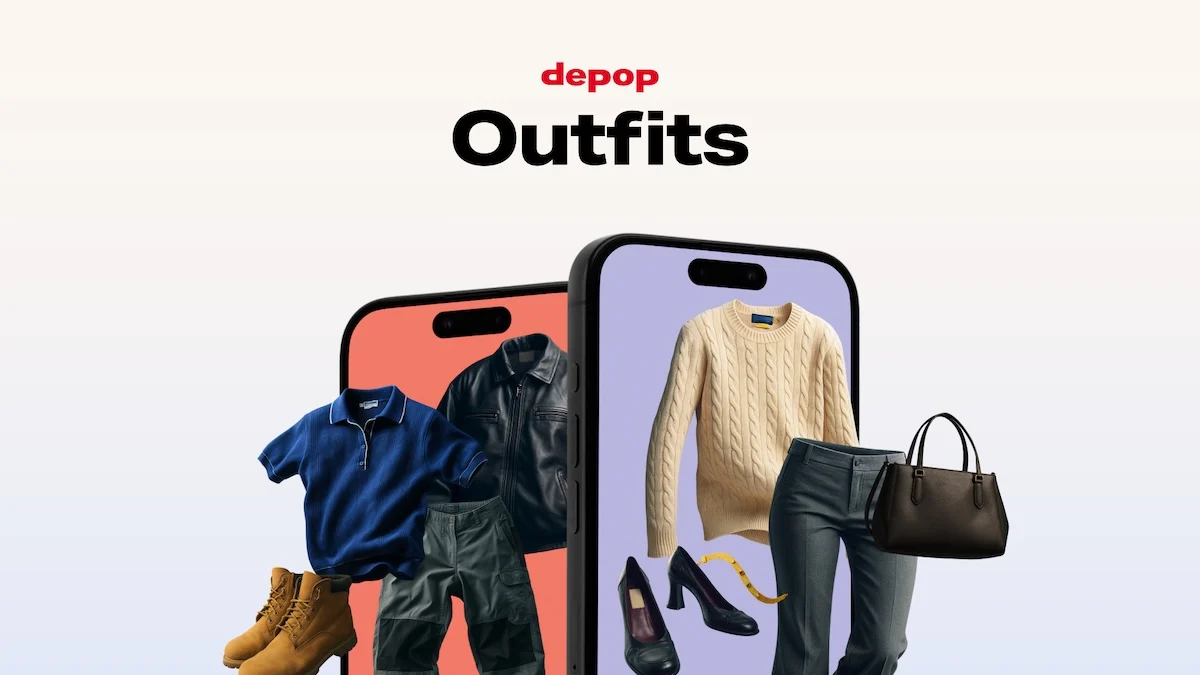
Depop, the leading peer-to-peer fashion resale platform, officially announced on Wednesday the rollout of a sophisticated new styling and collaging tool designed to transform how users interact with secondhand apparel. The feature, titled “Outfits,” introduces a dedicated mood board-style interface that allows the app’s community to curate, design, and share digital fashion collages. This strategic move aims to deepen user engagement by bridging the gap between creative expression and e-commerce, catering specifically to the aesthetic-driven preferences of Generation Z, who represent the core of Depop’s global user base.
The introduction of Outfits marks a significant evolution for the London-based company as it seeks to maintain its dominance in a rapidly saturating resale market. By providing tools that allow users to visualize how disparate items—ranging from vintage streetwear to contemporary luxury accessories—can be styled together, Depop is transitioning from a traditional marketplace into a comprehensive social commerce ecosystem. The feature is currently live and available to all users globally within the Depop mobile application.
Functional Mechanics of the Outfits Tool
The technical implementation of the Outfits feature focuses on user-friendly customization and seamless integration with existing inventory. To utilize the tool, a user selects a specific item they wish to highlight or style. Upon selecting the item, a scissors icon appears on the right side of the interface. This icon serves as the gateway to the collage-making suite, where the app’s software assists in isolating the product image, effectively removing backgrounds to facilitate a clean, professional-looking layout.
Within the editing suite, users are granted a variety of creative controls. These include the ability to add vibrant, customizable backgrounds, adjust the scale and rotation of multiple product images, and layer different items to simulate a complete look. To assist those less familiar with graphic design, Depop has included a series of pre-designed templates that act as layout guides, ensuring that even novice users can produce high-quality visual content.
Crucially, the feature is built with conversion in mind. Every item featured within an "Outfit" collage is fully shoppable. If a user views a collage and takes an interest in a specific vintage jacket or a pair of boots, they can click directly on the image to view the listing details. In instances where a specific item has already been sold, Depop’s algorithm automatically generates suggestions for similar alternatives currently available on the platform, ensuring that the creative inspiration leads to a functional shopping path.
Strategic Alignment with Gen Z and Social Media Trends
The launch of Outfits is a calculated response to the "mood board" culture that has permeated social media over the last decade. Historically, platforms like Polyvore pioneered the digital fashion collage, creating a void in the market when they shuttered. In recent years, Pinterest has reclaimed much of this territory, specifically through the 2022 launch of "Shuffles," a standalone collage-making app that was eventually integrated into the main Pinterest ecosystem due to its immense popularity among younger demographics.
Depop’s decision to internalize these creative tools reflects a broader trend in "social commerce," where the act of shopping is inextricably linked to content creation and social sharing. By allowing users to export their curated outfits as static images to platforms like Instagram and Pinterest, Depop is effectively turning its user base into a decentralized marketing force. When a user shares a stylish collage to their Instagram Story, they are not only expressing their personal brand but also driving external traffic back to the Depop ecosystem.
Industry analysts suggest that this feature addresses the "discovery" problem inherent in resale. Unlike traditional retail, where a brand might have thousands of units of the same shirt, resale involves millions of unique, one-of-one items. The Outfits tool allows sellers to provide context for these items, showing potential buyers how a seemingly niche vintage piece can be integrated into a modern wardrobe.
Financial Performance and Market Context
The timing of the Outfits launch coincides with a period of robust financial growth for Depop under the stewardship of its parent company, Etsy. According to Etsy’s Q2 2025 earnings report, Depop has emerged as a high-performing asset within the group’s portfolio. The platform reported a 34.7% year-over-year increase in Gross Merchandise Sales (GMS) on a currency-neutral basis. This surge in volume has placed Depop on a trajectory to reach a $1 billion GMS run rate, a milestone that underscores the increasing mainstream adoption of secondhand fashion.
In the broader competitive landscape, Depop’s growth outpaces several of its key rivals. For comparison, the Japanese-owned marketplace Mercari reported a Gross Merchandise Value (GMV) of approximately $728 million for the fourth quarter of 2024. While Poshmark and ThredUp remain significant players in the North American market, Depop’s unique positioning as a cultural hub for youth fashion gives it a distinct advantage in capturing the "circular economy" spend of the under-30 demographic.

Etsy’s leadership has consistently highlighted Depop’s potential to drive "incremental growth" by attracting a demographic that is increasingly moving away from fast fashion due to environmental concerns and a desire for individuality. The Outfits tool is viewed as a retention mechanism—a way to keep users inside the app longer by offering utility beyond the simple transaction.
Implications for the Seller Community
For Depop’s community of sellers—many of whom operate as small-scale entrepreneurs—the Outfits tool represents a significant upgrade in digital merchandising capabilities. Previously, sellers had to rely on external photo-editing software or complex "flat lay" photography to show styled looks. The new in-app tool democratizes these professional styling techniques.
Sellers can now create collages that feature their "Hero" items alongside complementary pieces from other sellers or their own inventory. This cross-pollination of styles encourages a more collaborative atmosphere on the platform. Furthermore, the "similar alternatives" feature acts as a safety net for sellers; even if a specific curated look features a sold-out item, the traffic generated by that collage can still be diverted to active listings, maintaining the momentum of the marketplace.
From a logistical standpoint, the tool also assists in reducing "buyer hesitation." By visualizing a complete outfit, consumers are more likely to understand the fit and aesthetic of a garment, potentially leading to a decrease in return-related inquiries and an increase in multi-item purchases, often referred to as "bundling."
The Evolution of Social Commerce and the Circular Economy
The launch of Outfits is emblematic of the "TikTok-ification" of e-commerce, where static grids are being replaced by dynamic, interactive content. As the resale market is projected to reach $350 billion globally by 2027, according to industry reports from ThredUp and GlobalData, platforms that offer the most engaging user experience are likely to capture the largest share of the market.
Depop’s trajectory from a niche app for creative Londoners to a billion-dollar GMS powerhouse reflects a fundamental shift in consumer behavior. The "circular economy"—a system aimed at eliminating waste and the continual use of resources—is no longer a fringe movement. It is a primary driver of retail innovation. Tools like Outfits facilitate this by making the "re-use" of clothing feel as aspirational and trendy as buying new.
By integrating creative expression with transactional functionality, Depop is addressing the psychological drivers of fashion: identity and belonging. The ability to "style" an outfit digitally mimics the physical experience of trying on clothes in a boutique, but with the added social validation of digital likes, shares, and follows.
Future Outlook and Technological Integration
Looking ahead, the Outfits feature provides a foundation for further technological integration. There is significant potential for Depop to incorporate Augmented Reality (AR) or more advanced Artificial Intelligence (AI) into the styling suite. For instance, future iterations could allow users to "virtually try on" the collages they create or use AI to automatically suggest items that match the aesthetic of a partially completed mood board.
As Etsy continues to invest in Depop’s infrastructure, the focus will likely remain on reducing friction in the user journey. The success of the Outfits tool will be measured not just by the number of collages created, but by its impact on "time spent in app" and the eventual conversion rate of styled items versus standard listings.
In conclusion, Depop’s Outfits feature is more than a simple creative add-on; it is a strategic pillar designed to fortify the platform’s position as the premier destination for Gen Z fashion. By merging the nostalgia of fashion collaging with the modern requirements of social commerce, Depop is ensuring that it remains at the forefront of the digital resale revolution, maintaining its impressive growth streak in an increasingly competitive global market.