

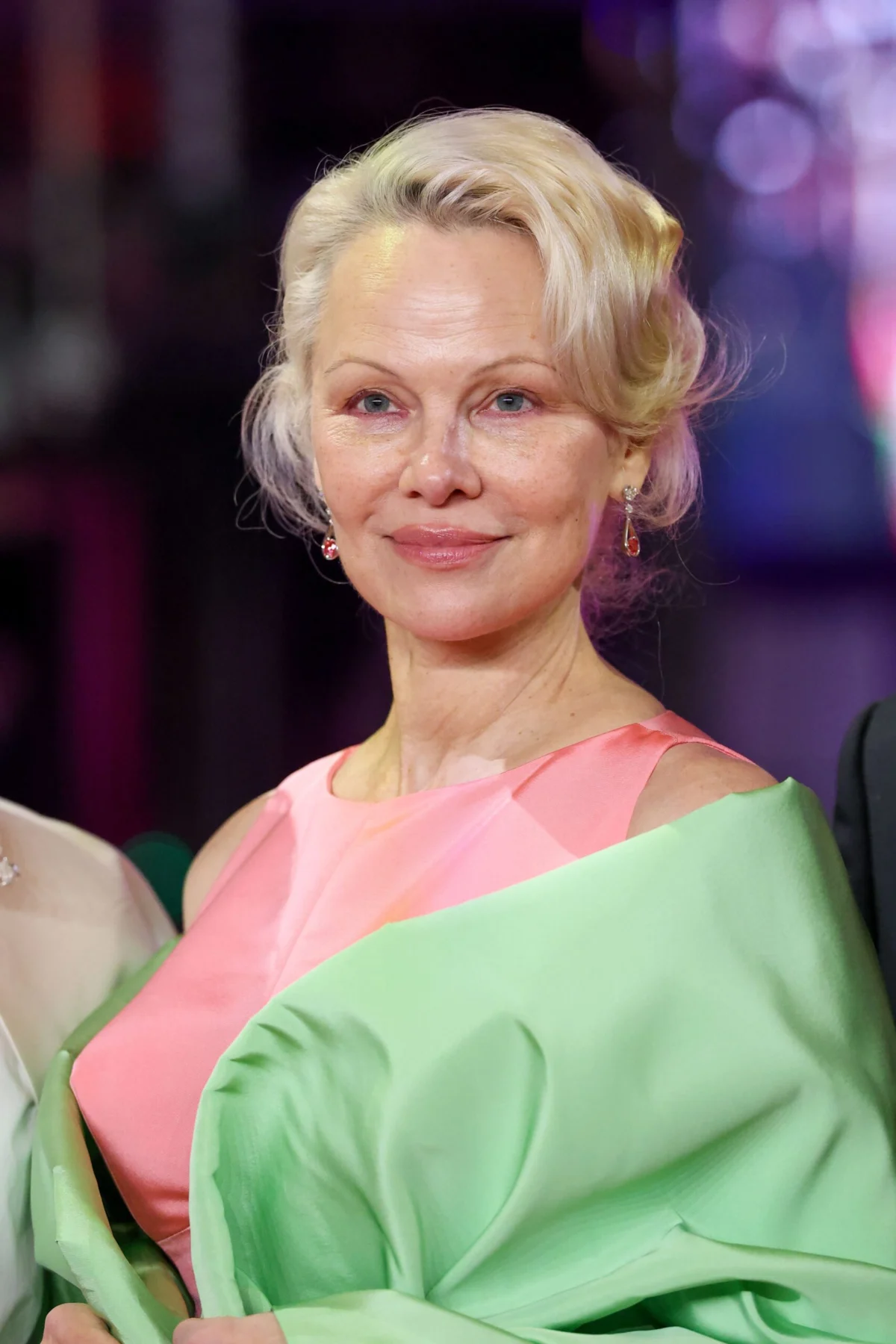
Pamela Anderson, a luminary whose career has spanned decades of evolving style and cultural influence, captivated attendees at the Fashion Trust U.S. 2026 Awards in Los Angeles on April 8th with a breathtaking hairstyle that artfully evoked the iconic glamour of the 1970s. The celebrated actress and advocate presented a masterclass in timeless beauty, opting for a soft, voluminous, and impeccably styled platinum-blonde lob that paid homage to the era’s defining hair trends, most notably the signature feathered looks popularized by Hollywood legend Farrah Fawcett. This sartorial and coiffure choice not only underscored Anderson’s enduring style prowess but also coincided with a broader resurgence of retro aesthetics in contemporary fashion and beauty.
The event, held at a prominent Los Angeles venue, drew a constellation of industry leaders, designers, and philanthropists, all gathered to support emerging talent in the fashion world. The Fashion Trust U.S., a non-profit organization dedicated to providing financial and mentorship support to up-and-coming American fashion designers, annually recognizes individuals and organizations that have made significant contributions to the industry. Anderson’s presence at the awards ceremony highlighted her commitment to fostering creativity and innovation, aligning with her own journey of artistic reinvention.
Anderson’s striking hairstyle featured a cascade of platinum-blonde locks expertly cut into a lob, a modern interpretation of the shoulder-length cut. The defining characteristic of this look was its remarkable softness and airy texture. Long, sweeping curtain bangs, parted to one side, artfully framed her face, with one side gently brushing over an eye while the other blended seamlessly into the layered front. The hair near her face was meticulously curled under, creating a gentle sweep that hugged her cheekbones and jawline. This subtle shaping amplified the natural movement and dimension of the layers, lending the entire style a dynamic, almost effortless flow. The overall effect was one of ethereal lightness, a delicate halo of blonde that exuded confidence and sophisticated nonchalance.
This particular hairstyle immediately conjured images of the defining hair trends of the 1970s, a decade celebrated for its liberated spirit and bold yet often naturalistic beauty statements. Farrah Fawcett, an enduring symbol of 1970s sex appeal and style, became synonymous with her voluminous, layered hairstyles that epitomized a carefree yet glamorous aesthetic. Anderson’s lob, with its comparable softness, movement, and expertly crafted layers, served as a direct and elegant nod to Fawcett’s iconic look, demonstrating a keen understanding of historical style cues and their adaptability to a modern context.
The Evolution of Pamela Anderson’s Beauty Philosophy
Anderson’s embrace of this retro-inspired hairstyle is particularly noteworthy given her recent evolution in personal style. In recent years, she has publicly championed a more minimalist approach to beauty, famously adopting a very natural makeup routine. This shift, characterized by a dewy complexion, a subtle hint of lip color, and a deliberate eschewing of heavy eye makeup such as mascara, has allowed her natural radiance to shine through. This pared-down beauty philosophy complements her current hairstyles, emphasizing a fresh, "as-if-she-just-woke-up-like-this" appeal that resonates with contemporary ideals of authenticity and self-acceptance.
Her foray into diverse hairstyles is not unprecedented. While the world often associates Pamela Anderson with her iconic, voluminous updo from her Baywatch era, she has increasingly demonstrated a willingness to experiment and draw inspiration from various decades. This has included a notable shift in late 2025, when she debuted a significantly more feathery bob, a cut that leaned into an even bolder interpretation of layered styles. Accompanying this dramatic haircut was a striking new copper hair color, a departure from her signature blonde.
At the time of that earlier transformation, Anderson herself commented on her playful approach to her hair. She reportedly stated that the cut was inspired by ’80s French cinema and the timeless allure of actress Marlène Jobert. Her sentiment, "I’m just playing with it… it’s gonna be different every day," encapsulates a spirit of joyful experimentation and a rejection of rigid beauty norms. This free-spirited attitude towards personal expression is a hallmark of her enduring appeal and continues to inspire many. The 1970s-inspired lob, therefore, can be seen as another chapter in this ongoing exploration, a harmonious blend of nostalgic influence and contemporary execution.
The Cultural Resonance of 1970s Hairstyles
The enduring appeal of 1970s hairstyles, particularly the feathered look, lies in their inherent versatility and ability to convey both glamour and approachability. This decade marked a shift in beauty ideals, moving away from the more structured styles of the 1960s towards looks that embraced natural texture and movement. The layered cuts, often accompanied by face-framing bangs, offered a flattering silhouette for a wide range of face shapes and hair types. These styles were not merely about aesthetics; they were imbued with a sense of freedom and individuality that resonated with the cultural zeitgeist of the era.

The resurgence of these styles in contemporary fashion is a testament to their timeless design and adaptability. Designers and stylists often draw inspiration from past eras to create looks that feel both familiar and fresh. The current popularity of shag haircuts, curtain bangs, and layered bobs can be directly linked to the influence of 1970s hair trends. This cyclical nature of fashion suggests that certain styles possess an inherent quality that allows them to transcend their original context and remain relevant for generations.
Anderson’s choice to embody this aesthetic at a high-profile event like the Fashion Trust U.S. Awards serves to amplify this trend. By showcasing such a perfectly executed rendition of the 1970s feathered lob, she not only makes a personal style statement but also reinforces the contemporary relevance of these iconic looks. Her ability to seamlessly transition between different decades of inspiration, from the ’90s to the ’80s and now the ’70s, demonstrates a sophisticated understanding of her own image and a confident command of evolving beauty narratives.
Supporting Data and Industry Trends
The fashion and beauty industries are increasingly influenced by nostalgia. Market research consistently shows a strong consumer interest in retro styles, with millennials and Gen Z actively seeking out trends from the 1970s, 1980s, and 1990s. This is evident in the popularity of vintage clothing, the resurgence of specific fashion silhouettes, and the widespread adoption of hairstyles reminiscent of past decades. For instance, searches for "curtain bangs" have seen a consistent surge in recent years, and salon statistics indicate a significant rise in requests for layered cuts.
The Fashion Trust U.S. Awards themselves represent a crucial element of the industry’s ecosystem. By supporting emerging designers, organizations like the Fashion Trust U.S. play a vital role in shaping the future of fashion. The financial backing and mentorship provided can be transformative for young talent, enabling them to navigate the competitive landscape and establish sustainable careers. Anderson’s participation underscores the importance of celebrity endorsement and advocacy in bringing attention to these vital initiatives.
The impact of such events extends beyond immediate recognition. The visibility gained by designers and the inspiration drawn from celebrity style can have ripple effects throughout the industry, influencing consumer purchasing decisions and setting aesthetic benchmarks for upcoming seasons. Anderson’s 1970s-inspired hairstyle, therefore, is not just a personal choice but a cultural moment that contributes to a broader dialogue about style, heritage, and the enduring power of iconic aesthetics.
Broader Implications and Future Outlook
Pamela Anderson’s consistent reinvention of her personal brand, particularly in her approach to beauty and style, offers a compelling case study in long-term career evolution. Her ability to remain relevant and captivating by embracing change while staying true to her core essence is a valuable lesson for anyone in the public eye, or indeed, in any profession that requires adaptability. Her current embrace of a more natural beauty aesthetic, combined with her playful exploration of historical hair trends, suggests a mature and confident individual comfortable in her own skin.
The fashion industry, in its constant pursuit of novelty, often finds inspiration in the past. The cyclical nature of trends means that elements from previous decades are continually reinterpreted for contemporary audiences. The 1970s, with its emphasis on freedom, self-expression, and a blend of bohemian and disco glamour, remains a rich source of inspiration. Anderson’s choice to channel this era, particularly through her hair, demonstrates a sophisticated understanding of this fashion phenomenon.
As the fashion and beauty industries continue to evolve, the influence of iconic figures like Pamela Anderson will undoubtedly persist. Her willingness to experiment and her ability to carry off diverse looks with confidence and grace serve as a powerful reminder that style is not static but a dynamic and personal journey. The 1970s-inspired feathered lob is more than just a hairstyle; it is a statement of enduring style, a celebration of nostalgia, and a testament to the timeless allure of a true icon. Her approach, as she herself has indicated, is one of joyful experimentation, a philosophy that continues to inspire and captivate, proving that beauty, much like fashion, is always evolving and open to new interpretations.