








The global fashion industry, currently valued at approximately 1.7 trillion dollars, is undergoing a profound structural transformation driven by the demand for unprecedented speed and consumer-centric customization. As traditional retail cycles compress from months to weeks, the reliance on manual design processes has become a significant bottleneck for multi-national brands. Raspberry AI, a New York-based technology startup founded in 2023, has emerged as a pivotal player in this shift. The company recently announced the successful closing of a 24 million dollar Series A funding round, a milestone that underscores the growing institutional confidence in generative artificial intelligence as a cornerstone of the future manufacturing ecosystem. Led by venture capital titan Andreessen Horowitz (a16z), the round saw participation from existing backers including Greycroft, Correlation Ventures, and MVP Ventures. This capital infusion arrives less than a year after the company’s 4.5 million dollar seed round, signaling a rapid scaling trajectory fueled by high enterprise demand.
The Intersection of Generative AI and Global Supply Chains
The genesis of Raspberry AI is rooted in the technological breakthroughs of late 2022, specifically the public release of large-scale image generation models such as OpenAI’s DALL-E and Stability AI’s Stable Diffusion. While these tools captured public imagination for their creative versatility, their application in a professional industrial context remained limited by a lack of domain-specific precision. Cheryl Liu, the founder of Raspberry AI, recognized this gap through a unique professional lens. Having served as a private equity analyst at KKR with a focus on the retail sector, followed by operational roles at Amazon and DoorDash, Liu possessed an intimate understanding of the inefficiencies inherent in the fashion supply chain.
Historically, the product development phase in fashion has been characterized by high costs and significant time lags. Designers typically move from conceptual sketches to physical prototypes—a process that requires shipping materials across continents and multiple iterations of sample creation. Each physical sample can take weeks to produce and transport, and it is not uncommon for a single garment to require three to five iterations before reaching production approval. In the era of "ultra-fast fashion," popularized by entities like Shein and Zara, these delays represent lost market opportunities. Raspberry AI was conceived to bridge this gap by providing a text-to-image and sketch-to-image platform tailored specifically for the technical requirements of fashion designers and merchandisers.
Technical Differentiation in a Crowded AI Marketplace
While general-purpose AI image generators like Midjourney or Adobe Firefly have gained traction among creative professionals, Raspberry AI distinguishes itself through its deep integration of industry-specific terminology and constraints. In a professional design environment, a prompt such as "fuzzy sweater" is insufficient for technical execution. Raspberry’s proprietary models are trained to understand the nuances of knitwear gauges, yarn weights, fabric compositions, and silhouette structures that standard models often overlook.
A primary feature of the platform is its ability to transform rudimentary hand-drawn sketches into photorealistic renders that mimic the aesthetic of a brand’s existing e-commerce photography. This allows stakeholders—ranging from creative directors to wholesale buyers—to visualize a product in its final form before a single piece of fabric is cut. According to Liu, the platform enables brands to iterate through 50 or more variations of a single design—changing prints, colors, and textures instantly—whereas previously, the cost and time of physical sampling would have limited them to just a few options. This "digital-first" approach not only accelerates the timeline but also serves as a critical tool for sustainability by drastically reducing the waste associated with discarded physical prototypes.
Institutional Backing and Market Validation
The decision by Andreessen Horowitz to lead the Series A round reflects a broader investment thesis centered on "AI for vertical industries." Bryan Kim, a partner at a16z, noted that the firm’s interest was driven by both the technical robustness of the product and the strategic vision of the founder. The firm had evaluated several startups in the fashion-tech space but found Raspberry AI’s approach to be the most aligned with the operational realities of large-scale manufacturers.

The startup’s commercial traction is equally compelling. In just two years of operation, Raspberry AI has secured a portfolio of 70 enterprise clients. These include high-performance athletic brands like Under Armour, luxury heritage houses such as MCM Worldwide, and massive industrial manufacturers like Gruppo Teddy. Gruppo Teddy, an Italian powerhouse, operates over 8,800 stores across nearly 40 countries, illustrating the scale at which Raspberry’s technology is being deployed. For these large organizations, the adoption of Raspberry AI is not merely a creative experiment but a strategic move to protect margins and improve speed-to-market in an increasingly competitive landscape.
Chronology of Growth and Strategic Expansion
The timeline of Raspberry AI’s development illustrates the accelerated pace of the modern venture-backed ecosystem:
- Late 2022: Initial release of foundational generative image models provides the technical catalyst for the company’s inception.
- Early 2023: Raspberry AI is founded by Cheryl Liu, focusing on the pain points of retail and fashion product development.
- Early 2024: The company closes a 4.5 million dollar seed round, allowing for initial product builds and pilot programs with major retailers.
- Mid-2024: Rapid onboarding of 70 marquee clients across the athletic, luxury, and mass-market segments.
- January 2025: Successful closing of a 24 million dollar Series A round led by a16z, bringing total known funding to nearly 30 million dollars.
With the new capital, Raspberry AI intends to aggressively expand its headcount across engineering, sales, and marketing departments. Furthermore, the company has announced plans to move beyond apparel. The underlying technology—the ability to turn conceptual sketches into photorealistic, production-ready visuals—is highly transferable to other consumer goods sectors. Raspberry is currently developing modules for home goods, furniture, and cosmetics, where the challenges of prototyping and visualization are remarkably similar to those in the fashion industry.
Broader Implications for the Global Fashion Workforce
The integration of generative AI into the design room has sparked a nuanced debate regarding the future of the creative workforce. Critics often express concern that automated design tools could displace entry-level designers or lead to a homogenization of style. However, the industry’s response, as reflected in Raspberry AI’s growth, suggests a different trajectory: one of augmentation rather than replacement.
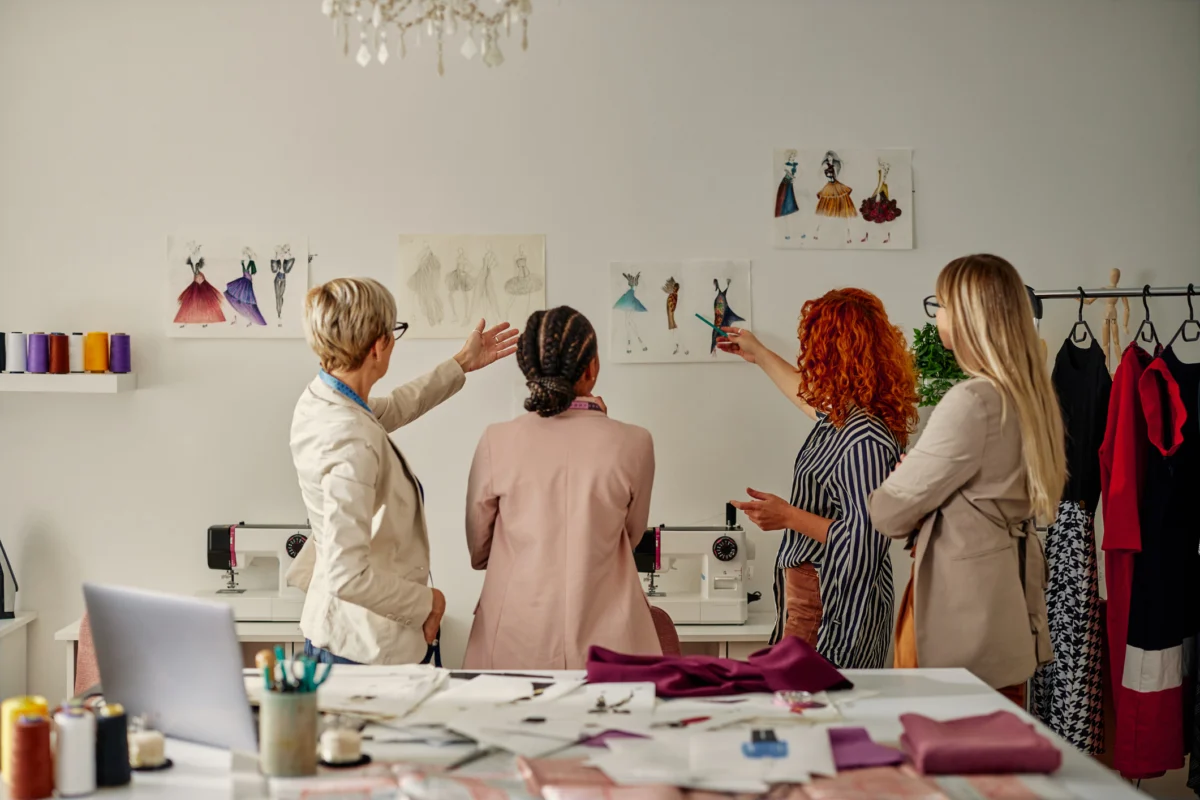
By automating the rote tasks of rendering and color-way iteration, platforms like Raspberry AI allow designers to spend more time on high-level conceptualization and trend analysis. Furthermore, the ability to visualize products instantly facilitates better communication between design teams and merchandising teams. In the traditional model, a disconnect often exists between a designer’s creative vision and a merchandiser’s data-driven requirements. Raspberry’s platform provides a common visual language that allows these teams to collaborate in real-time, ensuring that the products being developed are both aesthetically pleasing and commercially viable.
The Competitive Landscape and Future Outlook
Raspberry AI does not operate in a vacuum. It faces competition from established software giants like Adobe, which has been rapidly integrating AI into its Creative Cloud suite through "Firefly." Additionally, specialized CAD (Computer-Aided Design) providers like Browzwear and CLO Virtual Fashion have long offered 3D garment simulation tools. However, these traditional tools often require extensive training and high computational power. Raspberry AI’s competitive advantage lies in its accessibility and the "generative" nature of its platform—it doesn’t just simulate a design; it helps create it from a text prompt or a rough sketch.
As the fashion industry continues to grapple with the pressures of overproduction and the environmental impact of physical waste, the role of "digital twins" and AI-generated prototypes will only increase in importance. The 24 million dollar investment in Raspberry AI is a clear indicator that the industry is moving toward a future where the first time a garment is physically realized is when it is ready for the production line. For Cheryl Liu and her team, the goal is to become the foundational operating system for the next generation of consumer product design, transforming a centuries-old craft into a high-speed, data-informed digital discipline.