











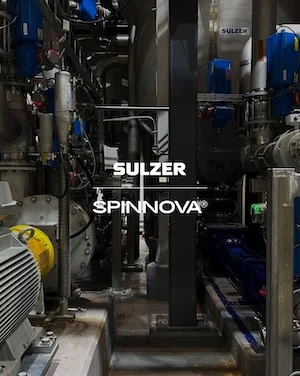
In a move that signals a significant maturation of the sustainable textile industry, Swiss industrial engineering giant Sulzer has officially joined the technology ecosystem of Spinnova, the Finnish pioneer in sustainable fiber production. This strategic partnership, formalized in early April 2026, aims to bridge the gap between pilot-stage innovation and large-scale industrial commercialization. By integrating Sulzer’s world-class expertise in fluid dynamics and process engineering with Spinnova’s proprietary mechanical fiber-spinning technology, the consortium seeks to redefine the manufacturing landscape for eco-friendly materials.
The collaboration focuses on the optimization of the production process for SPINNOVA® fiber, a revolutionary textile material created from wood or waste streams without the use of harmful dissolving chemicals. Sulzer, headquartered in Winterthur, Switzerland, brings nearly two centuries of engineering heritage to the table, specializing in pumping, mixing, and agitation technologies that are critical for handling the complex suspensions required in fiber production. This agreement is not merely a supplier-client relationship but a deep-level co-development initiative designed to enhance the cost-competitiveness and operational efficiency of Spinnova’s technology for global licensees.
The Evolution of a Strategic Partnership
The formalization of Sulzer’s role within the Spinnova ecosystem is the culmination of years of successful collaboration. The two companies first crossed paths during the development of the Woodspin demonstration factory, a joint venture between Spinnova and the Brazilian eucalyptus pulp producer Suzano. During that project, Sulzer provided the essential infrastructure required for the facility’s ramp-up, proving that its industrial solutions could handle the unique demands of microfibrillated cellulose (MFC).
The relationship deepened during the pilot phases of MFC production, where the handling of high-consistency fiber suspensions presented significant engineering hurdles. MFC is notoriously difficult to transport and mix due to its non-Newtonian fluid properties; it requires precise shear rates and pressure management to maintain material integrity. Sulzer’s ability to provide customized pumping solutions and flow control allowed Spinnova to stabilize its production output, setting the stage for the 2026 agreement which expands Sulzer’s role into the broader technology development roadmap.
Technical Synergy and Engineering Contributions
At the heart of this partnership is the integration of Sulzer’s specialized equipment into Spinnova’s "Technology Concept." For an emerging technology to achieve global scale, it must be modular, reliable, and energy-efficient. Sulzer’s contribution focuses on three primary areas:
- Pumping and Fluid Transport: The movement of viscous cellulose flows requires specialized centrifugal and positive displacement pumps. Sulzer’s AHLSTAR and BE series pumps are being adapted to ensure that the delicate cellulose fibrils are not damaged during transport, which is essential for maintaining the strength of the final textile fiber.
- Mixing and Homogenization: Creating a consistent feedstock is vital for the spinning process. Sulzer’s agitation technology ensures that the MFC remains suspended uniformly, preventing clumping that could lead to production downtime or inconsistencies in fiber quality.
- Energy and Resource Management: One of Spinnova’s core value propositions is its low environmental footprint. Sulzer’s high-efficiency motors and flow-optimization software help reduce the total energy consumption of the production line, further strengthening the sustainability credentials of the SPINNOVA® fiber.
By refining these "core infrastructure" components, the partnership aims to lower the Capital Expenditure (CAPEX) and Operational Expenditure (OPEX) for future textile mills that adopt Spinnova’s technology. This is a critical factor in competing with traditional, high-volume fibers like polyester and conventional cotton.
Data and Market Context: The Push for Next-Gen Materials
The partnership comes at a time when the global textile industry is under intense pressure to decarbonize. According to industry data from the Textile Exchange, the global fiber market exceeded 110 million tonnes in recent years, with synthetic fibers (mostly petroleum-based polyester) accounting for over 50% of the total. Meanwhile, conventional cotton production remains under scrutiny for its high water consumption and pesticide use.
Spinnova’s technology offers a compelling alternative. Internal data suggests that SPINNOVA® fiber production uses approximately 99% less water and results in 74% fewer CO2 emissions compared to conventional cotton. However, for these environmental benefits to have a global impact, production must scale from the hundreds of tonnes to the hundreds of thousands of tonnes.
The entry of an industrial heavyweight like Sulzer—which reported sales in the billions of CHF and maintains a presence in over 180 locations worldwide—provides the "industrial backbone" necessary for this transition. Market analysts suggest that the involvement of established engineering firms reduces the perceived risk for investors and textile manufacturers looking to pivot toward circular business models.
Perspectives from Leadership
The leadership of both organizations has emphasized that this collaboration is a vital component of the broader transition to a circular economy. Mikko Kautto, who oversees Technology Concept and Partners at Spinnova, highlighted the practical advantages of the alliance. "Co-development with Sulzer strengthens our offering to scale up Spinnova’s technology," Kautto stated. "By combining Sulzer’s technology and engineering expertise in pumping, mixing, and fiber suspension flows with our technology concept, we can industrialize more effectively. This partnership strengthens the entire process from planning to implementation, improving the concept competitiveness at large scale."
From the Swiss perspective, the partnership aligns with Sulzer’s strategic focus on the "Pulp, Paper, and Board" segment, which has increasingly looked toward high-value bio-materials as traditional paper markets evolve. Sirpa Välimaa, Head of Business Segment for Pulp, Paper, and Board at Sulzer, noted the company’s commitment to innovation. "Sulzer is committed to supporting companies that push the boundaries of innovation like Spinnova," Välimaa said. "By providing reliable technology and engineering expertise, we are pleased to help our partners strengthen their processes and advance their ambitions."
Broader Implications for the Textile Value Chain
The Spinnova-Sulzer ecosystem represents a new model for industrial development in the 21st century. Rather than a single company attempting to own every aspect of the value chain, the "ecosortium" model relies on specialized partners to solve specific technical challenges. This approach is expected to have several long-term implications for the market:
1. Faster Time-to-Market for Bio-based Synthetics:
The collaboration streamlines the engineering phase for new factories. When a brand or a manufacturer decides to build a Spinnova-licensed plant, they are no longer starting from scratch. They are purchasing a "proven package" that includes Sulzer’s pre-engineered fluid handling systems, significantly reducing the time between the investment decision and the first bale of fiber.
2. De-risking the Circular Transition:
For major fashion houses—many of whom have pledged to use 100% sustainable or recycled materials by 2030—the primary concern is supply chain reliability. The presence of Sulzer ensures that the machinery behind the fiber is backed by global service networks and decades of industrial reliability data.
3. Enhancing Fiber Versatility:
While the initial focus has been on wood-based cellulose, the Spinnova process is capable of processing various waste streams, including agricultural waste and textile-to-textile recycled fibers. Sulzer’s expertise in mixing and separation will be crucial as the feedstock becomes more diverse and complex, allowing the technology to adapt to different regional raw materials.
A Timeline of Industrial Transformation
The journey toward this partnership reflects the rapid pace of innovation in the Finnish "Bio-Valley" and the global engineering sector:
- 2015-2018: Spinnova transitions from laboratory research to pilot-scale production, proving the feasibility of mechanical fiber spinning.
- 2020-2022: Partnerships with brands like Adidas, H&M, and Marimekko demonstrate market demand. The Woodspin joint venture is announced.
- 2023-2024: Construction and commissioning of the first commercial-scale demonstration plant. Sulzer begins providing critical pump and agitation infrastructure.
- 2025: Successful integration of MFC production environments, with Sulzer technology playing a key role in stabilizing fiber quality.
- 2026 (Current): Formal ecosystem agreement signed, moving from a vendor relationship to a strategic co-development partnership aimed at global licensing and mass-market penetration.
Conclusion: The Path Forward
As the textile industry faces stricter environmental regulations, particularly within the European Union’s Circular Economy Action Plan, the demand for "next-gen" fibers is expected to skyrocket. The partnership between Sulzer and Spinnova positions both companies at the forefront of this shift. By solving the "boring" but essential problems of industrial engineering—how to move, mix, and manage complex fluids at scale—Sulzer is enabling Spinnova’s "exciting" vision of a world where clothes are made from trees and waste without harming the planet.
The success of this ecosystem will likely serve as a blueprint for other sustainable technology startups. It demonstrates that while a great idea can start in a lab, it takes the muscle of global engineering giants to bring that idea to every wardrobe in the world. As the partnership moves into its next phase, the focus will remain on driving down costs and ensuring that SPINNOVA® fiber is not just a premium sustainable choice, but the standard for the global textile industry.