











In a significant shift for the global retail sector, an often-overlooked yet profoundly influential player—the retail landlord—is finally being brought into the sustainability conversation. While consumer brands have historically borne the brunt of scrutiny regarding environmental, social, and governance (ESG) practices, a new initiative, the Sustainable Retail Index Association (SRIA), is poised to redirect this lens, holding the owners of shopping centres, high streets, and retail precincts accountable for the sustainability performance of their vast tenant portfolios.
This week marks the official launch of the SRIA, an initiative co-founded by two of the world’s largest retail landlords: Unibail-Rodamco-Westfield (URW), a global leader in commercial real estate, and Ingka Centres, the parent group of IKEA and a major player in retail destination development. The association’s primary goal is to establish a standardized, transparent, and data-driven methodology for measuring and reporting the sustainability performance of retail tenants, thereby empowering landlords to actively influence and improve the ESG credentials of their leased spaces. Good On You, a prominent consumer ratings system for fashion brands, has been confirmed as the data partner behind the index, lending its expertise in comprehensive brand assessments.
The Unseen Hand: Why Landlords Matter in Sustainability
For years, the spotlight on retail sustainability has predominantly focused on the brands themselves – their supply chains, manufacturing processes, material sourcing, and labor practices. This focus is understandable, given their direct role in producing goods. However, the retail ecosystem is complex, and a critical component has largely remained in the shadows: the landlord. These entities own the physical spaces where commerce happens, from sprawling mega-malls to bustling urban high streets and carefully curated shopping precincts. Their power, though often unseen by the end consumer, is immense.
Retail landlords dictate the brand mix, influencing which businesses gain access to prime retail locations. They establish the operational parameters of their centres, from energy consumption and waste management to water usage and infrastructure. Furthermore, through lease agreements and tenant engagement strategies, they possess the structural power to encourage, incentivize, or even mandate certain sustainable practices from their tenants. This influence extends to everything from in-store energy efficiency and waste segregation to the adoption of circular economy services like repair, rental, or resale.
As Sandra Capponi, co-founder of Good On You, recently articulated, "This is a huge, powerful industry. It has significant influence over which brands consumers can access, but it’s largely been left out of the sustainability conversation. The more I’ve investigated this space, the clearer it’s become that landlords have both the commercial incentive and the structural power to influence retailer behaviour." The absence of standardized metrics for landlords to assess their tenant portfolios has, until now, made it difficult for them to quantify their collective environmental and social impact and drive systemic change.
The Genesis of Change: Introducing the Sustainable Retail Index Association
The SRIA represents a coordinated effort to fill this critical gap. Its genesis lies in the growing recognition among progressive landlords that sustainability is no longer merely a marketing opportunity but a fundamental business imperative. The initial collaboration between Good On You and URW laid the groundwork for the index, demonstrating the feasibility and value of such a tool. The subsequent involvement of Ingka Centres elevated the initiative to an industry-wide association, aiming for broad adoption and the establishment of a universal standard.
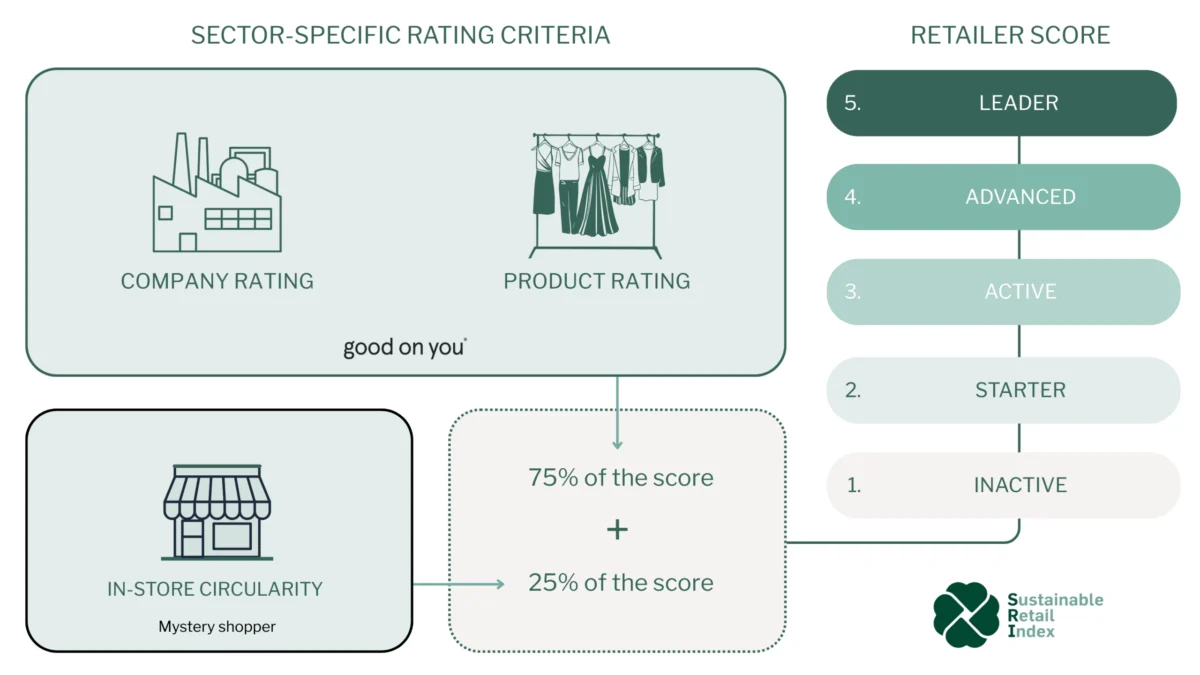
The Sustainable Retail Index (SRI) itself is an assessment tool designed to provide landlords with granular data on their tenants’ sustainability performance. It combines Good On You’s established brand rating data, which evaluates brands across environmental impact, labor practices, and animal welfare, with specific in-store operational practices. This includes metrics covering the brand’s entire value chain, from raw material sourcing and manufacturing transparency to whether it offers circularity services within its physical stores, such as repair workshops, take-back programs for recycling, or rental options. The index is built on a foundation of reliable, transparent, and publicly available information, ensuring credibility and verifiability.
Anna Drozdowski, global head of sustainable retail and social impact for URW, highlighted the proactive stance: "We are convinced that there is a role to play for landlords to engage with retailers. It’s about how we can support tenants on ESG diagnosis and improvement with dedicated tools." By providing landlords with a clear, measurable framework, the SRIA aims to facilitate informed decision-making regarding tenant selection, operational improvements, and strategic investments in sustainable retail environments.
The Imperative for Action: Data Driving the Shift
The timing of the SRIA’s launch is particularly pertinent, reflecting several converging trends that underscore the urgent need for greater accountability in the retail sector:
-
Resilience of Physical Retail: Despite the undeniable boom in e-commerce over the past decade, physical retail remains the dominant shopping channel globally. In 2024, approximately 73% of UK retail sales occurred in brick-and-mortar stores. Similarly, in the US, while e-commerce sales are projected to reach $1.6 trillion by 2028, this will still constitute only 24% of total retail sales, according to Forrester research. This enduring prominence means that the environmental and social footprint of physical retail spaces and their tenants is substantial and cannot be ignored. Landlords, therefore, manage a significant portion of the retail sector’s direct impact.
-
Mounting Investor Pressure: ESG-focused investing has moved from a niche concern to a mainstream expectation. A 2023 report by Morgan Stanley revealed that 88% of investors globally are interested in companies that achieve both financial and ESG-linked returns. Institutional investors, particularly in Europe, are increasingly scrutinizing the climate risk and supply chain ethics embedded within their portfolios. For real estate companies, this translates into rigorous demands for transparency regarding the sustainability performance of their assets and the tenants within them. Landlords capable of demonstrating portfolio-level sustainability data gain a competitive edge in attracting capital and managing risk. As Capponi notes, "There are shareholders and potential investors asking landlords about how they are derisking their portfolio, and how they are tackling sustainability is definitely a driver. It’s an important one, because it’s not just a moral obligation; it’s commercial too."
-
Evolving Consumer Expectations: Today’s consumers, especially younger generations, are more conscious than ever about the ethical and environmental implications of their purchasing decisions. While a "attitude-behavior gap" sometimes exists (where stated values don’t always translate into purchasing habits), this gap is often attributed to a lack of accessible, trustworthy information and convenient sustainable options. Research from platforms like Zalando in 2025 indicated that after price, key barriers to sustainable shopping include difficulty identifying options, not knowing where to find them, and general confusion about what "sustainability" truly means. Physical retail spaces, curated by landlords, have the potential to bridge this gap by making sustainable choices easier to discover and engage with. "People don’t want to be in places that are just promoting the same old fast fashion; they want variety and options to make better decisions," Capponi emphasizes.
Reimagining Physical Retail: Beyond Consumption
The SRIA’s launch is not an isolated event but rather a strong signal within a broader trend of retail players rethinking the very purpose of shopping centres. The vision emerging is one where retail environments transcend their traditional role as "shrines to consumerism" and evolve into dynamic hubs of education, community engagement, and circularity.
Landlords are actively exploring and implementing a wide variety of initiatives, both independently and in partnership with their tenants. These range from fundamental in-store upgrades, such as eliminating single-use plastic bags, introducing refill stations for beauty and household products, optimizing waste and recycling systems, and deploying energy-efficient lighting, to more ambitious circular economy models.
URW, for instance, has been at the forefront of integrating circularity by collaborating with tenants to introduce rental, resale, and repair services. A notable example is their partnership with Sojo, a next-gen alterations platform, which has launched in both London and Paris Westfield centres. This omni-channel offer provides both online and on-site repair services, addressing a key challenge for many retailers. Drozdowski explains, "The intention behind it was to ask, how can we play our role to support retailers in offering services that maybe they can’t do themselves for different reasons?"
Similarly, independent multi-brand retailers like Percy Langley, which exclusively stocks British brands across its UK locations, view their physical stores as multi-purpose community spaces. Poppy Sherbrooke, founder of Percy Langley, describes their approach: "Our retail spaces are critical for us as event spaces. We’ve done things like repair workshops with our designers showcasing visible repair so that you’re able to learn techniques. We have one of our upcycling brands coming in to make Christmas decorations out of textile waste… and doing workshops where, even if you’re not seeking to buy new clothes, you can still engage with the design community." These examples illustrate a profound shift from purely transactional retail to experiential and educational engagement, fostering a deeper connection with products and promoting longevity.
The Business Case for Green: Financial and Reputational Rewards
The initiatives driven by the SRIA and forward-thinking landlords are not simply altruistic gestures; they are underpinned by a robust business case. The ability to measure and improve tenant sustainability performance offers several tangible benefits:
- Risk Management: By understanding the ESG profiles of their tenants, landlords can better identify and mitigate risks associated with supply chain disruptions, reputational damage, and future regulatory compliance.
- Competitive Advantage: Shopping centres that can demonstrate a strong commitment to sustainability, both in their operations and their tenant mix, will become more attractive to conscious consumers and purpose-driven brands. This translates into increased foot traffic and higher occupancy rates.
- Access to Capital: As mentioned, ESG-focused investors are actively seeking opportunities in sustainable assets. A clear, data-backed sustainability story makes landlords more appealing to these critical financial stakeholders.
- Enhanced Brand Reputation: Proactive engagement in sustainability initiatives enhances the landlord’s brand image, fostering trust and loyalty among consumers, tenants, and the wider community.
- Operational Efficiencies: Driving tenants towards more sustainable practices, such as energy efficiency and waste reduction, can also lead to lower operational costs for the entire centre.
"Landlords like URW and Ingka Centres are taking action to improve the mix of retailers and tenants for a few reasons," Capponi explains. "So they can manage risk in their supply chain and their customer base, so that they can give shoppers better options, and so they can engage other stakeholders that are asking for this information, including investors."
Challenges and the Path Forward
While the launch of the SRIA is a monumental step, the path to truly sustainable retail environments is not without its challenges. Concerns around greenwashing, the complexity of data collection across diverse tenant portfolios, the varying levels of commitment among retailers, and the initial investment costs for infrastructure upgrades are all factors that will need careful navigation.
However, the momentum is undeniable. The SRIA’s ambition to create an industry standard will likely exert pressure on other major landlords to adopt similar measurement tools and engage more deeply with their tenants on sustainability. This collaborative approach has the potential to accelerate the adoption of circular economy principles across the retail sector.
As Sherbrooke of Percy Langley aptly puts it, "The scale that these businesses are working at gives them so much scope and power to make significant change very quickly." By treating sustainability as a portfolio-level concern, rather than merely a marketing add-on, retail landlords are poised to play a pivotal role in shaping a more responsible and resilient future for global commerce. The industry-wide conversation sparked by the SRIA’s launch is a promising start, indicating a long-overdue reckoning with the full scope of retail’s environmental and social impact. The sustained commitment to these initiatives will ultimately determine whether these spaces can truly evolve from mere points of transaction to genuine catalysts for positive societal and environmental change.