








Schwarz Etienne, a venerable Swiss watchmaker with roots tracing back to La Chaux-de-Fonds, has long been recognized for its prowess in crafting intricate movements and components for other esteemed brands. However, in recent years, the company has been steadily increasing its focus on its own Schwarz Etienne label, aiming to capture a larger share of the discerning watch market. While the brand’s commitment to exceptional watchmaking and elegant design is undeniable, achieving widespread recognition has presented a unique challenge. This is a company that operates at the intersection of tradition and innovation, offering timepieces that are neither inexpensive nor positioned at the ultra-luxury echelons, but rather aim to deliver a compelling blend of high-end craftsmanship, premium materials, and a subtle yet impactful touch of novelty. It is within this context that the Schwarz Etienne 1902 GMT emerges as a significant highlight within their current collection, representing a sophisticated evolution of their offerings.

A Heritage of Precision: The Schwarz Etienne Legacy
Founded in 1919 by Paul Arthur Schwarz and his cousin Charles Etienne, Schwarz Etienne established its reputation early on as a manufacturer of high-quality watch movements and ébauches. For decades, the company served as a crucial, albeit often unseen, pillar of the Swiss watch industry, supplying intricate mechanical components that powered timepieces from numerous well-known brands. This behind-the-scenes expertise fostered a deep understanding of horological engineering and finishing, a foundation upon which their own branded watches are built. The transition to prominently showcasing the Schwarz Etienne brand represents a strategic shift, allowing them to directly communicate their design philosophy and technical capabilities to a global audience. This evolution is not without its complexities, as balancing their historical role as a component supplier with their ambition as a distinct watch brand requires careful navigation of market perception and communication strategies.
The 1902 Collection: A New Era of Design
The 1902 collection, introduced in 2025, signifies a deliberate effort by Schwarz Etienne to present a more cohesive and aesthetically focused range of timepieces. This family currently comprises three distinct models: the 1902 Petite Seconde, the 1902 Reserve De Marche, and the 1902 GMT. While the Petite Seconde and Reserve De Marche models showcase fine craftsmanship and commendable finishing, their design language, as noted by industry observers, can at times bear a resemblance to other established high-end brands, potentially diluting their unique horological statement. The 1902 GMT, however, appears to chart a distinct course, offering a compelling combination of familiar case architecture and refined aesthetics with a remarkably innovative dial and movement integration.

The Schwarz Etienne 1902 GMT: A Fusion of Form and Function
The Schwarz Etienne 1902 GMT distinguishes itself through a thoughtfully designed 39mm polished titanium case, available with either a silver or a striking blue dial. This contemporary yet classic case size ensures versatility and comfort for a wide range of wrist sizes. The choice of titanium not only contributes to a lighter feel on the wrist but also lends a modern, understated aesthetic that complements the watch’s functional focus. The polished finish adds a touch of sophistication, ensuring the case catches the light and draws attention to its clean lines and meticulous construction.
Innovative Movement Design: The ASE 320.000 Micro-Rotor Caliber
At the heart of the 1902 GMT lies the in-house developed ASE 320.000 automatic micro-rotor movement. This caliber is not merely an engine; it is a testament to Schwarz Etienne’s commitment to pushing the boundaries of mechanical watchmaking. What sets the ASE 320.000 apart is its unique execution of a 24-hour dial combined with a GMT complication and a subsidiary seconds display. This trifecta of functions is remarkably uncommon in contemporary watchmaking, and Schwarz Etienne appears to have pioneered its integration in this particular configuration.

The 24-hour dial provides an intuitive and clear reading of time in a format favored by many globally, particularly for tracking local time at a glance. The GMT complication, a staple for frequent travelers and global citizens, allows for the tracking of a second time zone with ease. The addition of a subsidiary seconds dial offers a traditional horological touch, enhancing the dial’s visual depth and mechanical intrigue. The synergy of these functions on a single dial presents a fresh and intellectually stimulating take on dual-time zone watches, a category that enjoys immense popularity alongside traditional time-only displays.
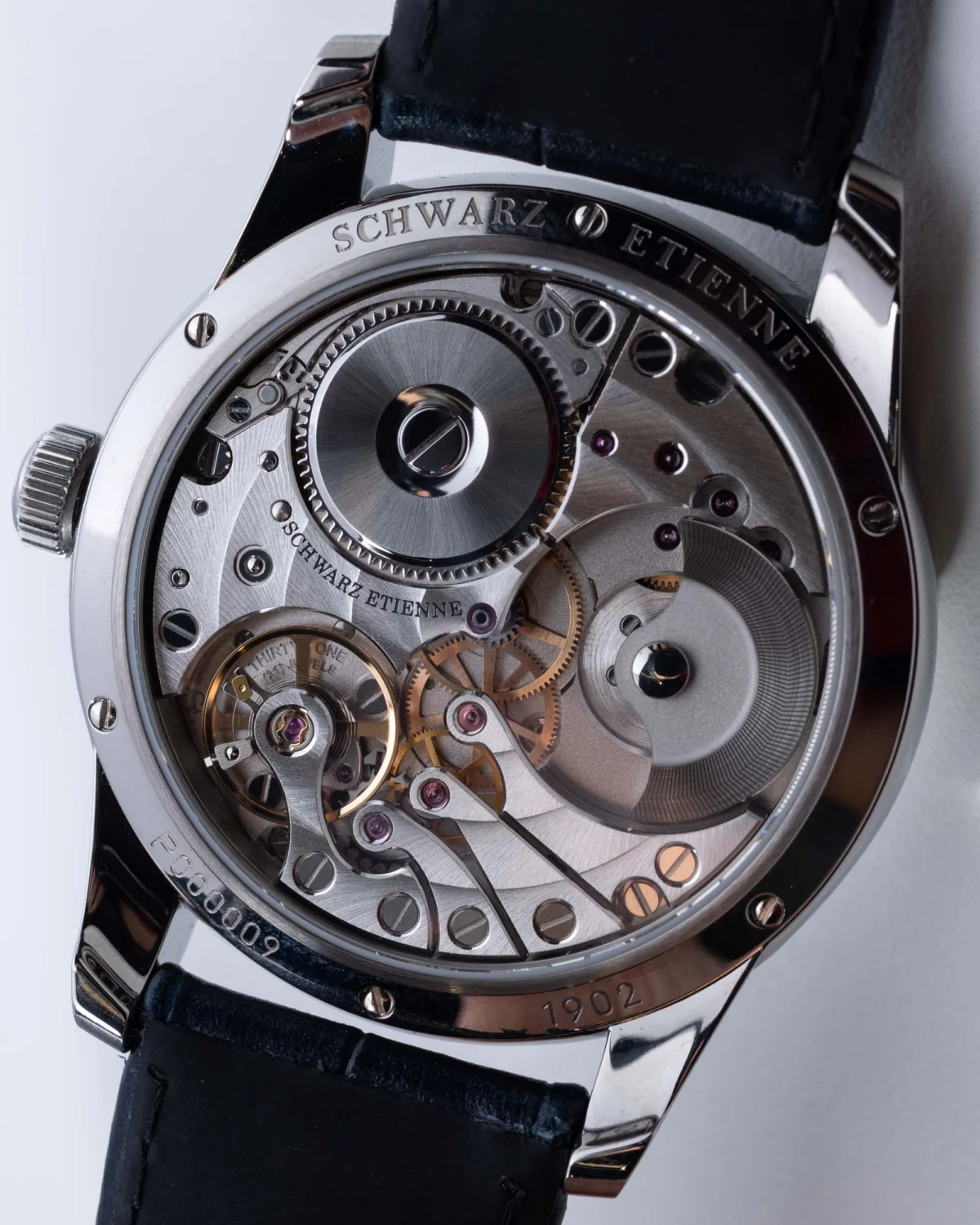
The movement itself is a visual delight, visible through the sapphire crystal caseback. It operates at a frequency of 3Hz (21,600 vibrations per hour) and boasts an impressive power reserve of 86 hours. While the current 3Hz beat rate ensures robustness and longevity, industry watchers might anticipate future iterations potentially increasing to 4Hz for a more fluid sweep of the second hand, a common trend in modern high-performance movements. The architecture of the ASE 320.000 is utilitarian in its core design, but it is elevated through extensive hand-finishing. This includes meticulous anglage (chamfering) on the bridges, a hallmark of fine watchmaking, and an overall aesthetic that emphasizes elegance and precision. The movement’s relatively slim profile, measuring 5.35mm in thickness, contributes significantly to the overall svelte profile of the 1902 GMT, with the entire watch measuring a mere 10.9mm thick. This remarkable thinness for an automatic watch with such complications is a significant engineering achievement.

Dial Design: A Symphony of Legibility and Aesthetics
The dial of the Schwarz Etienne 1902 GMT is where the watch truly shines, offering a captivating blend of classic watchmaking principles and modern design sensibilities. The execution of the dial elements—hands, hour markers, and the dial surface itself—is where Schwarz Etienne demonstrates its mastery. The contrast between the polished hands and markers against the dial surface ensures exceptional legibility, a crucial aspect for any functional timepiece, especially one designed for tracking multiple time zones.
The use of space and depth on the dial is deliberate and artful. The 24-hour ring, the GMT hand, the main hour and minute hands, and the subsidiary seconds subdial are all carefully integrated without creating visual clutter. This thoughtful composition adds an instrumental feel to the watch, reinforcing its purpose as a reliable tool for navigating time across different regions. The dial’s appeal lies not just in its layout but in the meticulous attention to detail: the sharpness of the applied hour markers, the perfect curvature of the hands, and the flawless finishing of the dial surface itself.

The choice of a 24-hour format for reading time, while familiar to many, adds a unique layer of interaction for those accustomed to the 12-hour convention. This subtle novelty enhances the emotional connection to the watch, transforming it from a mere time-telling device into an engaging horological instrument that stands apart from the ubiquitous digital displays on our smartphones. The boldness of the hands and markers, combined with the lightweight titanium case, imbues the 1902 GMT with a slightly sportier edge, yet its overall design leans towards a dressier, more traditional aesthetic. This duality makes it a highly adaptable timepiece, suitable for both formal occasions and more casual settings.
Materiality and Durability: Craftsmanship in Every Detail
The 39mm titanium case is not only aesthetically pleasing but also functionally robust. With a water resistance rating of 50 meters, it offers a degree of protection against everyday encounters with water, such as handwashing or unexpected rain showers. Protecting the dial is a slightly domed, anti-reflective coated sapphire crystal. This choice of material provides superior scratch resistance, ensuring the clarity of the dial remains uncompromised over time. The domed profile adds a subtle vintage charm and helps to reduce glare, further enhancing legibility.

Complementing the watch’s refined design is a blue alligator leather strap, thoughtfully lined with rubber for enhanced comfort and durability. This combination of luxurious leather on the exterior and practical rubber on the interior is a testament to Schwarz Etienne’s commitment to wearability and thoughtful design choices. The strap is secured by a buckle that matches the case material, maintaining a cohesive aesthetic.
Market Positioning and Value Proposition
The Schwarz Etienne 1902 GMT positions itself in a segment of the watch market that values independent watchmaking, technical innovation, and high-quality finishing, without necessarily commanding the astronomical prices of some of the most established haute horlogerie brands. While the price point of 21,500 CHF (Swiss Francs) places it in the luxury category, it represents a significant value proposition when considering the in-house movement, the intricate complications, the hand-finishing, and the overall quality of materials and construction.

In a market where dual-time zone watches are among the most sought-after complications, the 1902 GMT offers a unique interpretation that blends traditional aesthetics with a novel functional arrangement. This approach draws parallels with the enduring appeal of brands like Patek Philippe, where classicism, functional complications, and exceptional dial readability are paramount. While not a direct imitation, the 1902 GMT shares that underlying philosophy of creating a timepiece that is both a sophisticated instrument and a cherished object of art. The price reflects the significant investment in research, development, and artisanal craftsmanship required to produce such a watch in limited quantities, a characteristic that further enhances its desirability among collectors.
Broader Implications for Independent Watchmaking
The success of timepieces like the Schwarz Etienne 1902 GMT has broader implications for the independent watchmaking sector. It demonstrates that established manufacturers with deep technical expertise can carve out a significant niche for themselves by focusing on innovation, quality, and a clear brand identity. By offering a compelling alternative to larger, more mainstream luxury brands, Schwarz Etienne contributes to a vibrant and diverse watch market. The emphasis on in-house movements and unique complications validates the enduring appeal of mechanical watchmaking for a discerning clientele who appreciate the artistry and engineering that goes into each timepiece. The 1902 GMT serves as a powerful statement of Schwarz Etienne’s capabilities and their vision for the future, signaling their intent to be recognized not just as a supplier of exceptional components, but as a creator of exceptional watches in their own right.