








The landscape of beauty, once sharply divided by price point, is experiencing a significant shift as drugstore foundations increasingly rival their high-end counterparts in both performance and formulation. This evolution, driven by advancements in cosmetic science and a growing demand for inclusivity, means that achieving a flawless complexion is no longer solely the domain of luxury brands. Makeup artists and industry experts are observing a narrowing gap, with affordable options delivering sophisticated results that cater to a diverse range of skin types, concerns, and preferences.
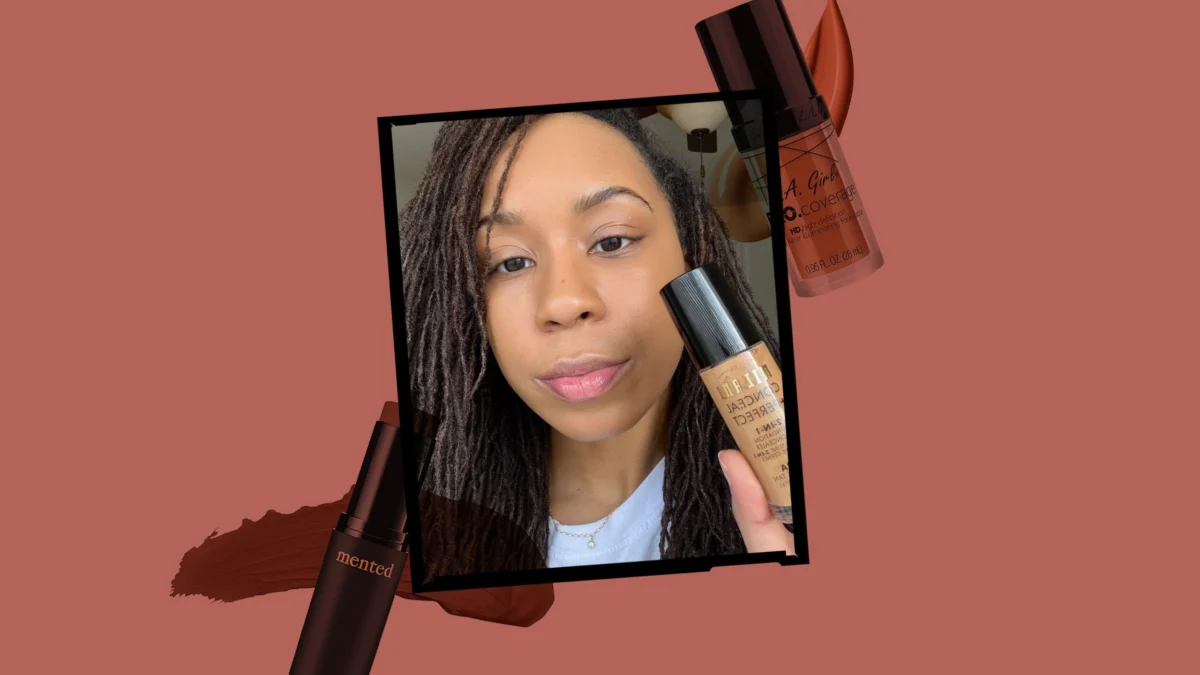
Marie, a prominent makeup artist whose insights are featured in recent beauty industry discussions, highlights a key factor in this transformation: the formulation of modern drugstore foundations. She specifically notes the Mented stick foundation as an example, contrasting its texture with older formulas. "Unlike other stick foundation formulas, Mented’s doesn’t have that waxy, slippery texture," she observes. This suggests a move towards more refined emulsions and pigment dispersion, moving away from potentially heavy or difficult-to-blend bases. Her recommendation for application – warming the product between fingers or on the back of the hand before using a dense foundation brush – further underscores the desire for seamless integration with the skin, a hallmark of high-quality makeup. This technique, while simple, speaks to the inherent adaptability of these improved formulas, allowing for a customized application that maximizes their potential.
The Democratization of Beauty: Challenging the High-End Monopoly
The notion that superior foundation performance is intrinsically linked to a premium price tag is being actively dismantled. For years, consumers have been conditioned to associate high-end foundations with superior ingredients, advanced technology, and therefore, better results. However, industry analysis reveals that the core chemical formulations of many foundations, whether found on a drugstore shelf or in a department store, share significant commonalities.
"Drugstore and high-end foundations share similar base formulations, making it achievable to attain high-end results at affordable prices," Marie confirms. This assertion is supported by the fact that many of the foundational ingredients – emollients, humectants, pigments, and film-formers – are available to all cosmetic manufacturers. The primary differences often lie in the proprietary blends, the concentration of certain active ingredients, and the brand’s marketing and packaging strategies.
Furthermore, for individuals with sensitive or reactive skin, drugstore foundations may even offer an advantage. "For sensitive or reactive skin specifically, drugstore may actually be the better call, as they are less likely to incorporate fragrance and alcohol," Marie elaborates. These ingredients, often included in higher-end products for sensory appeal or preservation, can be common triggers for irritation. The reduced likelihood of these potential irritants in many drugstore formulations makes them a safer and more accessible choice for a significant segment of the population. As she aptly puts it, "the difference between drugstore and high-end foundation narrows down to technique and product choice." This empowers consumers, shifting the focus from the brand name to the individual’s understanding of their skin and makeup application.
Tailoring to Every Age and Stage: Drugstore Foundations for Mature Skin
The aging process brings about natural changes in the skin, including the appearance of fine lines, a decrease in elasticity, and potential shifts in hydration levels. Historically, some foundations could exacerbate these concerns, settling into lines and creating a heavy, "cakey" appearance. However, contemporary drugstore offerings are increasingly designed to address these specific needs.
Marie identifies two crucial qualities that make drugstore foundations particularly well-suited for mature skin: "lightweight and breathable." A lightweight texture is paramount because, as she explains, "it minimizes the appearance of fine lines and texture, avoiding a ‘cakey’ look that can emphasize rather than conceal these concerns." This focus on a sheerer, more adaptable coverage allows the skin’s natural texture to show through, creating a more youthful and natural finish.
Beyond texture, the integration of skincare benefits is a significant development. "She also highlights that many drugstore foundations now incorporate active skin-care ingredients like hyaluronic acid for added nourishing, softening benefits," Marie states. Hyaluronic acid, a potent humectant, draws moisture into the skin, promoting hydration and plumping the complexion, which can help to soften the appearance of fine lines. Other beneficial ingredients commonly found in modern drugstore foundations include niacinamide for improving skin texture and barrier function, and antioxidants like Vitamin E to protect against environmental stressors. This dual-action approach, offering both cosmetic coverage and skincare benefits, represents a major leap forward in accessible beauty.
Navigating the Shelves: Key Considerations for Drugstore Foundation Selection
With the expanding array of options, selecting the right drugstore foundation requires a strategic approach. Consumers are encouraged to move beyond brand loyalty and focus on understanding their individual needs and the product’s capabilities.
"Familiarize yourself with foundation finish keywords that align with your makeup goals," advises Marie. This is a critical step in deciphering product descriptions. "Terms such as matte and blur indicate oil-controlling and pore-minimizing ingredients, while dewy, smooth, and radiant indicate hydrating, light-reflecting formulas." Understanding these terms allows consumers to match foundation finishes to their skin type and desired aesthetic. For example, someone with oily skin might seek out a "matte" or "blurring" formula to help control shine and minimize the appearance of pores, while someone with dry or mature skin might opt for a "dewy" or "radiant" finish to impart a healthy glow.
Beyond the finish, shade matching remains a paramount concern. "From there, she recommends comparing shade ranges across brands to find the best match," Marie suggests. The improvement in shade inclusivity across drugstore brands in recent years has been a significant development, with many brands now offering a broader spectrum of undertones and depths. This allows for a more precise match, crucial for a seamless application and natural look.
Finally, ensuring product integrity is essential. "and always checking the product’s expiration date and point after opening symbol to ensure the formula is ‘both safe and performing at its optimal efficacy’," Marie stresses. Makeup products, like other cosmetics, have a shelf life. Using expired foundation can lead to compromised performance, altered texture, and potential skin irritation. The "period after opening" symbol (often depicted as an open jar with a number followed by ‘M’) indicates how many months the product is best used after being opened. Adhering to these guidelines ensures both safety and optimal product performance.
The Allure Methodology: A Commitment to Rigorous Review
The insights provided by experts like Marie are informed by a comprehensive and evolving product testing and review process. Publications like Allure prioritize a multi-faceted approach to evaluating beauty products, ensuring that recommendations are grounded in thorough research and real-world application.
"Before reviewing any makeup, we ask questions about a number of factors: What ingredients are in it? Does the brand offer a wide shade range inclusive of consumers with all skin tones and undertones? Is it safe for readers who have sensitive skin or wear contact lenses? Is it on the affordable side or more of a splurge? Is its packaging consciously designed or needlessly wasteful?" This systematic inquiry forms the bedrock of their review process. It goes beyond simply liking a product; it delves into its composition, ethical considerations, and practical application for a diverse audience.
For their specific review of the best drugstore foundations, the editorial team implemented a rigorous testing protocol. "we enlisted the help of multiple editors, writers, contributors, and makeup artists to review the products. This ensures our testing base spans different skin tones, genders, and dermatological conditions." This commitment to diversity in testers is crucial. A foundation that performs exceptionally on one skin tone or type may not do so on another. By involving a broad spectrum of individuals, Allure aims to provide a more representative and reliable assessment of a product’s performance across various scenarios.
The evaluation process itself is categorized into primary areas: "ingredients, wear and longevity, packaging, and inclusivity." This structured approach allows for a comprehensive understanding of each product’s strengths and weaknesses. Ingredients are scrutinized for their efficacy and potential for irritation. Wear and longevity are assessed by observing how the foundation holds up throughout the day, including its tendency to fade, crease, or transfer. Packaging is examined for its practicality, sustainability, and ease of use. Inclusivity, a cornerstone of modern beauty standards, is judged on the breadth and accuracy of the shade range, as well as the product’s suitability for different skin concerns. Further details on their methodology can be found on their dedicated reviews process and methodology page, underscoring a dedication to transparency and credibility.
A Reflection of Diversity: The Importance of an Inclusive Testing Team
The philosophy underpinning comprehensive product reviews emphasizes that beauty is not a monolithic experience. Allure‘s dedication to a diverse testing team stems from a recognition that individual needs and experiences shape perceptions of product efficacy.
"A beauty product is a personal purchase. You might be searching for a face cream to address persistent dryness or a new nail product to add to your Sunday self-care routine. You may simply be browsing for the latest launches to hit the hair market. No matter what you seek or your individual needs and concerns, Allure wants to ensure that you love anything we recommend in our stories." This statement encapsulates the publication’s user-centric approach. It acknowledges that beauty purchases are often driven by specific concerns, personal preferences, and a desire for products that genuinely enhance well-being.
The editorial team’s diverse background is presented as a core asset in achieving this goal. "We believe that having a diverse team of writers and editors—in addition to the wide range of outside testers and industry experts we regularly call upon—is essential to reaching that goal." This highlights a multi-pronged strategy: internal expertise combined with external, real-world testing.
The publication poses rhetorical questions that effectively illustrate the necessity of this diversity. "After all, can we really say a skin-care product is the ‘best’ for people over 50 if the only testers we’ve solicited opinions from are folks who have yet to hit 30? Can we honestly deem a high-end diffuser worthy of your hard-earned cash if it’s never been tested on curls?" These questions underscore the limitations of homogeneous testing groups and the importance of representing a wide range of demographics and physical characteristics.
The article concludes by proudly stating: "We’re proud that our staff spans a wide range of ages, skin tones, hair textures, genders, and backgrounds, which means that we’re able to fairly assess any beauty product that comes into the beauty closet." This assertion reinforces their commitment to impartiality and their ability to provide recommendations that are relevant and trustworthy for a broad and diverse consumer base. This dedication to inclusive testing not only validates the quality of drugstore foundations but also empowers consumers to make informed decisions in an increasingly accessible and sophisticated beauty market.