



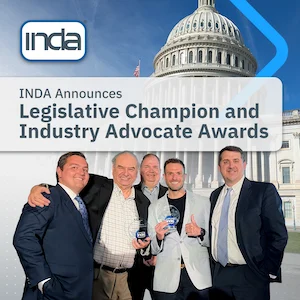
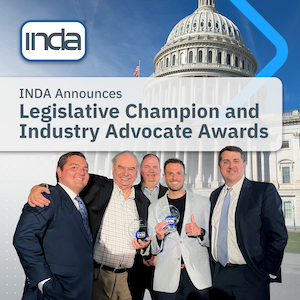
In a significant gathering of policymakers and industrial leaders in the nation’s capital, INDA, the Association of the Nonwoven Fabrics Industry, officially announced the recipients of its inaugural Legislative Champion and Industry Advocate of the Year Awards on March 27, 2026. The awards, presented during the third annual Washington D.C. Fly-In and Advocacy Summit, serve to honor individuals who have demonstrated exceptional commitment to advancing the legislative priorities and economic health of the nonwovens sector. The timing of the ceremony was particularly auspicious, coinciding with a major legislative breakthrough regarding the labeling of non-flushable products, a primary concern for both the industry and municipal wastewater managers across the United States.
A Landmark Victory for the WIPPES Act
The highlight of the summit was the presentation of the Legislative Champion Awards to Senator Jeff Merkley (D-OR) and Congresswoman Lisa McClain (R-MI). Both lawmakers were recognized for their tireless bipartisan efforts to advance the Wastewater Infrastructure Pollution Prevention and Environmental Safety (WIPPES) Act. The legislation, identified as S. 1092, represents a critical step toward standardizing the labeling of non-flushable wipes, ensuring that consumers receive clear and consistent guidance on proper disposal.
Senator Merkley, who attended the summit in person, provided the attendees with a momentous update: the WIPPES Act had passed the United States Senate by unanimous consent just one day prior to the ceremony. This rare show of absolute bipartisan agreement underscores the urgency of the issue and the effectiveness of the advocacy work spearheaded by INDA and its partners. The bill aims to establish a federal requirement for "Do Not Flush" labels on packages of non-flushable wipes, such as baby wipes, cleaning wipes, and makeup removal pads, which are frequently misidentified as flushable by consumers.
The passage of the WIPPES Act in the Senate is the culmination of years of negotiation between the nonwovens industry and wastewater associations. By mandating a uniform, high-visibility symbol, the act seeks to mitigate the catastrophic impact that non-flushable materials have on municipal sewer systems. Congresswoman McClain has been equally instrumental in the House of Representatives, building a coalition of support that bridges the gap between industrial interests and environmental stewardship.
Honoring Excellence in Industry Advocacy
Beyond the legislative sphere, INDA also recognized two prominent figures within the private sector for their dedication to the industry’s collective goals. The Industry Advocate of the Year awards were bestowed upon Martyn Davis, President of Sellars Nonwovens, and Sam Nebel, co-founder of Goodwipes.
Martyn Davis has long been a vocal proponent of sustainable manufacturing and the economic importance of the nonwovens sector in the American Midwest. Under his leadership, Sellars Nonwovens has become a benchmark for operational excellence and proactive engagement with regulatory bodies. His work has focused on ensuring that federal policies support domestic manufacturing while promoting environmental responsibility.
Sam Nebel, representing the innovative and consumer-facing side of the industry, was recognized for his pivotal role in wipes advocacy. As a co-founder of Goodwipes, Nebel has been at the forefront of the "flushability" conversation, working to align brand messaging with technical standards. His advocacy has been essential in bridging the gap between young, high-growth companies and the established regulatory frameworks of the nonwoven industry.
Wes Fisher, INDA’s Director of Government Affairs, emphasized the importance of these contributions during the ceremony. “INDA would like to extend a heartfelt thanks and congratulations to all awardees,” Fisher stated. “It was a great moment for Senator Merkley to join us in person to share the news of the Senate passage of the WIPPES Act. He and Representative McClain have been instrumental in moving this key legislation. Additionally, we would like to thank and recognize Sam and Martyn for their steadfast support of the nonwovens industry’s advocacy agenda.”
The Economic and Environmental Context of the Nonwovens Industry
The nonwovens industry is a vital, yet often overlooked, pillar of the global economy. Valued at over $50 billion globally, the sector produces materials essential for healthcare, hygiene, filtration, automotive, and construction applications. In the United States, the industry supports tens of thousands of high-skilled manufacturing jobs and contributes significantly to the national GDP.
However, the rapid growth of the wipes market—driven by consumer demand for convenience and hygiene—has created significant challenges for public infrastructure. Data from the National Association of Clean Water Agencies (NACWA) indicates that improper disposal of non-flushable wipes costs U.S. wastewater utilities an estimated $441 million to $1 billion annually. These costs stem from equipment damage, sewer blockages, and the labor-intensive removal of "fatbergs"—massive congealed masses of grease and non-biodegradable wipes that clog city pipes.
The WIPPES Act addresses this by creating a national standard that replaces a patchwork of varying state regulations. For manufacturers, this provides regulatory certainty and reduces the complexity of packaging design. For municipalities, it promises a reduction in the volume of non-dispersible material entering the waste stream.
Chronology of the Advocacy Summit and the WIPPES Act
The 2026 Washington D.C. Fly-In and Advocacy Summit marked the third year of this collaborative effort between INDA and ISSA, the Worldwide Cleaning Association. The partnership reflects the interconnectedness of the cleaning and nonwoven industries, particularly in the professional and commercial cleaning sectors.
- 2023-2024: INDA and ISSA establish the joint Advocacy Summit to provide a unified voice for the hygiene and cleaning sectors in D.C. Early versions of the WIPPES Act are introduced but face delays in committee.
- 2025: The introduction of S. 1092 by Senator Merkley and the companion bill in the House by Representative McClain. INDA increases its grassroots efforts, mobilizing member companies to contact their representatives.
- March 26, 2026: The U.S. Senate passes the WIPPES Act by unanimous consent, signaling a major victory for the coalition of industry and environmental groups.
- March 27, 2026: INDA holds its third annual Fly-In, presenting the inaugural awards and celebrating the Senate’s decision.
The summit featured a series of briefings where industry leaders met with over 50 congressional offices to discuss not only labeling but also trade policy, PFAS (per- and polyfluoroalkyl substances) regulations, and workforce development. The event serves as a platform for small and large businesses alike to explain the technical nuances of their products to lawmakers who draft the regulations governing them.
Broader Implications and Future Outlook
The recognition of Senator Merkley and Representative McClain highlights a rare instance of successful bipartisan cooperation in a polarized political climate. By focusing on practical solutions for infrastructure and consumer clarity, the WIPPES Act has become a model for industry-specific legislation.
The implications of this legislative success extend beyond the United States. As global markets look toward the U.S. for regulatory trends, the standardization of "Do Not Flush" labeling is likely to influence international standards, particularly in Europe and Asia, where similar infrastructure challenges exist.
For the nonwovens industry, the inaugural awards signal a new era of proactive political engagement. Historically, the industry operated largely behind the scenes. However, as environmental scrutiny increases and the definition of "single-use plastics" evolves, INDA has recognized the necessity of having a seat at the table in Washington.
The Industry Advocate awards given to Martyn Davis and Sam Nebel also highlight the importance of internal leadership. By honoring those who take time away from their corporate duties to engage in the tedious work of policy advocacy, INDA is fostering a culture of civic participation within its membership. This engagement is crucial as the industry navigates future challenges, including the transition to more sustainable, biodegradable fibers and the ongoing global supply chain adjustments.
Conclusion and Next Steps
As the 2026 Fly-In concluded, the focus of the nonwovens industry shifted toward the House of Representatives. With the Senate’s unanimous approval, momentum is high for the WIPPES Act to reach the President’s desk. The advocacy work of INDA members remains vital in ensuring that the House moves swiftly to mirror the Senate’s actions.
The inaugural Legislative Champion and Industry Advocate of the Year Awards have set a high bar for future recognition. By honoring those who bridge the gap between industrial innovation and public policy, INDA has reinforced its role as a critical intermediary in the American economic landscape. The success of the WIPPES Act serves as a testament to what can be achieved when technical expertise, corporate responsibility, and legislative will align to solve tangible problems for the American public.
With continued growth projected in the nonwovens sector, particularly in the medical and industrial filtration markets, the relationship between Washington and the industry will only deepen. The 2026 summit has established a clear roadmap for how this relationship can yield benefits for manufacturers, consumers, and the environment alike.