










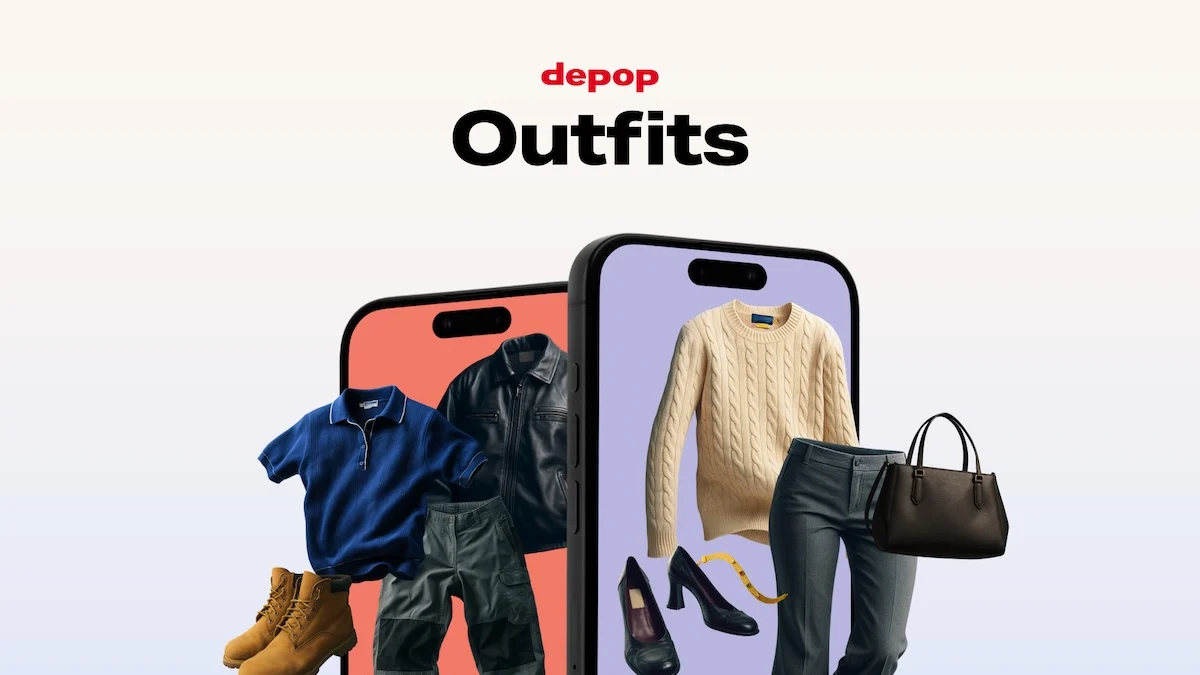
Fashion resale powerhouse Depop officially announced on Wednesday the rollout of "Outfits," a sophisticated styling and collaging tool engineered to transform the way users interact with secondhand apparel. This new feature introduces a dedicated mood board-like interface within the application, empowering the platform’s predominantly Gen Z user base to curate, design, and share digital fashion compositions. By integrating creative expression directly with its e-commerce engine, Depop aims to transition from a transactional marketplace into a holistic social styling hub, encouraging users to visualize complete looks rather than viewing individual garments in isolation.
The introduction of Outfits arrives at a pivotal moment for the London-based company, which has seen its influence swell as the circular economy moves into the mainstream of global retail. The tool is accessible through a streamlined user interface: when a user identifies a specific item they wish to style, they can select a "scissors" icon located on the right side of the visual display. This action triggers a suite of customization options, allowing the user to remove backgrounds, adjust image sizing, and manipulate the placement of various items on a digital canvas. To assist those seeking structured inspiration, Depop has included a variety of pre-designed templates that serve as layout guides for professional-looking fashion editorials.
Crucially, the feature is built on a "shoppable" framework. Every item featured within a collage is linked directly to its active listing. In an effort to mitigate the friction caused by the unique nature of secondhand inventory—where items are often one-of-a-kind and sell quickly—Depop has integrated an intelligent recommendation engine. If a specific piece within a shared outfit sells out, the app automatically generates suggestions for similar alternatives currently available on the platform, ensuring that the creative inspiration remains a viable pathway to purchase.
A Strategic Pivot Toward Social Commerce and Visual Storytelling
The launch of Outfits is not merely a technical update but a strategic response to the shifting habits of young consumers who increasingly view shopping as a form of content creation. By providing internal tools for collaging, Depop is reclaiming a segment of user activity that previously took place on external platforms. Historically, Depop "sellers" and "style influencers" would export item photos to third-party editing software to create promotional graphics for their shops. By internalizing this process, Depop increases "time spent in-app" and captures valuable data on how users pair different brands and aesthetics.
This move aligns Depop with broader industry trends popularized by platforms like Pinterest. In 2022, Pinterest launched "Shuffles," a standalone collage-making app that quickly went viral on TikTok and was subsequently integrated into the main Pinterest ecosystem. The "Polyvore" era of the early 2010s—referring to the defunct but beloved social commerce site that pioneered digital fashion mood boards—has seen a massive resurgence among Gen Z. This demographic prizes "curation" as a form of digital identity. For Depop, providing these tools natively allows it to compete with both traditional social media and rival resale platforms by offering a more "lifestyle-oriented" experience.
Furthermore, the Outfits feature includes robust sharing capabilities. Users are encouraged to export their static curated images to Instagram Stories, Pinterest boards, and TikTok feeds. This creates an organic marketing loop: as users share their Depop-styled outfits on external social networks, they drive new traffic back to the Depop marketplace, effectively turning the user base into a decentralized marketing department.
Financial Performance and Market Position
The announcement of the Outfits tool follows a period of significant financial momentum for Depop’s parent company, Etsy. According to the Q2 2025 earnings report, Depop has emerged as a primary growth engine within the Etsy portfolio. The platform’s Gross Merchandise Sales (GMS) surged by 34.7% year-over-year on a currency-neutral basis. This aggressive growth trajectory has placed Depop on a clear path toward a $1 billion GMS run rate, a milestone that underscores the platform’s dominance in the youth-focused resale sector.
To provide context for this growth, market analysts often compare Depop’s performance to other major players in the secondary market. For instance, Mercari, a significant competitor in the general resale space, reported a Gross Merchandise Value (GMV) of $728 million for the fourth quarter of 2024. While Mercari maintains a broad user base across multiple categories, Depop’s hyper-focus on fashion, community, and "cool factor" has allowed it to achieve higher levels of engagement and faster growth among the valuable 18-to-25-year-old demographic.

Etsy’s acquisition of Depop for $1.6 billion in 2021 was initially met with some skepticism regarding the high valuation. However, the 2025 financial data suggests that the investment is yielding substantial returns as the "re-commerce" sector continues to outpace traditional retail. The introduction of Outfits is seen as a move to defend this market share against emerging threats from ultra-fast fashion giants like Shein—which recently launched its own resale program—and established competitors like Vinted and Poshmark.
Timeline of the Digital Fashion Collage Trend
The evolution of fashion collaging reflects a broader shift in digital consumption over the last two decades. Understanding this chronology explains why Depop is prioritizing the Outfits feature now:
- 2007–2018: The Polyvore Era. Polyvore becomes the gold standard for fashion mood boards, creating a community of millions who curated "sets." Its abrupt closure in 2018 after being acquired by SSENSE left a significant void in the market.
- 2019–2021: The Rise of Manual Curation. Without a central platform, Gen Z users began using general design tools like Canva or Instagram’s "layout" features to create "aesthetic" shop announcements for their Depop and Poshmark stores.
- 2021: Etsy Acquires Depop. The $1.6 billion deal signals the mainstreaming of social resale.
- 2022: Pinterest Shuffles. Pinterest releases a dedicated collage app to capture the Gen Z "vibe shift," proving that visual curation is a primary driver of discovery for young shoppers.
- 2024: Integration of Commerce and Creativity. Major platforms begin merging creative tools with direct "buy" buttons.
- 2025: Depop Launches "Outfits." Depop formalizes the styling process, making the "mood board to checkout" pipeline seamless.
Implications for Sellers and the Circular Economy
For the millions of independent sellers on Depop, the Outfits tool serves as a sophisticated merchandising asset. In the traditional resale model, a seller’s success depends largely on the quality of a single product photo. With Outfits, sellers can now demonstrate the versatility of their inventory. A vintage blazer, for example, can be featured in multiple collages—one styled for a "90s corporate" look and another for a "streetwear" aesthetic. This helps buyers visualize how a secondhand item fits into a modern wardrobe, reducing the perceived risk of buying used clothing.
From a sustainability perspective, the tool reinforces the "circular fashion" ethos. By focusing on "styling" rather than just "buying," Depop encourages users to view their existing wardrobes as modular components that can be refreshed with a few key vintage additions. This editorial approach mimics the experience of reading a high-end fashion magazine, but with the added benefit that every item is part of a sustainable, pre-owned ecosystem.
Industry analysts suggest that this move could also improve Depop’s conversion rates. One of the primary barriers to entry for secondhand shopping is the overwhelming amount of "noise"—the millions of disparate items that users must sort through. Curated outfits act as a filter, providing a curated "signal" that helps users navigate the inventory through the lens of specific trends or influencers they trust.
Future Outlook: AI and Personalized Curation
Looking ahead, the launch of Outfits provides a foundation for further technological integration. As Depop gathers data on which items are frequently paired together in user-generated collages, the company can refine its machine-learning algorithms to provide more accurate "Complete the Look" recommendations. This type of predictive styling was once the exclusive domain of high-end luxury retailers but is now being democratized through community-driven platforms.
There is also potential for AI-assisted collaging. Future iterations of the tool could theoretically suggest complementary items to a user’s half-finished outfit board based on color theory, current seasonal trends, or the user’s past purchase history. As the line between social media and e-commerce continues to blur, Depop’s investment in creative tools like Outfits positions it not just as a place to buy clothes, but as a primary destination for fashion inspiration and digital expression.
The Outfits feature is currently live and available to all Depop users globally. As the platform approaches its $1 billion GMS milestone, the success of this tool will likely serve as a benchmark for how other resale platforms integrate social creativity with commercial functionality. For now, Depop has successfully tapped into the cultural zeitgeist, proving that in the world of Gen Z fashion, the way an item is styled is just as important as the item itself.