





The evolution of modern rock and roll is inextricably linked to the visual transformations of its most prominent frontmen, and few artists have navigated this territory with as much stylistic versatility as Alex Turner. Rising to prominence in the mid-2000s as the razor-sharp lyricist and driving force behind the Arctic Monkeys, Turner has continuously redefined his public persona through a carefully curated sequence of hairstyles. From the unpretentious, garage-rehearsed indie scally of his youth to the polished, stadium-filling crooner of his later years, Turner’s grooming choices have mirrored the shifting musical landscapes of his career. This retrospective examines the definitive hairstyles of Alex Turner, charting his journey from Sheffield obscurity to global rock icon, and details the professional techniques required to replicate his most enduring looks.

Background Context and the Rise of an Indie Icon
The cultural trajectory of the Arctic Monkeys remains one of the most remarkable anomalies in British music history. Emerging from High Green, Sheffield, the band bypassed traditional industry gatekeepers by distributing their raw, unvarnished demos through MySpace and word-of-mouth networks. In 2006, their debut studio album, Whatever People Say I Am, That’s What I’m Not, shattered commercial records to become the fastest-selling debut album in British music history.

In the immediate wake of this unprecedented success, the band members maintained an aesthetic that was thoroughly detached from manufactured pop stardom. A widely cited 2007 anecdote captures Turner and his bandmates standing anonymously in a security queue at Ibiza airport, blending seamlessly with exhausted holidaymakers following a sold-out performance at Ibiza Rocks. Looking back, this period represented the final chapter of Turner’s unassuming anonymity. Propelled by precocious lyrical anthems and a rapidly expanding global audience, the twenty-year-old frontman soon stepped into the cultural spotlight, adopting a succession of distinct visual identities that would influence a generation of indie music fans.
The Chronology of Turner’s Stylistic Evolution

Turner’s hair-spiration has long relied on historical touchstones, drawing heavily from the stylistic lineage of British music icons while maintaining a distinctly modern edge. Observers have frequently noted a stylistic parallel between Turner’s career-long hair trajectory and the distinct eras of Beatles icon George Harrison, progressing systematically from youthful mop-tops to sophisticated, vintage-inspired cuts.
Phase One: The Indie Scally Feather Cut (2006–2007)

During the explosive arrival of the Arctic Monkeys, Turner’s hair reflected the unpretentious, garage-band ethos of the UK indie scene. Heavily influenced by predecessors such as Paul Weller, Ian Brown, and Liam Gallagher, this early haircut featured textured layers and classic sideburns that resonated with festival-goers and gig-goers alike.
According to Joshua Gibson, a session stylist at Sassoon Salon and a regular presence backstage at London Fashion Week Men’s, the foundation of this look relies entirely on precision cutting. "It especially needs to be layered on thick, wavy, and unruly hair so that it doesn’t look too wig-like," Gibson explains. To achieve the requisite movement without sacrificing hold, stylists recommend avoiding heavy gels in favor of conditioning styling creams. The product should be worked through damp hair using a comb before allowing the style to dry naturally or via a rough finger-dry.

Phase Two: The Mop Top and Collaboration (2007–2008)
As Turner’s creative horizons expanded—most notably through his collaboration with Miles Kane in The Last Shadow Puppets—his hair underwent a noticeable elongation, occasionally featuring a nascent mullet at the nape. Reminiscent of the classic 1960s British invasion cuts remembered fondly by older generations, this iteration varied from parted fringes to locks hanging moodily across the eyes.

Styling this longer, texturized silhouette requires maintaining length along the perimeter while layering the interior. For those with thick, wavy hair, experts advise applying a moisturizing curl cream from roots to ends, followed by a gentle shake to prevent a defined part. Individuals with finer hair types achieve better results using a medium-hold mousse to impart body without weighing the strands down, utilizing low heat from a hairdryer to lock in natural movement.
Phase Three: The Grunge Bed Head (2009–2012)

The release of the Arctic Monkeys’ third studio album, Humbug, in 2009 marked a darker, more psychedelic sonic shift, which was accompanied by Turner’s transition into a full-fledged long-hair era. Influenced by prolonged stints in California, collaborations with Queens of the Stone Age founder Josh Homme, and contemporary fashion circles, Turner adopted a layered, shoulder-grazing grunge aesthetic.
While requiring patience to grow out, this look is best suited for naturally wavy hair textures. Gibson notes that strategic layering is essential to provide facial definition, allowing the hair to be neatly tucked behind the ears. Maintenance of this style relies on a judicious combination of moisturizing hair oils and lightweight volumizing mousses. Applied to damp hair and distributed evenly with a wide-tooth comb, these products ensure the extended waves remain nourished and free from excessive frizz while supporting a casual side parting.

Phase Four: The Rockabilly Quiff (2013–2015)
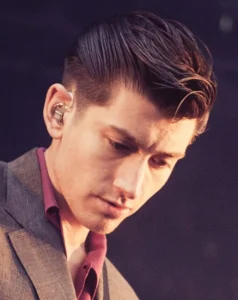
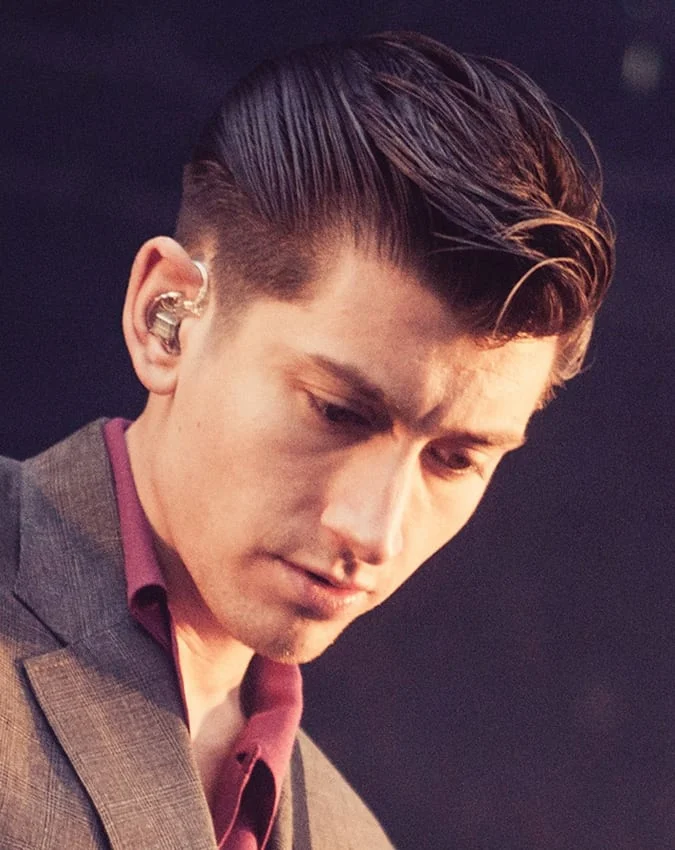
The arrival of the 2013 album AM signaled Turner’s most dramatic visual reinvention. Channeling the 1950s greaser and Teddy Boy subcultures of post-war Britain, Turner debuted a sharply sculpted quiff, characterized by a prominent widow’s peak, a distinct cowlick, and precise side-parting.

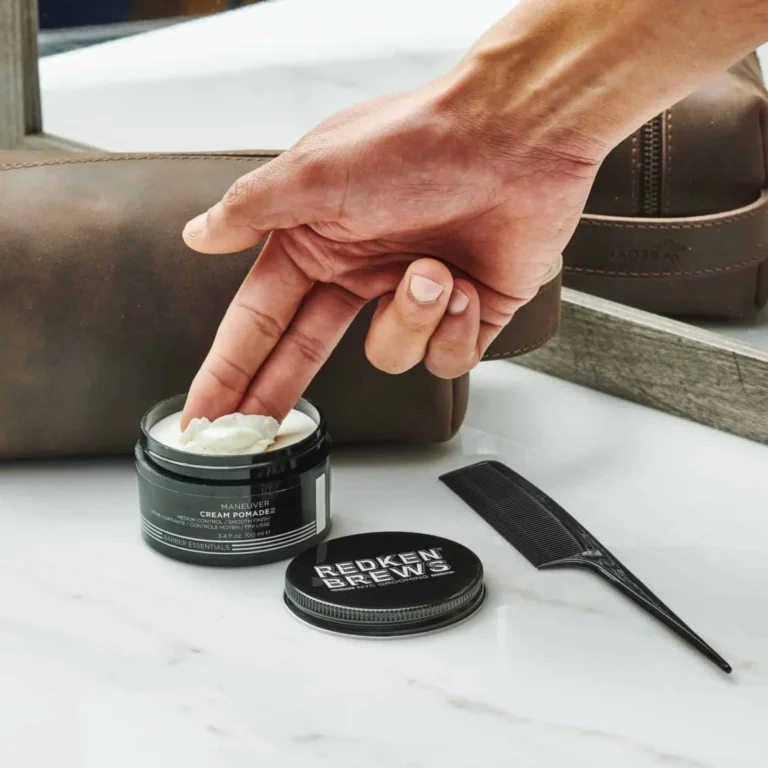
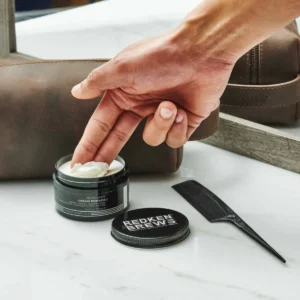
This high-maintenance style requires clean lines around the hairline and graduated layers at the sides to direct the hair away from the face. Achieving the iconic volume associated with this era necessitates a blow-drying routine utilizing a vent brush and a volumizing mousse. For a polished, high-hold finish, stylists recommend working pomade or styling clay sparingly into the roots rather than the ends, ensuring the structure remains elevated throughout the day.
Phase Five: The Long Hair and Beard Combination (2016–2017)

With the release of Tranquility Base Hotel & Casino in 2018, Turner transitioned toward a laid-back, West Coast aesthetic characterized by longer, looser waves and the addition of a well-maintained beard. Moving away from the immaculate precision of the AM era, this hippie-inflected style required a delicate balance between relaxed texture and deliberate grooming.
Replicating this look involves working a styling foam or sea-salt spray through damp hair to establish a strong foundation of texture and wave. Drying the hair upside down using a diffuser attachment prevents frizz while maximizing root lift. Concurrently, facial hair maintenance becomes critical; the accompanying beard must be trimmed with restraint to maintain an intentional, sophisticated edge rather than an unkempt appearance.

Phase Six: The Buzz Cut (2018–Present)
In a move that surprised fans and media outlets alike, Turner discarded his long locks in favor of a low-maintenance buzz cut, publicly debuting the look during an appearance on The Late Show with Stephen Colbert. Mirroring the aesthetic previously adopted by long-time collaborator Miles Kane, the buzz cut offered a stark, liberating departure from his previous styling routines.

Requiring minimal daily maintenance, a standard grade-two clipper cut is sufficient to achieve the look, provided attention is paid to cleaning up the neckline. Grooming experts note that while the buzz cut eliminates the need for morning styling, it places increased emphasis on overall head shape and wardrobe coordination, making it a bold statement for those willing to embrace simplicity.
Broader Impact and Grooming Industry Implications

The continuous evolution of Alex Turner’s hairstyle highlights a broader trend within contemporary male grooming: the rejection of a static personal signature in favor of periodic reinvention. Turner’s ability to pivot seamlessly from mod-inspired youthfulness to retro-greaser sophistication and minimalist modernism underscores the intersection of music, fashion, and personal identity. For consumers and salon professionals alike, Turner’s catalog of looks serves as a practical masterclass in adapting historical hair icons to fit modern sensibilities, proving that versatility remains the ultimate hallmark of a true style icon.