







Netflix’s latest limited series, a sweeping seven-part adaptation of John Steinbeck’s 1952 literary masterpiece East of Eden, has emerged as a significant cultural touchstone of the year. Created by Zoe Kazan, the production offers a modern, psychologically nuanced re-examination of the original text. While the series maintains the core multigenerational narrative involving the Trask family, it distinguishes itself by centering the story on the complex and often controversial character of Cathy Ames, portrayed with critical acclaim by Florence Pugh. This shift in perspective allows for a profound exploration of female agency, trauma, and the performative nature of morality across four decades of American history.

A Historical and Narrative Framework
The series spans 43 years, beginning in the immediate aftermath of the American Civil War in New England and concluding in the 1910s against the looming backdrop of the First World War. This ambitious timeline required a rigorous approach to production design, particularly regarding the aesthetic evolution of the characters. Co-hair and makeup designers Nancy Hennah and Sarah Rubano were tasked with maintaining historical fidelity while reflecting the shifting societal expectations of women from the Victorian era into the early 20th century.
The production team relied heavily on the script’s specific narrative beats rather than existing cinematic interpretations of the novel. By prioritizing Zoe Kazan’s descriptive vision, the design team ensured that the visual cues—hair, makeup, and costuming—served as narrative devices that mirrored the characters’ internal developments. This collaboration extended to Florence Pugh’s personal glam team, including hairstylist Jaime Leigh McIntosh and makeup artist Heba Thorisdottir, who integrated historical accuracy into the character’s physical transformation.

The Chronology of Character Transformation
The narrative arc of Cathy Ames is marked by a deliberate transition from a facade of vulnerable innocence to the calculated power of a brothel owner operating under the name Kate. This trajectory is physically articulated through three distinct wig styles and a shifting palette of cosmetics.
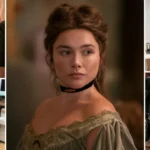
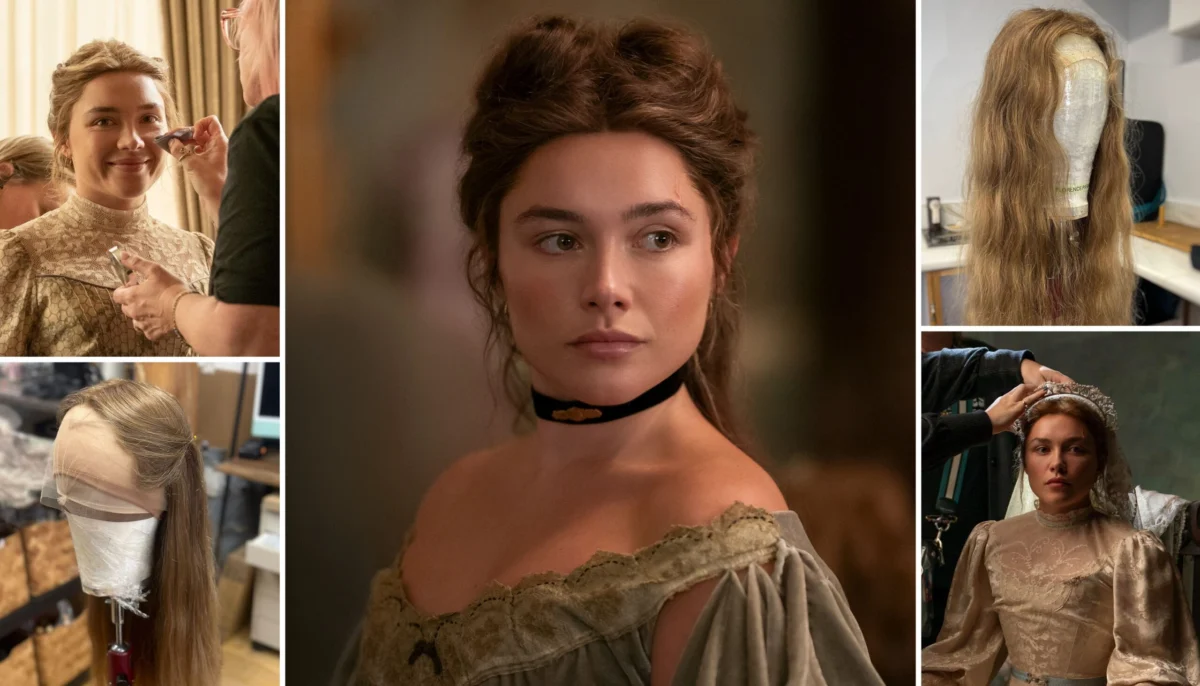
In the early stages, while Cathy is in Boston and later on the Trask family farm in the Salinas Valley, the aesthetic goal was to project youth and non-threatening fragility. To achieve this, McIntosh utilized a lighter, natural-toned wig with sun-kissed ends, designed to look like a mature development of an adolescent blonde. The styling during this period was intentionally simple; given that the character was recovering from injuries sustained during her flight from a previous life, the hair was kept loose and natural to signify helplessness. Small, improvised hair ribbons—some crafted from the fabric of her own blood-stained arrival dress—served as a subtle, metaphorical nod to the trauma lurking beneath her innocent exterior.

As the story progresses to the Salinas Valley, where Cathy marries Adam Trask, her look remains consistent with her "innocent" persona. Makeup artist Heba Thorisdottir employed a skin-first approach, using sheer foundations and subtle, rosy tones from Westman Atelier to simulate a youthful, natural flush. This calculated "faux-naïf" appearance was essential for manipulating the men in her life, particularly Adam, to secure her position and relative safety.
The Emergence of Kate: Power and Performance
The most significant visual shift occurs when Cathy abandons her family to assume the identity of "Kate" at a brothel in Salinas. This pivot is marked by a transition to a darker wig, a move dictated by both the internal logic of the plot—the character is instructed by the town sheriff to change her appearance to avoid detection—and the evolving nature of her role in society.

During her tenure at the brothel, Kate begins to experiment with more elaborate hairstyles. One notable look, which the production team dubbed "kitten ears," became a recurring motif. These two symmetrical peaks in her hair symbolized her growing sense of authority and, eventually, her absolute control over her environment. As she rises to become the owner of the establishment, her style becomes increasingly ornate. The introduction of tiaras and antique hair accessories, sourced by costume designer Kirsty Cameron and independent artists, serves to crown her as the undisputed, albeit morally compromised, sovereign of her domain.
The makeup palette underwent a parallel evolution. As cosmetics became more commercially accessible in the early 1900s, Kate’s look grew bolder. The signature red lip, achieved by mixing Le Rouge Français and MAC Russian Red, serves as a stark visual indicator of her detachment from the "innocent" Cathy. This contrast is most evident in the episode "The Great Try," where her aesthetic reaches its most definitive and authoritative state.

Technical Precision and Production Realism
The commitment to realism went beyond surface-level aesthetics. McIntosh, for instance, avoided modern hot tools entirely, opting instead for traditional "wet setting" techniques to create texture in the wigs, ensuring that the hair behaved as it would have in the late 19th and early 20th centuries. Similarly, Thorisdottir’s approach to makeup was designed to reflect the limited availability of beauty products in rural California during the period, only expanding as the character’s wealth and access to trade grew.
The collaboration between the actors and the design team was a critical factor in the show’s success. Florence Pugh’s willingness to engage in the transformation—even to the point of allowing makeup to "break down" in the final, climactic scenes—added a layer of raw, unvarnished reality that elevated the character’s descent. In the final episode, titled "Tinshel," Kate’s disheveled appearance—complete with messy hair and smeared, worn-in makeup—stands in direct, haunting contrast to the pristine, controlled image she cultivated throughout the series.

Implications and Industry Impact
The meticulous attention to detail in East of Eden represents a growing trend in high-end television production where the visual language of a character is treated with as much gravity as the dialogue. By using hair and makeup as a narrative timeline, the production team has provided a masterclass in visual storytelling.
The success of the series has also had an impact on the broader beauty industry. The specific products mentioned by the design team, particularly the Westman Atelier line, have seen a resurgence in interest, highlighting the influence that period-piece costume and makeup design can exert on contemporary consumer behavior.

Ultimately, the adaptation of East of Eden succeeds because it recognizes that the most powerful revelations of a character’s soul often happen in the quiet moments of preparation—the brushing of hair, the application of lipstick, and the fixing of a ribbon. Through these small, technical decisions, the production has effectively humanized a character historically regarded as a caricature of villainy, grounding her in a tangible, evolving reality that resonates with modern audiences. As the series continues to draw critical acclaim, it serves as a reminder of the vital role that behind-the-scenes artistry plays in defining the legacy of a prestige television project.