





The intersection of artificial intelligence and high fashion has officially moved past the realm of futuristic novelty and into mainstream retail application. Jenny Wang, founder and chief executive officer of the AI-powered fashion technology platform Alta, has spent the past several years turning a childhood dream into a concrete commercial enterprise. What began as a nostalgic nod to the beloved 1995 cult classic film Clueless—in which protagonist Cher Horowitz meticulously coordinates her daily outfits using a computerized wardrobe carousel—has materialized into a sophisticated technological infrastructure. Backed by $11 million in venture capital secured last year in a round led by Menlo Ventures, Alta is systematically reshaping how consumers interact with their wardrobes and how independent designers engage with modern digital shoppers.
The rapid maturation of Alta from a standalone consumer application into an enterprise-level integration tool reflects broader shifts in the retail technology landscape. As artificial intelligence continues to permeate every sector of the global economy, the fashion industry is facing mounting pressure to adopt tools that reduce return rates, enhance consumer engagement, and bridge the gap between physical retail and digital storefronts. By allowing users to construct accurate 3D virtual avatars and populate digital closets with items from thousands of participating brands, Alta has established itself as a frontrunner in the emerging sector of agentic commerce.
A Chronological Evolution: From Concept to Runway Integration
The trajectory of Alta’s development highlights the fast-paced nature of generative artificial intelligence applications within the consumer tech sector. The platform officially launched in 2023, capturing immediate industry attention for its ability to generate high-fidelity virtual outfit try-ons using personal user measurements and preferences. Within its first year of operation, the platform achieved a monumental milestone, generating more than 100 million user-created outfits. This rapid adoption did not go unnoticed by tastemakers and critics; publications including Time and Vogue lauded Alta as one of the standout technological innovations of the year.
Strategic partnerships quickly followed the platform’s initial public debut. Alta secured official collaborations with major resale and industry heavyweights, including Poshmark and the Council of Fashion Designers of America (CFDA). These alliances laid the groundwork for the platform’s expansion into the B2B market, transforming Alta from a consumer-facing styling toy into a comprehensive enterprise solution for apparel brands.
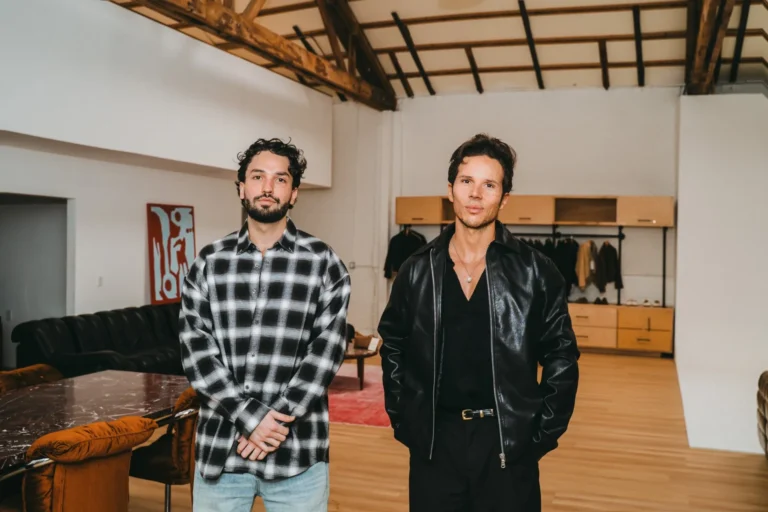
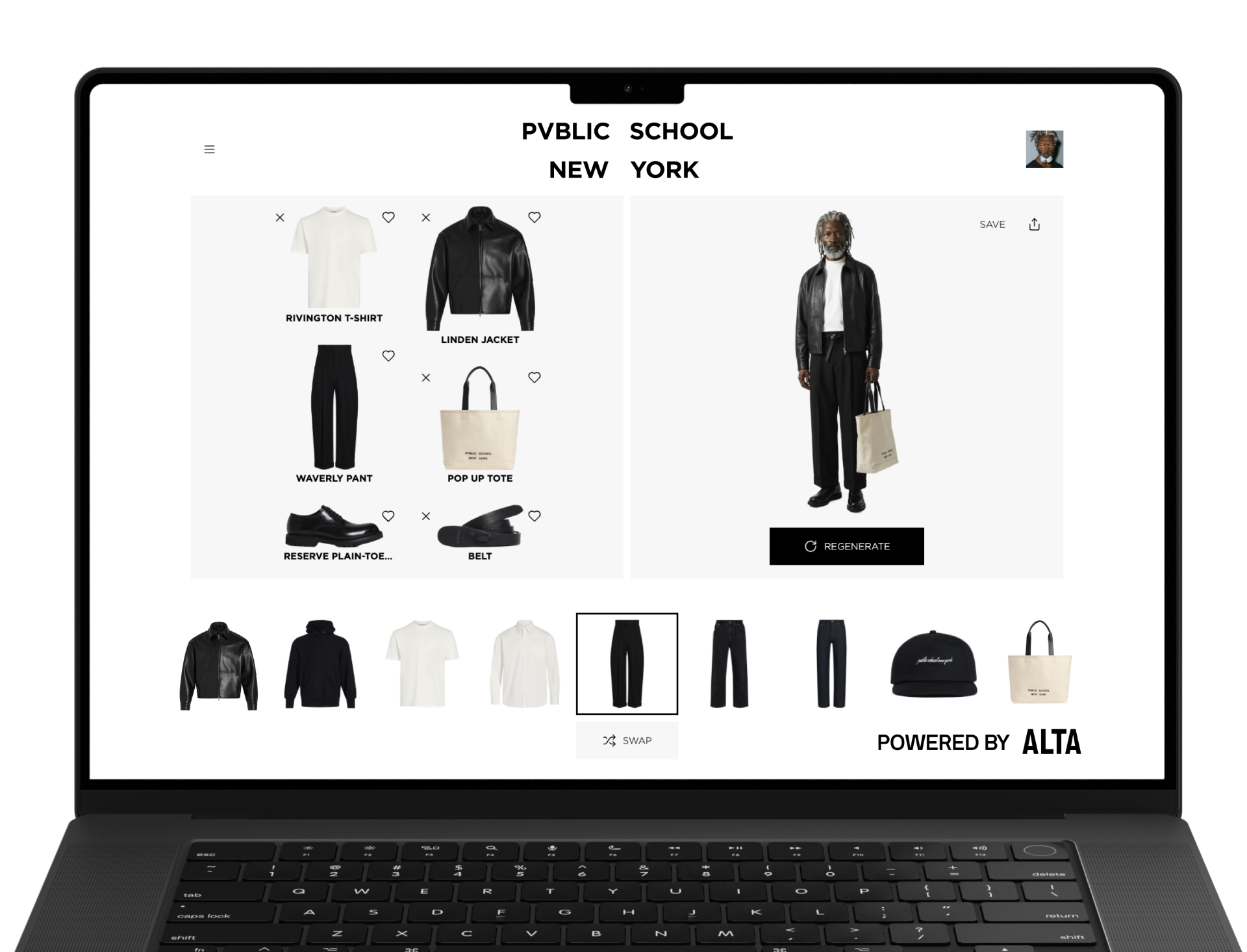
The pinnacle of this expansion materialized during New York Fashion Week (NYFW), where Alta unveiled its landmark integration partnership with Public School New York. The storied urban fashion label, founded by designers Dao-Yi Chow and Maxwell Osborne, chose NYFW as the venue for its grand re-debut following a multi-year hiatus. Instead of relying solely on traditional runway presentations, the brand embraced cutting-edge digital infrastructure by embedding Alta’s "Style with Alta" button directly into its e-commerce product pages. This integration allows prospective buyers to view clothing items from the new collection and instantly test them on their personal Alta avatars prior to making a purchasing decision.
The High-Profile Backing and Investor Confidence
Alta’s rapid ascent has been heavily fueled by a strategic and diverse roster of investors who bring both capital and deep industry expertise to the table. When the company closed its $11 million funding round last year, the capitalization table featured a unique blend of venture capital heavyweights, tech innovators, and fashion icons.
Menlo Ventures spearheaded the investment round, recognizing the vast commercial potential of merging personalized AI avatars with e-commerce logistics. They were joined by the Anthology Fund, the venture capital arm of foundational AI developer Anthropic, underscoring the deep technological sophistication required to power real-time, high-fidelity virtual garment simulation. Furthermore, the inclusion of notable fashion and retail figures—such as supermodels Jasmine Tookes and Karlie Kloss, alongside Rent the Runway co-founder Jenny Fleiss—provided Alta with immediate credibility and invaluable networking channels within the upper echelons of the global fashion industry.
For angel investors like the founder of Poshmark, who ultimately served as the connective tissue introducing Wang to the team at Public School New York, the investment thesis is straightforward. Modern consumers, particularly younger demographics, demand hyper-personalized digital experiences that mirror the convenience and interactivity of social media platforms. By securing high-profile endorsements and strategic allies from both Silicon Valley and Seventh Avenue, Alta positioned itself uniquely at the intersection of venture-backed software and heritage design houses.
Inside the Technology: How Alta Outpaces Competitors

While major fast-fashion and luxury conglomerates—including Zara and Balmain—have previously experimented with digital supermodels and rudimentary virtual try-on features, Alta’s proprietary technology boasts significant technical advantages. According to Wang, existing enterprise solutions often suffer from severe latency and computational limitations. For instance, digital avatar systems deployed by competitors like Zara typically restrict users to dressing their avatars in a maximum of four items simultaneously, with rendering times frequently stretching to approximately two minutes per styling session.
In contrast, Alta’s algorithmic architecture enables avatars to don eight or more distinct items within a matter of seconds. This speed and fluidity are critical for maintaining user engagement in an era of diminishing digital attention spans. The platform achieves this by utilizing a sophisticated data layer that accurately maps body dimensions, historical purchase data, and personal style preferences.
The dual-pronged business model separates the consumer experience from enterprise operations. The standalone consumer application functions as the digital equivalent of Cher Horowitz’s computerized closet, serving as a centralized hub where users can curate, organize, and style their existing physical wardrobes alongside items sourced from thousands of integrated retail brands. Meanwhile, the enterprise tier allows external brand websites to embed Alta’s infrastructure natively, ensuring that shoppers never have to leave a designer’s primary storefront to visualize how a garment will fit their specific body type.
A Paradigm Shift in Brand-Consumer Relationships
The strategic decision by Public School New York to partner with Alta during its highly anticipated industry comeback signals a broader philosophical shift among independent and heritage designers alike. After stepping away from the cyclical pressures of the traditional fashion calendar for several years, Chow and Osborne recognized that navigating the post-pandemic retail landscape required a fundamental reimagining of how brands communicate with their audiences.
Reflecting on the integration during New York Fashion Week, Chow emphasized that technology can no longer be treated as a peripheral marketing gimmick. "We have to look at tech as a partner in the business today," Chow noted in an interview, stressing that the industry has evolved far beyond the superficial digital experiments of the mid-2010s. For Public School, the objective is not to utilize artificial intelligence as a substitute for human design talent, but rather as an extension of narrative storytelling. By deploying Alta’s virtual try-on capabilities, the brand can cultivate meaningful interactions with consumers who may be unable to attend physical fashion shows or visit brick-and-mortar flagship stores in person.
This sentiment is echoed by industry analysts who monitor the commercial implications of generative AI in retail. Historically, one of the primary drivers of cart abandonment and subsequent product returns in online apparel shopping has been the uncertainty surrounding sizing, fit, and aesthetic coordination. By offering an interactive tool that bridges the imagination gap, brands can foster higher consumer confidence, lower return rates, and cultivate deeper brand loyalty.
The Future of Agentic Commerce and Digital Identity
Looking ahead, Wang envisions a future where Alta transcends its current categorization as a mere styling app or virtual dressing room. The ultimate corporate ambition is to establish Alta as the foundational personal identity layer for the future of consumer artificial intelligence and digital commerce.
As the retail industry pivots toward "agentic commerce"—an automated paradigm where AI agents execute purchasing decisions, meal planning, and wardrobe curation on behalf of human users—the availability of structured, highly accurate personal data becomes paramount. Wang argues that for autonomous shopping agents to function effectively, they require a secure, comprehensive data layer that genuinely understands an individual’s unique aesthetic preferences, existing closet inventory, past purchasing habits, and precise physical dimensions.
By serving as this indispensable data repository, Alta aims to secure a permanent role in the digital economy. Whether through expanding its roster of brand integrations, refining its real-time 3D rendering capabilities, or cementing its status as the definitive digital closet for modern consumers, the company is actively laying the groundwork for a retail ecosystem where the line between cinematic imagination and everyday consumer reality is permanently erased.