








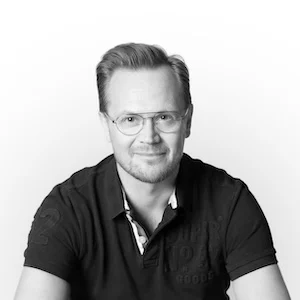
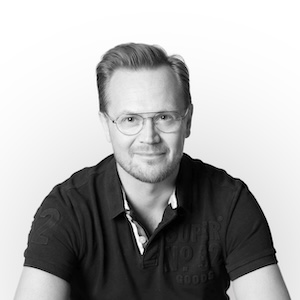
The landscape of European textile management is undergoing a significant pivot as Saltsjö-Boo, Sweden-based technology firm Cyclothe announces the appointment of Calvin Woolley as its new Co-founder and Chief Executive Officer. Woolley, a veteran of the global textile industry who previously served as the Sustainable Business Manager for Textiles at Inter IKEA, takes the helm at a critical juncture for the company. His transition from one of the world’s largest furniture and textile retailers to the vanguard of circular technology marks a definitive shift for Cyclothe, which is moving from the research and development phase into aggressive, industrial-scale commercial deployment across the Nordics and the broader European market.
This leadership change is not merely a personnel acquisition; it signals a fundamental maturation of the circular economy sector. For years, the industry has grappled with the "infrastructure gap"—the disconnect between ambitious corporate sustainability pledges and the physical realities of post-consumer waste management. By integrating a leader with deep institutional knowledge of global supply chain logistics, Cyclothe is positioning its technology as the "missing layer" necessary to fulfill the requirements of increasingly stringent European Union regulations.
The Evolution of Circular Infrastructure
The textile industry is currently under immense pressure from both regulatory bodies and consumer sentiment to address the massive accumulation of post-consumer waste. According to data from the European Environment Agency, textiles are the fourth-highest source of pressure on the environment and climate change within the EU. Annually, the average European consumes nearly 26 kilograms of textiles, with the vast majority ending up in landfills or incinerators.
Cyclothe’s operational model serves as a direct intervention in this cycle. Rather than acting as a traditional waste management service, the company provides a comprehensive "Circular Resource Infrastructure." This platform functions as a digital and physical bridge, connecting municipal collection points, individual citizens, large-scale retailers, and specialized recyclers.
The technology behind this infrastructure is multifaceted. It relies on a trio of core components: smart intake hubs that register items at the point of collection, AI-driven identification systems that categorize materials and garment conditions, and data-backed logistics software that routes these items to their highest-value destination. By prioritizing reuse and repair over fiber-to-fiber recycling, Cyclothe seeks to preserve the economic value inherent in high-quality textiles, a strategy that aligns with the EU’s Strategy for Sustainable and Circular Textiles.
A Career Defined by Sustainable Transformation
Calvin Woolley’s appointment follows a 25-year career characterized by his focus on systemic change. His tenure at Inter IKEA was marked by the challenge of managing supply chains at a massive, global scale. During his 15-year focus on sustainability and circularity, Woolley was instrumental in navigating the complex regulatory environments that govern international textile trade.
His decision to move from the corporate giant to the tech startup sector highlights a growing trend among senior executives who believe that the future of sustainability lies in modular, scalable, and intelligent infrastructure rather than internal corporate initiatives alone. Halit Kosmaz, the founder of Cyclothe, noted that Woolley’s "deep command of the global textile value chain" was the primary driver behind the recruitment. For Kosmaz, the transition represents the company’s evolution: "Bringing Calvin into Cyclothe marks our deliberate transition from developing infrastructure to deploying it commercially at industrial scale."
In his own assessment of the industry, Woolley emphasizes that the "structural friction" currently present in the market is not a result of insufficient ambition. "It is clear that the textile sector does not suffer from a lack of circular ambition," Woolley stated. "It suffers from a lack of functioning infrastructure. What we’re missing is an infrastructure capable of managing new legislation in a commercially viable way."
Market Dynamics and Regulatory Tailwinds
The timing of this leadership transition is synchronized with a wave of legislative updates in Europe. The Extended Producer Responsibility (EPR) schemes, which mandate that textile producers take financial and operational responsibility for the end-of-life management of their products, are currently being implemented across various EU member states. These regulations are compelling brands to invest in traceability and collection systems—the exact services that Cyclothe provides.
Without a standardized, intelligent system for sorting and processing, many brands are struggling to comply with these EPR requirements without incurring prohibitive costs. Cyclothe’s integration of AI-enabled decision engines allows for the precise sorting required to meet both environmental standards and economic efficiency. By providing a transparent, data-backed loop, the company enables brands to track their products from the point of discard back into the value chain, effectively turning "waste" into a secondary raw material asset.
Strategic Roadmap: Scaling the Nordics and Beyond
As the new CEO, Woolley is expected to oversee an ambitious expansion plan. The company is currently prioritizing the rollout of its smart collection network throughout the Nordic region, which serves as a testing ground for European-wide implementation. These regions have historically been at the forefront of recycling technology and environmental policy, making them an ideal proving ground for the high-tech sorting architecture Cyclothe has developed.
The strategy involves three distinct phases:
- Network Density: Increasing the number of smart collection points in high-traffic urban areas to improve capture rates of post-consumer textiles.
- Operational Integration: Establishing deeper partnerships with municipalities to integrate Cyclothe’s sorting technology into existing waste management flows, ensuring that the infrastructure is interoperable.
- Marketplace Development: Expanding the downstream marketplace for certified reuse and resale partners. By creating a reliable, high-quality stream of sorted textiles, Cyclothe is essentially building a B2B platform that provides raw materials for high-grade recycling partners, thereby closing the loop.
Industry Analysis: The Shift from "Waste" to "Resource"
Industry analysts suggest that the success of the circular economy hinges on the professionalization of the reverse supply chain. Historically, the collection of used textiles has been a fragmented, low-margin business characterized by high labor costs and manual sorting processes. By replacing human-dependent sorting with AI-backed automation, Cyclothe addresses the primary bottleneck that has prevented circularity from achieving scale.
Furthermore, the integration of digital traceability is vital for brands aiming to comply with the upcoming Digital Product Passport (DPP) requirements under the EU’s Ecodesign for Sustainable Products Regulation. If a garment is to be recycled effectively, its composition and history must be known. Cyclothe’s infrastructure, which logs and tracks items throughout the reverse journey, provides the necessary data architecture to support these future compliance needs.
Conclusion and Future Outlook
The entry of Calvin Woolley as Co-founder and CEO brings a level of institutional credibility to Cyclothe that is rare for a startup. His ability to navigate the complex stakeholder dynamics of global brands—ranging from procurement officers to sustainability directors—will be crucial as Cyclothe moves from proprietary technology development to commercial deployment.
As the company prepares for its next phase of growth, the focus will remain on the synergy between physical logistics and digital intelligence. The industry will be watching closely to see how effectively Cyclothe can bridge the gap between small-scale pilot projects and the mass-market, industrial-scale infrastructure that the global textile economy requires.
With the backing of a seasoned expert like Woolley, and a technology stack designed to address the specific pain points of modern EPR legislation, Cyclothe is positioning itself as a central player in the global effort to decouple textile production from resource extraction. As Woolley noted, the "keystone" for the industry is now in place, and the coming months will likely see the company shift from a conceptual solution to a standard utility within the European textile market. The mandate for the new leadership is clear: translate the vision of a circular future into a scalable, high-value, and, most importantly, functional reality.