



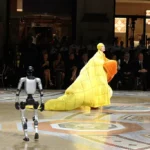



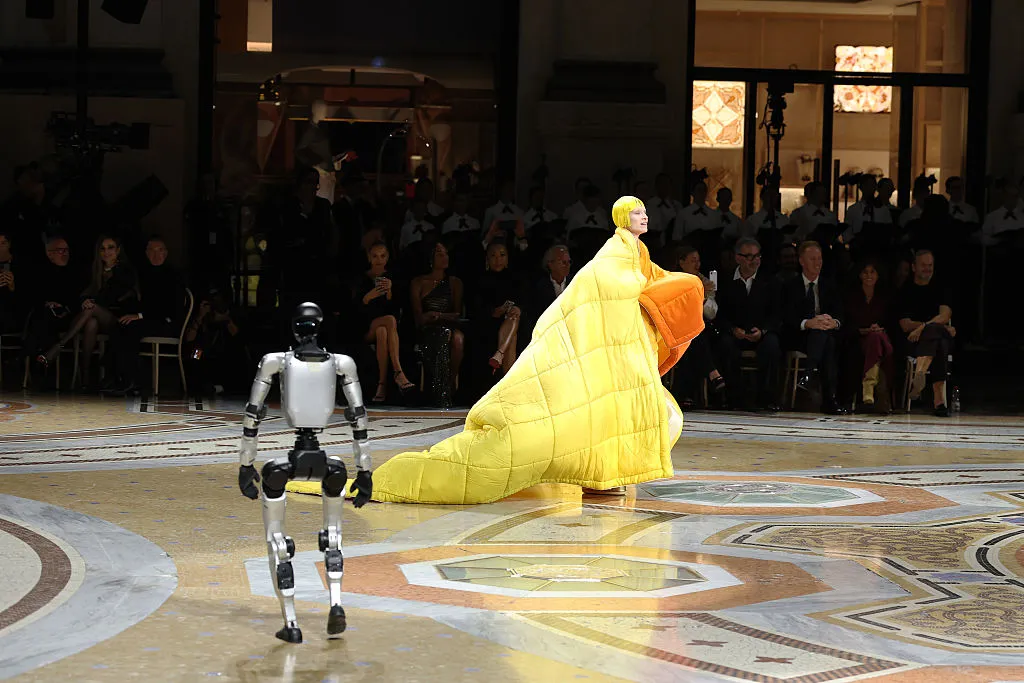
The intersection of high fashion and emerging technology reached a controversial crescendo at the conclusion of Vogue World Milan, where a troupe of unclad humanoid robots shared the spotlight with elite couture. Marketed ostensibly as a celebration of Italian craftsmanship and the enduring significance of the human touch in an increasingly automated world, the event instead pivoted sharply toward the industrial machinery of the future. During a segment titled The Age of Intelligence, autonomous machines developed by the Chinese robotics firm Unitree marched into the historic Galleria Vittorio Emanuele II to the pulsating rhythms of Gigi D’Agostino’s Eurodance anthem, L’Amour Toujours. The juxtaposition of sophisticated tailoring against the sterile, mechanical movements of metal-and-circuitry automatons immediately polarized attendees, igniting a broader global debate regarding the economic anxiety, labor displacement, and cultural alignment defining contemporary society.
The Evolution and Spectacle of Vogue World
Launched five years ago, Vogue World has evolved into Condé Nast’s premier annual traveling extravaganza—a hybrid format functioning simultaneously as a runway presentation, celebrity-studded variety show, and lucrative commercial vehicle. Previous iterations have traversed major global capitals, staging productions in New York City, London, Paris, and Hollywood. Each destination is deliberately chosen to reflect a distinct cultural or commercial narrative.
However, the choice of Milan for the latest installment created an inherent ideological friction. Promotional materials heavily emphasized traditional artisanship, manual craftsmanship, and the irreplaceable value of human emotion in design. Yet, the inclusion of corporate sponsorships from Meta Glasses and OpenAI signaled a contrasting agenda, one that leans aggressively into Silicon Valley’s vision of the future. This underlying tension broke into the open when the Unitree robots took to the floor, performing stiff dance routines, waving their arms, and executing elementary maneuvers completely devoid of attire. The resulting footage, capturing the visibly pained and existential expression of Valentino Creative Director Alessandro Michele seated in the front row, circulated widely across social media platforms, overshadowing the actual garments designed for the showcase.
A Calculated Convergence of Fashion and Silicon Valley
The deployment of automated technology at high-profile fashion events is part of a broader, long-term strategic alignment between legacy publishing and the technology sector. Industry analysts trace this relationship back at least a decade, highlighted by notable milestones such as Apple executive Jony Ive co-hosting the 2015 Met Gala. Over the intervening years, media conglomerates have increasingly sought financial partnerships within the tech industry to offset declining print revenues, while technology leaders have leveraged cultural institutions to validate their products and polish their public image.
This symbiotic relationship explains the controversial announcement that the next edition of Vogue World will descend upon San Francisco—a city long criticized within the traditional style establishment as lacking the historical sartorial heritage of Milan, Paris, or New York. The timing coincides with intensified scrutiny over the influence of tech billionaires, exemplified by high-profile media events like Jeff Bezos and Lauren Sánchez co-hosting subsequent cultural galas. Critics argue that these partnerships represent a tone-deaf alignment with an ultra-wealthy elite during a prolonged global cost-of-living crisis, where ordinary citizens grapple with inflation, housing shortages, and economic instability.

Industry Backlash and Economic Anxieties
The public reaction to the Milan showcase exposed deep fractures within the creative community. While corporate executives and technology sponsors celebrated the display as a visionary leap forward, independent designers, labor advocates, and fashion journalists raised serious ethical concerns. Observers noted the unsettling contrast between celebrating human craftsmanship while platforming technology that actively threatens human livelihoods.
In private commentary and public forums, tech founders and creative directors expressed dismay at the uncritical embrace of robotics. Critics pointed out that humanoid robots are increasingly associated with workforce displacement, algorithmic surveillance, and intensive energy consumption—crises overseen by the very technology titans funding and promoting these cultural crossovers. For many working within the creative industries, the sight of unclad robots performing trivial dances on a fashion runway felt less like forward-thinking innovation and more like a grim symbol of industrial hubris.
Furthermore, digital strategists and design experts argued that the deployment of standard factory robots failed to represent genuine innovation in the creative technologist space. Commentators contrasted the simplistic Unitree performance with sophisticated wearable technology and ephemeral art projects seen elsewhere in the industry—such as the experimental bubble dresses created by artist duo AA Murakami for high-profile red carpets. These advanced applications demonstrate how engineering can augment human expression, whereas autonomous bipedal machines marching down a runway were widely perceived as a blunt, gimmicky marketing ploy designed to appease corporate stakeholders rather than advance design discourse.
Implications for the Future of Creative Industries
As preparations for Vogue World San Francisco move forward, the fallout from the Milan exhibition serves as a critical inflection point for the fashion industry. The controversy underscores the risks publications face when commercial imperatives override cultural authenticity. While financial alliances with the technology sector provide necessary capital in an evolving media landscape, they risk alienating the core audiences who value fashion as a fundamentally human art form.
Whether the upcoming San Francisco showcase will refine its approach to technological integration or double down on Silicon Valley partnerships remains to be seen. However, the viral discomfort of industry veterans like Alessandro Michele has permanently altered the narrative surrounding fashion-tech collaborations. The debate is no longer merely about aesthetics or novelty, but about the preservation of human labor, artistic integrity, and social responsibility in an era increasingly dominated by automation.