






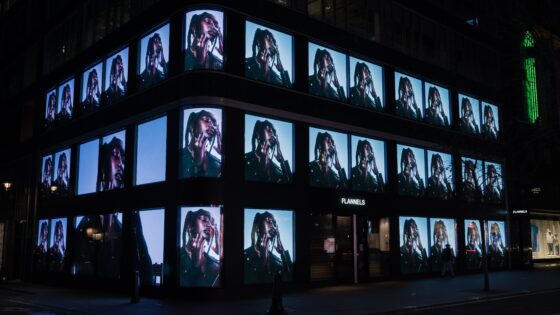
Frasers Group, the retail conglomerate spearheaded by Mike Ashley’s vision and now under the leadership of CEO Michael Murray, has officially inaugurated a dedicated "Frasers Group Luxury" division. This strategic pivot marks a definitive departure from the group’s historical roots as a discount sporting goods retailer, signaling an aggressive push to consolidate its high-end assets. The most significant addition to this new portfolio is the department store giant Harvey Nichols, which joins the group’s existing stable of premium retailers, including Flannels and various luxury partnerships.
This consolidation is not merely an administrative reshuffling; it is a profound repositioning of the company’s capital allocation and operational focus. By grouping its luxury interests under one umbrella, Frasers Group aims to streamline supply chain logistics, enhance brand negotiation power, and provide a unified, elevated consumer experience across its physical and digital touchpoints.
The Evolution of a Retail Empire: A Chronology
To understand the magnitude of this shift, one must look at the timeline of Frasers Group’s ascent into the luxury segment. Historically known as Sports Direct, the group began its transition in the mid-2010s, recognizing that the long-term future of high-street retail required a hedge against the volatility of the mid-market sports and apparel sector.
- 2017: Frasers Group increases its stake in Flannels, a multi-brand luxury retailer, signaling a shift toward higher-margin products.
- 2019: The group completes the rebranding of House of Fraser, attempting to revitalize the legacy department store chain with a more contemporary, premium-focused aesthetic.
- 2021: Michael Murray takes the helm as CEO, accelerating the "elevation strategy." This approach prioritizes modern store environments, high-end partnerships, and premium digital infrastructure.
- 2023-2024: The group continues its acquisition spree, targeting brands with strong heritage but struggling operational efficiency.
- October 2026: The formal announcement of "Frasers Group Luxury" serves as the capstone to nearly a decade of strategic acquisitions, formally separating the high-end tier from the core discount and sports businesses.
The Addition of Harvey Nichols: A Strategic Masterstroke
The inclusion of Harvey Nichols within this new luxury division is perhaps the most symbolic move of the year. Harvey Nichols, a global icon of high-fashion, brings with it a cachet that the group previously lacked. While Flannels has been successful in capturing a younger, trend-driven demographic, Harvey Nichols offers a more established, affluent, and international customer base.
Market analysts suggest that by integrating Harvey Nichols into the Frasers Group ecosystem, the group can leverage its massive retail footprint to share back-office costs, digital marketing technology, and logistics networks. This allows for a "halo effect" where the operational efficiencies of the wider group benefit the bespoke, high-touch nature of the luxury business.
Supporting Data and Market Context
The retail luxury sector has faced significant headwinds in recent years due to fluctuating consumer confidence and the rise of the resale market. However, data suggests that the "premiumization" of retail remains a robust strategy for groups with deep capital reserves.
According to recent industry reports, the luxury retail segment in the UK has shown a 4.2% year-over-year growth in the premium goods category despite broader inflationary pressures. Frasers Group’s decision to move now is indicative of a "buy-and-build" strategy—acquiring assets during a period where high-street valuations are tempered, then driving efficiency through centralizing management.
By separating the luxury division, Frasers Group is likely preparing for more transparent reporting. Institutional investors often penalize conglomerates that obscure their luxury performance within mass-market financial reports. This structural change will allow analysts to isolate the luxury arm’s EBITDA, potentially unlocking higher valuation multiples for the group as a whole.
Official Perspectives and Industry Reactions
While an official statement from Michael Murray has been measured, the internal communication reflects a commitment to a "best-in-class" operational model. In industry circles, the consensus is one of cautious optimism.
"The creation of a dedicated luxury arm is a necessary evolution," says Sarah Jenkins, a senior retail analyst at London-based consultancy RetailMetrics. "Frasers Group has spent years buying pieces of the puzzle. Now, they are finally assembling them. The challenge will be maintaining the distinct brand identities of the companies under their control—specifically ensuring that the heritage of Harvey Nichols is not diluted by the rapid-growth, high-volume DNA of the rest of the group."
Competitors, including the John Lewis Partnership and Selfridges Group, are watching closely. The threat posed by Frasers Group is not just in the scale of their acquisitions, but in their willingness to invest heavily in store environments. Their flagship Flannels X locations, which integrate fitness, beauty, and hospitality into the retail experience, serve as a blueprint for what they intend to do with their luxury assets.
Broader Implications: What Does "Luxury" Mean for Frasers?
The term "luxury" in the context of Frasers Group is increasingly synonymous with "aspirational retail." The company is moving away from the "pile it high, sell it cheap" philosophy that defined its early years. Instead, the new division is tasked with curating a high-end experience that centers on scarcity, exclusivity, and premium customer service.
However, the transition is not without risk. Luxury consumers are notoriously sensitive to brand perception. If the Frasers Group branding becomes too closely associated with the discount-heavy history of its parent company, there is a risk of alienation for the top-tier luxury shopper. The group must strike a delicate balance between the operational efficiency of a massive retail conglomerate and the refined, bespoke atmosphere required to maintain high-end brand equity.
Furthermore, the integration of digital platforms remains a critical pain point. As the group brings Harvey Nichols under its technical umbrella, it must ensure that the digital experience—the speed of delivery, the quality of packaging, and the personalized service—is not compromised by the migration to group-wide systems.
The Road Ahead: A New Standard for Retail?
As of October 2026, the retail landscape in the UK is witnessing a fundamental shift. The establishment of Frasers Group Luxury suggests that the future of the department store is not in decline, but in consolidation. By merging the strengths of various legacy brands, Frasers is attempting to build a sustainable model that can compete with international luxury powerhouses like LVMH or Kering, albeit at a different price point and with a different retail focus.
The coming twelve months will be telling. The group has promised to release further details on the synergy targets for the new division in the next quarterly earnings call. Observers will be looking for signs of margin expansion and a clear strategy on how the group plans to navigate the increasingly blurred lines between "premium" and "luxury" fashion.
In conclusion, the formation of the Frasers Group Luxury arm represents a maturation of a retail giant. By formalizing its commitment to the top end of the market, the group is signaling to the City that it has graduated from its status as a discount operator. Whether this structural change will yield the desired profitability and brand prestige remains to be seen, but it is undoubtedly the most significant structural change in the British retail sector this year. The industry now waits to see if this "luxury era" can survive the scrutiny of the modern, discerning consumer.