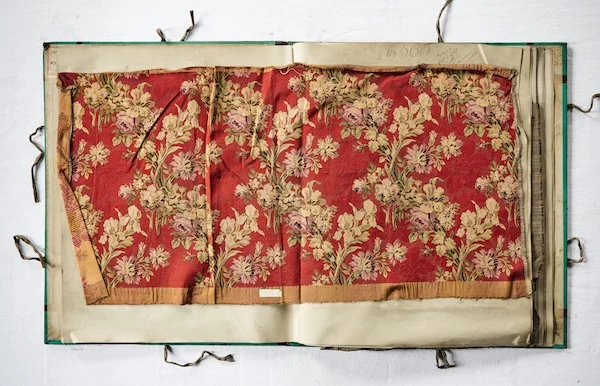









The agricultural landscape is undergoing a silent, yet significant, transformation as textile engineering intersects with plant science. At North Carolina State University (NC State), a multidisciplinary team has unveiled a breakthrough in crop protection and yield enhancement: a sophisticated, three-dimensional knitted textile known as "Plant Armor." By serving as a physical barrier against pests while optimizing the thermal environment for strawberry plants, this innovation represents a potential paradigm shift in sustainable farming practices.
The Origins of a Botanical Breakthrough
The development of Plant Armor was not a linear trajectory within agricultural research. Instead, it emerged from an unlikely source: military defense technology. Initially, the research team—led by faculty from the Wilson College of Textiles and the College of Agriculture and Life Sciences—was focused on developing high-performance fabrics designed to make military uniforms more breathable and comfortable for soldiers wearing heavy body armor, specifically with the added goal of creating mosquito-resistant barriers.
As the team refined the three-dimensional, porous structure of these fabrics, they began to recognize broader applications for the material. The unique geometry of the knit, which allows for airflow and moisture regulation while creating a physical separation between a surface and potential threats, suggested that the material could serve as a protective shield for sensitive crops. Following years of iterative design and rigorous field testing, the transition from military-grade textile to agricultural implement was solidified.
Chronology of Field Trials
The journey from concept to validated agricultural tool spanned several years of observation. The most recent tunnel field trials, conducted to assess the efficacy of the Gen 2 iteration of the textile, provided the definitive data needed to demonstrate the product’s viability.
- Initial Research Phase (2020–2022): Preliminary design work focused on optimizing the textile’s porosity and structural integrity. Researchers tested various weave patterns to ensure that sunlight and precipitation could reach the plants while maintaining enough physical space to deter insects.
- Patent Acquisition (February 2023): North Carolina State University secured US Patent No. 11,582,968 B2, recognizing the novel design of the 3D, porous textile cover.
- Field Testing and Data Collection (2024–2026): Throughout multiple growing seasons, the team deployed Plant Armor in tunnel-based field tests. The goal was to monitor biomass development, fruiting frequency, and pest interaction.
- Publication of Findings (September 2026): The results were published in the journal Agriculture, confirming that the fabric consistently outperformed uncovered crops in both quantity and developmental speed.
Mechanisms of Success: Why the Fabric Works
The primary concern of the research team was whether the textile would inadvertently hinder the plants’ ability to photosynthesize. Often, covering crops with protective materials can lead to "shade-avoidance" syndrome, where plants prioritize growing stems and leaves to reach for sunlight, ultimately sacrificing fruit production.
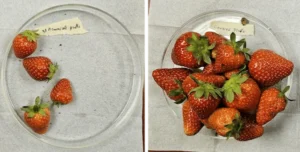
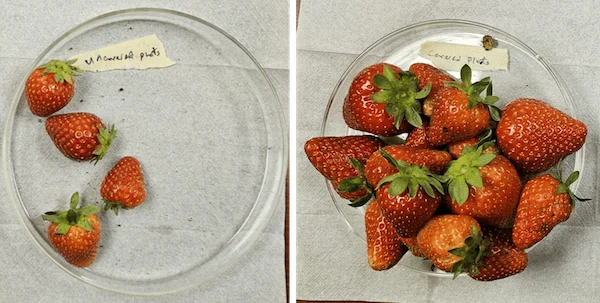
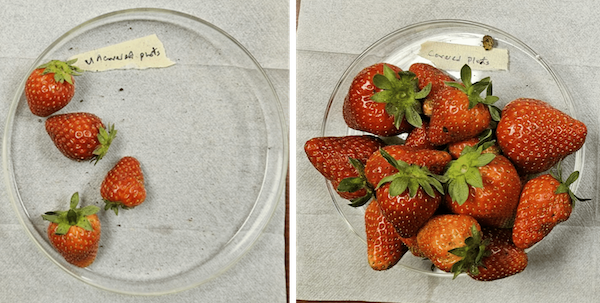
However, the team found that Plant Armor’s design effectively mitigated this response. The fabric allows for sufficient light penetration while simultaneously providing a consistent warming effect. This phenomenon is measured in "growing degree-days"—the accumulated thermal units required for a plant to reach specific developmental milestones. By trapping a precise layer of warmth, the textile accelerates the plant’s progress through its phenological stages. Consequently, plants protected by Plant Armor reach the fruiting stage faster and more reliably than their uncovered counterparts, leading to a yield increase of up to 3.56 times.
Furthermore, the three-dimensional structure serves as a mechanical defense against common strawberry pests. Because the insects cannot reach the plant surface, the physical barrier effectively replaces or supplements the need for chemical pesticides, offering a clear pathway to more organic and sustainable agricultural models.
Expert Perspectives and Collaborative Research
The collaborative nature of the project has been cited as a cornerstone of its success. Gabriel Olawuyi, the lead author of the paper, noted that the data initially surprised the researchers. "We expected that the seemingly opaque fabric would lead to an increase in vegetative biomass at the expense of fruiting," Olawuyi stated. "However, the fabric did not impede access to light at all, and fruit production increased significantly."
R. Michael Roe, a William Neal Reynolds Distinguished Professor at NC State, emphasized the importance of serendipity in scientific advancement. "The path to Plant Armor started with trying to make a cloth to go on a soldier’s chest to make body armor more comfortable," Roe observed. "Then, through trial and error, we arrived at a product which could triple the output of strawberry farms here in North Carolina. We couldn’t have predicted that when we started."

The research project was made possible by significant institutional support, including funding from the North Carolina Agricultural Foundation and the U.S. Department of Agriculture’s National Institute of Food and Agriculture through the Research Capacity Fund (HATCH).
Implications for Modern Agriculture
The implications of this technology extend far beyond a single crop. As climate change continues to create unpredictable growing conditions, the ability to regulate the local microclimate of a plant—while simultaneously preventing pest damage—is of immense value to the agricultural sector.
- Water and Resource Efficiency: By moderating the temperature and protecting against extreme environmental fluctuations, the fabric may contribute to reduced water loss through evaporation.
- Pesticide Reduction: The primary agricultural benefit is the reduction of synthetic inputs. With growing regulatory and consumer pressure to reduce pesticide residues on fresh produce, a physical barrier like Plant Armor offers a cleaner alternative for high-value crops like strawberries.
- Economic Scalability: The technology is currently licensed for commercial development by NC State. If scaled, it could provide significant economic relief to farmers who face rising costs for inputs and labor, while helping to stabilize food supply chains.
Looking Toward Commercialization
As the project moves from academic research into the commercial sphere, the focus will shift toward manufacturing scalability and long-term durability. While the current trials have proven the efficacy of the fabric in tunnel settings, further research may investigate the material’s performance in varied climates and open-field conditions.
The success of Plant Armor serves as a testament to the power of interdisciplinary innovation. By bridging the gap between textile engineering, entomology, and horticulture, the NC State team has provided a blueprint for how modern universities can solve real-world problems. Whether the technology will be adapted for other crops—such as blueberries, raspberries, or vegetable greens—remains a subject for future inquiry, but the foundational success with strawberries provides a robust proof-of-concept.
As agriculture moves deeper into the 21st century, the emphasis on high-tech solutions that respect biological processes will likely grow. Plant Armor represents a quiet, efficient, and highly effective step in that direction, proving that sometimes the best way to help a plant grow is simply to provide it with the right protection. The combination of increased yields, reduced chemical reliance, and thermal optimization positions this textile as a significant candidate for the future of sustainable, high-yield commercial farming.