









REMSCHEID, Germany — September 24, 2026 — In an era defined by the rapid digitalization of industrial manufacturing, Barmag, a subsidiary of the Rieter Group, has announced the introduction of three sophisticated, retrofittable automation solutions designed to optimize maintenance and service processes within chemical fiber spinning facilities. By addressing the critical nexus of product quality, equipment uptime, and workplace safety, these technological advancements mark a significant pivot toward smarter, more reproducible maintenance protocols for global synthetic fiber producers.
The Strategic Imperative for Maintenance Modernization
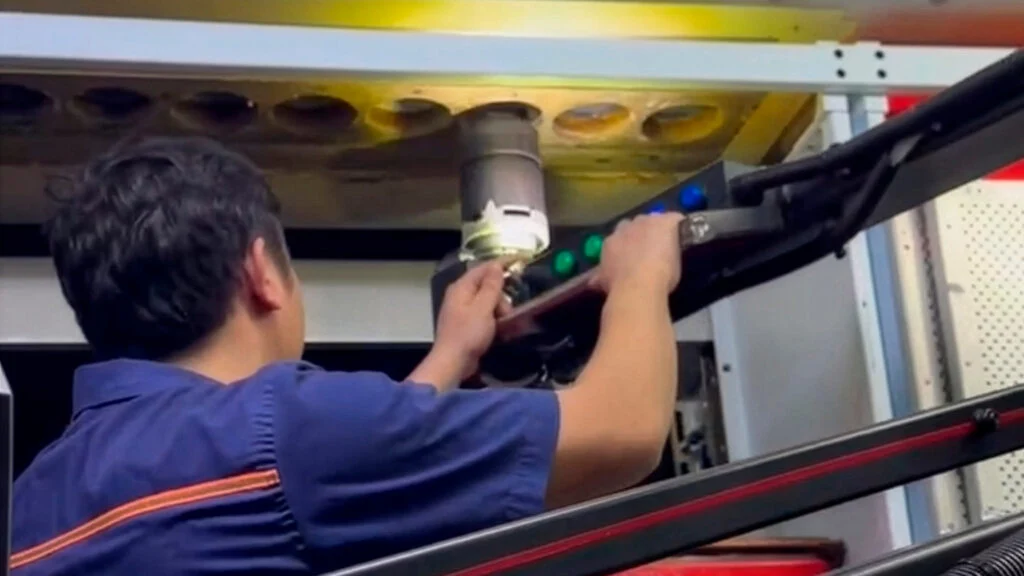
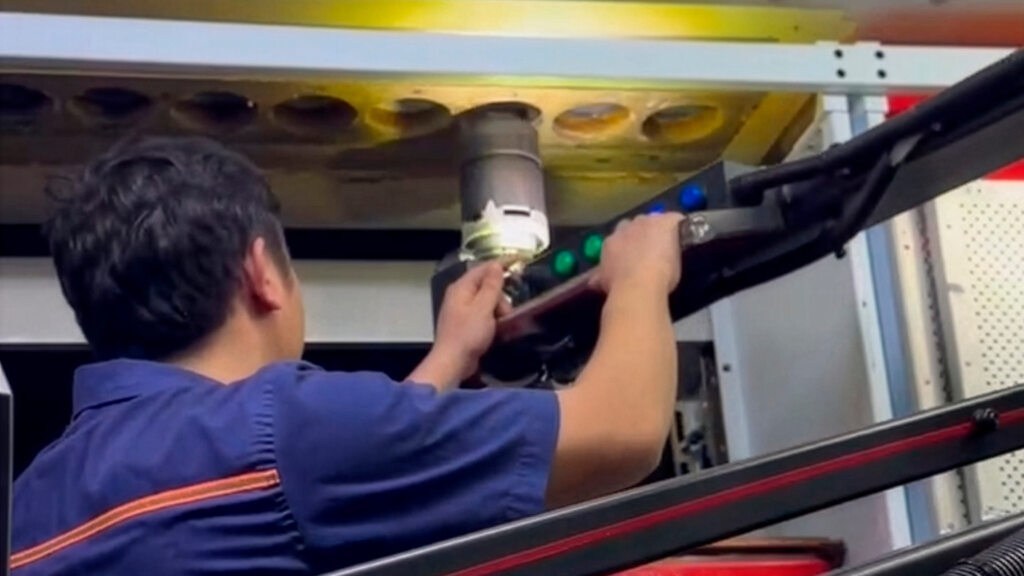
For decades, the chemical fiber industry has relied heavily on manual labor for the upkeep of spinning beams, spinnerets, and associated components. These tasks, while essential, have historically been prone to human error, physical strain, and process variability. As market demands for high-tenacity, defect-free filaments grow, the inconsistency inherent in manual maintenance has become a bottleneck for production performance.
Maintenance, once viewed as a mere operational cost, is increasingly recognized as a key competitive differentiator. Equipment availability is directly tied to the speed and precision of service cycles. Barmag’s latest suite of tools—comprising an automatic knife sharpening machine, an autonomous wiping robot, and an electric Spinpack changer—is engineered to standardize these interventions, effectively removing the "human factor" from high-precision cleaning and replacement tasks.
Chronology of Development and Industrial Integration
The journey toward these automated solutions began several years ago as Barmag’s research and development teams identified a persistent industry-wide trend: the increasing complexity of fiber polymers required tighter tolerances in spinneret cleanliness. Early prototypes were tested in select pilot plants across Europe and Asia throughout 2024 and 2025.
The successful implementation of these units in controlled environments demonstrated that the transition from manual to automated maintenance could be achieved without requiring a complete overhaul of legacy infrastructure. Following the successful validation of the "retrofit-first" approach, Barmag finalized the commercial rollout in late 2026. The announcement on September 24 serves as the formal market introduction, signaling a shift in how fiber producers will manage their assets moving forward.
Deep Dive: Technical Capabilities and Supporting Data
The core of Barmag’s new portfolio lies in the granular improvement of three distinct operational areas.
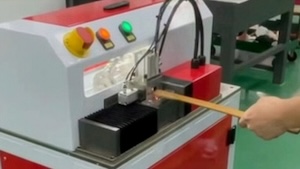
1. Precision in Cleaning: The Automatic Knife Sharpening Machine
Spinnerets are the heart of the spinning process. Even microscopic deviations in the sharpness or alignment of cleaning knives can lead to uneven fiber diameters or filament breakage. The new automatic sharpening machine ensures that cleaning blades maintain a factory-standard edge, reducing the variance that typically plagues manual sharpening.

The operational data gathered during the pilot phases is compelling. Plants utilizing the automated sharpener reported a 12 percent increase in the full-bobbin rate, indicating fewer interruptions due to thread breakage. Furthermore, take-up efficiency—a primary metric for overall line productivity—saw improvements of up to 28 percent. Perhaps most significant for operational expenditure is the extension of spinneret service life by up to 51 percent, drastically reducing the frequency of expensive component replacements.
2. Autonomous Maintenance: The Wiping Robot
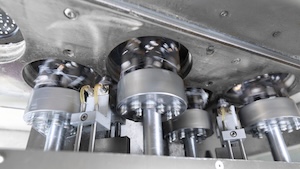
The wiping robot represents a leap forward in continuous process stability. Designed for both filament and staple fiber processes, the robot automates the delicate task of cleaning the spinneret face. By integrating rotating scraper blades that are automatically resharpened in a dedicated parking station, the unit eliminates the inconsistency of manual wiping.
Beyond throughput, this automation carries significant environmental and health benefits. By automating the cleaning cycle, plants can optimize the application of silicon oil, leading to a marked reduction in consumption. Consequently, the concentration of oil-containing aerosols—a common occupational health concern in spinning rooms—is significantly lowered, creating a safer, cleaner working environment for personnel.
3. Ergonomics and Safety: The Electric Spinpack Changer
The physical toll of replacing heavy, hot spinning packages (Spinpacks) has long been a challenge for maintenance crews. The electric Spinpack changer is a mobile, motorized unit that assists operators in these tasks. By providing mechanical lift and ensuring precise installation through calibrated torque settings, the system removes the risk of physical injury and damage to the spinning beam threads. This contributes to shorter downtime during product changeovers and ensures that every Spinpack is installed with uniform precision, which is critical for maintaining consistent fiber quality.
Official Perspective on Industrial Transformation
Stefan Heesen, Senior Manager of Customer Services at Barmag, highlighted that the primary goal of these technologies is not just technological novelty, but practical utility. "There is significant potential for optimization not only in the production process itself, but also in the supporting maintenance and service tasks," Heesen stated. "Automating these tasks helps make existing plants more productive, safer, and more cost-effective to operate. Our focus was on creating a pathway for producers to modernize their facilities without the need for massive capital expenditures associated with new lines."
Industry analysts observe that Barmag’s approach of prioritizing "retrofit-readiness" is a strategic response to the current economic climate. With many manufacturers looking to extend the lifecycle of their current assets rather than investing in new machinery, the ability to bolt on high-tech automation is a highly attractive value proposition.
Broader Implications for the Fiber Industry
The adoption of these technologies is expected to have a ripple effect across the global synthetic fiber market.
Enhanced Quality Consistency
As the textile industry shifts toward circularity and recycled polymers, the spinning process is becoming increasingly sensitive to material fluctuations. Automated maintenance ensures that the mechanical components of the spinning line are always in peak condition, providing a stable platform to handle the more variable nature of recycled feedstocks.
Workplace Evolution
The transition toward automated maintenance also signals a change in the labor structure of the factory floor. As routine manual tasks are offloaded to machines, the role of the operator is evolving toward one of supervision, data monitoring, and systems management. This shift is expected to improve employee retention by reducing the physical burden of the work and providing opportunities for upskilling.
Sustainability Gains
The data regarding reduced cleaning cycles—which can be shortened by up to 53 percent—suggests a significant reduction in resource consumption. Less frequent cleaning implies lower energy usage, less solvent or chemical waste, and fewer interruptions to the heat-controlled spinning environment. For major fiber producers under increasing pressure to meet ESG (Environmental, Social, and Governance) targets, these incremental gains in efficiency are instrumental in lowering the carbon footprint per ton of fiber produced.
Future Outlook
As Barmag begins the global deployment of these solutions, the industry will be watching to see how quickly these automated processes become the new standard. The ability to measure success through clear KPIs—such as the 51 percent extension in spinneret life or the 28 percent boost in take-up efficiency—provides a clear business case for widespread adoption.
The introduction of these three solutions on September 24, 2026, represents more than just a product launch; it is a clear indicator that the future of fiber manufacturing lies in the integration of intelligent, precision-focused maintenance. By bridging the gap between legacy hardware and modern automation, Barmag is providing the tools necessary for the textile industry to remain competitive, sustainable, and resilient in an increasingly demanding global marketplace.