








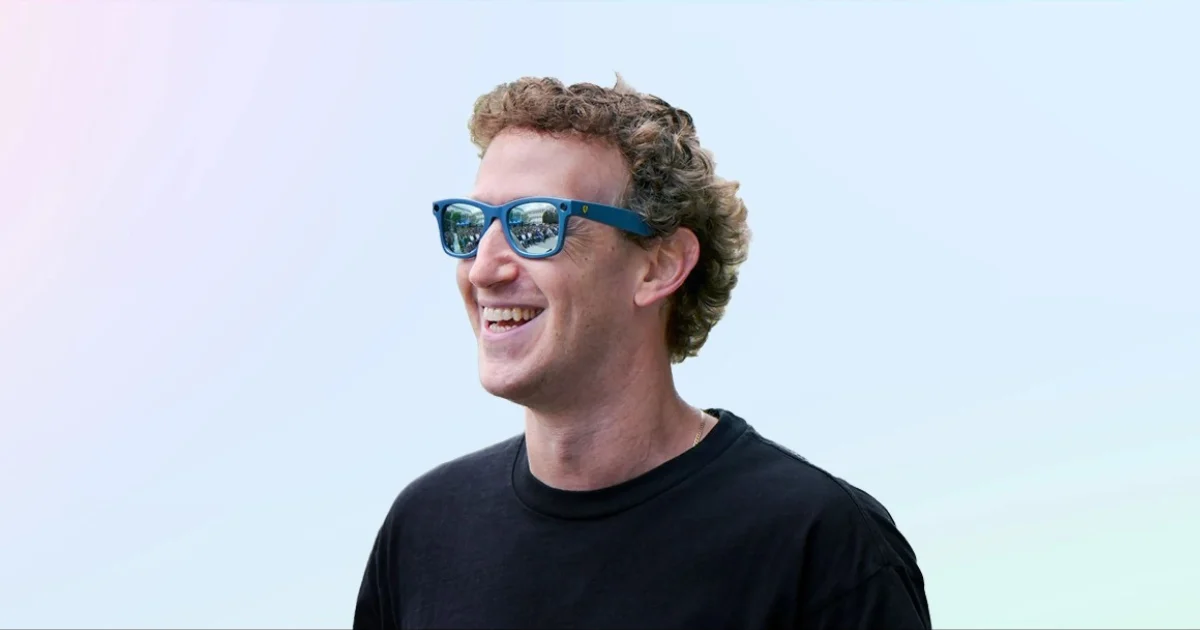
The intersection of Silicon Valley technology and European luxury fashion has once again become the center of intense industry speculation. Meta Platforms CEO Mark Zuckerberg was recently spotted sitting front-row at Prada’s Fall/Winter 2026 Fashion Week presentation in Milan, an appearance that has heavily fueled rumors regarding an impending high-fashion smart glasses collaboration. Seated alongside Lorenzo Bertelli—Prada’s chief merchandising officer and the son of head designer Miuccia Prada—Zuckerberg’s presence at the high-profile runway event has prompted industry analysts to look beyond mere personal style upgrades and examine the strategic business alignments shaping the future of wearable artificial intelligence.
While Zuckerberg’s public-facing persona has undergone a noticeable evolution in recent years, characterized by a carefully curated personal rebrand and an elevated wardrobe, insiders suggest that his front-row seat in Milan served a far more commercial purpose. Last summer, multiple reports indicated that Meta was actively developing a Prada-branded iteration of its popular AI-powered smart eyewear line. Although Meta has not yet issued an official public announcement or confirmed the collaboration, the convergence of tech executives and luxury fashion leadership points toward an imminent expansion of Meta’s wearable tech ecosystem into the high-end designer market.
The Evolution of Meta’s Smart Eyewear Portfolio
Meta’s journey into smart eyewear began with modest ambitions, marked by the release of the Ray-Ban Stories collection in partnership with EssilorLuxottica, the French-Italian eyewear manufacturing conglomerate and parent company of iconic brands like Ray-Ban and Oakley. Initially viewed as a niche consumer gadget, the hardware has rapidly evolved into a mainstream commercial success.
The growth trajectory of these connected devices has accelerated dramatically over the past two years. According to financial and sales data released by EssilorLuxottica, the manufacturer tripled its sales of Meta AI glasses in 2025, moving over 7 million units compared to roughly 2 million units the previous year. This massive sales surge encompasses both the flagship Ray-Ban Meta line and the athletic-focused Oakley Meta glasses, which debuted to capture active lifestyle consumers.
Adding a Prada-branded variant to this portfolio would provide Meta with an immediate and formidable foothold in the luxury fashion market. Current offerings like Ray-Ban and Oakley successfully cater to casual and athletic demographics, but a partnership with Prada would bridge the gap between high technology and haute couture, positioning AI smart glasses not just as utility tools or fitness accessories, but as coveted status symbols.
Chronology of the Partnership and Licensing Framework
The groundwork for a potential Prada smart glasses line has been quietly laid through long-term corporate realignments between EssilorLuxottica and the Prada Group. Understanding the feasibility of this hardware rollout requires examining the timeline of their existing licensing agreements:
- December 31, 2025: The prior ten-year exclusive eyewear licensing agreement between EssilorLuxottica and the Prada Group—governing brands such as Prada and Miu Miu—officially reached its initial expiration date.
- Late 2025 to Early 2026: Ahead of the expiration, both conglomerates finalized a major contract extension, renewing their partnership for an additional ten years through December 31, 2030, with built-in provisions allowing for a further extension through December 31, 2035.
- Summer 2025: Industry reports first surfaced indicating that Meta was expanding its hardware collaboration roadmap beyond Ray-Ban and Oakley to include luxury labels, specifically naming Prada as a primary target for AI-integrated designer frames.
- February 2026: Mark Zuckerberg attends the Prada Fall/Winter 2026 Fashion Week show in Milan, engaging in high-level discussions with chief merchandising officer Lorenzo Bertelli, thereby revitalizing public speculation regarding the delayed luxury product launch.
This extended licensing framework between EssilorLuxottica and Prada provides the stable manufacturing and distribution foundation required to mass-produce high-end, electronic-integrated eyewear. EssilorLuxottica’s established mastery over traditional frame aesthetics ensures that technological components—such as micro-speakers, cameras, and batteries—can be housed within slender acetate and metal frames without compromising the signature design language expected from a luxury house like Prada.
Market Implications and Brand Positioning
For Meta, diversifying its hardware lineup through luxury collaborations represents a critical strategic pivot. As competition in the augmented reality and smart glasses sector heats up with entries from rival technology conglomerates, brand differentiation is paramount. By partnering with Prada, Meta can transcend the typical consumer electronics demographic, appealing to fashion-forward consumers who historically prioritize aesthetic prestige over functional novelty.
Furthermore, luxury branding can command significantly higher profit margins. While Ray-Ban Meta glasses occupy a mid-tier price point accessible to broad consumer segments, a Prada-branded variant could be marketed as a luxury accessory, allowing EssilorLuxottica and Meta to capture higher revenues per unit sold. This strategy mirrors how traditional luxury watchmakers successfully integrated smart features or how designer fashion houses collaborate with consumer electronics giants to release limited-edition smartphones and audio accessories.
However, entering the luxury space also carries unique marketing challenges. High-fashion consumers expect exclusivity, impeccable craftsmanship, and timeless design. If the underlying technology becomes obsolete too quickly—as consumer electronics frequently do—it could create a friction point for luxury buyers accustomed to investing in items designed to last for decades. Meta and its manufacturing partners will need to ensure that the hardware architecture supports longevity and seamless software updates to maintain its value proposition.
Consumer Backlash and Growing Surveillance Concerns
Even as Meta positions its smart glasses for luxury market penetration, the broader ecosystem surrounding wearable recording technology faces unprecedented scrutiny and consumer skepticism. The expansion of always-connected devices into public spaces has triggered a powerful cultural backlash against ubiquitous surveillance, threatening to cast a shadow over otherwise impressive hardware sales figures.
In recent months, public frustration regarding privacy invasions has manifested in tangible ways. Consumers across various demographics have increasingly disconnected, dismantled, or physically destroyed surveillance hardware in public view. High-profile incidents involving citizens tearing out Ring doorbell cameras and vandalizing automated Flock traffic surveillance systems highlight a deep-seated public anxiety over automated data collection and corporate monitoring.
This cultural resistance has been exacerbated by recent investigative reports concerning Meta’s product roadmap. Publications including The New York Times recently reported that Meta is actively planning to integrate facial-recognition software into its smart glasses. The prospect of everyday users wearing glasses capable of instantly scanning faces in public spaces and matching them against databases has drawn sharp criticism from privacy advocates, civil liberties organizations, and everyday consumers alike.
The sensitivity surrounding visual data capture has reached such a pitch that independent software developers have begun creating counter-measures. Notably, a third-party developer recently launched a localized mobile application designed to detect and warn individuals if someone wearing AI-enabled smart glasses is operating in their immediate vicinity. This grassroots defensive tool underscores the growing friction between wearable tech convenience and personal privacy rights.
Corporate Response and Future Outlook
To date, Meta has maintained a measured silence regarding the specific details of Zuckerberg’s Milan meetings and has not formally responded to media requests for comment concerning the rumored Prada collaboration. Similarly, representatives for EssilorLuxottica and the Prada Group have declined to provide definitive timelines for when, or if, a luxury-branded AI eyewear device will hit retail shelves.
As Meta navigates this dual reality—experiencing record-shattering hardware adoption on one hand while confronting rising privacy-related hostility on the other—the company faces critical strategic decisions. The success of a potential Prada Meta AI glasses line will depend not only on the aesthetic appeal of the frames and the prestige of the luxury label, but also on how effectively Meta can address mounting consumer concerns regarding data privacy, consent, and surveillance transparency.
If Meta and its partners can successfully strike a balance between advanced ambient computing and respectful privacy guardrails, a high-fashion collaboration could cement smart glasses as the definitive post-smartphone personal computing platform. Conversely, failure to adequately address public apprehension regarding recording technologies risks turning luxury smart eyewear into a socially stigmatized accessory, complicating adoption among the very demographic fashion houses strive most to attract.