







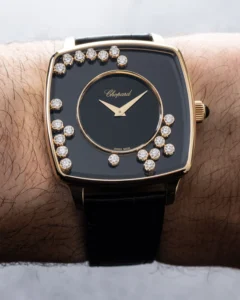


The contemporary watch industry is currently undergoing a structural transformation, moving from a market defined by legacy prestige and gatekept knowledge toward an era of hyper-accessibility and information saturation. This shift has prompted an urgent need for clarity among consumers who are increasingly overwhelmed by the sheer volume of brands, micro-labels, and digital influencers competing for their attention. In the latest episode of the SUPERLATIVE podcast, host Ariel Adams sits down with Thomas J. Sandrin, the founder of WatchDNA and a veteran of the Swatch Group, to dissect these systemic changes and explore how data-driven education can restore confidence in the luxury watch buying process.
The Evolution of Industry Expertise
Thomas J. Sandrin’s professional trajectory offers a unique vantage point on this transition. Before establishing WatchDNA, Sandrin spent over a decade within the Swatch Group, specifically contributing to the growth of Hamilton. This tenure provided him with a comprehensive understanding of the mechanics behind brand identity, distribution, and the importance of heritage in storytelling. Following his time in the corporate sphere, Sandrin pursued an MBA, a move that allowed him to bridge the gap between emotional brand marketing and the analytical business models that sustain long-term growth.
The inception of WatchDNA—and the preceding launch of Northern Watch Services—stems from a desire to address a fundamental friction point in the consumer journey: the lack of unbiased, centralized information. In an era where digital content is often monetized through affiliate links and "pay-to-play" reviews, consumers frequently struggle to differentiate between objective reporting and marketing copy. WatchDNA aims to serve as an educational ecosystem that emphasizes the history, technical specifications, and ethos of brands without resorting to the transactional pressures common in modern digital media.
Chronology of a Shifting Marketplace
To understand the current state of the watch market, one must look at the timeline of digital transformation in horology. For much of the 20th century, the watch industry relied on a linear model: manufacturers sold to wholesalers, who sold to authorized dealers, who finally interacted with the end customer. This relationship was built on physical proximity and the authority of the sales associate.
The rise of the internet in the early 2000s began to erode this exclusivity. By the 2010s, the emergence of social media platforms fundamentally changed the hierarchy of influence. Watch enthusiasts moved from reading static magazines to engaging with real-time conversations on forums and Instagram. However, this democratization of information brought a new set of challenges: the erosion of institutional expertise. As Sandrin notes, the perception of "expertise" has become decoupled from historical knowledge, often being replaced by popularity-driven metrics.
By the mid-2020s, the sheer number of independent brands—often referred to as "micro-brands"—exploded. While this provided consumers with unprecedented variety, it also led to "choice paralysis." Sandrin’s work with WatchDNA acts as a modern response to this environment, providing a structured framework for consumers to navigate a marketplace that is significantly more fragmented than it was twenty years ago.
Supporting Data and Market Dynamics
Recent market analysis from the Swiss Watch Federation and various industry consultants highlights that while the luxury watch segment continues to show resilience, the "discovery phase" for new buyers has become significantly more complex. Data indicates that nearly 70% of luxury consumers conduct extensive digital research before entering a physical boutique. Despite this digital-first approach, the desire for physical interaction remains high.
Sandrin emphasizes a critical paradox: while consumers conduct their research online, they still report a high degree of dissatisfaction with the lack of tactile experience. The role of the independent retailer is evolving from a simple point of sale to an experiential hub. According to industry trends, boutiques that offer educational value—such as watchmaking workshops or deep-dive brand history sessions—are seeing higher conversion rates than those that rely solely on inventory availability. WatchDNA’s initiative to bridge the gap between digital discovery and physical retail is a strategic response to this data, aiming to connect well-informed consumers with retailers who can facilitate a high-touch purchasing experience.

Implications of Third-Party Validation
One of the central themes discussed in the SUPERLATIVE interview is the necessity of third-party validation. In a market where anyone can claim to be a horological expert, the consumer is left to perform their own due diligence. Sandrin argues that trust is the primary currency of the future watch market. Brands that can cultivate authentic stories and maintain transparency regarding their supply chains and historical lineage are gaining ground over those that rely on temporary hype cycles.
The implications for the broader industry are significant. As platforms like WatchDNA gain traction, the industry may see a move toward "standardized education." If consumers can easily compare the technical merits of a movement or the historical significance of a brand’s design language, retailers will be forced to compete on the quality of their service and the depth of their relationships with clients. This shift potentially favors traditional retailers who have historically prioritized client relations over volume-based transactions.
Analysis: The Future of Consumer Engagement
The transition toward a more informed consumer base is not without its hurdles. The challenge lies in the "blurring of the lines" between education and advertising. Many media outlets in the watch space have integrated commerce into their editorial output, which can inadvertently compromise impartiality. Sandrin’s model is positioned as an alternative—a platform that prioritizes the "DNA" of the brand over the immediate sale.
From a macro perspective, the work being done by innovators like Sandrin signals a maturation of the watch collecting community. As the industry moves past the speculative bubbles of the early 2020s, collectors are returning to a focus on horological substance. This trend is a positive development for manufacturers that invest in original design and mechanical excellence rather than aesthetic trends.
The Human Element in a Digital Age
Despite the reliance on digital tools and data, the interview underscores a timeless truth: horology is fundamentally a human-centric endeavor. The appeal of a mechanical watch lies in the craftsmanship, the history of the house, and the relationship between the creator and the wearer. Sandrin’s advocacy for in-person experiences, even in an increasingly virtual world, serves as a reminder that a watch is a tactile object meant to be worn and appreciated in physical space.
The collaboration between Ariel Adams and Thomas Sandrin highlights a critical juncture for the industry. By focusing on the intersection of education, history, and community, stakeholders are attempting to build a more sustainable future for watch enthusiasts. As the market continues to expand and evolve, the ability of consumers to discern quality from noise will be the defining factor in the success of both brands and retailers.
Concluding Perspectives
The conversation between Adams and Sandrin serves as both a reflection of the current market and a roadmap for its future. As consumers become more sophisticated, the industry must respond with greater transparency and a renewed focus on the narratives that make watches meaningful. For those interested in the intricacies of the watch industry, the insights provided by WatchDNA represent a necessary evolution in how we discover, compare, and value the timepieces that mark our personal histories.
For further information regarding the methodologies discussed by Thomas Sandrin, enthusiasts are encouraged to explore the WatchDNA platform. The initiative continues to develop tools aimed at simplifying the comparative landscape, ensuring that the next generation of collectors is equipped with the knowledge required to make informed, long-term investments in the art of horology. As the industry navigates the complexities of the digital age, the focus remains clear: it is not merely about owning a watch, but understanding the DNA that makes it tick.