











The ancient world, a realm of profound myths, epic sagas, and seismic societal shifts, has consistently served as a potent muse for filmmakers since the dawn of cinema. While Homer’s The Odyssey continues to inspire contemporary blockbuster adaptations, the vast tapestry of antiquity – spanning the grandeur of Egypt, the philosophical depths of Greece, and the imperial might of Rome – has long offered a fertile ground for diverse interpretations far removed from conventional spectacle. The 1960s and 1970s, in particular, witnessed a significant departure from the Hollywood-driven historical epic, as a wave of European auteurs turned their gaze toward the more intimate, idiosyncratic, and often sensual facets of the classical era. These directors, eschewing polished realism and mainstream narratives, utilized ancient texts, historical figures, and mythology as canvases for deeply personal visions, confronting the inherent unknowability of such a distant past by piecing together fragments, histories, and rumors to construct lustrous worlds that were both authentically ancient and uniquely their own. This exploration delves into seven such cult films that offer a more unusual and profound journey through antiquity, prioritizing nuanced interpretations over pristine historical accuracy or star-studded casts.
Redefining Roman Decadence: Visions of Empire and Excess
The Roman Empire, with its unparalleled power, societal complexities, and eventual decadence, has frequently served as a cinematic metaphor for human ambition and decline. A trio of films from this era—Fellini Satyricon, Caligula, and Othon—each offer radically different, yet equally provocative, examinations of Roman life, pushing the boundaries of cinematic representation and historical interpretation.
Fellini Satyricon (1969)
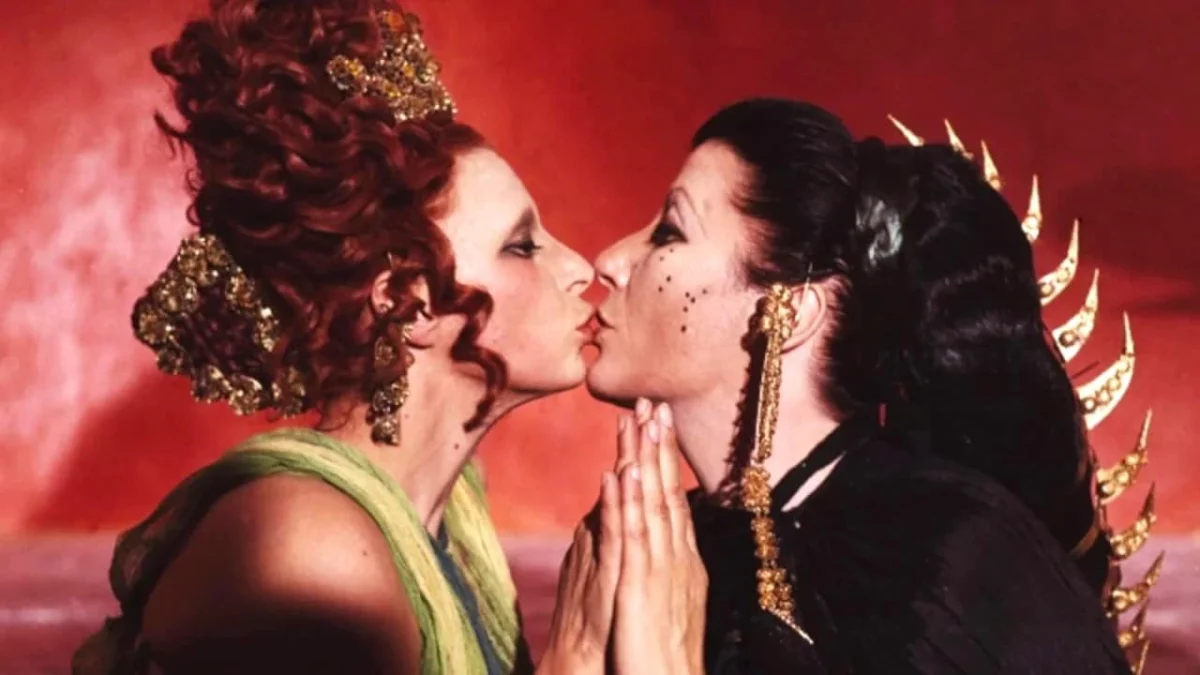
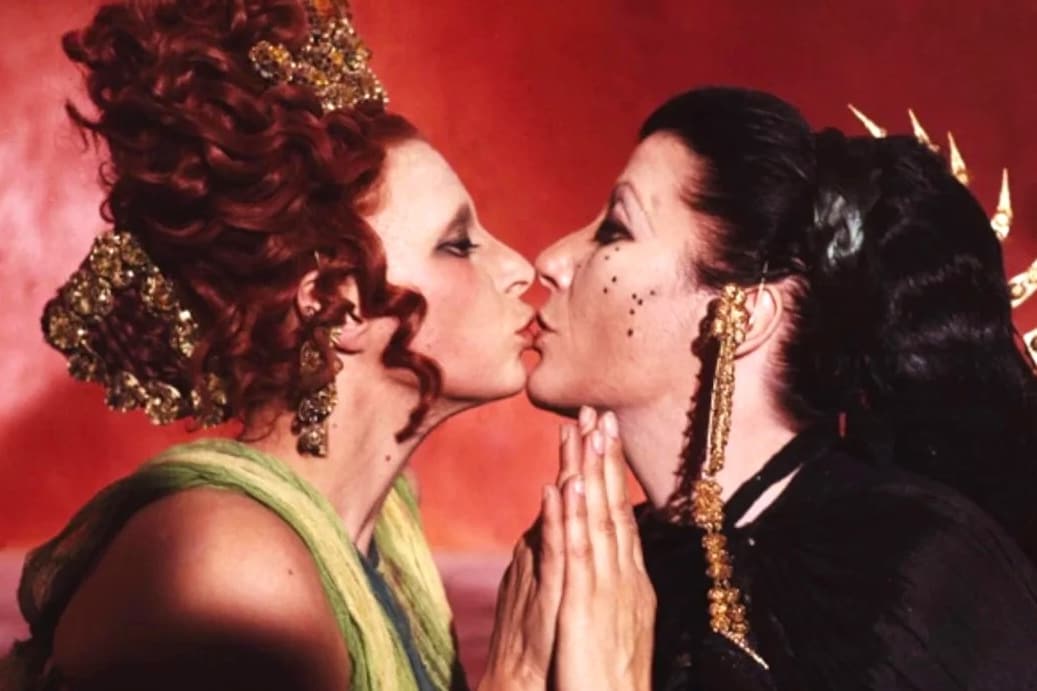
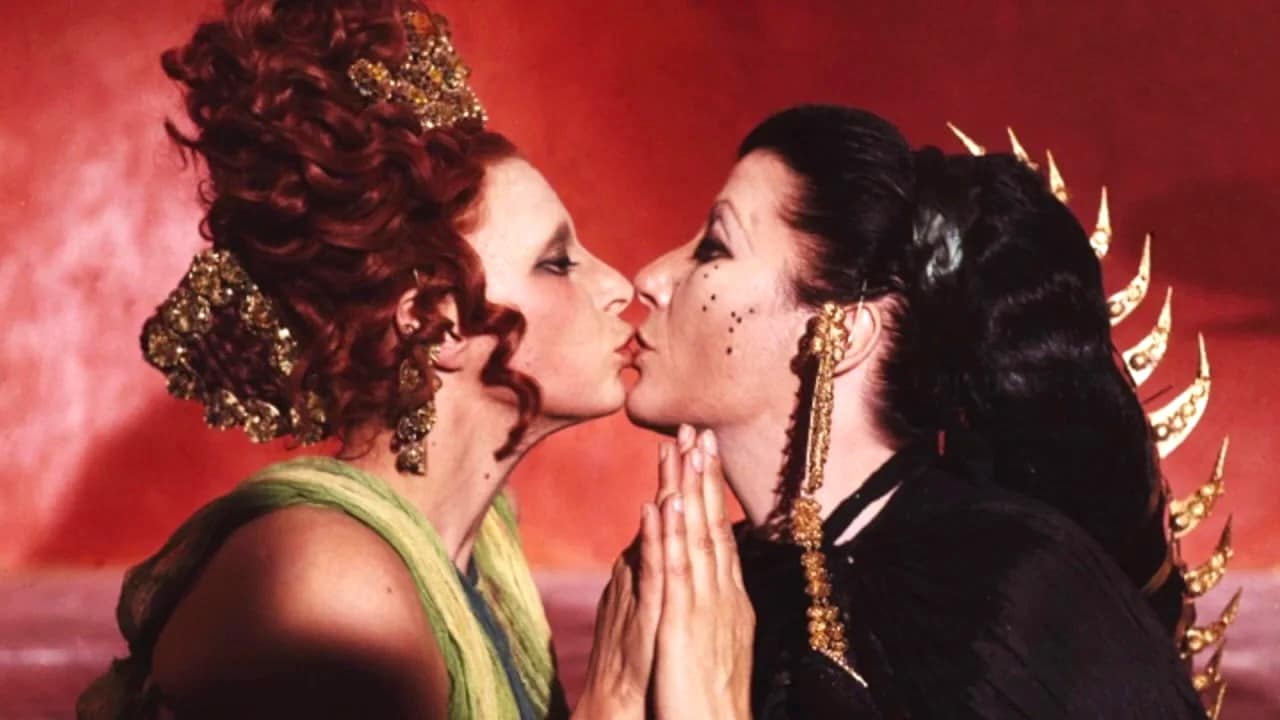
Federico Fellini’s Fellini Satyricon is a cinematic kaleidoscope, a surreal and grotesque adaptation of Petronius’s fragmentary Roman novel, Satyricon, written during the reign of Emperor Nero. Released in 1969, at a time when Fellini was moving further into experimental and dreamlike narratives following successes like La Dolce Vita and 8½, the film follows the episodic, carnivalesque adventures of two young men, Encolpius and Ascyltus, across a hallucinatory Mediterranean landscape. Their journey, a delirious odyssey of their own, encompasses barbaric banquets, psychedelic brothels, and encounters with mythical figures, culminating in imprisonment by pirates.
Fellini, known for his extraordinary visual flair, had no intention of producing a faithful historical adaptation. Instead, he transformed Imperial Rome into a phantasmagoric, almost space-age fantasy, deeply imbued with the counter-cultural and hedonistic spirit of the late 1960s. Filmed predominantly at Rome’s iconic Cinecittà studios, the production was a massive undertaking, reflecting Fellini’s maximalist aesthetic. The costumes and sets, designed by the celebrated Danilo Donati, were extravagant and fantastical, blending historical allusions with anachronistic elements to create a timeless yet distinctively Felliniesque vision. Donati’s work, which also graced Pasolini’s Oedipus Rex and Brass’s Caligula, underscored the era’s collaborative spirit in reimagining antiquity.
Upon its release, Fellini Satyricon divided critics. Some lauded its audacious originality and visual grandeur, while others found it self-indulgent and impenetrable. Vincent Canby of The New York Times called it "a journey through Fellini’s unconscious," highlighting its deeply personal nature. Despite mixed initial reviews, the film has since been recognized as a masterpiece of arthouse cinema, a testament to Fellini’s singular vision and his ability to transcend conventional storytelling. Its influence on subsequent generations of filmmakers exploring themes of decadence and societal decay is undeniable, solidifying its status as a quintessential cult classic that dared to imagine antiquity not as a dusty historical record, but as a living, breathing, and often terrifying dreamscape.
Caligula (1979)
If Fellini Satyricon offered a surreal journey through Roman excess, Tinto Brass’s Caligula plunged headfirst into the abyss of imperial depravity. Released in 1979, this "Romesploitation" classic notoriously tackled the story of Emperor Caligula, a figure synonymous with power, corruption, and madness. The film stars Malcolm McDowell in a compelling, yet often overshadowed, performance as the titular emperor, alongside Teresa Ann Savoy as his sister and lover Drusilla, and Dame Helen Mirren as his wife Caesonia.
Caligula‘s production was fraught with conflict and controversy, becoming a cautionary tale in cinematic history. The screenplay was initially penned by Gore Vidal, who sought to explore the political machinations and psychological deterioration of Caligula. However, his vision clashed severely with director Tinto Brass’s more overtly explicit approach. The ensuing battle for creative control escalated dramatically when producer Bob Guccione, the founder of Penthouse magazine, took over the editing process and controversially inserted extraneous hardcore pornography footage into the film without Brass’s or the actors’ consent. This move cemented the film’s reputation for shock value over artistic merit, leading to its banning in numerous countries and a critical panning upon its initial release.
Despite its tumultuous origins and the widespread condemnation, Caligula gradually garnered a cult following, primarily due to its sheer audacity and the compelling performances by its lead actors, particularly McDowell, who managed to imbue Caligula with a disturbing blend of charisma and psychotic instability. The sets, once again crafted by the ingenious Danilo Donati, were spectacular, reflecting the opulence and eventual squalor of the Roman court. In 2020, producer Thomas Negovan undertook a painstaking reconstruction, utilizing original camera negatives to create a version closer to the creators’ initial artistic intent. This "Ultimate Cut" premiered at Cannes in 2023, 44 years after its chaotic debut, finally allowing audiences and critics to re-evaluate the film on its own terms. McDowell himself praised the new version, stating on Instagram, "Because of the brilliant work of Thomas Negovan, one of my best performances has finally come to light after 47 years!" This re-evaluation underscores the film’s complex legacy, moving it from mere exploitation to a controversial, yet undeniably significant, piece of cinematic history.
Othon (1970)
In stark contrast to the lavishness of Fellini Satyricon and the explicit provocations of Caligula, Jean-Marie Straub and Danièle Huillet’s Othon, released in 1970, offered a radically minimalist and intellectually rigorous engagement with Roman antiquity. Commonly known as Othon, its original French title, Les Yeux ne veulent pas en tout temps se fermer ou Peut-être qu’un jour Rome se permettra de choisir à son tour, translates to the rather less catchy "Eyes Do Not Want to Close at All Times or Perhaps One Day Rome Will Allow Herself to Choose in Her Turn." The film is a direct adaptation of Pierre Corneille’s 1664 play, which delves into the intricate Roman politics of 69 AD, specifically focusing on Emperor Galba’s fraught decision over his successor: the weak but noble Pison, or the ambitious and cunning Otho.
Straub-Huillet, known for their austere, Brechtian filmmaking style, aimed to strip away conventional cinematic artifice to foreground the text and its historical context. Shot among the actual ruins of Rome’s Palatine Hill, the film features actors delivering Corneille’s classical French verse in a rapid, almost flat monotone. Crucially, the modern city of Rome, with its notorious traffic and contemporary sounds, is constantly visible and audible in the background. This deliberate blending of ancient and modern serves as a profound commentary on the continuity of history and power struggles, collapsing the distance between 17th-century French drama, 1st-century Roman politics, and 20th-century urban reality.
Othon is deliberately difficult to follow, its non-naturalistic performances and unadorned aesthetic challenging viewer expectations. Yet, this approach forces a meditative engagement with the flow of dialogue, the stark beauty of the 16mm photography, and the ambient sounds of the city. While it alienated many mainstream audiences, Othon was championed by avant-garde critics and film scholars for its uncompromising artistic vision and its profound critique of conventional historical dramas. It stands as a remarkable work of art, a testament to the power of cinematic austerity in exploring complex political and philosophical themes, offering an intellectual counterpoint to the more visceral depictions of Roman life.
Challenging Conventions: Identity, Sexuality, and the Human Condition
Beyond the immediate allure of Roman excess, other European filmmakers turned to diverse corners of antiquity to explore themes of identity, sexuality, and the human condition, often through deeply personal and transgressive lenses. These films dared to confront the "unknowable" not with grand spectacles, but with intimate gazes, challenging prevailing cinematic norms.
Oedipus Rex (1967)
Pier Paolo Pasolini, the provocative Italian director, poet, and intellectual, brought his unique vision to Sophocles’ seminal tragedy, Oedipus Rex, in 1967. The story of Oedipus, a prince fated to kill his father and marry his mother, is arguably as well-known and psychologically resonant as the tale of Odysseus. Pasolini’s film forms the middle part of an unofficial ancient-world trilogy, bookended by The Gospel According to St Matthew (1964) and Medea (1969), showcasing his enduring fascination with myth, religion, and the primal origins of human behavior.
Franco Citti delivers a raw, intense performance as the hero doomed by prophecy, while the legendary Silvana Mangano appears as Queen Jocasta, his fated mother-wife. Mangano herself had played both Penelope and Circe in Mario Camerini’s 1954 adaptation of The Odyssey, Ulysses, making her a familiar face in cinematic antiquity and adding a layer of meta-textual resonance to Pasolini’s more abstract portrayal.
Pasolini’s Oedipus Rex is set in an unspecified, archaic ancient past, yet it provocatively begins and ends in the 20th century, effectively collapsing the temporal distance between antiquity and the modern day. Filmed largely in the stark, primal landscapes of Morocco, Pasolini deliberately eschewed historical accuracy in favor of a universal, mythic aesthetic. He filled his starkly beautiful world with anachronistic elements, including Romanian and Japanese folk music, alongside spectacular, ahistorical costumes and masks that evoked a sense of ritual and timelessness. Pasolini famously claimed that because the story of Oedipus is a myth, "it is meta-historical," allowing him complete freedom in his interpretation. The film’s stark beauty and unflinching portrayal of incest and parricide earned it significant critical praise, establishing it as a bold and visually poetic reinterpretation of a foundational Western myth.
Sebastiane (1976)
Derek Jarman’s Sebastiane, released in 1976, holds a unique place in cinematic history as the first feature-length film ever made entirely in Latin. Jarman, a pivotal figure in British queer cinema, was profoundly inspired by the iconography of Saint Sebastian, whose arrow-pierced body had long been adopted as a potent symbol within gay culture. The film chronicles the life of Sebastian, one of Emperor Diocletian’s guards, leading up to his martyrdom, filtered through an unapologetically homoerotic lens.
Set on the rugged, sun-drenched beaches and rocky terrain of Sardinia, which stand in for the Roman world, Sebastiane is a sensual and visually striking work. Accompanied by an atmospheric and haunting soundtrack by Brian Eno, the film centers the male body, exploring themes of desire, devotion, and suffering. Its explicit depictions of gay sex were groundbreaking for the time, provoking considerable outrage, particularly when it aired on Channel 4 in 1985. The production itself was a low-budget affair, with the crew often having to conceal scenes of male nudity from curious and sometimes angry local villagers. For the film’s riotous opening orgy sequence, Jarman famously cast a flamboyant group of London punks, artists, and dancers, deliberately creating a moment where, in his own words, "modern London winked at Ancient Rome," bridging cultural eras with audacious irreverence.
Sebastiane was a defiant artistic statement, a powerful exploration of queer identity and spirituality that challenged both religious dogma and cinematic censorship. While controversial, it was acclaimed in art-house circles for its poetic beauty and its pioneering role in LGBTQ+ cinema. It remains a powerful testament to Jarman’s vision and his ability to fuse historical narrative with contemporary queer sensibilities, making it an enduring cult classic for its courage and aesthetic innovation.
Young Aphrodites (1963)
Nikos Koundouros’s 1963 film Young Aphrodites (originally Mikres Aphrodites) offers a quiet, pastoral counterpoint to the epic grandeur and explicit provocations often associated with ancient world cinema. This Greek drama is based on the bucolic poetry of Theocritus and Longus’s Hellenistic romance novel, Daphnis and Chloe, transporting viewers to 200 BC. The narrative unfolds as a group of shepherds ventures to new pastures, where two parallel romances blossom: one between two young adults, and another between a young boy and girl.
In stark contrast to the sword-and-sandal genre popular at the time, Young Aphrodites is characterized by its tender, erotic sensibility and its sparse dialogue and action. Many of the actors were real-life shepherds, lending an authentic, ethnographic quality to the portrayal of their daily lives and courtship rituals, which often involve animals and birds. Koundouros’s direction emphasizes naturalism and a profound connection to the landscape. The black-and-white cinematography captures the raw beauty of the Greek countryside, highlighting the innocence and nascent sensuality of young love in a world that is simultaneously idyllic and imbued with a certain primal cruelty.
The film’s minimalist approach and poetic realism resonated strongly with international critics. Nikos Koundouros won Best Director at the Berlin Film Festival in 1963, and the film was nominated for the prestigious Golden Bear. Young Aphrodites stands as a beautiful and sensitive exploration of burgeoning sexuality and human connection within a pre-Christian, mythic landscape. It reminds audiences that antiquity was not solely a stage for emperors and warriors, but also for the universal, timeless stories of ordinary people and the tender awakenings of love.
The Grand Exception: Cleopatra (1963)
While the preceding films represent a departure from mainstream spectacle, one monumental production from this era demands inclusion, not for its artistic subversion, but for its sheer, unparalleled excess and the sheer force of its cultural impact: Joseph L. Mankiewicz’s Cleopatra (1963). This film, an anomaly on a list primarily dedicated to arthouse cult classics, stands as perhaps the most notorious motion picture ever made, a quixotic spectacle that few have actually watched in its entirety, yet whose legend persists.
Cleopatra stars Elizabeth Taylor and Richard Burton, whose scandalous on-set affair became a global sensation, inextricably linking their colossal union with the film’s narrative. Taylor, glittering in her elaborate wigs and heavily painted eyeliner, and Burton, tanned and smouldering in a toga, became icons of Hollywood glamour and scandal. The film’s colossal runtime, exceeding four hours, with a handy intermission dividing Cleopatra’s romance with Julius Caesar from her later relationship with Marc Antony, was a testament to its ambition and narrative scope.
The production was plagued by a litany of disasters. After an ill-fated attempt at Britain’s gloomy Pinewood Studios, filming moved to Rome’s Cinecittà. On-set woes ranged from logistical nightmares, such as antipathy between horses and elephants (long before the advent of CGI), to unexpected hazards like unexploded Second World War landmines, a debilitating sandstorm, and cats giving birth beneath the elaborate sets. Beyond the logistical chaos, the production was engulfed by a relentless tabloid whirlwind. Taylor’s health suffered numerous crises, including staphylococcal pneumonia, a tracheotomy, meningism, tooth abscesses, brucellosis, phlebitis, and even multiple suicide attempts. The affair between Taylor and Burton, both married at the time, was condemned globally by the press and even denounced by the Vatican as "erotic vagrancy," turning the film into a real-life soap opera that overshadowed its cinematic merits.
With an unprecedented budget of $44 million (equivalent to over $400 million today), Cleopatra nearly bankrupted Twentieth Century Fox. It was a paragon of cinematic excess, featuring tens of thousands of extras, 26,000 costumes, and some of the most elaborate sets ever constructed. Despite its astronomical cost and tumultuous production, Cleopatra eventually recouped its expenses through global box office returns and subsequent television rights, albeit slowly. Its legacy is complex: a cautionary tale of Hollywood hubris, a benchmark for lavish production design, and an enduring cultural touchstone for its blend of historical drama, romance, and scandal. While not a "cult" film in the traditional sense of obscure or counter-cultural appeal, its epic scale, behind-the-scenes drama, and sheer unlikeliness have earned it a unique place in the pantheon of cinema history, an undeniable "twisted path" through antiquity forged by unparalleled ambition and human drama.
The Enduring Allure of an Unknowable Past
The films discussed here—Fellini Satyricon, Oedipus Rex, Cleopatra, Sebastiane, Caligula, Othon, and Young Aphrodites—represent a diverse and often transgressive cinematic journey through the ancient world. Far from merely recreating history, these European auteurs and their collaborators used antiquity as a mirror, reflecting contemporary anxieties, challenging societal norms, and exploring the timeless complexities of the human condition. From Fellini’s grotesque carnival to Pasolini’s primal myths, Jarman’s homoerotic martyrdom, Brass’s explicit depravity, Straub-Huillet’s minimalist political drama, Koundouros’s tender pastoral, and Mankiewicz’s monumental spectacle, each film offered a unique lens through which to engage with a past that remains, in many ways, unknowable.
These films, many of which achieved cult status for their unconventional approaches and boundary-pushing content, underscored a crucial shift in cinematic representation of history. They moved beyond simplistic heroic narratives to delve into the psychological, sexual, and political undercurrents of ancient societies, often blurring the lines between historical accuracy and artistic interpretation. They challenged audiences to confront the strangeness and complexity of human nature, suggesting that the past, in all its forms, continues to resonate with and inform our present. In their daring, their artistry, and their sheer unwillingness to conform, these "twisted paths" through antiquity remain vital and compelling contributions to the cinematic canon, continuing to stir and provoke audiences decades after their initial releases.