






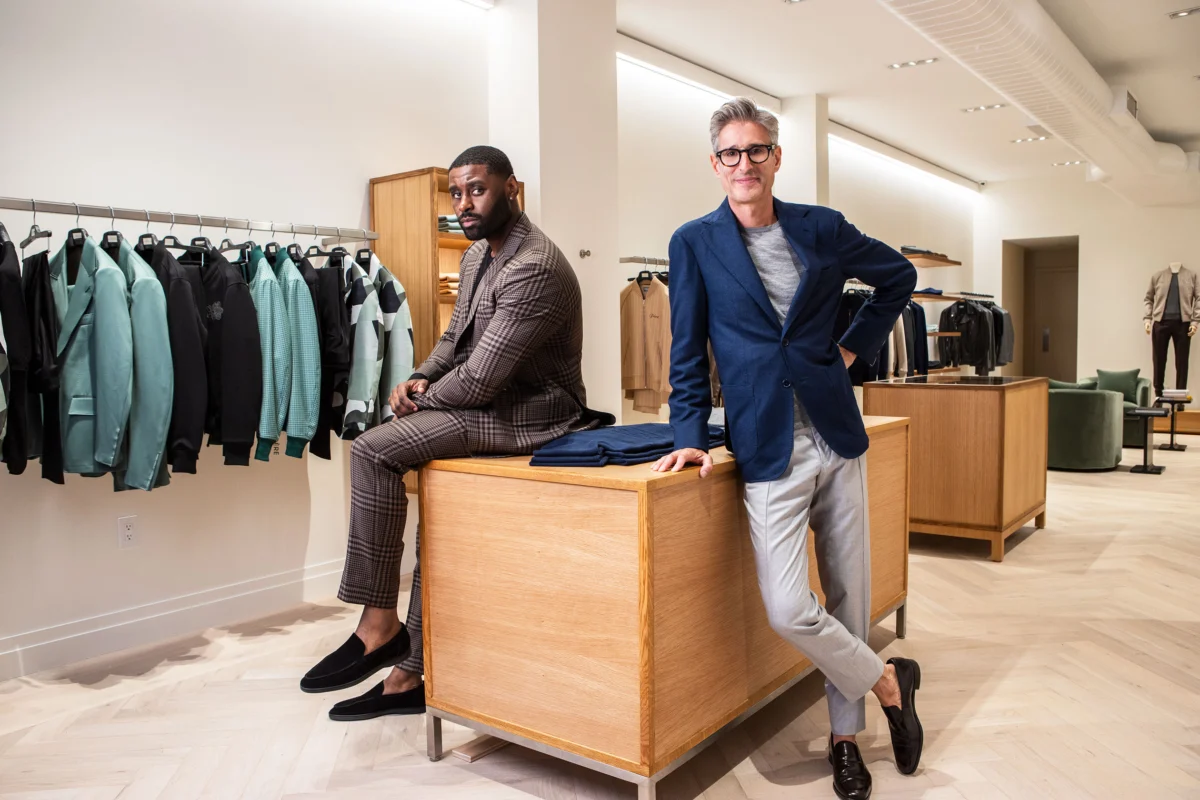
The landscape of high-end menswear is witnessing a significant shift as Frère, a luxury brand that has rapidly captured the attention of global tech titans and cultural icons, officially opens its first flagship boutique in New York City’s historic SoHo neighborhood. Since its initial launch in March, the brand has positioned itself at the intersection of traditional bespoke tailoring and modern ready-to-wear, attracting a client list that includes Apple CEO Tim Cook, music mogul Jay-Z, and Coinbase co-founder Fred Ehrsam. The opening of the physical retail space marks a pivotal moment for the company as it seeks to formalize its presence in the "quiet luxury" sector—a movement characterized by understated, high-quality garments that eschew loud logos in favor of impeccable craftsmanship and premium materials.
Frère’s entry into the physical retail market comes at a time when the "tech bro" aesthetic is undergoing a sophisticated transformation. For years, the Silicon Valley uniform was defined by functional, if uninspired, staples: Patagonia vests, corporate-branded hoodies, and basic denim. However, as the leadership of the technology sector has matured and its influence has expanded globally, there has been a notable pivot toward refined minimalism. Frère caters specifically to this demographic, offering items such as $3,490 wool knit tracksuits and $5,990 cashmere overcoats. These price points reflect the brand’s commitment to the highest tiers of the luxury market, placing it in direct competition with established European houses like Loro Piana and Brunello Cucinelli.
The Architectural and Cultural Pedigree of Frère
The brand is the result of a strategic partnership between two industry veterans with vastly different but complementary backgrounds. Davidson Petit-Frère, the creative director, initially built his reputation in the world of luxury real estate before transitioning into fashion. His journey into the sartorial arts began with internships and the eventual launch of Musika Frère, a brand that gained notoriety for its sharp, bespoke suits tailored for celebrities such as Beyoncé and NBA star Stephen Curry. Petit-Frère’s design philosophy is deeply rooted in his Haitian heritage, which he blends with European tailoring techniques to create a look that is both culturally resonant and globally sophisticated.
Partnering with Petit-Frère is CEO François Kress, a seasoned executive whose resume reads like a directory of the luxury world’s most prestigious boardrooms. Kress previously served as the president of Fendi for North and South America, managing director of Bulgari in the same regions, and president and CEO of Prada Group in the United States. This combination of Petit-Frère’s creative vision and Kress’s operational expertise in the global luxury market has allowed the brand to scale with remarkable speed. According to Kress, the duo spent years contemplating the trajectory of menswear, eventually deciding that the future lay in a balance of "innovation, artistry, and cultural relevance."
A Strategic Shift in Tech Sector Fashion
The rise of Frère reflects a broader trend within the technology industry where CEOs and venture capitalists are increasingly using fashion to signal status and personal brand identity. While figures like Mark Zuckerberg and Jeff Bezos have recently experimented with more flamboyant styles, including gold chains and vibrant patterns, a significant portion of the tech elite is moving toward "quiet luxury." This style emphasizes neutrals, superior fabric quality, and a fit that is both professional and comfortable.
The SoHo flagship store is designed to be an immersion into this world. Interestingly, Frère has operated without a formal e-commerce platform since its inception, choosing instead to focus on the tactile experience of luxury. Kress noted that the physical location is essential for a brand of this caliber, as the quality of cashmere and the precision of a shoulder seam are difficult to convey through a digital screen. The brand plans to launch its online store later this month, but the flagship remains the primary vehicle for storytelling and brand immersion.
Investment and Financial Backing
The financial trajectory of Frère is as high-profile as its clientele. The company is currently in the process of raising a seed round, led by Robert Nelsen, an angel investor and the co-founder and managing director of ARCH Venture Partners. Nelsen, who is primarily known for his high-stakes investments in the biotechnology sector, cited the brand’s ability to blend timelessness with a "fresh perspective" as a key driver for his involvement.

Nelsen is joined by a diverse group of investors from the worlds of finance, tech, and entertainment. This includes Robert Hamwee of New Mountain Capital and Jay-Z, whose participation underscores the brand’s cross-sector appeal. The capital raised thus far has been utilized to build a specialized team, develop the inaugural ready-to-wear collection, and secure the prime real estate in SoHo. This investment strategy suggests that Frère is not merely a niche boutique label but a brand with the infrastructure and backing to compete on a global scale.
Chronology of Development
The timeline of Frère’s development illustrates a rapid ascent in a notoriously difficult industry.
- Pre-2024: Davidson Petit-Frère establishes himself through Musika Frère, dressing high-profile athletes and entertainers, while François Kress oversees North American operations for Fendi and Prada.
- Late 2023: Kress and Petit-Frère finalize the concept for a new luxury brand that bridges the gap between bespoke tailoring and high-end ready-to-wear.
- March 2024: Frère officially launches, operating primarily through private appointments and word-of-mouth among the tech and finance elite.
- Late 2024: The brand secures seed funding from Robert Nelsen, Jay-Z, and other prominent investors.
- December 2024: The first flagship store opens in SoHo, New York.
- Late December 2024: Planned launch of the brand’s first e-commerce platform.
Market Analysis and Industry Implications
The emergence of Frère is indicative of a larger consolidation of luxury consumption. As the global economy fluctuates, the "ultra-luxury" segment—where customers are less sensitive to price changes—has remained resilient. By targeting the technology sector, Frère is tapping into a demographic with immense purchasing power and a growing desire for exclusivity.
Furthermore, the brand’s decision to prioritize a physical flagship store over digital sales is a calculated move that aligns with traditional luxury values. In an era of "fast fashion" and digital-first brands, the move toward in-person shopping in SoHo serves to validate the brand’s quality. For a CEO or a high-net-worth individual, the value proposition of a $6,000 coat is not just the warmth it provides, but the experience of the fitting and the assurance of the material’s provenance.
Industry analysts suggest that the success of Frère could encourage other luxury brands to rethink their approach to the technology market. Rather than viewing tech professionals as a monolith of casual wear, there is a clear opportunity to provide garments that reflect their professional stature. Petit-Frère’s ability to "blend classic tailoring with contemporary elements" allows these leaders to stand out subtly, a requirement in environments where overt displays of wealth are often discouraged, but quality is always noticed.
Official Responses and Perspectives
The founders and investors have expressed a clear vision for the brand’s role in the modern wardrobe. Davidson Petit-Frère emphasized that the brand is an extension of his own identity and the heritage he brings to the table. "We combine elements of my Haitian heritage with the luxury and sophistication that defines the brand," he told reporters. This cultural infusion is what separates Frère from the more sterile, traditional European luxury houses.
From an investor’s perspective, Robert Nelsen highlighted the practical appeal of the garments. "They make a helluva suit, plain and simple," he stated, noting that for those in tech, fashion is about a style that feels "personal but still professional." This sentiment is echoed by the brand’s rapid adoption among Silicon Valley’s most recognizable names.
As Frère looks toward 2025, the focus will likely shift toward international expansion and the growth of its digital presence. However, the core of the brand remains rooted in the artisanal quality of its New York flagship. In a world increasingly dominated by the ephemeral nature of digital trends, Frère is betting on the enduring value of a well-tailored suit and the quiet power of exceptional craftsmanship. The SoHo store is not just a place of commerce; it is a statement of intent for the future of luxury menswear.