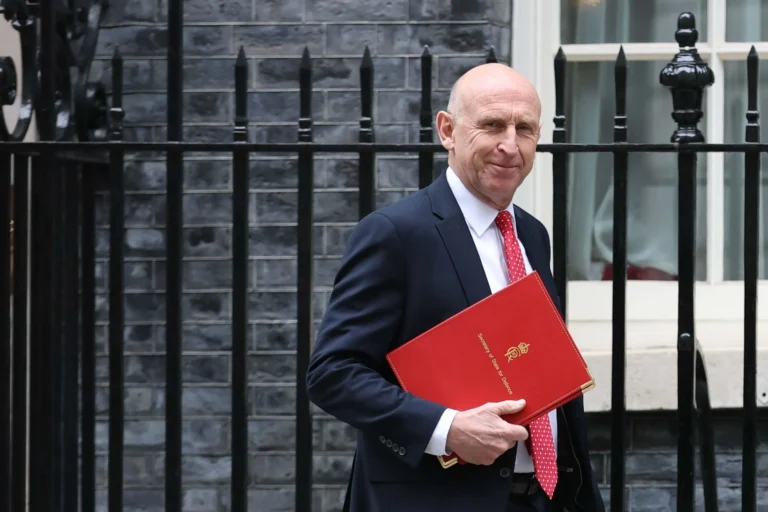












The United Kingdom’s newly inaugurated Prime Minister, Andy Burnham, has officially begun his tenure in the top office at No. 10 Downing Street, immediately setting an ambitious agenda with the launch of his flagship "Circuit Breaker for Britain" initiative. Central to this bold new strategy is a comprehensive package of business rates relief, aimed squarely at revitalizing the nation’s struggling high streets. The move, initially reported by Drapers on July 24, 2026, as Burnham settled into the hot seat, marks a critical early test for the new administration’s economic vision and its commitment to bolstering local economies across the UK.
The Mandate for Change: Burnham’s Ascent to No. 10
Andy Burnham’s journey to the premiership culminated in a decisive victory for the Labour Party in the general election held in November 2025. Following a period of significant political and economic turbulence, including the lingering effects of the post-pandemic recovery, high inflation, and persistent cost-of-living challenges, the electorate sought a fresh direction. Burnham, a former cabinet minister and highly popular Mayor of Greater Manchester, successfully campaigned on a platform of regional empowerment, social justice, and a pragmatic approach to economic reform. His "Circuit Breaker for Britain" concept emerged as a cornerstone of his manifesto, promising a radical intervention to breathe new life into communities and address systemic inequalities that had widened over the preceding decade. The campaign successfully tapped into widespread public frustration over neglected town centres, rising unemployment in certain sectors, and the perception that previous governments had failed to adequately support local businesses against the backdrop of global economic shifts and the inexorable rise of online retail.
Upon assuming office, Prime Minister Burnham wasted no time in signaling his intent to deliver on these promises. His inaugural address emphasized a commitment to "rewiring the British economy from the ground up," with a particular focus on empowering local enterprises and fostering a more equitable distribution of wealth and opportunity. The "Circuit Breaker" was framed not merely as a policy, but as a philosophical shift – a declaration that the government would actively intervene to protect and nurture the foundational elements of the British economy, starting with its high streets.
Unpacking the "Circuit Breaker" Initiative: A Multi-pronged Approach
The core of the "Circuit Breaker for Britain" initiative, as initially highlighted, is a significant reform of business rates. The government’s white paper, published just days after Burnham took office, outlined a two-year emergency relief package designed to alleviate the financial burden on retailers and other high street businesses. Under the proposed legislation, which is expected to pass swiftly through Parliament with the government’s strong majority, qualifying businesses will receive an immediate 50% reduction in their business rates liability for the fiscal years 2027/28 and 2028/29. This measure is targeted at properties with a rateable value below a certain threshold, ensuring that the relief primarily benefits small and medium-sized enterprises (SMEs) and independent retailers that are often most vulnerable to high overheads.
Beyond the immediate relief, the "Circuit Breaker" proposes a comprehensive review of the entire business rates system, with a view to implementing a more permanent, fairer, and adaptable taxation model by 2029. This review will explore alternatives such as an online sales tax, a land value tax, or a reformed property tax system that better reflects current economic realities and the evolving retail landscape.
However, the "Circuit Breaker" is more than just business rates relief. It encompasses several other key pillars:
- High Street Revitalization Fund: A £2 billion fund allocated over four years to local authorities, empowering them to invest in infrastructure improvements, public realm enhancements, cultural events, and initiatives to attract new businesses and diversify high street offerings. This fund aims to create vibrant, multi-purpose town centres that are less reliant solely on traditional retail.
- Digital Transformation Grants: Small grants and advisory services for independent businesses to enhance their online presence, e-commerce capabilities, and digital marketing strategies, helping them compete in a hybrid retail environment.
- Empty Property Incentives: A package of incentives and reduced regulatory hurdles for developers and local entrepreneurs looking to convert vacant retail units into residential properties, community hubs, or co-working spaces, addressing the blight of empty storefronts.
- Skills and Apprenticeship Programmes: Targeted funding for vocational training and apprenticeship schemes focused on retail management, digital skills, and customer service, ensuring the high street workforce is equipped for future demands.
This multi-pronged approach reflects the administration’s understanding that the challenges facing the high street are complex and require more than a single solution.
The UK High Street: A Landscape in Flux (Supporting Data & Context)
The "Circuit Breaker" initiative arrives at a critical juncture for the UK’s high streets. For years, these once-bustling arteries of community life have been struggling against a perfect storm of challenges. According to data from the British Retail Consortium (BRC) and the Centre for Retail Research, the overall vacancy rate across UK high streets stood at an alarming 14.5% in Q2 2026, a slight improvement from the pandemic peak but still significantly higher than pre-2019 levels of around 10%. This figure masked even starker realities in certain regions, particularly in former industrial towns and secondary retail locations, where vacancy rates often exceeded 20%.
The structural shift towards online shopping, accelerated dramatically by the COVID-19 pandemic, has fundamentally altered consumer behaviour. E-commerce accounted for approximately 35% of all retail sales in the UK in 2025, up from around 20% five years prior. This trend has led to numerous high-profile retail bankruptcies and store closures, leaving a visible scar on town centres. Major chains like Arcadia Group, Debenhams, and numerous smaller fashion and lifestyle brands have either disappeared or significantly downsized their physical footprints.
Business rates, often described as an archaic tax system based on property values rather than profitability, have long been identified as a major contributor to the high street’s woes. Retailers frequently argue that these rates, which are revalued periodically and can rise significantly even when trading conditions are poor, place an unfair burden on physical stores compared to online-only competitors who operate from out-of-town warehouses with lower rateable values. A 2024 report by the Federation of Small Businesses (FSB) indicated that business rates were consistently cited as one of the top three cost pressures for independent retailers, alongside energy bills and staffing costs. The report estimated that retailers paid approximately 25% of the total business rates collected in England, despite accounting for a much smaller share of the overall economy. This disparity has fueled calls for fundamental reform for over a decade.
Timeline of Policy Development and Launch
The "Circuit Breaker" policy has a relatively short but intensive gestation period, reflecting the urgency placed upon it by the new government.
- April 2025: Andy Burnham, then Leader of the Opposition, formally unveils the "Circuit Breaker for Britain" as a key plank of his party’s general election manifesto, detailing the proposed business rates relief and high street investment fund.
- November 2025: Labour wins a decisive majority in the general election, with the "Circuit Breaker" widely credited as a popular and tangible policy offering.
- December 2025: Following his appointment as Prime Minister, Burnham establishes a dedicated task force within the Department for Levelling Up, Housing and Communities (DLUHC) to fast-track the policy’s implementation.
- January 2026: A white paper outlining the full scope of the "Circuit Breaker" is published, initiating a rapid, targeted consultation period with retail bodies, local authorities, and economic think tanks.
- March 2026: The "Business Rates Relief and High Street Regeneration Bill" is introduced to Parliament, receiving cross-party support in principle, though with some dissenting voices regarding the fiscal implications.
- June 2026: The Bill receives Royal Assent, officially becoming law. The government announces that the business rates relief component will come into effect from April 1, 2027, with the High Street Revitalization Fund and Digital Transformation Grants becoming accessible to local authorities and businesses from September 2026.
- July 24, 2026: Prime Minister Burnham formally launches the "Circuit Breaker for Britain" in a highly publicized event at a revitalized market town in the Midlands, kicking off the initial application phase for the non-rates related elements of the package.
Reactions from Stakeholders
The launch of the "Circuit Breaker" has elicited a range of responses from across the economic and political spectrum.

Retail Sector: Helen Dickinson, Chief Executive of the British Retail Consortium (BRC), largely welcomed the move. "This substantial business rates relief is a much-needed shot in the arm for our high streets," she stated in a press release. "For too long, the outdated business rates system has placed an unsustainable burden on physical retailers. This temporary relief will provide crucial breathing space, allowing businesses to invest, innovate, and adapt. However, the BRC urges the government to swiftly move towards a fundamental, long-term reform that creates a level playing field between bricks-and-mortar and online retailers."
Similarly, Martin McTague, National Chair of the Federation of Small Businesses (FSB), praised the initiative. "Independent businesses are the lifeblood of our communities, and many have been teetering on the brink. A 50% cut in business rates for two years will be transformative for thousands of SMEs, potentially saving jobs and encouraging new investment. We particularly welcome the accompanying funds for digital transformation and high street regeneration, which acknowledge the multifaceted nature of the challenge."
Individual retailers, while cautious, expressed optimism. Sarah Jenkins, owner of an independent bookstore in Bristol, commented, "Every penny saved on rates is a penny we can put back into stocking our shelves, paying our staff better, or improving our customer experience. It feels like the government is finally listening."
Economic Analysts: Economists offered a more nuanced perspective. Dr. Eleanor Vance, Senior Fellow at the Institute for Fiscal Studies (IFS), acknowledged the immediate stimulus potential. "The ‘Circuit Breaker’ will undoubtedly provide a short-term boost to the retail sector and local employment," she noted. "However, the fiscal cost of this relief, estimated at around £4-5 billion over two years, will need to be carefully managed. The long-term success hinges on whether the accompanying funds and the promised fundamental reform of business rates truly address the structural issues. A temporary cut without a sustainable replacement could simply defer the problem."
Professor Alistair Jenkins of the London School of Economics suggested that the policy represented a significant interventionist shift. "This is a bold move by Prime Minister Burnham, signaling a departure from previous, more hands-off approaches to the high street," Jenkins observed. "The challenge will be ensuring the relief is targeted effectively and doesn’t simply prop up unviable businesses. The focus on diversification and digital capabilities is crucial for future resilience."
Local Authorities: The Local Government Association (LGA) expressed cautious optimism, tempered by concerns over potential funding gaps. Cllr. Jane Smith, an LGA spokesperson, stated, "We welcome the High Street Revitalization Fund and the recognition that local councils are best placed to understand their communities’ needs. However, business rates are a significant source of local government revenue. While central government will compensate for the rates relief, we need assurances that this compensation is both sufficient and sustainable in the long term, and that it doesn’t lead to cuts in other vital local services."
Opposition Parties: The Conservative Opposition, now in a period of rebuilding, largely supported the concept of business rates reform but criticised the "Circuit Breaker" as potentially "too little, too late" or "fiscally irresponsible." Shadow Chancellor Rebecca Evans commented, "While we agree that business rates need reform, this temporary measure is a sticking plaster. The government must outline a credible plan for long-term fiscal stability and a permanent, competitive tax environment for all businesses, not just a two-year reprieve." The Liberal Democrats called for even more radical reform, advocating for a complete abolition of business rates and their replacement with a fairer land value tax.
Broader Implications and Potential Challenges
The success of the "Circuit Breaker for Britain" holds significant implications for the Burnham government and the broader UK economy.
Economic Impact: If successful, the initiative could stimulate significant investment in high street properties, create thousands of new jobs in retail and related services, and boost local consumer spending. A vibrant high street often correlates with increased property values, reduced crime rates, and enhanced community cohesion. The digital transformation grants could help small businesses future-proof their operations, fostering resilience against future economic shocks.
Social Impact: Beyond economic metrics, a revitalized high street can serve as the heart of a community, providing social spaces, cultural amenities, and a sense of local identity. This aligns with Burnham’s broader agenda of "levelling up" and empowering regions beyond London.
Political Capital: For Prime Minister Burnham, the "Circuit Breaker" is a litmus test of his government’s ability to deliver on core manifesto pledges. Its success or failure will significantly impact his political capital and the public’s trust in his administration.
However, significant challenges remain.
- Fiscal Sustainability: The cost of the business rates relief, while compensated by central government, still represents a substantial outlay. The long-term viability of replacing the revenue stream from business rates with a new, equally effective, and less burdensome tax system is a complex fiscal puzzle.
- Implementation Gaps: Ensuring that the High Street Revitalization Fund and Digital Transformation Grants are effectively distributed and utilized by local authorities and businesses, particularly in areas with limited capacity, will be crucial. Bureaucracy and administrative hurdles could hinder uptake.
- Addressing Structural Issues: While business rates relief is important, it doesn’t fundamentally alter consumer habits or the underlying economics of online retail. The "Circuit Breaker" aims to diversify high streets, but achieving this transformation will require sustained effort, innovative local leadership, and continued investment beyond the initial two-year period.
- Unintended Consequences: Some economists warn that untargeted relief could prolong the life of businesses that are fundamentally unviable, delaying necessary market adjustments. There’s also a risk that landlords might absorb some of the relief through higher rents, negating the benefit for tenants.
Looking Ahead: The Road to Revitalization
As Andy Burnham’s government embarks on this ambitious mission, the metrics for success will be closely watched. Key indicators will include: a reduction in high street vacancy rates, an increase in new business formations in town centres, growth in local employment figures, and crucially, an improvement in public perception of local high streets as vibrant, attractive destinations.
The Prime Minister has repeatedly stressed that the "Circuit Breaker" is not a quick fix, but the beginning of a long-term commitment to reshaping Britain’s economic landscape. The promised comprehensive review of business rates by 2029 will be critical in establishing a permanent framework that supports physical retail while adapting to the digital age. The challenge for Burnham’s administration is not just to provide immediate relief, but to lay the groundwork for a truly resilient, diversified, and community-centric future for the UK’s beloved, yet beleaguered, high streets. The journey has just begun, and the nation watches with bated breath to see if this ambitious "Circuit Breaker" can indeed reset the course for Britain.