






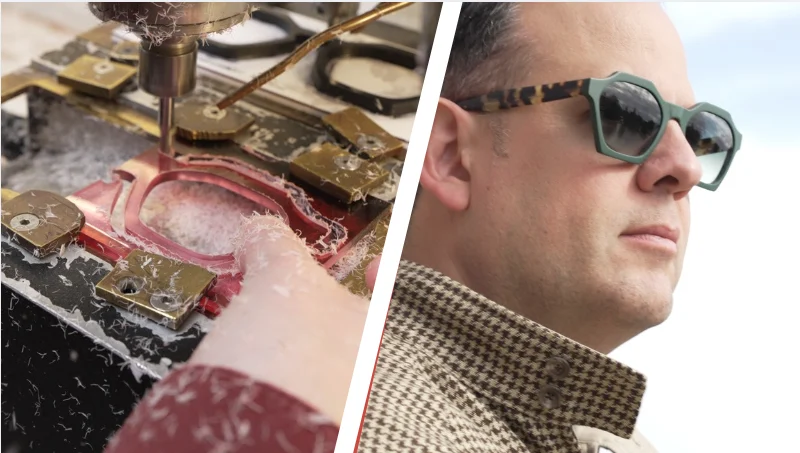
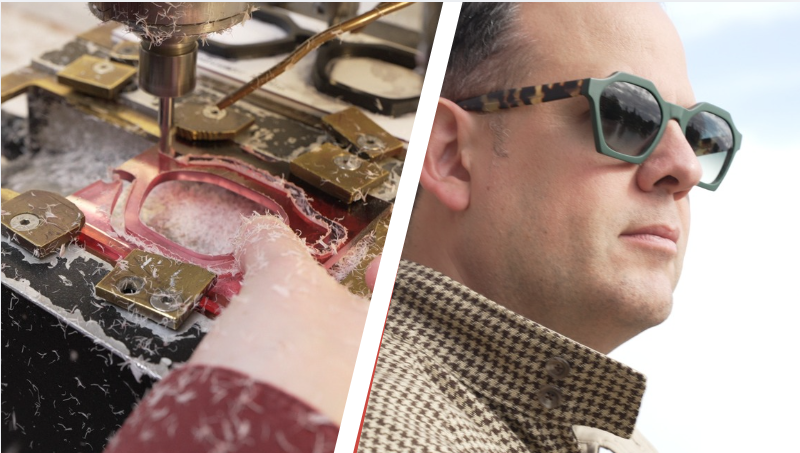
The quest for perfectly fitting eyewear, a seemingly simple desire, often culminates in a recurring cycle of discomfort: glasses that persistently slide down the nose, exert pressure on the temples, or leave unsightly red marks. This common frustration, as highlighted by a recent exposé from Gentleman’s Gazette, underscores a fundamental issue with mass-produced frames: they are rarely, if ever, designed to accommodate the intricate nuances of individual facial anatomy. In response to this widespread problem, the Gentleman’s Gazette, a leading authority on classic style and quality craftsmanship, embarked on a journey to Vienna, Austria, to document the meticulous process of commissioning bespoke acetate eyeglasses from the esteemed atelier, Schau Schau Brillen. This collaboration, featuring Sven Raphael Schneider, CEO and Founder of Gentleman’s Gazette, and Jack Collins, Senior Content Manager, offers an unparalleled look into the world where eyewear transcends mere functionality to become a true extension of one’s personal style and comfort. The endeavor not only chronicles the creation of a custom pair from initial fitting to final polish but also serves as an educational deep dive into why tailored eyewear represents a significant investment in daily well-being and sartorial elegance.
The Resurgence of Bespoke Craftsmanship and its Appeal
The journey undertaken by Gentleman’s Gazette to Schau Schau Brillen is indicative of a broader global trend: the growing appreciation for bespoke craftsmanship across various luxury sectors. In an era dominated by rapid mass production and disposable goods, discerning consumers are increasingly gravitating towards products that offer unparalleled quality, precision fit, and a unique narrative of creation. This resurgence is particularly evident in fields like sartorial tailoring, shoemaking, watchmaking, and now, eyewear. The appeal lies in the rejection of "one-size-fits-all" solutions, favoring instead items meticulously crafted to individual specifications. For eyewear, where fit directly impacts comfort, vision, and aesthetic harmony with the wearer’s face, the bespoke model offers a compelling alternative to the compromises inherent in off-the-rack options.
According to market analyses, the global luxury goods sector, including personalized items, continues to demonstrate resilience and growth, driven by consumers seeking exclusivity and lasting value. While specific data for the bespoke eyewear market remains a niche segment within the broader optical industry, its trajectory mirrors that of other custom-made luxury items, suggesting a steady increase in demand among those who prioritize comfort, durability, and personal expression. This shift reflects a desire for authenticity and a rejection of the anonymity often associated with mass-produced items. Historically, eyewear production was largely an artisanal craft, with spectacles custom-made by skilled opticians to suit individual needs. The advent of industrialization in the 19th and 20th centuries brought about mass manufacturing, making eyewear widely accessible but sacrificing personalized fit and often, the longevity of the product. The modern bespoke movement, therefore, represents a return to these traditional values, leveraging contemporary materials and techniques to achieve a new standard of personalized excellence while simultaneously preserving invaluable artisanal skills.

Schau Schau Brillen: A Legacy of Precision in Vienna
Schau Schau Brillen stands as a beacon of traditional craftsmanship in the heart of Vienna, a city renowned for its rich cultural heritage and commitment to artisanal excellence. The atelier, with its elegant showroom located on the historic Rotenturmstraße, embodies a philosophy where eyewear is not just an optical aid but a finely crafted accessory, a piece of wearable art. The company’s dedication to the bespoke process is evident in every step, from the initial client consultation to the painstaking hand-finishing of each frame. Their reputation is built on a deep understanding of facial anatomy, material science, and design aesthetics, principles that have been honed and passed down through what appears to be a multi-generational legacy within the "family’s workshop" in Perchtoldsdorf. This workshop, nestled just outside Vienna, is where the intricate artistry truly comes to life, a testament to the enduring value of skilled human touch in an increasingly automated world.
The collaboration between optician Paul and artisan Hannah is central to Schau Schau Brillen’s bespoke offering. Paul, with his extensive expertise in optics and facial fitting, meticulously assesses each client’s unique features, translating complex measurements into a precise blueprint. His role extends beyond technical measurement to include a crucial stylistic consultation, guiding clients through frame shapes, sizes, and colors that best complement their facial structure, skin tone, and overall personal style. He acts as the bridge between the client’s vision and the technical feasibility, ensuring that the final product is both aesthetically pleasing and ergonomically perfect. Hannah, the artisan, then transforms these precise specifications into a tangible product. Her hands-on expertise in working with acetate, a material chosen for its versatility, durability, and quality, is indispensable. This harmonious division of labor, combining scientific precision with artistic craftsmanship, ensures that each pair of glasses is not only optically sound and perfectly fitted but also a unique work of art, reflecting the individuality of its wearer.
The Meticulous Journey of Bespoke Acetate Eyeglasses
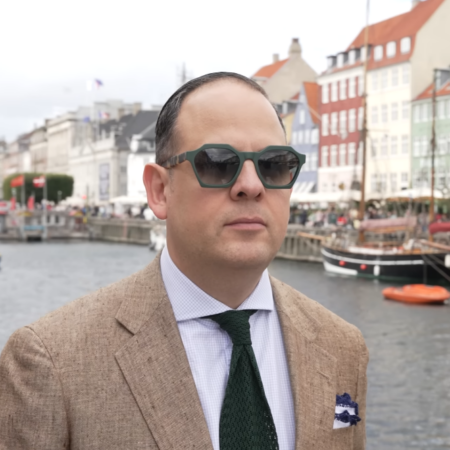
The process of commissioning bespoke acetate eyeglasses at Schau Schau Brillen is a testament to patience and precision, a journey that Sven Raphael Schneider aptly describes as an investment in "comfort and stylistic level." This intricate process, meticulously documented by Gentleman’s Gazette, begins long before any material is cut, emphasizing detailed planning and personalized attention.
Phase 1: The Initial Consultation and Precision Fitting
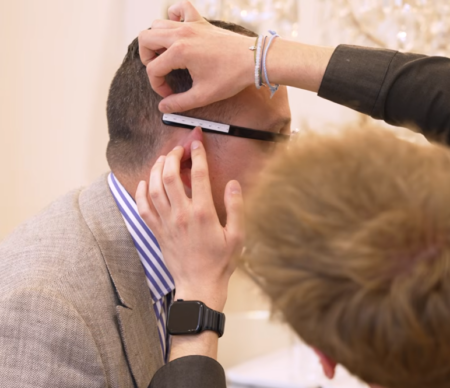
The first crucial step takes place at the Rotenturmstraße showroom, where Paul, the experienced optician, conducts an exhaustive fitting session. Unlike standard optical shops where a handful of generic frame sizes are offered, bespoke fitting delves into the minute details of the wearer’s face. This involves a series of precise measurements that go far beyond typical width and bridge size. Key metrics include:
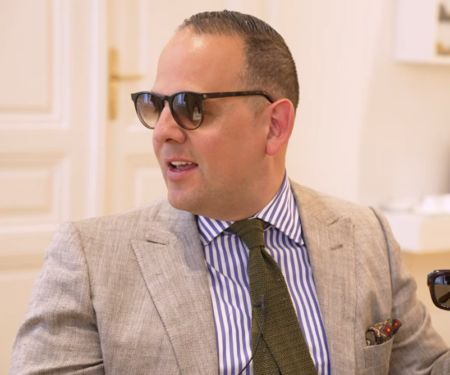
- Bridge Height and Width: Critical for preventing slippage or pressure marks, this measurement ensures the frame rests perfectly on the nose, distributing weight evenly. A common issue with off-the-rack glasses is an ill-fitting bridge, which can make the nose appear longer or wider than it is, a problem often exacerbated by the standard "keyhole" bridge design. Paul meticulously measures the nasal ridge, considering its slope and width, to create a bridge that contours seamlessly to the individual, often redesigning the bridge from the center out to correct visual imbalances.
- Temple Length: Often overlooked in mass production, temple length is paramount for comfort and stability. As highlighted in the Gentleman’s Gazette’s video, "Temple length is the one measurement most people have never actually had taken." Standard frames offer limited temple lengths, leading to arms that are either too short (pulling the frame forward) or too long (causing them to hook uncomfortably behind the ear or protrude). Bespoke temples are calibrated precisely from the hinge to the ear, ensuring the glasses stay securely in place without pinching or sliding, thereby eliminating a primary cause of constant adjustments.
- Pantoscopic Tilt and Frame Wrap: These measurements determine the angle at which the lenses sit relative to the face and the overall curvature of the frame. This optimization is crucial for visual clarity, minimizing peripheral distortion, and ensuring that the eyes align perfectly with the optical center of the lenses.
- Facial Asymmetry: No face is perfectly symmetrical. Bespoke eyewear explicitly accounts for these subtle differences, ensuring the frame sits level and balanced, even if one ear is slightly higher than the other or one side of the face is marginally wider. This individualized correction prevents crooked frames and enhances overall aesthetic balance.
- Stylistic Consultation: Beyond technical measurements, Paul engages in a detailed discussion about the client’s aesthetic preferences, lifestyle, and existing wardrobe. This ensures the chosen design, while technically perfect, also aligns seamlessly with the wearer’s personal brand. Considerations include face shape (round, square, oval, heart), skin tone, hair color, and the desired overall impression, ensuring the glasses enhance rather than detract from the wearer’s features.
Phase 2: Material Selection and Design Refinement
With the precise measurements in hand, the focus shifts to material and design. Acetate, a high-quality, plant-based plastic derived from cotton fibers, is the preferred material for bespoke frames at Schau Schau Brillen. Its advantages are numerous: it’s lightweight, durable, hypoallergenic, and, crucially, offers an unparalleled range of colors, patterns, and transparencies. This allows for immense creative freedom, enabling clients to choose a unique aesthetic that true tortoiseshell, now illegal due to conservation efforts, can no longer provide. The choice between buffalo horn and acetate is also discussed, with horn offering unique qualities like exceptional lightness, warmth against the skin, and a distinct patina that develops over time, albeit at a higher cost and with a more limited palette. Clients can select from a vast array of acetate sheets, experimenting with layered colors, matte or glossy finishes, and subtle patterns to achieve their desired look, creating a truly one-of-a-kind frame.
Phase 3: Handcrafting at the Perchtoldsdorf Workshop
The detailed blueprint and material selection are then passed to artisan Hannah at the workshop in Perchtoldsdorf. This is where the magic of handcrafting truly begins, a process that blends traditional techniques with modern precision.
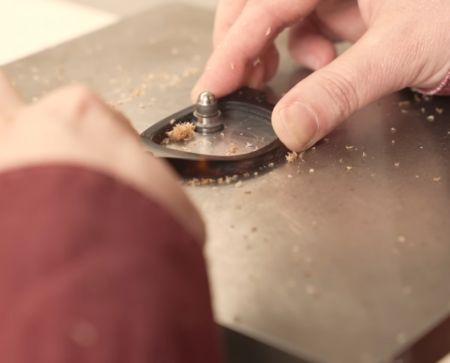
- Cutting and Rough Shaping: Using precision tools, including potentially a small CNC machine for initial rough cuts, Hannah carefully extracts the frame components from the chosen acetate sheets. However, the subsequent stages are predominantly manual, requiring extensive skill and experience.
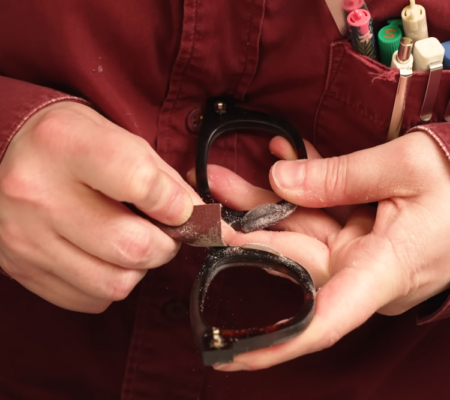
- Milling and Filing: The rough-cut pieces are meticulously shaped and refined using various milling tools, files, and sanding implements. This stage requires immense skill and an acute eye for detail, as Hannah sculpts the bridge, rims, and temples to match the client’s specific measurements and design. The curvature of the frame, the thickness of the acetate, and the subtle bevels are all hand-worked, ensuring ergonomic perfection and aesthetic grace.
- Lens Channel Precision: The lens channel, the groove into which the optical lenses will eventually be fitted, is arguably "the single most unforgiving step in the entire build," as noted by the Gentleman’s Gazette. Its precision is paramount; it must match the lens exactly, or the entire front piece becomes useless. This requires exacting measurements and steady hands to ensure a perfect, stress-free fit for the optical lenses, preventing any distortion or instability.
- Hinge Installation: High-quality, often multi-barrel, hinges are carefully integrated into the frame. These are typically robust metal components that are riveted or heat-pressed into the acetate, ensuring smooth operation, long-term durability, and stability for the folding mechanism of the temples.
- Initial Polishing and Tumbling: Once the frame components are shaped and assembled, they undergo an initial round of hand-polishing to remove tool marks and prepare the surface. Following this, the frames are placed in a tumbling drum, a crucial step in the bespoke process that involves rotating them with abrasive media and polishing compounds for an extended period, often 24-28 hours. This seemingly passive step is vital for achieving a consistently smooth, uniform surface, reaching into every curve and crevice, and preparing the acetate for its final lustrous finish. It is, as the Gentleman’s Gazette observes, where "patience is the actual product you’re buying," allowing the material to achieve its full potential of tactile smoothness and visual depth.
Phase 4: Final Polishing and Live Adjustments
After the tumbling process, the frames return for their final hand-polish, often involving multiple stages with progressively finer compounds, bringing out the maximum depth and sheen of the acetate. The final stage involves the client’s return for a conclusive fitting session. Here, Paul makes "final rounds of live adjustments, made in fractions of a millimeter." This might involve subtly heating and bending the temple arms to ensure a perfect wrap around the ear, adjusting the nose pads for optimal weight distribution, or fine-tuning the frame’s overall alignment to ensure it sits perfectly level. The goal, as eloquently stated, is that "You only know the fit is perfect when you stop thinking about the glasses entirely." This ergonomic ideal signifies that the glasses have become a seamless, comfortable, and unobtrusive extension of the wearer, providing clarity and comfort without distraction.
Implications and Broader Impact of Bespoke Eyewear
The rise of bespoke eyewear, exemplified by the craftsmanship at Schau Schau Brillen, carries significant implications for both consumers and the optical industry. For the individual, the benefits extend far beyond mere aesthetics.
Unrivaled Comfort and Durability: The most immediate and tangible benefit is unparalleled comfort. Glasses that are perfectly fitted eliminate common irritations like slipping, pinching, and pressure points, transforming a daily necessity into a seamless experience. This enhanced comfort can even improve concentration and reduce fatigue for those who wear glasses for extended periods. Furthermore, bespoke frames, crafted from high-quality materials like cellulose acetate and assembled with meticulous attention to detail, are inherently more durable than their mass-produced counterparts. This translates into a longer lifespan for the eyewear, reducing the need for frequent replacements and offering a better return on investment over time, despite the higher initial cost.
Enhanced Personal Style and Confidence: Bespoke eyewear is a powerful tool for self-expression. By customizing every aspect—from frame shape and size to color and finish—wearers can choose glasses that perfectly complement their unique facial features, skin tone, and personal aesthetic. As Sven Raphael Schneider notes, it’s about achieving a perfect "stylistic level." This level of personalization fosters a sense of confidence and individuality that off-the-rack frames, designed for broad appeal, simply cannot match. Jack Collins’ sentiment, "A bespoke suit may be an investment you enjoy wearing occasionally, but bespoke glasses are something I love wearing daily," perfectly encapsulates the profound daily impact of truly personalized eyewear on one’s self-perception and interaction with the world.
A Challenge to Mass Production and a Nod to Sustainability: The bespoke movement subtly challenges the dominance of mass-market eyewear manufacturers. While not designed to compete on price or volume, bespoke ateliers highlight the compromises inherent in large-scale production. This trend encourages a re-evaluation of consumption habits, moving away from fast fashion principles towards thoughtful, long-lasting purchases. From a sustainability perspective, bespoke eyewear contributes positively by promoting durability and reducing waste. Higher quality, repairable frames mean fewer glasses end up in landfills, and the use of