












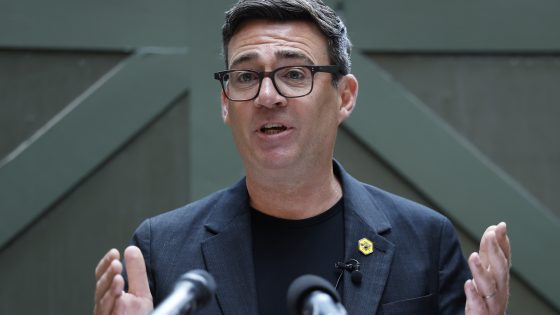
As incoming prime minister Andy Burnham prepares to enter No.10 Downing Street on Monday, 20 July 2026, the fashion retail industry stands at a critical juncture, eagerly anticipating the policy direction of the new administration. Leaders across the sector are vocalising their urgent priorities, seeking robust governmental support to navigate persistent economic headwinds, accelerate sustainable practices, and foster innovation in a rapidly evolving market. The Drapers Digital Edition has canvassed opinion from key industry stakeholders, revealing a consensus around economic stability, high street revitalisation, supply chain resilience, and a firm commitment to environmental, social, and governance (ESG) principles.
The New Administration’s Mandate: A Nation at a Crossroads
Andy Burnham’s ascent to the premiership comes amidst a complex socio-economic landscape. The UK economy in mid-2026 continues to grapple with the lingering effects of global inflation, supply chain disruptions exacerbated by geopolitical tensions, and a domestic consumer market characterised by cautious spending. His government is expected to prioritise economic stability and growth, but the specifics of how these broad objectives will translate into sector-specific policies remain to be seen. The fashion retail sector, a significant contributor to the national GDP and employment, is particularly keen to ensure its unique challenges and opportunities are addressed. With an estimated annual contribution exceeding £60 billion and supporting over 890,000 jobs directly and indirectly, the industry’s health is inextricably linked to the broader economic prosperity of the nation.
Key Priorities for Fashion Retail: A Sectoral Call to Action
Industry leaders are articulating a clear set of demands, advocating for policies that will not only safeguard existing businesses but also stimulate future growth and adaptability.
1. Economic Stability and Consumer Confidence
Foremost among the industry’s concerns is the need for a stable economic environment that fosters consumer confidence and encourages discretionary spending. Persistent inflationary pressures, though showing signs of moderation, have continued to erode purchasing power. Data from the Office for National Statistics (ONS) for Q1 2026 indicated a marginal 0.8% year-on-year growth in non-food retail sales, a figure that remains below pre-pandemic levels when adjusted for inflation. The Bank of England’s interest rate policy, while aimed at curbing inflation, has also impacted mortgage holders and renters, further tightening household budgets.
Helen Dickinson, Chief Executive of the British Retail Consortium (BRC), stated, "Our primary message to Prime Minister Burnham is the imperative for economic stability. Consumers need certainty to spend, and businesses need a predictable environment to invest. We urge the new government to implement fiscal policies that ease the cost of living crisis, potentially through targeted tax relief or energy support, to reignite consumer confidence and stimulate demand for non-essential goods, including fashion." Retailers are particularly sensitive to fluctuations in disposable income, with many reporting a bifurcation in the market: premium and luxury segments showing resilience, while mid-market and value segments face intense competition and price sensitivity.
2. Revitalising the High Street and Business Rates Reform
The long-standing issue of high street decline remains a critical concern. Despite various initiatives and temporary relief measures, physical retail spaces continue to face challenges from escalating operating costs and the ongoing shift to online shopping. Industry figures indicate that in 2025, the UK saw a net loss of 3,500 retail stores, with fashion accounting for a significant proportion of these closures. The burden of business rates is frequently cited as a major contributing factor.
"For years, the antiquated business rates system has placed an unfair burden on physical retailers, disproportionately penalising those with a strong high street presence," commented John Smith, CEO of a prominent national fashion chain. "Prime Minister Burnham has an opportunity to fundamentally reform this system, moving towards a fairer, more equitable taxation model that supports rather than penalises bricks-and-mortar stores. This isn’t just about saving shops; it’s about preserving community hubs and local employment." Calls for reform include a shift to an online sales tax to level the playing field, or a significant reduction in the multiplier applied to rateable values, especially for smaller businesses and those in struggling town centres. The industry advocates for a comprehensive review of town planning and urban regeneration policies, encouraging mixed-use developments and fostering experiential retail to drive footfall.
3. Sustainability and Circular Economy Imperatives
The push for sustainability has moved from a niche concern to a central imperative for the fashion industry. With growing consumer awareness and increasing regulatory pressure, retailers are grappling with the complexities of transitioning to more circular and ethical business models. The government’s previous commitments to achieving Net Zero by 2050, coupled with evolving Extended Producer Responsibility (EPR) schemes, place significant obligations on fashion brands. Data suggests that consumer demand for sustainably produced clothing continues to rise, with a 15% increase in searches for ‘sustainable fashion’ recorded in the UK in 2025 alone.
"The fashion industry is uniquely positioned to drive positive environmental change, but we need clear policy frameworks and financial incentives to accelerate this transition," stated Dr. Anya Sharma, Head of Sustainability at the UK Fashion & Textile Association (UKFT). "We urge Prime Minister Burnham to invest in green infrastructure, support innovation in sustainable materials and manufacturing processes, and establish robust, harmonised regulations that prevent greenwashing while rewarding genuine eco-friendly practices. A national strategy for textile recycling and waste reduction is paramount." The industry is keen to see government support for research and development into new fibres, dyes, and production methods that minimise environmental impact, alongside initiatives that promote garment longevity, repair, and resale.
4. Future-Proofing Through Digital Transformation and Skills
The rapid pace of technological advancement continues to reshape retail, demanding significant investment in digital infrastructure, artificial intelligence (AI), and data analytics. E-commerce penetration, which surged during the pandemic, has stabilised at around 30% of total retail sales, but the sophistication of online retail continues to evolve. Retailers are increasingly leveraging AI for everything from inventory management and trend forecasting to personalised customer experiences. However, a significant skills gap remains a barrier to widespread adoption.
"The digital frontier of fashion retail is vast, from AI-driven personalisation to immersive virtual shopping experiences," remarked David Chang, founder of a leading e-commerce fashion platform. "Prime Minister Burnham’s government must prioritise investment in digital skills training and education, ensuring a pipeline of talent equipped for the jobs of tomorrow. Furthermore, policies that foster innovation, protect data privacy, and ensure fair competition in the digital marketplace are crucial for the UK to remain a global leader in fashion tech." The industry is calling for government-backed apprenticeship schemes, retraining programmes for existing retail workers, and grants to help SMEs adopt new technologies, preventing a two-tier digital divide within the sector.
5. Navigating Global Trade and Supply Chain Resilience
The aftermath of Brexit continues to present complexities for the fashion retail sector, particularly concerning customs procedures, tariffs, and access to skilled labour. While new trade agreements have been pursued, the full benefits are yet to materialise for many businesses, and the administrative burden for cross-border trade remains high. Geopolitical instability, notably in Eastern Europe and parts of Asia, has highlighted the fragility of global supply chains, leading to increased shipping costs and extended lead times for raw materials and finished goods.
"Post-Brexit trade complexities continue to add significant costs and delays for fashion retailers, impacting competitiveness," explained Sarah Jones, an independent trade consultant specialising in textiles. "We need the new government to actively engage in simplifying customs processes, negotiating beneficial trade deals that reduce tariffs on textile and apparel imports and exports, and exploring mechanisms to support near-shoring or re-shoring of manufacturing where viable. Supply chain diversification and resilience should be a national strategic priority." Industry stakeholders are advocating for direct engagement with the Department for Business and Trade to streamline regulations and provide clearer guidance for businesses operating internationally.
The Broader Economic Landscape in 2026: A Challenging Backdrop
Andy Burnham’s administration inherits an economic environment marked by both challenges and opportunities. While inflation has begun to cool from its peaks, consumer confidence remains fragile. The UK’s productivity growth has lagged behind some international competitors, and public finances are under pressure. Global competition from fast-fashion giants and rapidly scaling online pure-plays continues to intensify, putting pressure on domestic brands to innovate and differentiate. The climate crisis also looms large, demanding urgent and decisive action across all sectors, including fashion’s significant environmental footprint. Burnham’s ability to balance these competing demands will define his premiership’s early days.
Industry Expectations and Collaborative Pathways: A Unified Voice for Change
The fashion retail sector, historically adaptable and resilient, is ready to collaborate with the new government. Leaders emphasise that a strong, innovative, and sustainable fashion industry is not just a commercial asset but a cultural one, contributing to the UK’s global soft power and creative economy. The collective hope is for an administration that understands the nuances of the sector, moves beyond a one-size-fits-all approach to retail, and actively involves industry expertise in policy formulation.
"We believe Prime Minister Burnham has the vision and the mandate to steer the country towards a more prosperous future," concluded one anonymous CEO of a major retail group. "Our industry is ready to be a partner in that journey, but we need a government that listens, understands, and acts decisively on the critical issues affecting us. From reforming business rates to fostering a truly circular economy, the opportunities for positive change are immense, and the time for action is now."
As Andy Burnham prepares to address the nation from No.10, the fashion retail sector awaits with keen interest, hopeful that its collective voice will resonate within the corridors of power, paving the way for policies that foster a vibrant, resilient, and future-ready industry. The next few months will be crucial in shaping the relationship between the new government and one of the UK’s most dynamic and economically significant sectors.