









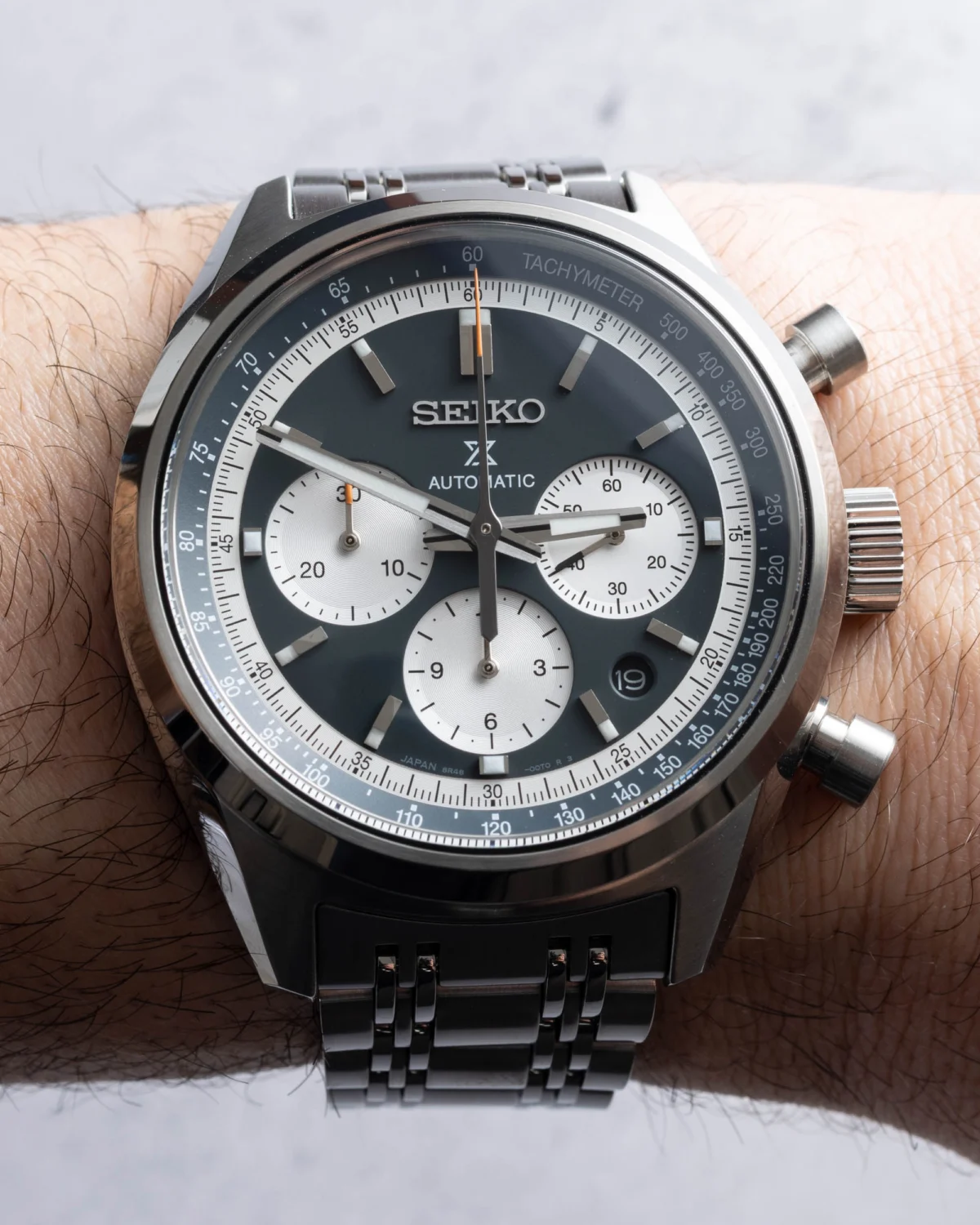
The horological world is abuzz with the release of the limited edition Seiko Prospex Speedtimer Chronograph SRQ049, a timepiece that not only showcases cutting-edge mechanical engineering but also proudly carries a rich heritage dating back to the mid-20th century. This exquisite watch, limited to a mere 1,000 pieces worldwide, represents a significant contribution to Seiko’s distinguished line of mechanical chronographs, a segment where the Japanese watchmaking giant consistently demonstrates its mastery. While Seiko is widely recognized for its extensive range of quartz and solar-powered timepieces, its prowess in developing and manufacturing sophisticated mechanical chronograph movements is a testament to its enduring commitment to watchmaking excellence. The SRQ049, with its striking "reverse panda" dial – a deep blue face contrasted by silver subdials and accents – is a modern interpretation of a design lineage that has been meticulously refined over decades. Alongside this limited edition, Seiko also offers several non-limited cosmetic variants, including the SRQ047J1 (silver and black), the SRQ051J1 (blue and silver), and the classic SRQ053J1 (black and white reverse panda), all of which share the Speedtimer name and its historical significance.
The Genesis of Speed: Seiko’s Olympic Ambition and the Birth of the Speedtimer Heritage
The story of the Seiko Prospex Speedtimer is inextricably linked to a pivotal moment in Japanese history and Seiko’s own corporate evolution: the 1964 Tokyo Olympic Games. This landmark event served as a catalyst, pushing Seiko to achieve a level of technological advancement in timekeeping that was unprecedented for the company at the time. Tasked with the crucial role of Official Timekeeper, Seiko faced a formidable challenge. Unlike established European competitors such as Omega and Longines, which boasted decades of experience in precision sports timing, Seiko was entering largely uncharted territory. The demands of Olympic timekeeping extended far beyond the capabilities of standard wristwatches, requiring the development of complex electronic timing devices and intricate systems for capturing and displaying results at various event venues.

Seiko’s response to this challenge was a remarkable feat of engineering and dedication. In 1964, the company unveiled its first wristwatch equipped with a stopwatch function: the Seiko Crown Chronograph. This groundbreaking timepiece not only marked Seiko’s entry into the competitive chronograph market but also introduced the sophisticated column-wheel transmission for the chronograph mechanism, a hallmark of high-end watchmaking. This innovation laid the foundation for Seiko’s future endeavors in chronographic development.
The momentum generated by the 1964 Games propelled Seiko’s innovation forward. A significant milestone was reached in 1969 when Seiko, alongside Zenith and Heuer, launched one of the world’s first automatic-winding chronographs, featuring the Caliber 6139. This movement was notable for incorporating both a vertical clutch and a column wheel, a combination that significantly enhanced the precision and smoothness of the chronograph’s operation. While the "Speedtimer" name itself may not have been in widespread use during the 1960s, the design philosophy and technical advancements pioneered in that era are directly inherited by the modern Seiko Speedtimer automatic mechanical chronographs, including the SRQ049.
The Caliber 8R48: A Modern Engine of Precision
At the heart of the contemporary Seiko Prospex Speedtimer Chronograph lies the in-house Caliber 8R48. This automatic chronograph movement is a testament to Seiko’s continued commitment to mechanical watchmaking. Operating at a frequency of 4Hz (28,800 vibrations per hour), it offers a power reserve of approximately 45 hours and features a 12-hour chronograph complication, alongside the time and date display.

The operational characteristics of the Caliber 8R48 are particularly noteworthy. The inclusion of a column wheel and a vertical clutch ensures a refined and precise user experience when engaging the chronograph functions. This combination, often found in more expensive timepieces, provides a satisfying tactile feedback and smooth engagement of the chronograph’s start, stop, and reset operations. Furthermore, the column wheel is known for its durability and reduced maintenance requirements over time compared to some alternative chronograph actuation systems.
However, Seiko’s official specifications for the Caliber 8R48’s accuracy, stated as ranging from +25 to -15 seconds per day, have drawn attention. This seemingly conservative rating contrasts with the generally observed superior performance of Seiko’s mechanical movements in real-world conditions. Industry observers suggest that these conservative figures may be a strategic decision, likely driven by legal and warranty considerations, allowing for a broader tolerance range without compromising customer satisfaction. For context, competitors like Rolex often advertise their movements with significantly tighter tolerances, such as +2/-4 seconds per day. It is crucial for consumers to understand that Seiko’s published accuracy figures often represent a worst-case scenario, and the actual performance of these movements typically exceeds these stated limitations, offering a level of precision that belies the official numbers.
Design and Engineering: A Harmonious Blend of Form and Function
The Seiko Prospex Speedtimer SRQ049 is more than just a sophisticated movement housed in a case; it is a meticulously designed instrument where form and function converge. The watch case itself measures 42mm in width, with a substantial lug-to-lug distance of 49.5mm and a thickness of 14.6mm. While the movement’s inherent thickness contributes to the case profile, the overall dimensions are well-balanced for a sports chronograph.

Protecting the dial is a domed sapphire crystal, treated with an anti-reflective coating to enhance legibility. The watch boasts a water resistance rating of 100 meters, making it suitable for a variety of aquatic activities. The case and its accompanying multi-link bracelet are crafted from stainless steel and feature a combination of polished and brushed finishes, adding a refined aesthetic. A significant enhancement is Seiko’s proprietary "super hard coating." This clear coating applied over the steel significantly increases its scratch resistance, a crucial feature for a watch designed for active wear, ensuring it maintains its pristine appearance for longer periods.
A notable inclusion for this limited edition is the provision of an additional black leather strap with white contrast stitching, paired with a steel deployant clasp. This dual-strap offering is a rare but welcome addition from Seiko, typically reserved for special releases. Swapping between the bracelet and the strap requires traditional watchmaking tools, as quick-release spring bars are not incorporated.
Dial and Legibility: A Nod to the Past, Optimized for the Present
The dial design of the Seiko Prospex Speedtimer SRQ049 is a direct homage to the numerous stopwatches Seiko produced throughout the 20th century, particularly those developed for the Olympic era. This heritage is evident in the highly legible hands and subdials, as well as the tachymeter scale that encircles the inner periphery of the dial, a classic feature of racing chronographs.

The "Prospex" designation signifies its place within Seiko’s collection of elite sports watches, and the iconic "X" logo, positioned beneath the applied Seiko logo, further reinforces this identity. The watch features applied baton-style hour markers and hands, all treated with Seiko’s in-house Lumibrite luminous material. While the lume application might appear modest, its effectiveness in low-light conditions, after sufficient charging, is commendable, allowing for clear time reading in the dark.
Value Proposition and Market Positioning
In the competitive landscape of mechanical chronographs, the Seiko Prospex Speedtimer collection presents a compelling value proposition. While some three-hand watches from various brands command higher prices despite their less complex mechanisms, the Speedtimer series offers a sophisticated automatic chronograph movement with a rich historical lineage at a remarkably accessible price point.
The non-limited edition Seiko Prospex Speedtimer automatic chronographs are priced at approximately $2,500 USD. The limited edition SRQ049, which includes the additional leather strap, retails for $2,700 USD. This pricing strategy positions the Speedtimer as an attractive option for watch enthusiasts seeking high-quality mechanical chronographs without the exorbitant cost often associated with Swiss counterparts.

Seiko also produces variations of the Speedtimer that feature a different bracelet design and place the tachymeter scale on the bezel, such as the Seiko Prospex Speedtimer SRQ055J1. These models, while also sharing the Speedtimer heritage, offer a slightly different aesthetic and functional emphasis.
Conclusion: A Legacy of Precision for the Modern Era
The Seiko Prospex Speedtimer Chronograph SRQ049 is more than just a timepiece; it is a wearable piece of horological history. Its impressive Caliber 8R48 movement, combined with a design deeply rooted in Seiko’s pioneering spirit, makes it a standout offering. The watch’s blend of technical sophistication, historical significance, and robust construction, further enhanced by its scratch-resistant coating and dual-strap configuration, solidifies its appeal.
For collectors and enthusiasts alike, the SRQ049 represents an opportunity to own a limited-edition piece that embodies Seiko’s enduring commitment to precision, innovation, and value. It is a watch that honors the past while embracing the future, a true testament to the art of Japanese watchmaking. The journey from the 1964 Tokyo Olympics to the release of this modern Speedtimer chronograph is a narrative of relentless pursuit of excellence, a legacy that continues to define Seiko’s place in the world of horology.