





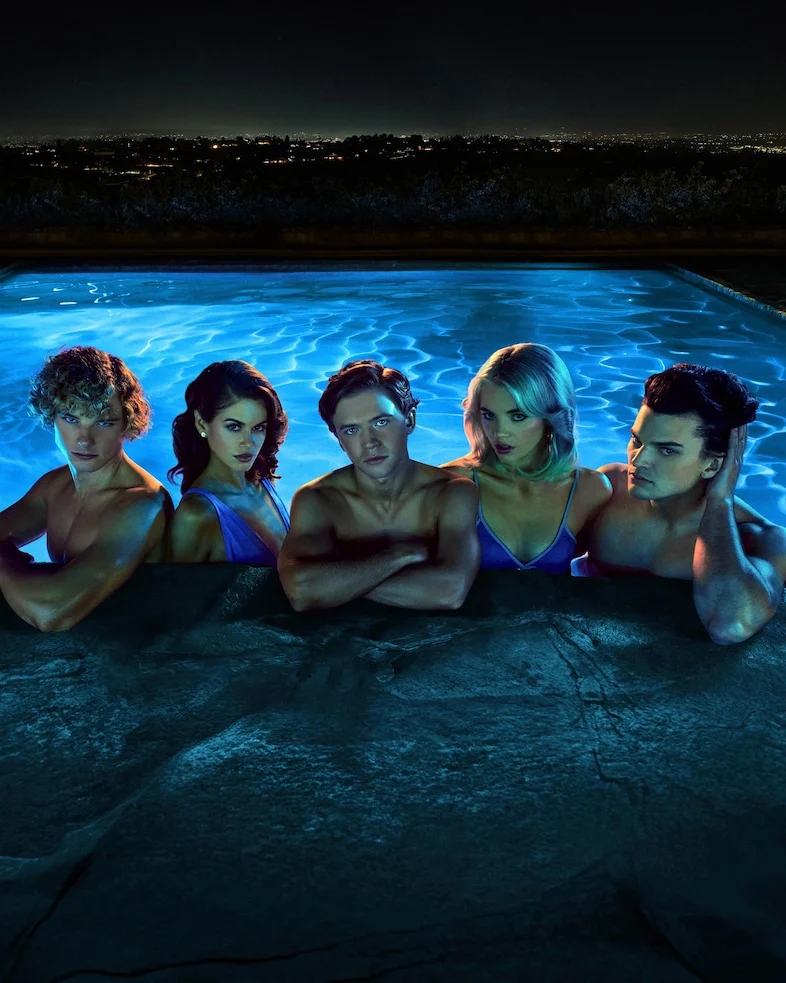
The highly anticipated screen adaptation of Bret Easton Ellis’s critically acclaimed 2023 novel, The Shards, has offered its first glimpse to the public, igniting significant buzz among literary enthusiasts and television viewers alike. This collaborative effort brings together the distinct, often provocative, literary voice of Ellis himself with the legendary showrunning prowess of Ryan Murphy. The initial trailer hints at a series steeped in the signature elements of Ellis’s work: a potent cocktail of sex, drugs, and the undercurrent of violence lurking beneath a veneer of preppy, privileged existence. As details emerge, the project positions itself as a major event in prestige television, promising to transport audiences back to the unsettling glamour of early 1980s Los Angeles.
The Return of a Literary Provocateur: Bret Easton Ellis’s The Shards
Bret Easton Ellis, a figure synonymous with a particular brand of detached, often nihilistic, yet profoundly insightful literary observation of American youth and culture, made a significant return to the literary scene with The Shards. Published in 2023, the novel marked his first major work in 13 years, following 2010’s Imperial Bedrooms. Ellis first introduced The Shards to the public in a unique serialized format as a podcast, reading chapters himself, before its official print publication. This unconventional rollout underscored the novel’s deeply personal and narrative-driven nature.
Set in 1981 Los Angeles, The Shards immerses readers in the senior year of its protagonist, also named Bret Easton Ellis, attending an elite prep school. This period, for the characters, is characterized by a heady blend of burgeoning sexual awakenings, drug experimentation, and the opulent, often superficial, lifestyle of the affluent Californian youth. However, this hedonistic backdrop is increasingly overshadowed by a creeping paranoia, fueled by the activities of a mysterious serial killer dubbed "The Trawler" and unsettling rumors of a burgeoning Satanic cult active within their seemingly impenetrable social circles. The novel deftly weaves together elements of a coming-of-age story with psychological thriller and meta-fiction, exploring themes of identity, memory, fear, and the corrupting influence of privilege. Critics widely lauded The Shards as a triumphant return to form for Ellis, praising its intricate plotting, unsettling atmosphere, and the author’s unflinching examination of moral decay. Its narrative complexity and the author’s distinctive voice made it an immediate candidate for screen adaptation, a process that promises to be as intricate as the novel itself.
A Master of Macabre and Melodrama: Ryan Murphy’s Vision
The decision to pair Bret Easton Ellis with Ryan Murphy as co-creators for The Shards adaptation on FX is a strategic move that aligns two formidable talents known for their distinctive, often boundary-pushing, approaches to storytelling. Ryan Murphy has carved out an empire in contemporary television, celebrated for his expansive and often controversial oeuvre that spans genres from musical dramedy (Glee) to anthology horror (American Horror Story) to true-crime biopics (Monster: The Jeffrey Dahmer Story). His productions are characterized by their high aesthetic polish, often transgressive themes, complex characterizations, and a willingness to explore the darker facets of human nature and societal anxieties.
Murphy’s directorial hand is evident in two of the ten episodes in the series, signaling his deep involvement in shaping the show’s visual and thematic landscape. Other directorial credits for the series include Michal Uppendahl, known for her work on American Horror Story and Mad Men, suggesting a continuity of visual style and a familiarity with complex narrative structures. Murphy’s extensive experience in crafting compelling, often unsettling, narratives from potentially challenging source material makes him an ideal partner for Ellis’s novel, which demands a nuanced approach to its dark themes and ambiguous characters. His track record of attracting top-tier talent and delivering high-quality, buzzworthy content suggests that The Shards is in capable hands, poised to capture the novel’s intricate blend of psychological horror, social commentary, and period detail.
From Podcast to Page to Screen: The Genesis of The Shards Adaptation
The journey of The Shards from its initial conceptualization to its eventual screen adaptation has been a winding one, reflecting the complexities often inherent in bringing ambitious literary works to television. The novel’s genesis as a series of podcast episodes, read by Ellis himself, provided an intimate and direct connection between the author and his audience, setting a unique precedent for its narrative style. This unconventional origin arguably made the novel even more ripe for adaptation, given its strong narrative voice and atmospheric qualities.
Initially, a high-profile adaptation was in the works at HBO, with acclaimed director Luca Guadagnino, known for Call Me By Your Name and Suspiria, attached to direct. This prospect generated considerable excitement, promising a unique artistic vision for Ellis’s work. However, this iteration ultimately fell through, reportedly due to "creative differences." The dissolution of this partnership led to a period of uncertainty for the project. Subsequently, Kristoffer Borgli, an Ellis-favorite director known for his distinctive films like Sick of Myself and The Drama, was rumored to be in contention. However, it was ultimately FX that secured the rights, with Ryan Murphy stepping in as co-creator alongside Ellis. This chronology underscores the significant appeal of The Shards as source material, attracting multiple high-caliber creative teams before landing on its current configuration, a testament to its compelling narrative and thematic depth.
Bringing the 1981 Elite to Life: Cast and Characters
The casting for The Shards adaptation reflects a careful selection of talent designed to embody the novel’s complex characters and capture the specific tenor of 1981 Los Angeles prep school life. Igby Rigney steps into the central role of Bret Easton Ellis, the narrating character, whose perspective anchors the story’s descent into paranoia and self-discovery. Rigney, known for his work in projects like Midnight Mass, brings a nuanced sensibility to the role, tasked with portraying both the protagonist’s intellectual curiosity and his increasing unease.
Opposite him, Homer Gere takes on the pivotal role of Robert Mallory, the enigmatic new student whose arrival serves as a catalyst for much of the story’s unsettling events. Mallory is depicted as a figure of dark allure and suspicion, and Gere’s portrayal will be crucial in conveying the character’s mysterious and potentially dangerous nature.
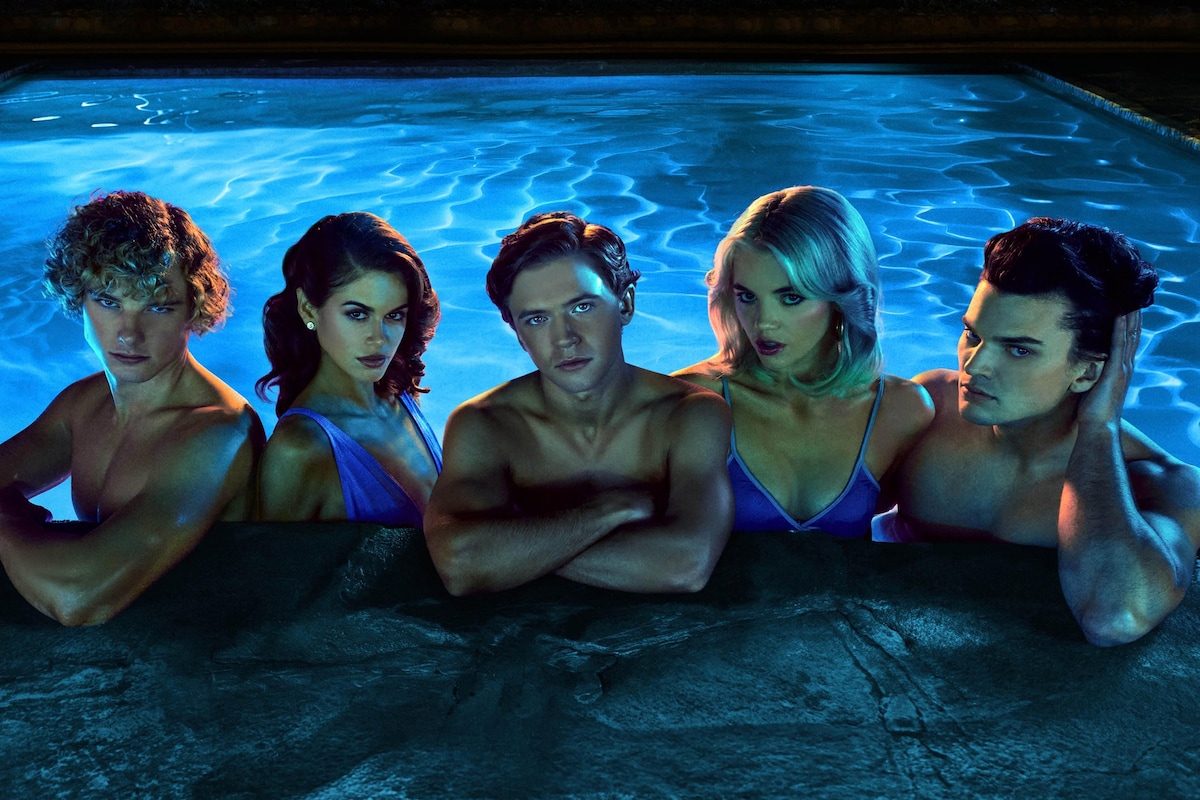
The series also features Kaia Gerber as Susan Reynolds, a key member of Bret’s social circle. Gerber’s growing acting career and established presence in the fashion world lend a certain authenticity to the portrayal of the privileged, aesthetically conscious youth of the era. Completing Bret’s inner circle are Debbie Schaffer, played by Hayes Warner, and Thom Wright, portrayed by Graham Campbell. These characters form the core group whose lives become entangled in the unfolding mysteries.
Adding layers to the adult world that peripherally influences the teens are Wes Bentley and Evan Rachel Wood as Terry and Liz Schaffer, respectively. Terry is depicted as a successful movie producer, embodying the aspirations and excesses of Hollywood, while Liz is an alcoholic former model, representing the darker side of a life spent in the public eye. Their dynamic will likely provide a crucial counterpoint to the youthful drama. Jordan Roth rounds out the ensemble as Steven Reinhardt, Terry’s assistant, a character who could serve as a bridge between the adult and teenage worlds or as another enigmatic presence. The ensemble cast, combining emerging talents with established actors, is poised to bring Ellis’s vivid characterizations to life, enhancing the immersive quality of the adaptation. It is worth noting that while Jacob Elordi was initially rumored for a role (likely Robert Mallory), those reports ultimately did not materialize, making the final cast choices all the more significant.
Soundscapes of the Early 80s: The Music of The Shards
Music plays an integral role in establishing the atmosphere and period authenticity of any historical drama, and The Shards is no exception. The adaptation has enlisted acclaimed singer-songwriter Troye Sivan to pen original music for the series, a significant artistic contribution that promises to deepen the show’s emotional and thematic resonance. Sivan, known for his distinctive pop sound and evocative lyrics, is collaborating with his longtime creative partner Leland on the soundtrack. This partnership suggests a carefully curated musical landscape that will not only evoke the specific sounds of the early 1980s but also infuse the narrative with contemporary artistic sensibility.
Further enriching the auditory experience, additional original music will reportedly come from Hayes Warner, who also portrays the character Debbie Schaffer in the series. This dual role as actor and musician offers a unique layer of immersion, potentially allowing Warner’s musical contributions to be directly informed by her character’s perspective and the series’ overarching themes. The strategic inclusion of original music, alongside what is expected to be a rich tapestry of period-appropriate tracks, will be crucial in transporting viewers to the specific cultural moment of 1981 Los Angeles, where music was often intertwined with identity, social scenes, and the emotional lives of the characters. The soundtrack is poised to be more than just background noise; it will be a vital component of the storytelling, mirroring the characters’ internal states and the external anxieties of their world.
The Allure of Auto-Fiction: Blurring Lines of Reality
One of the most compelling and debated aspects of The Shards is its auto-fictional nature. By naming the protagonist "Bret Easton Ellis" and incorporating numerous details from the author’s actual upbringing and experiences—such as attending an elite prep school in Los Angeles in 1981—the novel deliberately blurs the lines between reality and fiction. This narrative device is a hallmark of Ellis’s later work and serves to heighten the psychological tension and ambiguity of the story.
While the premise grounds the narrative in a semblance of reality, Ellis himself has leaned into the ambiguity, leaving the audience to ponder where the factual ends and the fictional begins. This intentional blurring is particularly potent in The Shards, especially given the novel’s darker, more controversial turns involving a serial killer and cult rumors. The arrival of the suspicious new student, Robert Mallory, dramatically shifts the narrative into territory that is presumably far removed from Ellis’s actual high school experience, yet the "autobiographical" framing adds a layer of disturbing plausibility. For the screen adaptation, maintaining this delicate balance will be key. The series will need to navigate the audience’s perception of "truth" within the narrative, using the auto-fictional framework to amplify the sense of paranoia and the unreliable nature of memory, making the horror more visceral and the psychological depths more profound. This meta-narrative approach is a sophisticated element that sets The Shards apart and presents a unique challenge and opportunity for the adaptation team.
Anticipating the Shockwaves: Implications for Prestige Television and Pop Culture
The arrival of The Shards adaptation on screen carries significant implications for both prestige television and broader pop culture. For Bret Easton Ellis, it represents a renewed engagement with his most recent and critically celebrated work, potentially introducing his distinctive literary voice to a new generation of viewers who may be less familiar with his seminal novels like Less Than Zero or American Psycho. The series could spark a resurgence of interest in his entire bibliography, cementing his status as a chronicler of American decadence and disillusionment.
For Ryan Murphy, The Shards adds another high-profile, thematically rich project to his impressive portfolio. His reputation for crafting visually striking and narratively daring television makes him a perfect fit for Ellis’s often provocative material. The collaboration itself is a statement, signaling a commitment to intellectual and challenging storytelling within a mainstream platform like FX.
The series also taps into a continued fascination with the 1980s, a decade frequently revisited in contemporary media for its unique blend of cultural optimism, consumerism, and underlying anxieties. By focusing on the elite prep school world of 1981 Los Angeles, The Shards promises to offer a specific, privileged lens through which to examine the era, echoing themes of wealth, power, and moral ambiguity that remain relevant today.
Furthermore, the adaptation’s exploration of auto-fiction and its blending of true crime elements with personal narrative aligns with current trends in storytelling that blur genre boundaries. The project’s journey through various creative hands before landing at FX underscores the perceived value and challenge of bringing Ellis’s complex vision to life. As the first look suggests, the series is poised to deliver a dark, compelling, and potentially unsettling narrative that will undoubtedly provoke discussion and solidify its place within the landscape of prestige television. The confluence of Ellis’s literary genius and Murphy’s cinematic vision promises a cultural event that extends beyond mere entertainment, offering a profound commentary on memory, identity, and the enduring shadows of the past.