









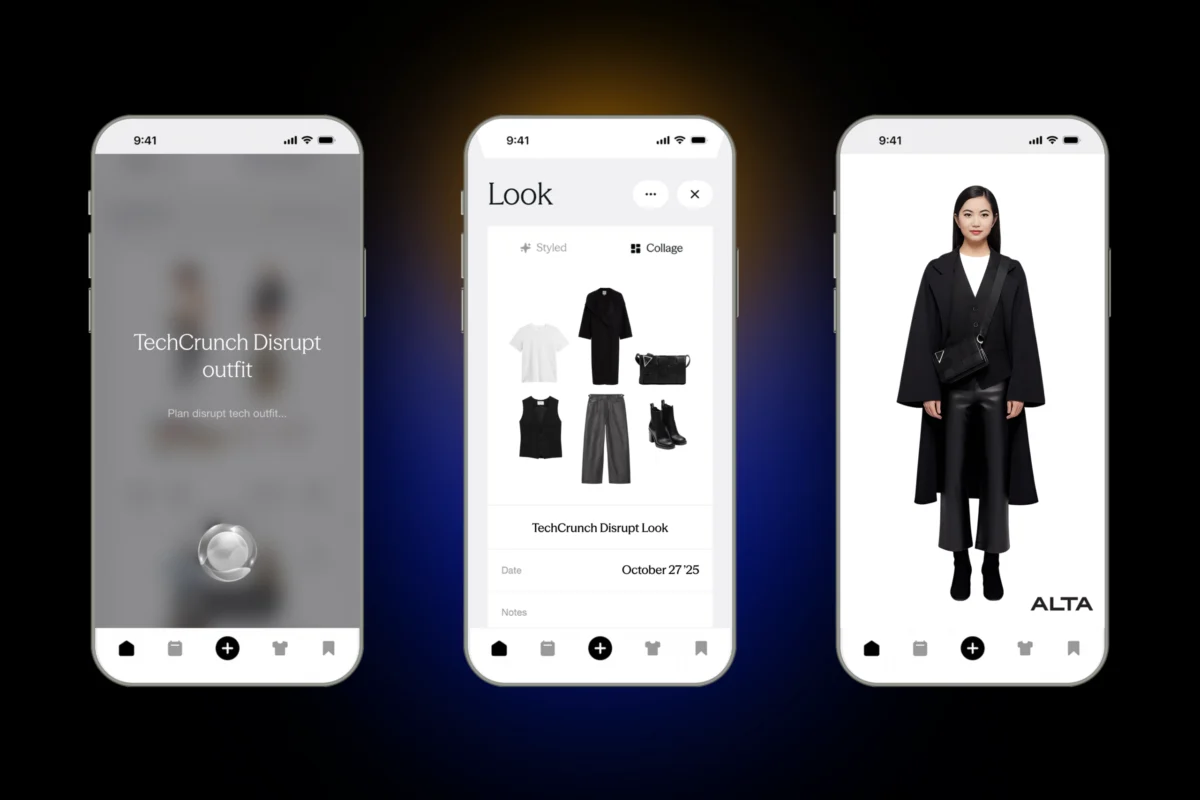
Alta, an artificial intelligence-driven personal styling and shopping platform, has announced the successful closure of an $11 million seed funding round led by Menlo Ventures. Founded by Jenny Wang, a 28-year-old Harvard-trained engineer and former tech investor, the startup aims to bridge the gap between high-end personal styling and the everyday consumer. The platform utilizes advanced generative AI to provide users with a virtual styling agent that manages their wardrobe, suggests outfits based on external variables such as weather and calendar events, and facilitates virtual try-on sessions using personalized avatars.
The funding round attracted a diverse and high-profile group of investors, reflecting the significant interest at the intersection of fashion and technology. Participants include Benchstrength, Anthology Fund (the venture arm of AI giant Anthropic), and Phenomenal Ventures, founded by Meena Harris. Notably, the round also saw participation from Aglaé Ventures, the investment firm backed by the Arnault family of LVMH, signaling a strong interest from the world’s leading luxury fashion conglomerate. Individual angel investors include DoorDash co-founder and CEO Tony Xu, Poshmark CEO Manish Chandra, and supermodels Karlie Kloss and Jasmine Tookes, alongside Rent the Runway co-founder Jenny Fleiss.
The Evolution of the Digital Closet
The concept of a digital wardrobe assistant is not entirely new, but previous iterations often struggled with the limitations of existing technology. Jenny Wang’s journey to launching Alta began years ago during her time as a student and throughout her early career in the technology sector. Wang noted that while she had attempted to build similar products in the past, the underlying AI technology—specifically in the realms of computer vision and generative modeling—was not yet sophisticated enough to provide a seamless and realistic user experience.
The release of large language models (LLMs) and advanced diffusion models for image generation has fundamentally shifted the landscape. Alta’s current iteration functions as a comprehensive ecosystem for a user’s clothing. To populate their digital closet, users can upload photos of their garments, forward digital purchase receipts, or search for items within Alta’s extensive existing database. This "wardrobe digitization" is a critical step in enabling the AI to understand the user’s personal style, current inventory, and future needs.
Once a closet is digitized, the AI acts as a 24/7 personal shopper. For instance, if a user has an upcoming professional conference, they can prompt the AI to suggest appropriate attire. The system then generates a lookbook of outfits derived from the user’s existing clothes, occasionally suggesting new items to purchase that would complement their current wardrobe. This integration of inventory management and predictive commerce represents a significant shift in how consumers interact with retail.
Bridging the Gap Between Technology and High Fashion
A key differentiator for Alta is its emphasis on professional-grade styling expertise. The platform’s AI was trained with the assistance of Meredith Koop, famously known as the long-time stylist for former First Lady Michelle Obama. This collaboration ensures that the AI’s recommendations are not merely based on data-driven patterns but are informed by the principles of professional fashion design, color theory, and occasion-based etiquette.
The involvement of the Council of Fashion Designers of America (CFDA) further cements Alta’s position within the industry. Through a strategic partnership, Alta is being offered to the CFDA’s membership base, which includes some of the most influential designers in the United States. This partnership serves a dual purpose: it provides designers with a new channel to reach consumers and offers Alta a direct pipeline to high-quality product data and trend insights.
The addition of Marie Kondo to the company’s advisory and expansion efforts highlights a focus on intentional consumption. As Alta expands into Oceania and the Pacific regions, Kondo’s philosophy of "sparking joy" through organization aligns with the platform’s goal of helping users maximize the utility of the items they already own, thereby reducing the environmental impact of "fast fashion" through better wardrobe utilization.
Market Context and the Competitive Landscape
The global AI in the fashion market is currently experiencing an unprecedented growth trajectory. Industry analysts estimate that the market was valued at approximately $650 million in 2022 and is projected to exceed $4.5 billion by 2030, representing a compound annual growth rate (CAGR) of over 30%. This growth is driven by the increasing demand for personalized shopping experiences and the need for retailers to reduce return rates—a multi-billion dollar problem in the e-commerce sector.
Alta enters a competitive space where several other players are attempting to capture the "digital closet" market. Apps like Whering and Cladwell have long sought to replicate the iconic computer-guided closet scene from the 1995 film Clueless. Furthermore, tech giants such as Google and Pinterest have introduced "virtual try-on" features for specific brands. However, Wang argues that these existing experiences are often fragmented.
"The experiences that consumers will crave and use in the future will need to be built with new technical architectures and new user interfaces," Wang stated. According to Wang, the traditional search-and-filter model of online shopping is becoming obsolete, replaced by a conversational and generative interface where the AI understands the context of a user’s life rather than just their search keywords.
Technical Infrastructure and Strategic Relocation
Jenny Wang’s background as a Harvard-trained engineer is central to Alta’s development. She remains actively involved in the coding process, leading a team of engineers who are developing in-house models tailored specifically for textile rendering and human form virtualization. The seed capital will be primarily used to expand this technical team and fund ongoing research and development into more realistic virtual try-on technologies.
In a strategic move, Wang relocated the company’s headquarters from San Francisco to New York City. This decision was driven by the city’s unique position as both a burgeoning hub for consumer-facing AI and the heart of the global fashion industry. "NYC is also a closer flight to Paris than SF," Wang noted, emphasizing the importance of proximity to European fashion houses. With the backing of Aglaé Ventures and European tech influencers like Zita d’Hauteville, Alta is positioning itself for a rapid expansion into the European luxury market, with Paris serving as a critical gateway.
Implications for the Future of Retail
The implications of Alta’s technology extend beyond individual convenience. For retailers, a platform that knows exactly what is in a consumer’s closet offers a level of targeted marketing previously thought impossible. By understanding the gaps in a user’s wardrobe, Alta can facilitate highly curated affiliate commerce, suggesting the "perfect" blazer to match a pair of trousers the user already owns.
Furthermore, the virtual try-on feature addresses one of the most significant pain points in fashion e-commerce: fit and visualization. High return rates—which can reach as high as 40% for online apparel sales—are often caused by the discrepancy between how a garment looks on a model versus the consumer. By allowing users to see clothes on their own personalized avatars, Alta has the potential to significantly lower return rates, improving margins for retail partners and reducing the carbon footprint associated with shipping and returns.
The company’s roadmap includes expanding partnerships with global retailers to integrate their inventories directly into the Alta interface. This would allow users to "try on" new arrivals alongside their current clothes in a unified virtual environment.
Conclusion: A New Era of Algorithmic Style
As Alta moves out of its initial launch phase, the focus will remain on refining the accuracy of its AI models and growing its user community. The startup represents a new wave of "consumer AI" that moves beyond simple text generation into complex, multi-modal applications that impact daily habits.
By combining the technical rigor of Silicon Valley with the aesthetic sensibilities of the New York and Parisian fashion scenes, Alta is attempting to solve a problem that has persisted since the dawn of e-commerce: how to make digital shopping feel as personal and tactile as a high-end boutique experience. With $11 million in new capital and a roster of investors that spans the heights of technology, fashion, and culture, Jenny Wang’s vision of a truly intelligent personal stylist is moving closer to a mainstream reality. The success of the platform will likely depend on its ability to maintain the delicate balance between being a useful utility for organization and a powerful engine for new consumption.