










After a notable three-year hiatus from the official fashion week calendar, Victor Barragán and his eponymous label made a resounding return at Berlin Fashion Week (BFW), unveiling the Spring/Summer 2027 collection that meticulously wove together potent political symbolism with a signature aesthetic of full-throttle sleaze. Staged within the hallowed, diplomatic halls of the Mexican Embassy in Berlin, the show, paradoxically titled Barragán SS30, served as a compelling statement on global politics, migration, and the evolving landscape of identity in contemporary society, cementing Barragán’s reputation as a designer unafraid to confront uncomfortable truths through his art.
Barragán’s Trajectory: From New York Provocation to Berlin’s Diplomatic Stage
The journey leading to this impactful Berlin presentation is crucial for understanding the depth of Barragán’s SS27 vision. The last time the label graced an official schedule was in September 2022, during New York Fashion Week. That SS23 collection was a landmark event, critically and culturally, where models provocatively emerged from a graffiti-covered porta-potty onto a runway strewn with refuse and dollar bills. This spectacle was a biting commentary on the perceived excesses and superficiality of white American capitalism, immediately re-establishing the Barragán catwalk as a vital site for radical experimentation and a platform for pushing his already provocative vision to new, extreme frontiers. It was a moment that underscored fashion’s capacity for sharp social critique, positioning Barragán not merely as a designer but as a cultural provocateur.
Following this high-profile return to the official circuit, Barragán opted for an unconventional path. October 2023 saw the presentation of Quiet Luxury, an off-schedule show held in Mexico City. This collection further elaborated on the ethos established a year prior, continuing to craft provocative clothing infused with a distinct political slant. The choice of Mexico City for this independent showcase reinforced his connection to his roots and allowed for an unbridled expression away from the direct scrutiny of the established fashion capitals. This period of operating outside the traditional schedule, however, did not diminish the brand’s momentum. Barragán remained active through a series of strategic collaborations, notably a significant partnership with the Palestinian brand Trashy Clothing. This collaboration was particularly noteworthy, marrying Barragán’s subversive aesthetic with explicit fashion activism, particularly in solidarity with Palestine. These partnerships kept the brand’s creative gears turning and its political voice resonant, demonstrating that while official runway presence is impactful, the designer’s influence extended far beyond traditional show formats. Nevertheless, as the Berlin show proved, the corporeal, immersive experience of a Barragán runway presentation remains unparalleled in its ability to communicate his complex messages directly and powerfully.
Berlin Fashion Week: A Fitting Canvas for Radical Expression
The decision to return to an official schedule at Berlin Fashion Week for SS27 was a calculated and strategically astute move. Berlin, often considered one of Europe’s more avant-garde and culturally liberal capitals, offers a distinct counterpoint to the commercial behemoths of Paris, Milan, London, and New York. BFW has steadily cultivated a reputation for championing emerging talent, sustainability, and experimental design, often embracing narratives that are more overtly political or socially conscious. This environment provided a fertile ground for Barragán’s particular brand of fashion activism and boundary-pushing aesthetics.
Berlin’s rich history of counter-culture, artistic freedom, and its vibrant, visible queer community align seamlessly with Barragán’s design philosophy. The city’s underground scene, renowned for its techno clubs and sexually liberated ethos, provides a natural backdrop for the "full-throttle sleaze" that is intrinsically linked to his brand’s identity. Furthermore, Berlin’s role as a nexus of European politics and a city that has grappled with complex historical narratives of national identity, division, and reunification, offered a powerful symbolic resonance for a collection explicitly addressing themes of sovereignty, migration, and political timelines. By choosing Berlin, Barragán was not just showcasing clothes; he was engaging in a dialogue with a city that inherently understands and often celebrates the provocative, the unconventional, and the politically charged. This symbiotic relationship allowed the SS27 collection to land with maximum impact, resonating deeply with an audience primed for intellectual and aesthetic challenges.
The Mexican Embassy: A Stage for Diplomatic Provocation
The choice of the Mexican Embassy in Berlin as the venue for the SS27 presentation was perhaps the most profound symbolic gesture of the entire show. A diplomatic embassy, by its very definition, represents a nation’s sovereignty, its presence on foreign soil, and its role in international relations. As Barragán’s show notes articulated, the embassy was framed as "a nation sustained by agreement and recognition, sovereignty existing through documentation in German land." This statement immediately elevated the runway from a mere fashion show to a geopolitical commentary.
The embassy setting provided a multi-layered context for the collection’s themes. It invoked discussions around nationality, immigration, international agreements, and the often-complex dynamics of cultural exchange. The sanctity and formality of the diplomatic space were juxtaposed with Barragán’s raw, unfiltered, and often confrontational designs, creating a powerful tension that underscored the collection’s central messages. This clash of environments amplified the political weight of each garment, turning the act of viewing fashion into an exercise in critical engagement with global issues. The embassy served not just as a backdrop, but as an active participant in the narrative, a physical manifestation of the very concepts Barragán sought to explore: borders, belonging, and the enduring power of national identity in an increasingly globalized world.
"Barragán SS30": A Future-Facing Political Statement
Adding another layer of intrigue and political foresight, the collection, presented in July 2026 for SS27, was enigmatically titled Barragán SS30. According to the designer’s show notes, this future-facing title directly referenced "the political and symbolic timeframe surrounding the projected end of Donald Trump’s current presidential administration in the United States." This specific and bold declaration immediately signaled Barragán’s intent to transcend immediate fashion trends and engage with long-term political implications.
The title itself is an act of defiance and a statement of hope or, perhaps, a cautionary look towards a future beyond a specific political era. By projecting three years beyond the collection’s immediate season, Barragán implies a vision for a world shaped by and reacting to the current political climate. It suggests a critical analysis of the lingering effects of a particular administration, or a defiant declaration of a future where different values might prevail. This conceptual leap transforms the collection into a commentary not just on the present, but on the enduring legacy of political leadership and the aspirations for what comes next. It underscores the designer’s commitment to using his platform for sustained political discourse, positioning his brand as a barometer of cultural and political shifts. The "SS30" title is a powerful reminder that fashion, in Barragán’s hands, is a tool for intellectual provocation and a catalyst for contemplating the societal ramifications of political cycles.
The Runway Unfolds: Political Narratives and Cross-Cultural Exchange
As the "glowering soundtrack" enveloped the embassy foyer and a "menacing red glow" bathed the space, the stage was set for a collection that was both visually arresting and intellectually stimulating. The very first look immediately seized attention and set the tone for the show’s complex themes: a heavily pregnant model emerged in a skintight green dress. This opening image was loaded with multiple interpretations, prompting the audience to consider profound questions of identity, belonging, and the future. Was she a Mexican woman seeking to ensure her child’s birth on home soil, albeit symbolically within the embassy on German land? Or a German citizen seeking refuge, a poignant reversal of typical migration narratives? This single powerful image instantly introduced themes of migration, maternity, sovereignty, and the hopes and anxieties tied to future generations. The vibrant green of the dress could further symbolize life, fertility, or even a subtle nod to the colors of the Mexican flag, intertwining personal narratives with national identity.
The rapid pace of the models, who "weren’t sticking around for long," ensured a dynamic and almost fleeting experience, mirroring the transient nature of many of the themes explored. Following this impactful opening, the collection seamlessly integrated a multitude of European symbols, meticulously crafted to narrate a cross-cultural exchange. Euro bills, typically symbols of economic unity and currency, were provocatively printed on thongs and swim caps, subverting their traditional meaning and injecting a layer of satirical commentary on global capitalism and consumerism. The placement of such potent symbols on intimate apparel is a signature Barragán move, challenging the boundaries of propriety and forcing a re-evaluation of value systems.
World flags adorned jeans and leather jackets, creating a visual tapestry of national identities that simultaneously celebrated and questioned the concept of borders. These garments suggested a blurring of lines, a globalized reality where national symbols become part of a larger, interconnected fashion narrative. Emblems signifying the movement of people and goods featured heavily throughout the collection, directly addressing the complexities of migration and transit. A "V.H. Barragan" suitcase, reminiscent of official travel paraphernalia, served as a literal and metaphorical vessel for these journeys. Similarly, a transit stamp t-shirt, cheekily emblazoned with the phrase "Please Destroy Me," offered a darkly humorous yet poignant critique of the dehumanizing aspects of border control and the vulnerability of individuals navigating international systems. This phrase, seemingly flippant, carried a profound weight, reflecting the psychological and physical toll of displacement and the inherent fragility of identity when subjected to external scrutiny.
The Unapologetic Embrace of Sleaze
Beyond its profound political undertones, the SS27 collection was, unequivocally, a masterclass in Barragán’s signature "full-throttle sleaze." This element is not merely for shock value; it is a deliberate artistic choice rooted in the designer’s celebration of queer subcultures, challenging heteronormative conventions, and reclaiming marginalized aesthetics. The runway became a character study in various facets of desire and rebellion, where societal norms of modesty and conventional beauty were gleefully dismantled.
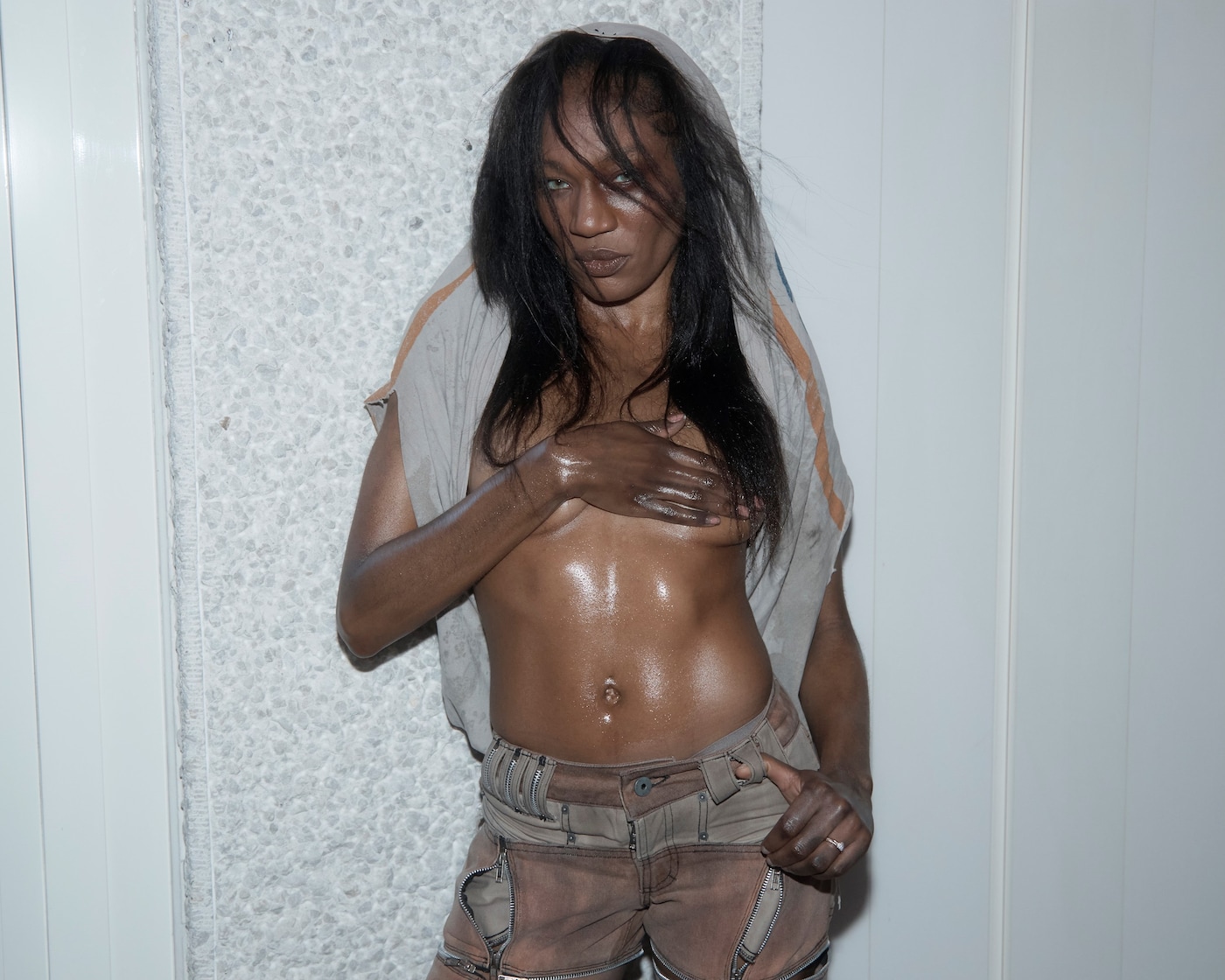
The collection featured "leather daddies in hot pants and captain hats," archetypes drawn from specific queer subcultures, presented without apology. "Oiled-up muscle Marys with holey boxers and jeans round their ankles" further pushed the boundaries of what is considered acceptable on a mainstream runway, celebrating a raw, unpolished, and overtly sexualized masculinity. These figures, often relegated to niche spaces, were brought to the forefront, empowering their aesthetic and challenging the dominant narratives of fashion.
The provocative details were abundant and unapologetic. One model in a latex dress had her arms clasped behind her back, bound together by skin-colored latex, evoking themes of constraint, control, and perhaps a subtle commentary on the performative aspects of submission and desire. In other instances, "duct tape and even bare hands were used instead of bras," a direct confrontation with traditional undergarments and an embrace of raw, unfiltered sensuality. Another model walked the entire runway with his hands provocatively down his pants, a gesture that was both defiant and inherently intimate, blurring the lines between public display and private act.
These elements collectively created a sense of discomfort for some, but for many, they represented an exhilarating liberation. They invited dialogue about consent, the male gaze, the female gaze, and the very nature of desire and self-expression in an increasingly scrutinized world. The "sleaze" in Barragán’s lexicon is a tool for disruption, a means to interrogate societal expectations around sexuality, body image, and public presentation. It ties directly into Berlin’s reputation for sexual liberation and its thriving underground scenes, where such expressions are not just tolerated but celebrated as integral to the city’s identity.
Designer’s Affirmation and Broader Implications
In the immediate aftermath of the show, amidst the characteristic post-runway chaos and celebration—including Barragán playfully showering his models and some unsuspecting journalists with champagne backstage—the designer articulated his connection to the host city. "I love Berlin, and I love the people," Barragán shared, his enthusiasm palpable. "There’s so many creative people here. I feel like my brand really fits in." This statement served as a powerful affirmation of his strategic choice of Berlin, highlighting the deep synergy between his brand’s ethos and the city’s progressive, artistic spirit. His feeling of belonging underscores the cultural alignment that made the show so impactful, demonstrating that the venue was not just a backdrop but an essential component of the collection’s narrative success.
Barragán’s SS27 collection at Berlin Fashion Week carries significant broader implications for the fashion industry and beyond. Firstly, it emphatically reasserts fashion’s role as a potent platform for political and social discourse. In an era where many brands cautiously navigate sensitive topics, Barragán dives headfirst, proving that clothing can be a powerful medium for critical commentary on migration, national identity, and global leadership. This show challenges the notion that fashion must remain apolitical or solely commercial.
Secondly, the collection stands as a powerful counter-narrative to the prevailing trend of "quiet luxury" and overt commercialism that often dominates major fashion weeks. Barragán consistently prioritizes artistic expression, provocative messaging, and a celebration of subcultures over mass appeal, thereby pushing against industry norms and advocating for a more authentic, uncompromised form of creative output. His work reminds the industry that there is a demand for fashion that is challenging, thought-provoking, and deeply connected to contemporary social issues.
Furthermore, Barragán’s unique blend of political critique and unapologetic sexuality contributes significantly to ongoing conversations within fashion about identity, gender, migration, and power dynamics. By fearlessly showcasing diverse body types, fluid masculinities, and transgressive aesthetics, he helps to broaden the definition of beauty and desirability, fostering a more inclusive and representative fashion landscape.
For Berlin Fashion Week itself, Barragán’s return and the sheer impact of his SS27 collection undoubtedly elevate its global profile. It reinforces BFW’s reputation as a vital hub for cutting-edge, experimental, and politically charged design, attracting international attention and solidifying its position as a significant voice in the global fashion calendar. The show’s success suggests a future where Berlin continues to be a destination for designers who seek to make profound statements that resonate far beyond the runway.
In conclusion, Victor Barragán’s SS27 collection was more than just a presentation of clothes; it was a meticulously orchestrated performance of cultural critique, political commentary, and artistic rebellion. Staged with deliberate intent at the Mexican Embassy in Berlin and framed by a future-gazing political title, the collection solidified Barragán’s status as a visionary designer who skillfully harnesses the power of fashion to provoke thought, challenge norms, and ignite crucial dialogues about the world we inhabit. His return to the official schedule was not just a comeback, but a powerful reaffirmation of fashion’s potential as a potent force for social and political change.