








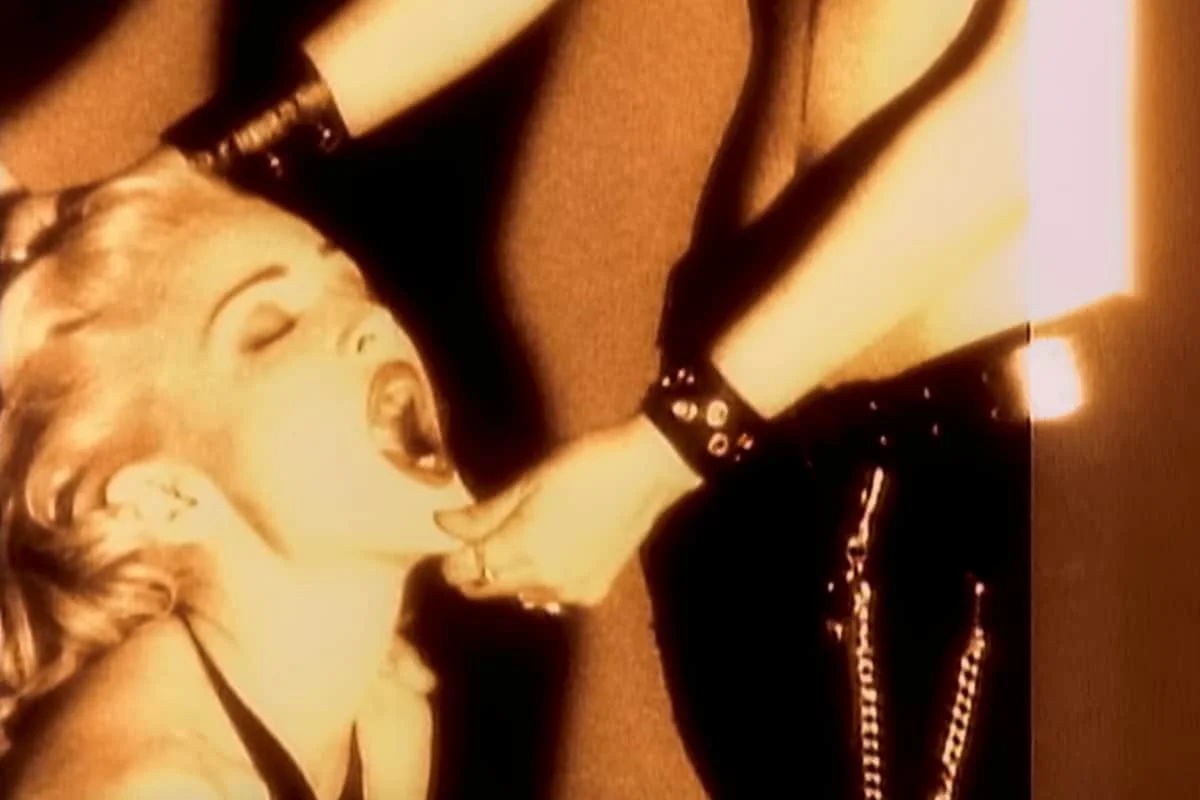
The release of Madonna’s new 10-minute film, Confessions II, a precursor to her 15th album of the same name, signals the continued provocative spirit of the Queen of Pop. Featuring scenes such as lasers on intimate body parts, a woman straddling a man in a toilet cubicle, and pop star Sabrina Carpenter in a suggestive pose, the project firmly re-establishes Madonna’s commitment to pushing boundaries. This new offering, a direct follow-up to her landmark 2005 album Confessions on a Dance Floor, which celebrated liberation through dance music, arrives amidst swirling rumors of a potential Glastonbury headline performance, underscoring her enduring cultural relevance and her unparalleled ability to generate discussion.
For over four decades, Madonna Louise Ciccone has meticulously crafted a career defined not just by musical innovation and relentless reinvention, but by a consistent and deliberate embrace of controversy. From the moment she burst onto the scene, she has served as a potent symbol of sexual liberation and bodily autonomy, challenging societal norms, religious dogma, and media censorship. Her journey has seen her banned from MTV in the 1990s and, by her own candid admission, excommunicated from the Catholic Church on multiple occasions. Each new album, tour, or visual project from Madonna guarantees a ripple effect, prompting strong reactions and often forcing a re-evaluation of prevailing cultural standards. This persistent willingness to court outrage has solidified her status as arguably the most influential and controversial figure in contemporary pop music.
The "Confessions II" Era: A Return to Form
The arrival of Confessions II and its accompanying album marks a deliberate revisiting of themes central to Madonna’s career. The title itself directly references Confessions on a Dance Floor, an album that fused disco and house elements with a narrative of personal and spiritual exploration. The new film’s imagery—laden with overt sexuality and transgressive scenarios—serves as a modern iteration of her long-standing artistic practice. By featuring younger artists like Sabrina Carpenter, Madonna not only introduces her provocative ethos to a new generation but also asserts her continued dominance in a landscape she largely helped shape. The explicit nature of the film, designed to shock and stimulate, sets the stage for what promises to be another chapter in her ongoing dialogue with censorship and societal expectations, reinforcing her reputation as an artist who uses her platform to challenge and provoke.
A Chronology of Madonna’s Defining Controversies
Madonna’s career is replete with moments that have ignited public debate, demonstrating her mastery of the art of provocation. These incidents, often meticulously planned, have not only cemented her iconic status but have also frequently opened up wider conversations about sexuality, religion, gender, and freedom of expression in popular culture.
1. Sex (October 1992): A Literary and Visual Eruption
Perhaps the zenith of Madonna’s provocative artistry came with the simultaneous release of her fifth album, Erotica, and the photobook Sex in October 1992. This coffee-table book, bound in an aluminum cover and depicting Madonna in a range of fully nude, sadomasochistic, and sexually explicit scenarios, remains controversial even by today’s standards. Featuring cameos from high-profile figures like Naomi Campbell, Vanilla Ice, Big Daddy Kane, and Princess Tatiana von Fürstenberg, the book was a bold, unapologetic exploration of sexuality, desire, and power dynamics.
The backlash was immediate and widespread. Many retailers refused to stock it, and critics condemned it as pornographic and self-indulgent. However, over time, Sex has undergone a re-evaluation, now often praised by academics and cultural commentators as a landmark post-feminist work. It challenged deeply ingrained taboos about female sexuality, agency, and the male gaze, opening a dialogue that was revolutionary for its time. The book sold over 1.5 million copies worldwide within days, demonstrating a public fascination that transcended the moral outrage and solidified Madonna’s role as a leading figure in the ongoing cultural wars. Its impact on art, fashion, and the public discourse around sexual expression is undeniable.
2. "Like a Prayer" (March 1989): The Pepsi Scandal and Religious Fury
The music video for Madonna’s 1989 single "Like a Prayer" remains one of her most incendiary and impactful provocations. The song itself, with its suggestive lyrics blurring the lines between religious fervor and sexual ecstasy, was already pushing boundaries. However, the accompanying video, directed by Mary Lambert, elevated the controversy to an unprecedented level. It depicted an interracial love affair, themes of racial violence (including imagery reminiscent of the Ku Klux Klan), a Black saint coming to life, and Madonna performing suggestive acts in a church, ultimately leading to a parallel narrative of religious and sexual ecstasy.
The reaction was explosive. The Vatican condemned the video, and Pope John Paul II called for a global boycott of Madonna and any companies associated with her. Crucially, this included PepsiCo, which had just launched a $5 million advertising campaign featuring Madonna and "Like a Prayer." Under immense pressure from religious groups and boycotts, Pepsi swiftly dropped the campaign, terminating their partnership with the singer. While many television stations refused to air the video, MTV, in a testament to its burgeoning cultural power, continued to play it, positioning itself as a bastion of artistic freedom. Madonna famously defended her work, stating, "Art should be controversial, and that’s all there is to it." The incident highlighted the growing tension between artistic expression, corporate sponsorship, and religious conservatism, making "Like a Prayer" a definitive moment in pop culture history.
3. Late Show with David Letterman (March 1994): The Uncensored Interview
In a stark departure from the controlled environments of music videos and concerts, Madonna’s appearance on the Late Show with David Letterman in March 1994 became an instant legend for its raw, uncensored chaos. Introduced by Letterman as having "slept with some of the biggest names in the entertainment industry," Madonna faced a barrage of provocative questions about her sex life, prompting her to retort with unfiltered candor. She famously quipped, "You’re a sick f*, I don’t know why I get so much sh."
Throughout the interview, Madonna uttered the word "fuck" an astonishing 14 times, a record for American network television at the time, forcing extensive censorship during its broadcast. The incident sent shockwaves through the television industry and the public, challenging the norms of primetime talk shows. Years later, Madonna revealed that she had smoked marijuana before the interview, and attributed her "gangsta" mood to dating rapper Tupac Shakur at the time. The interview cemented her reputation as unpredictable and defiant, unwilling to conform to polite celebrity decorum, and underscored her ability to command attention and controversy even in an unscripted setting.
4. Confessions Tour (May – September 2006): The Crucifixion Spectacle
The Confessions Tour, launched in 2006 to support her critically acclaimed album Confessions on a Dance Floor, continued Madonna’s tradition of intertwining religious iconography with sexual and political statements. The most contentious segment of the show featured Madonna performing on a giant mirrored cross, complete with a crown of thorns, staging a symbolic crucifixion. During this segment, a backdrop displayed powerful statistics detailing the number of children orphaned by AIDS, particularly in Africa.
This act drew immediate and fervent condemnation, particularly from the Catholic Church. This time, it was Pope Benedict XVI who lambasted the performance, describing it as "blasphemous" and an "outrage." The show faced legal threats and calls for boycotts in various countries, including Germany and Russia, leading to some segments being cut from television broadcasts, notably on NBC. Madonna, ever defiant, defended her artistic choice by stating, "I believe in my heart that if Jesus were alive today he would be doing the same thing." Her argument was that the crucifixion was a metaphor for the suffering caused by indifference and inaction, particularly concerning the AIDS crisis. The controversy highlighted her consistent use of shock tactics to draw attention to social issues, even at the risk of alienating a significant portion of her audience.
5. "Justify My Love" (November 1990): MTV’s Breaking Point
Just a year after "Like a Prayer," Madonna pushed the boundaries further with the music video for "Justify My Love," a track from her first greatest hits compilation, The Immaculate Collection. The video, shot in black and white, depicted Madonna participating in an orgy within a hotel room, featuring scenes of voyeurism, bondage, and same-sex encounters. Despite employing creative camera angles to avoid explicit nudity, the video’s overt sexual themes and, notably, its allusions to gay sex, proved to be a step too far for many broadcasters.
While MTV had stood by Madonna during the "Like a Prayer" controversy, they drew the line at "Justify My Love," banning it from their rotation, a significant move given their prior support. This decision ignited a debate about censorship standards, with cultural critic Mark Crispin Miller observing that "it was perfectly all right for MTV to broadcast sadomasochism couplings and events as long as the images don’t violate a certain heterosexual norm." In a savvy move, Madonna capitalized on the ban by releasing the video as a commercially available VHS single, which became the best-selling video single of all time.
Further controversy erupted when a remix of the song, titled "The Beast Within," included a spoken-word passage quoting from the Book of Revelation: "I know your tribulation and your poverty and the slander of those who say that they are Jews, but they are not. They are a Synagogue of Satan." This immediately drew accusations of antisemitism from various Jewish organizations. Madonna vehemently denied the claims, stating, "People can say I am an exhibitionist, but no one can ever accuse me of being a racist." The incident underscored her willingness to explore challenging themes and her adeptness at turning censorship into a marketing opportunity.
6. Blond Ambition Tour (April – August 1990): The Conical Bra and Simulated Masturbation
Madonna’s 1990 Blond Ambition Tour was a theatrical extravaganza that redefined the concert experience, but it also became a lightning rod for controversy. Coming a year after "Like a Prayer," the tour deliberately intensified its parallels between religion and sex. Pope John Paul II famously labeled it "one of the most Satanic shows in the history of humanity" and spearheaded protests that led to the cancellation of an Italian date.
Beyond the religious outrage, the tour faced legal threats. In Toronto, police officers threatened to arrest Madonna for "lewd and obscene behavior" if she proceeded with a simulated masturbation scene during her performance of "Like a Virgin." Undeterred, Madonna performed the act, daring authorities to arrest her (they did not). The tour also popularized Jean Paul Gaultier’s iconic conical bra, a groundbreaking fashion statement that simultaneously celebrated and challenged perceptions of the female body, drawing criticism for allegedly over-sexualizing it while simultaneously empowering it. The Blond Ambition Tour solidified Madonna’s reputation as a performance artist who used her stage to dismantle taboos and provoke dialogue.
7. "Open Your Heart" (January 1987): Gay Representation and Child Endangerment
Less than a year after "Papa Don’t Preach," Madonna again found herself embroiled in controversy with the music video for her 1987 single "Open Your Heart." The video, set in a peep show or strip club, was widely seen as a significant step in Madonna’s embrace of overt sexual imagery. More notably, it featured explicit depictions of gay couples, a remarkably bold move for a mainstream pop star during the height of the AIDS crisis, a period marked by widespread fear and discrimination against the LGBTQ+ community.
However, the primary source of outrage stemmed from the inclusion of a young child character attempting to enter the adult establishment. Critics and parent groups lambasted the video for its perceived glorification of inappropriate environments and potential endangerment of minors. While Madonna aimed to highlight themes of liberation and acceptance, the juxtaposition of a child in such a setting proved to be a step too far for many, adding another layer to her growing reputation as a provocateur.
8. "Papa Don’t Preach" (June 1986): The Abortion Debate
Madonna’s 1986 hit "Papa Don’t Preach" sparked a fierce debate across the political spectrum with its lyrics: "Papa don’t preach, I been losing sleep / But I made up my mind / I’m keeping my baby." The song, told from the perspective of a pregnant teenager seeking her father’s understanding, became a flashpoint in the ongoing abortion debate.
Conservative groups in America interpreted the song as a pro-life anthem, praising Madonna for seemingly advocating against abortion. Conversely, pro-choice organizations, including Planned Parenthood, criticized the song for allegedly glamorizing teen pregnancy and potentially discouraging young women from considering all options. Planned Parenthood even called for radio stations to reconsider playing the song. Madonna, reflecting on the uproar, famously stated, "It is a message song that everyone is going to take the wrong way." The controversy highlighted her uncanny ability to create art that could be interpreted in myriad ways, often reflecting and amplifying existing societal divisions.
9. Kissing Britney Spears and Christina Aguilera (August 2003): A Generational Torch Pass
At the 2003 MTV Video Music Awards, Madonna once again captured global headlines with a performance that became instantly iconic. During a rendition of her classic "Like a Virgin," she was joined on stage by pop sensations Britney Spears and Christina Aguilera, along with rapper Missy Elliott. The performance culminated in Madonna sharing passionate kisses with both Spears and Aguilera, a moment that was widely reported to be unrehearsed and took the audience by surprise.
While such public displays of affection might seem relatively tame today, the kisses caused an international sensation. Media outlets across the globe ran headlines and debated the implications of the act. The cameras famously cut to Spears’ then-boyfriend, Justin Timberlake, who appeared visibly uncomfortable, adding another layer of drama to the moment. The incident was widely interpreted as Madonna symbolically passing the torch of pop provocation to the next generation, asserting her enduring influence while simultaneously shocking and entertaining a global audience. It also subtly pushed boundaries around same-sex affection in mainstream media, albeit in a highly sexualized and performative context.
10. "What It Feels Like For A Girl" (September 2000): Violence as Social Commentary
Madonna’s music videos have frequently faced bans, but the controversy surrounding her 2000 single "What It Feels Like For A Girl" was notable for being censored not for sexual imagery, but for violence. Directed by her then-husband Guy Ritchie, the video depicted Madonna embarking on a high-octane, destructive crime spree with an elderly accomplice. Scenes included blowing up petrol stations, running over men in the street, and ramming into police cars.
The lyrics, particularly "You think that being a girl is degrading / But secretly you’d love to know what it’s like," were intended to highlight societal double standards and the frustrations women face. Madonna aimed to invert traditional gender roles, showing women engaging in aggressive, typically male-associated behavior to underscore a point about female agency and the constraints placed upon women. Despite this artistic intention, the video was widely sanctioned by television stations for its graphic violence, sparking a debate about media censorship, the portrayal of women, and the effectiveness of provocative imagery in delivering social commentary.
Madonna’s Enduring Impact and Legacy
Madonna’s career is a masterclass in strategic provocation. Each controversy, whether meticulously planned or spontaneously ignited, has served to amplify her message, challenge societal norms, and solidify her status as a cultural icon. She has consistently pushed the boundaries of what is acceptable in pop music, from sexual expression and gender fluidity to religious commentary and political statements. Her defiance against censorship and her willingness to tackle taboo subjects have paved the way for countless artists who followed.
Her ability to reinvent herself, coupled with her unwavering commitment to artistic freedom, ensures her continued relevance. As she launches Confessions II and potentially prepares for another major stage like Glastonbury, Madonna demonstrates that even after four decades, she remains the undisputed Queen of Pop—a force who continues to provoke, inspire, and define the ever-evolving landscape of popular culture. Her controversies are not mere scandals; they are critical dialogues embedded in the fabric of modern history, reflecting and shaping the very values of society itself.