









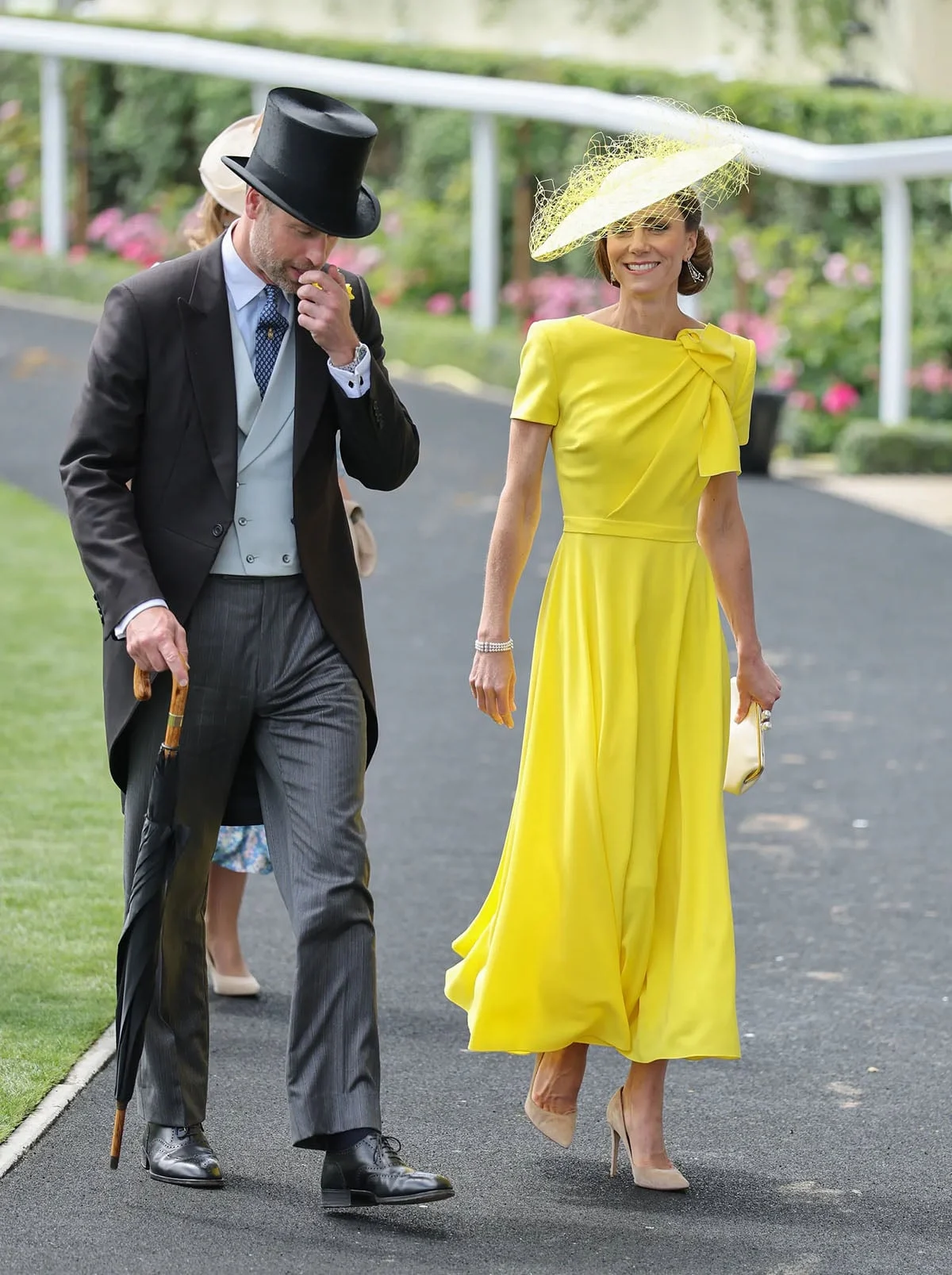
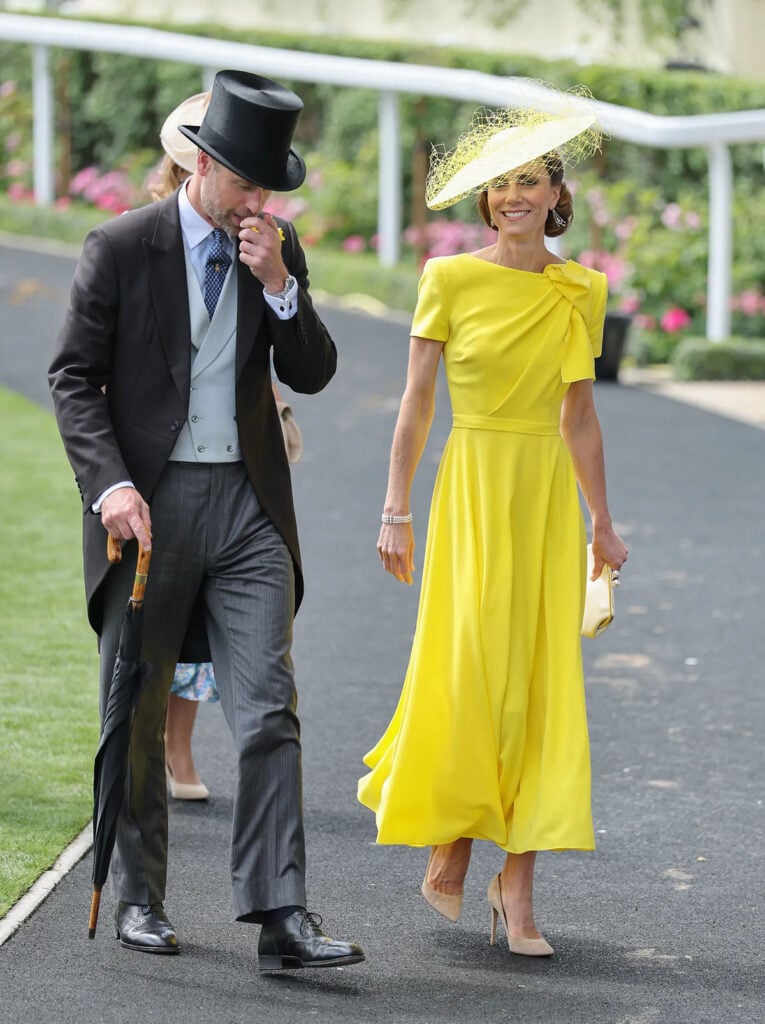
The Princess of Wales made a high-profile return to the Berkshire circuit for the annual Royal Ascot meeting, signaling a masterclass in sustainable luxury by re-wearing one of her most recognizable ensembles. Attending the prestigious event in the sunshine-yellow Roksanda "Brigitte" dress, Her Royal Highness demonstrated the power of strategic styling to transform a familiar garment into a fresh, occasion-appropriate statement. This appearance marks the third major public outing for the vibrant midi dress, further cementing the Princess’s commitment to a circular fashion economy within the royal wardrobe.
While the dress itself has been a staple of the Princess’s public life since 2022, the 2026 Royal Ascot appearance was distinguished by a significant shift in accessories, most notably the inclusion of a bespoke Jane Taylor London hat. The sculptural piece provided the necessary formality required by the Royal Enclosure’s strict dress code while elevating the architectural lines of the Roksanda design. This intentional curation highlights a broader trend within the British Royal Family to balance traditional sartorial expectations with modern environmental sensibilities.
The Architectural Legacy of the Roksanda Brigitte Dress
Designed by London-based, Serbian-born designer Roksanda Ilinčić, the "Brigitte" dress is characterized by its bold use of color and structured silhouette. The garment features a distinctive bow detail at the shoulder, a cinched waistline, and a fluid midi skirt that exemplifies Ilinčić’s background in architecture. The vibrant "sunshine yellow" hue is a departure from the more muted pastels often seen at royal engagements, serving as a visual anchor that ensures the Princess remains visible during large-scale public gatherings.

Roksanda has long been a favorite of the Princess of Wales, as the brand’s aesthetic aligns with her preference for clean lines and sophisticated, modern femininity. The brand, which launched in 2005, has become synonymous with "art-as-fashion," often utilizing color-blocking and unexpected structural elements. By choosing a Roksanda piece for a third time, the Princess reinforces the brand’s status as a cornerstone of contemporary British luxury.
A Chronological History of the Ensemble: 2022 to 2026
The journey of the Brigitte dress began in March 2022 during the royal tour of the Caribbean. The Princess first debuted the look upon her arrival at Norman Manley International Airport in Kingston, Jamaica. At the time, the choice of yellow was widely interpreted as a diplomatic gesture, paying homage to one of the primary colors of the Jamaican national flag. On that occasion, she paired the dress with white Aquazzura pumps and a white Salvatore Ferragamo clutch, creating a crisp, tropical aesthetic.
The second appearance occurred only months later, in July 2022, at the Wimbledon ladies’ singles final. For the sporting event, the Princess maintained the white accessory palette but opted for a more relaxed presentation suitable for the Royal Box at the All England Lawn Tennis and Croquet Club. The dress’s versatility was noted by fashion commentators, who praised its ability to transition from a formal diplomatic arrival to a high-profile sporting event.
The 2026 Royal Ascot appearance represents the most formal iteration of the look to date. By replacing the previous minimalist styling with complex millinery and heritage jewelry, the Princess transitioned the garment from "daywear" to "ceremonial finery." This evolution provides a blueprint for how high-value wardrobe investments can be maintained across different social and professional contexts.
The Significance of Royal Ascot Millinery and Accessories
At Royal Ascot, the hat is often considered the primary focus of the outfit, particularly within the Royal Enclosure where headpieces must have a base of at least four inches. The Jane Taylor London hat worn by the Princess in 2026 was a tonal match to the Roksanda dress, featuring an intricate, tilted brim that added height and drama. Jane Taylor has been a frequent collaborator with the Princess, known for creating pieces that balance traditional British millinery techniques with contemporary shapes.
Further distinguishing this appearance was the selection of footwear. Moving away from the high-contrast white pumps used in 2022, the Princess selected Gianvito Rossi "Bisque" suede pumps. The softer, neutral tone of the "Bisque" suede served to elongate the leg and allowed the vibrant yellow of the dress and hat to remain the focal point. The ensemble was completed with an ivory Anya Hindmarch "Maud Pearls" clutch, a piece the Princess has owned and utilized for several years, reinforcing the theme of re-wearing.
Heritage Jewelry and the Legacy of Queen Elizabeth II
The inclusion of historic jewelry added a layer of institutional continuity to the look. The Princess wore diamond chandelier earrings that were part of the private collection of the late Queen Elizabeth II. These earrings, often associated with formal state banquets and diplomatic receptions during the late monarch’s reign, served as a poignant nod to royal history.
Additionally, the Princess wore a pearl-and-diamond bracelet by Nigel Milne. This piece has a long-standing history within the royal jewelry box, having been commissioned in the late 1980s. The use of pearls, often referred to as "mourning jewelry" but also a symbol of purity and classic British style, provided a sophisticated counterpoint to the modern lines of the Roksanda dress. The blending of contemporary designer labels with heirloom jewelry is a hallmark of the Princess’s styling strategy, bridging the gap between the modern monarchy and its historical roots.

Economic Impact and the "Kate Effect" in 2026
The Princess of Wales remains one of the most influential figures in global fashion, with her sartorial choices frequently leading to immediate commercial impacts, often dubbed the "Kate Effect." Analysis of retail data following the Royal Ascot appearance indicated a significant spike in searches for "yellow midi dresses" and "architectural shoulder details."
For Roksanda, the continued visibility of a four-year-old design reinforces the brand’s reputation for timelessness—a critical metric in the luxury fashion market. Similarly, Jane Taylor London saw a surge in inquiries for similar sculptural millinery. Industry experts suggest that the Princess’s move toward re-wearing items does not diminish her economic influence; rather, it shifts the focus toward "investment pieces" and high-quality craftsmanship, encouraging consumers to prioritize longevity over fast-fashion trends.
Fact-Based Analysis: The Sustainability Mandate
The decision to wear the Roksanda dress for a third time is not merely a stylistic choice but a strategic one. As the British Royal Family under King Charles III emphasizes a "slimmed-down" and more environmentally conscious monarchy, the Princess’s wardrobe has reflected these values. By opting for a "repeat" look at an event as heavily photographed as Royal Ascot, she signals that glamour and sustainability are not mutually exclusive.
Data from fashion sustainability advocacy groups suggests that extending the life of a garment by just nine months can reduce its carbon, water, and waste footprints by approximately 20% to 30%. By keeping the Roksanda dress in active rotation for over four years, the Princess aligns her public image with the King’s long-standing environmental advocacy.

Broader Implications for Royal Protocol and Public Image
The 2026 Royal Ascot appearance confirms the Princess of Wales’s role as a steadying influence within the royal family’s public-facing operations. Her ability to navigate the complexities of royal protocol—maintaining the dignity of the Royal Enclosure while appearing modern and accessible—is reflected in her clothing choices.
The "Brigitte" dress, in its three distinct outings, has become a symbol of her tenure as Princess of Wales: bold, disciplined, and respectful of tradition. As the royal family continues to adapt to the expectations of a 21st-century audience, the Princess’s focus on "wardrobe recycling" and supporting British-based designers like Roksanda and Jane Taylor provides a consistent narrative of stability and thoughtful consumption.
In conclusion, the Princess of Wales’s appearance at Royal Ascot 2026 was a calculated success. Through the expert use of millinery, heritage jewelry, and a refined color palette, she successfully revitalized a four-year-old dress, proving that the most successful fashion moments are often those that build upon a foundation of existing excellence rather than chasing the novelty of the new.