








The convergence of luxury fashion and the tech industry’s most influential figures has become a defining narrative of recent months, raising profound questions about ethical priorities, brand values, and the future trajectory of both sectors. What initially appears as a superficial melding of two high-profile worlds—one built on heritage and aesthetics, the other on innovation and disruption—reveals a deeper, more intricate dance between cultural capital and immense financial power. This alliance, often spotlighting individuals whose empires face scrutiny for their environmental, social, and governance (ESG) records, prompts a critical examination of the underlying values that now seem to bind these seemingly disparate industries.
The traditional landscape of luxury fashion, long associated with aristocratic patronage and exclusive clientele, has undergone a dramatic transformation in the digital age. E-commerce platforms, social media marketing, and the burgeoning metaverse have reshaped how brands interact with consumers, create demand, and define aspirational lifestyles. Simultaneously, the tech industry has produced a new generation of ultra-wealthy individuals whose fortunes rival, and often surpass, those of historical industrialists. These tech titans, once largely confined to Silicon Valley boardrooms, are now stepping into the front rows of fashion shows, onto the boards of prestigious cultural institutions, and even onto the runways themselves, signaling a potent shift in who holds the keys to cultural influence and economic leverage.
This strategic alignment is not merely coincidental but reflects a calculated exchange of mutual benefits. Luxury fashion houses seek relevance, innovation, and access to new demographics and technological capabilities. Tech billionaires, in turn, gain cultural legitimacy, social cachet, and a softer public image, often leveraging the aspirational appeal of high fashion to enhance their personal brands or introduce their technologies into mainstream consciousness. However, this partnership is not without its detractors, particularly those concerned with sustainability, labor ethics, and the broader societal implications of unchecked wealth and power. Critics argue that by embracing figures whose business practices are frequently questioned, luxury fashion risks undermining its own claims to craftsmanship, artistry, and, increasingly, ethical responsibility.
A New Power Dynamic: Tech Titans Take Center Stage
The past year has provided several high-profile examples that underscore this growing entanglement, moving beyond mere celebrity endorsement to deeper institutional and strategic integrations. These instances illuminate how the boundaries between technology, finance, and high culture are increasingly dissolving, often with a clear commercial or reputational agenda.
Mark Zuckerberg’s Front-Row Presence at Prada: A Glimpse into the Future of Wearable Tech
One of the most notable events signaling this shift was Meta CEO Mark Zuckerberg’s appearance at Prada’s Milan Fashion Week show. Accompanied by his wife, Priscilla Chan, and high-profile fashion figures like Anna Wintour and Eva Chen, Instagram’s head of fashion partnerships, Zuckerberg’s presence was far from a casual attendance. His strategic seating arrangement next to Lorenzo Bertelli, the marketing director and son of Miuccia Prada and Patrizio Bertelli, ignited widespread speculation.
Analysts immediately pointed to the potential for a Meta AI Glasses collaboration with the luxury powerhouse. Meta Platforms, through its Reality Labs division, has been heavily investing in augmented reality (AR) and virtual reality (VR) technologies, including its Ray-Ban Stories smart glasses. These wearables, designed to integrate digital functionalities into everyday life, represent a significant frontier for the company. A partnership with a brand like Prada would offer Meta an unparalleled entry into the luxury market, imbuing its tech products with a coveted aura of style and exclusivity. For Prada, such a collaboration could position the brand at the forefront of fashion innovation, appealing to a tech-savvy, affluent demographic and expanding its product categories beyond traditional apparel and accessories. The New York Times aptly observed that Zuckerberg’s presence "reflected how fashion shows are now just one part of the business at a multinational luxury house like Prada," highlighting the evolving, multi-faceted nature of brand strategy in the 21st century. This move suggests that high fashion is no longer solely about fabric and silhouette but increasingly about digital integration and the future of interaction.
The Bezoses at the Met Gala: Reshaping Cultural Philanthropy
Another significant indicator of this trend emerged with the announcement that Amazon founder Jeff Bezos and his partner, Lauren Sánchez, would serve as honorary board members for the Met Gala. This elevation follows Amazon’s previous role as a lead sponsor for the event, signifying a deepening of the Bezoses’ involvement from financial backers to active shapers of one of the fashion world’s most prestigious annual gatherings. The theme, "Fashion is Art," provides a fitting backdrop for this discussion, as it intertwines creative expression with immense wealth and influence.
The couple is set to join a distinguished roster of co-chairs, including global icons like Beyoncé, Nicole Kidman, Venus Williams, and Anna Wintour, reinforcing their position at the apex of cultural and social power. As Vanessa Friedman of The New York Times noted, "Come May 4, the Bezoses will take their place at the pinnacle of the party," an image that for many, "may be proof positive… that it has become the most visceral expression of a new gilded age." This sentiment resonates with broader concerns about the increasing concentration of wealth and its influence on cultural institutions. For the Bezoses, this role offers a potent platform for image enhancement and social capital, potentially softening public perception amidst ongoing scrutiny of Amazon’s labor practices, environmental footprint, and market dominance. Lauren Sánchez’s prior high-profile appearances at Paris haute couture shows, including Dior and Schiaparelli, often alongside celebrity stylist Law Roach, further cemented her growing presence within the fashion elite, paving the way for this more formalized role. The Met Gala, an event celebrated for its blend of celebrity, fashion, and philanthropy, thus becomes a key battleground for defining cultural legitimacy in an era increasingly shaped by tech wealth.
Gucci’s Runway: A Commentary on Wealth and Influence
Demna’s Gucci show, while artistically divisive, generated considerable discussion due to the unexpected figures who walked the runway, effectively blurring the lines between fashion, celebrity, and controversial wealth. Alongside established personalities like Paris and Nicky Hilton, the presence of two particular individuals drew significant attention and sparked debate.
One was Vivian Wilson, the estranged daughter of Elon Musk, who has publicly distanced herself from her father, famously referring to him as a "pathetic man-child." Her appearance, whether interpreted as a personal statement or a strategic casting choice by Demna, brought a direct, albeit complex, connection to one of the most polarizing figures in tech. The other notable walker was Karlie Kloss, a supermodel married to billionaire entrepreneur Josh Kushner, and sister-in-law to Ivanka Trump. Kloss’s ties to a family deeply embedded in both finance and politically charged circles added another layer of intrigue.
These castings raised questions about Demna’s intent: Was it a form of satirical commentary on the pervasive influence of wealth? Was it an attempt to court these powerful families or their broader networks? Or was it simply a provocative choice designed to generate media buzz? Regardless of the specific motivation, the connections to these "problematic billionaires" (as described by the original article) were undeniable, transforming the runway into a stage for a broader cultural discourse on power, family legacies, and public perception. The inclusion of figures with such complex public profiles suggests that luxury fashion is increasingly willing to engage with, or even exploit, controversy for visibility, even if it means aligning with figures associated with questionable values.
The Underlying Mechanics: Why Fashion and Ultra-Wealthy Tech are Increasingly Coupled
The burgeoning alliance between luxury fashion and the tech elite is driven by a complex interplay of economic imperatives, cultural capital exchange, and, some argue, an ideological alignment that prioritizes profit and influence over ethical considerations. While luxury fashion has always been intrinsically linked to the wealthiest segments of society, the nature of this connection is evolving.
Economic Synergy and Market Expansion:
For luxury fashion brands, the tech billionaires and their vast networks represent a lucrative market for high-value products. The global luxury market, estimated to be worth over €1.5 trillion, is constantly seeking new avenues for growth. Tech’s rapid wealth creation has created a new class of consumers with immense disposable income, often seeking to translate their financial success into social standing and cultural legitimacy through luxury goods. Furthermore, the integration of technology offers new product categories, such as smart wearables, digital fashion, and NFTs, which can open up entirely new revenue streams and engage a younger, digitally native demographic. Meta’s push into AR/VR, for instance, finds a natural partner in fashion for developing stylish, aspirational hardware and digital experiences. Amazon’s foray into luxury retail, while separate from the Bezoses’ personal fashion appearances, underscores the tech giant’s ambition to capture a share of the high-end market.
Cultural Capital Exchange and Brand Relevance:
Beyond direct sales, there is a significant exchange of cultural capital. Tech billionaires, often perceived as disruptors or even figures of controversy, can leverage their association with luxury fashion to cultivate a more refined, sophisticated public image. Attending exclusive fashion events or serving on prestigious boards provides them with social cachet and access to elite networks. Conversely, luxury fashion brands gain relevance and visibility in a rapidly digitizing world. Aligning with tech leaders can project an image of innovation, forward-thinking, and cultural currency, helping them stay competitive and appealing to a new generation of consumers who prioritize technological integration and digital presence. The "cool" factor that tech leaders bring, even if debated, is a powerful currency in the attention economy.
Ideological Alignment and Ethical Concerns:
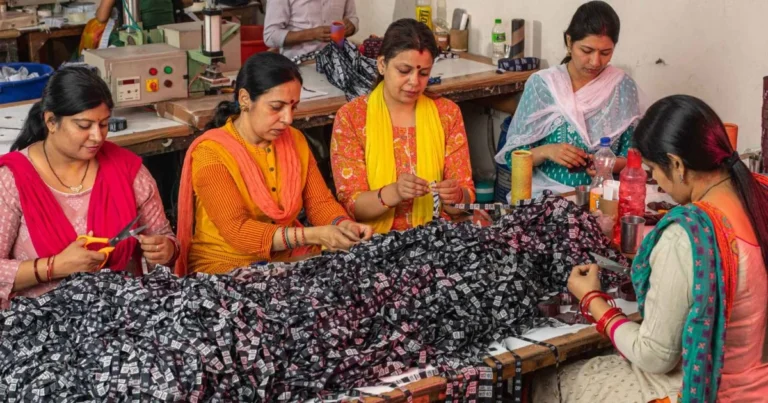
Perhaps the most concerning aspect of this coupling, as highlighted by critics, is the potential merging of problematic ideologies. Both the luxury fashion and tech industries have faced substantial criticism regarding their ethical footprints. Luxury fashion, despite its glamorous facade, has historically grappled with issues of labor exploitation in its supply chains, significant environmental impact from resource-intensive production and waste, and ethical dilemmas concerning animal welfare.
Similarly, the tech industry, while celebrated for innovation, faces increasing scrutiny over its own set of challenges: widespread labor issues in manufacturing and the gig economy, the environmental cost of massive data centers and electronic waste, concerns over data privacy and surveillance, monopolistic practices, and the societal impact of its platforms on mental health and democratic processes. When these two sectors converge, particularly through their most prominent, often controversial, figures, it raises questions about a shared tolerance, or even endorsement, of practices that prioritize profit and power over people and planet. This "merging of poor values," as some describe it, suggests a systemic disregard for ethical boundaries, where the immense wealth generated allows for the sidestepping of accountability.
Industry Reactions and Broader Implications
The growing presence of tech billionaires in luxury fashion has not gone unnoticed by industry observers and ethical advocates, sparking a range of reactions from cautious pragmatism to outright condemnation.
Fashion analyst Mandy Lee articulated a common sentiment among critics: "We all know billionaires keep the lights on in the fashion industry but that doesn’t mean they should be welcomed with open arms just so the brands we love can continue making clothes we like." She emphasized the "very fine line between accepting that is our reality and being ignorant to the real dangers it poses." This perspective acknowledges the economic dependency of the fashion industry on ultra-wealthy patronage but warns against normalizing associations with figures whose business practices are widely viewed as detrimental to society or the environment.
Anastasia Vartanian, writing for Glamour, observed the inevitability of this trend: "Whether this is another attempt at farming engagement through sparking outrage or a sign of corrupt morals is up to your interpretation. What we can say for certain, though, is that the tech revolution in fashion is here." This statement captures the dual nature of these collaborations—they can be seen as either cynical attempts to generate buzz or as genuine harbingers of a technologically integrated future for fashion.
Ethical and Environmental Concerns:
Environmental and labor rights organizations have voiced concerns about the symbolic validation that luxury fashion confers upon tech giants whose operations often have significant negative impacts. For instance, the environmental footprint of global data centers (powering tech services) is substantial, while the e-waste generated by discarded electronics poses a massive environmental challenge. When these figures are embraced by an industry increasingly pressured to adopt sustainable practices, it can be perceived as hypocritical, undermining genuine efforts towards ethical fashion. Critics argue that such collaborations distract from the urgent need for systemic change in both sectors, potentially greenwashing the image of corporations with questionable records.
The Normalization of Surveillance and Data Exploitation:
The presence of figures like Mark Zuckerberg, whose company Meta has faced intense scrutiny over data privacy and the societal impact of its platforms, raises concerns about the normalization of surveillance culture within the aspirational realm of luxury. The idea of "Meta AI Glasses" seamlessly integrated with high fashion can be seen as an elegant veneer for technology that could potentially gather vast amounts of personal data, further eroding privacy in the name of convenience or style.
The "New Gilded Age" and Wealth Inequality:
The most overarching implication, as suggested by the Met Gala observation, is the reinforcement of a "new gilded age." This era is characterized by extreme wealth inequality, where a small number of individuals amass unprecedented fortunes, often at the expense of broader societal well-being. Their conspicuous presence and influence in high fashion, a traditional symbol of elite status, serves as a visible manifestation of this power concentration. It signals that cultural gatekeeping, once perhaps influenced by old money or artistic merit, is now increasingly dictated by the financial might of tech moguls.
The Future Outlook:
The "tech revolution in fashion" is undeniably underway. This means a future where smart textiles, AI-driven design, virtual try-ons, and metaverse fashion shows become increasingly common. The ethical challenge lies in ensuring that this technological advancement is harnessed for good, rather than simply as another tool for profit generation and the consolidation of power. For luxury fashion to maintain its integrity and address the pressing issues of sustainability and social responsibility, it must critically evaluate the partnerships it forms. The platforming of tech billionaires, while offering undeniable financial and innovative opportunities, requires careful consideration of the message it sends about the industry’s true values and its commitment to a more equitable and sustainable future. Without such introspection, luxury fashion risks becoming merely another extension of the tech industry’s expansive, and often ethically complex, empire.