











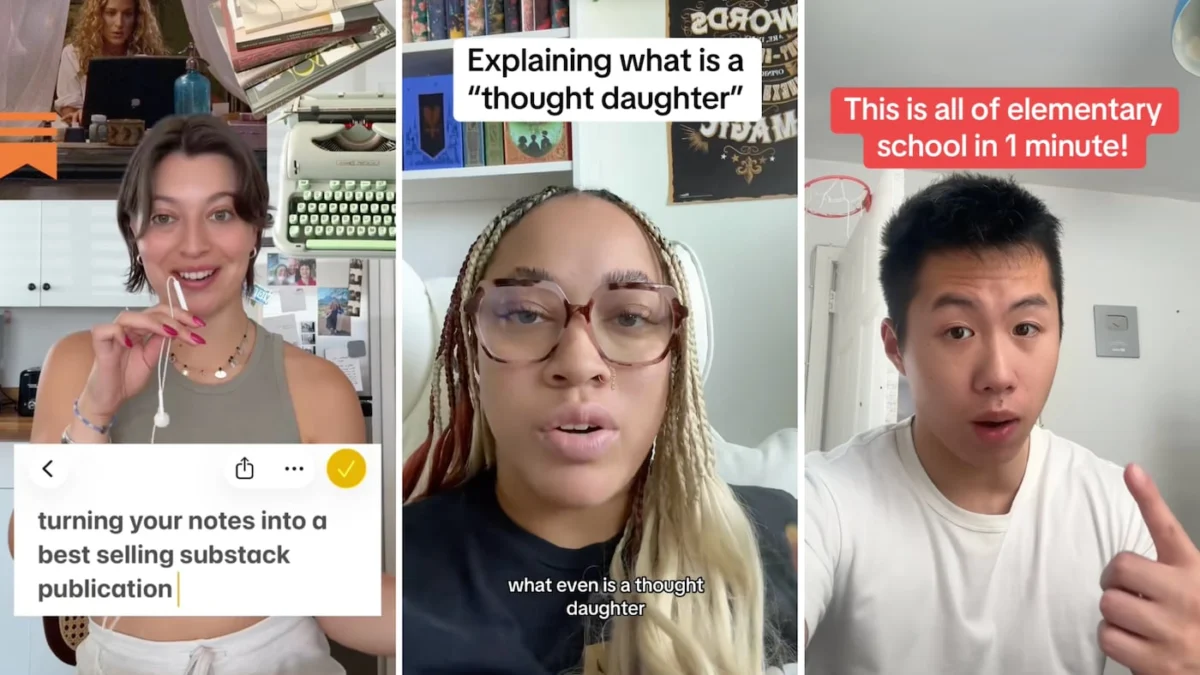
The landscape of digital content consumption has undergone a profound shift, moving away from mindless entertainment and toward rapid, bite-sized intellectual discourse. Across platforms like TikTok and Instagram, a new breed of digital creator has emerged: the "thoughtfluencer." Armed with miniature clip-on microphones and green screens, these content creators deliver rapid-fire explainers on neuroscience, philosophy, history, and sociology. While this trend has successfully mobilized millions of digitally native youths to engage with complex topics, it has also sparked an intense debate among cultural critics, educators, and cyber-ethnographers regarding the superficiality of fast-paced commentary and the commodification of intellectualism.
The Genesis of the Thoughtfluencer Movement
The rapid expansion of the thoughtfluencer phenomenon can be traced to a confluence of algorithmic shifts and changing youth demographics. In late 2025, digital platforms began heavily rewarding educational and informative content, offering creators a viable alternative to traditional lifestyle vlogs and dance trends.
A prominent catalyst for this shift occurred in December 2025, when Kaitlyn Gilbride, a 22-year-old student at the University of California, Berkeley, posted a short-form video detailing the neuroscience of human admiration. Prior to this viral breakthrough, Gilbride had focused primarily on mundane college application guides. However, recognizing a demand for accessible STEM content—particularly from women in technical fields—she began translating her coursework in psychology, human biology, and neuroscience into digestible 60-second explainers.
Gilbride’s sudden rise to algorithmic prominence mirrored a broader cultural awakening. Millions of young internet users, fatigued by repetitive entertainment loops often colloquially termed "brain rot," began actively searching for substantive content. This shift coincided with a well-documented global loneliness epidemic. For many isolated youths, content blending cognitive science with self-improvement advice offered a simulated sense of mentorship and self-actualization.
Bridging Entertainment and Education: Chronology and Evolution
To understand how educational content evolved into viral entertainment, industry analysts point to a multi-year progression of social media utility:
- Phase One (Early Social Media Era): Platforms prioritized aesthetic curation, lifestyle documentation, and localized community building through fashion, beauty, and travel posts.
- Phase Two (The Pandemic and Post-Pandemic Boom): Creators utilized long-form and short-form video formats to distribute niche how-to guides, DIY projects, and lifestyle advice, establishing baseline audience trust in digital educators.
- Phase Three (The Algorithm-Driven Intellectual Pivot): Beginning in late 2025 and accelerating through 2026, algorithms shifted to reward high-retention explanatory content, allowing academic concepts, literary summaries, and sociological theories to enter the viral mainstream.
Cyber-ethnographers note that this evolution represents a natural psychological progression. As mobile devices occupy an increasingly dominant share of daily human life, users naturally seek to replicate their real-world intellectual desires within digital spaces. If individuals spend hours daily looking at screens, the demand to perform intellectual labor within those same ecosystems becomes inevitable.
Institutional Challenges and Societal Catalysts
The explosive growth of thoughtfluencing does not occur in a vacuum; it runs parallel to a mounting institutional crisis in traditional education and literacy. Recent data from national educational assessments underscores a persistent decline in reading comprehension scores among students, particularly in the United States. Simultaneously, the educational sector has faced intense ideological and legislative battles regarding curricula, funding for specialized programs, and restrictions on diversity, equity, and inclusion (DEI) initiatives.
Faced with polarizing institutional shifts and narrowing academic frameworks, younger generations have increasingly turned to decentralized digital platforms to curate their own educational journeys. In this context, thoughtfluencers serve as informal independent educators, helping bridge the gap for individuals seeking intellectual, spiritual, and emotional nourishment outside traditional scholastic environments.
Furthermore, this digital trend mirrors a physical resurgence in analog intellectual spaces. Trend analysts note a parallel boom in public lecture series, independent book clubs, poetry readings, and the transformation of modern libraries and bookstores into prominent social hubs. Intellectual life is increasingly sought after as a communal activity rather than an isolated pursuit.
Critical Perspectives: The Illusion of Depth and the Beauty Hierarchy
Despite the undeniable appeal of democratized knowledge, cultural critics and academic researchers have raised significant concerns regarding the structural limitations of short-form intellectual content.
Shuang Bright, a fashion theorist and digital creator, argues that the fundamental mechanics of modern social media are inherently incompatible with genuine intellectual rigor. "To be constantly churning out thoughtful commentary or analysis is an oxymoron because you can’t be thoughtful quickly," Bright observes. She notes that algorithms often penalize videos exceeding three minutes in length, forcing creators to distill centuries of historical or philosophical nuance into soundbites. This structural constraint risks producing a facade of education, where viewers consume a rapid snippet, experience a momentary sense of cognitive enrichment, and immediately scroll onward without retaining or critically analyzing the core material.
Moreover, the relentless demand for consistency and volume has driven some content creators to rely on artificial intelligence tools to generate scripts. This practice frequently detaches the information from rigorous academic sourcing. In many viral videos, creators utilize AI-generated chatbot screenshots as authoritative proof, bypassing years of peer-reviewed research and primary source verification in favor of engagement-driven presentation.
Compounding these structural issues is the internet’s entrenched beauty hierarchy. Sociological analyses of the trend reveal that algorithms consistently elevate content produced by conventionally attractive individuals—a dynamic humorously acknowledged by creators themselves. As designer and cyberethnographer Ruby Thelot points out, the modern thoughtfluencer often succeeds because they combine traditional intellectual topics with high production values and personal charisma, effectively outcompeting traditional, less visually dynamic academic formats. However, this dynamic means that digital intellectualism remains deeply intertwined with superficial metrics of online validation.
Broader Implications for the Future of Learning
As the thoughtfluencer ecosystem matures, media critics and educators are forced to reevaluate the definition of learning in the digital age. While commentators like Shaad D’Souza warn against an oversaturation of performative intellectuality—noting that modern internet culture pressures everyone to act as a published writer or public expert—others view the trend as an imperfect yet vital entry point to deeper academic pursuits.
The long-term implications of this movement are twofold. On one hand, the commodification of thought threatens to reduce complex systemic issues into easily digestible, monetization-friendly commodities that prioritize personal branding over collective truth. On the other hand, the cultural shift that makes intellectual curiosity "cool" demonstrates an enduring human desire for knowledge.
Ultimately, navigating this new era requires a delicate balance. While tiny mics and 60-second explainers can successfully ignite initial curiosity, sustaining true intellectual growth will continue to demand the patient, quiet discipline of sitting with comprehensive ideas beyond the confines of the smartphone screen.