






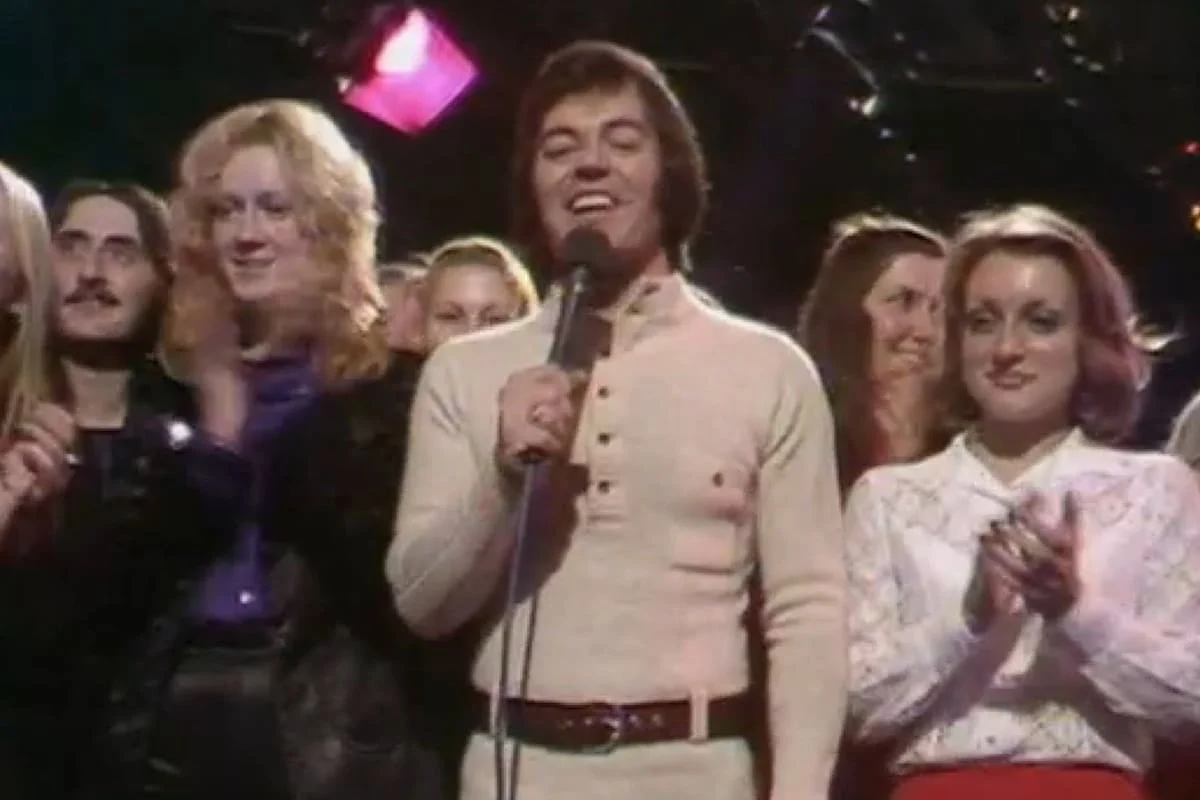
A recent re-airing of a 1970s special of Top of the Pops on the BBC offered a poignant glimpse into a bygone era of television. Music enthusiasts were seen dancing with uninhibited joy to performances by icons such as Donny Osmond and Alice Cooper. Beyond the distinctive 70s fashion and nostalgic melodies, what resonated most strikingly was the pervasive sense of normalcy among everyone featured – both the audience and the performers. Faces displayed textured skin, teeth were often naturally misaligned, hairlines receded, and complexions were often make-up free, occasionally gleaming with natural sweat. This raw authenticity presents a stark contrast to the meticulously sculpted and polished visages that now dominate our screens.
Today, beauty standards in television and film have reached unprecedented extremes. This phenomenon is not merely anecdotal but is increasingly evident in casting choices that challenge narrative integrity. A notable example is the casting of Jacob Elordi as the titular creature in Guillermo del Toro’s upcoming adaptation of Frankenstein. Mary Shelley’s 1818 novel famously describes the creature as so grotesquely repellent that “no mortal could support the horror of that countenance.” While Elordi possesses the requisite height, his aesthetic could not be further from a monstrous figure – a dissonance that did not escape the notice of audiences or the press. Glamour UK provocatively questioned, “So you’re attracted to Frankenstein’s monster. Now what?” while a BBC reviewer lamented the monster’s attractiveness, quipping, “Giving him a makeover is like having a vegetarian Count Dracula.” The core issue here transcends mere attractiveness; it speaks to a fundamental reinterpretation of character that prioritizes conventional beauty over narrative fidelity.
Similarly, literary adaptations often fall prey to this aesthetic homogenization. Emily Brontë envisioned Cathy in Wuthering Heights as a strong, striking teenager with brown hair, embodying a character whose allure stemmed from her intensity rather than conventional beauty. Yet, in Emerald Fennell’s proposed adaptation, the role is reportedly set to be played by Margot Robbie, an actress who gained widespread recognition as the “hottest blonde ever” in The Wolf of Wall Street. Such casting decisions, while undoubtedly bringing star power, risk flattening the nuanced characterizations originally conceived by authors, replacing them with a singular, commercially palatable vision of beauty.
The Industry’s Inner Conflict: Marketability Versus Authenticity
Shakyra Dowling, a respected casting director operating in independent British film and television, acknowledges that prioritizing beauty in casting has "always been an element" of the industry. However, she clarifies that this impulse often originates not from casting directors themselves – who, she states, actively seek "individuality and authenticity" – but from a broader cultural shift towards an increasingly "image-driven" society. Dowling notes the pervasive influence of "marketability" discussions driven by financiers and broadcasters, who ultimately hold the purse strings. This commercial imperative often translates into a preference for actors who align with prevailing beauty ideals, perceived as more bankable.
A significant contributing factor, Dowling observes, is the current ecosystem in which younger actors are developing. They are immersed in the same social media landscape as their peers, platforms like Instagram and TikTok, which proliferate "very filtered ideas of beauty." This exposure often leads actors to undertake cosmetic alterations to conform to a perceived industry standard even before they have fully honed their craft as performers. This preemptive "self-optimization" can potentially hinder their development, pushing them towards a physical archetype rather than fostering unique acting talent.
The "Yassification" of Reality Television and Public Figures
The phenomenon of aesthetic enhancement, often termed "yassification," extends far beyond professional actors to members of the public appearing on screen. Reality television, a genre built on showcasing "real" people, has become a hotbed for this trend. While romance reality shows like Love Island have historically attracted contestants who invest heavily in their appearance, the scale of pre-show cosmetic procedures has escalated dramatically. Reports indicate that the 2025 UK cast of Love Island collectively spent thousands of pounds on various procedures before entering the villa, including hair transplants, veneers, and dermal fillers in the lips, chin, cheeks, and even tear troughs. This level of intervention highlights a growing expectation for participants to arrive "camera-ready," often meaning pre-altered.
The trend is not confined to youth-oriented shows. A contestant on the 2023 season of The Golden Bachelor, a spin-off targeting an older demographic, reportedly underwent procedures to minimize the visibility of veins on the back of her hands in preparation for the show. This particular detail underscores the pervasive nature of these beauty pressures, suggesting that even age-related physical characteristics are now deemed "fixable" for television.
Even programs designed to strip away superficiality are not immune. Survivor, which maroon individuals on remote islands with no personal grooming items, has seen contestants undertaking extensive pre-show cosmetic work. One 2025 participant disclosed to Allure that she had received Botox, laser hair removal, a gel manicure, and a professional hair appointment to ensure she appeared camera-ready. Fans on platforms like Reddit (e.g., r/survivor) have speculated about other contestants undergoing microblading, lash lifts, and even cosmetic tattoos, leading one Redditor to ask, “Why does this cast seem so well-groomed and polished?” This indicates a fundamental shift where the very premise of such shows – authenticity in extreme conditions – is being undermined by pre-emptive aesthetic interventions.
The Cascading Effect: Celebrity Influence and Societal Pressure
The immense pressure on actors to conform to increasingly narrow beauty standards is undeniable. The entertainment industry’s history is replete with examples of performers being told they were not attractive enough for Hollywood roles. More recently, Bella Ramsey, the lead in The Last of Us, faced death threats and was forced to delete social media accounts after a segment of the male gaming community deemed them insufficiently attractive for the role. Such vitriolic reactions underscore the intense scrutiny and unrealistic expectations placed on public figures, especially women and non-binary individuals.
The normalization of cosmetic surgery and aesthetic procedures by celebrities creates a powerful "trickle-down effect." When high-profile personalities openly or implicitly endorse these enhancements, it sets a new benchmark for beauty that gradually permeates reality television and, subsequently, the general public. This was starkly illustrated in 2024 when a cosmetic aesthetics doctor reported to Sky News a staggering 12-fold increase in requests for dermal fillers after the latest season of Love Island aired. A similar surge occurred in 2015 when Kylie Jenner publicly admitted to having lip fillers, leading to a reported 70 percent rise in inquiries for the procedure within 24 hours. These instances demonstrate a direct correlation between celebrity actions, media exposure, and consumer behavior, illustrating how entertainment figures inadvertently become arbiters of societal beauty norms.
Professor Lynda Boothroyd, a body image researcher at the University of Durham, explains the psychological impact of this pervasive imagery. Her research on body perception suggests that our ideas of desirable weight or muscularity can be "dialled up or down" simply by repeated exposure to images that, while not always appealing, represent extreme aesthetic ideals. This constant visual bombardment, particularly in an era where many stars appear to be shrinking to increasingly tiny sizes, subtly recalibrates public perception of what is considered "normal" or aspirational.
A Growing Backlash and the Demand for Authenticity
Despite the pervasive nature of these glossy, often surgically enhanced faces on our screens, a counter-movement is gaining traction. Viewers are increasingly pushing back, expressing a desire for more authentic and diverse representations of humanity. British comedian Al Nash, in a viral "Subway Take" video, articulated this sentiment by stating, “I was watching The Rings of Power and I don’t want to see a hobbit with fake tits and perfect teeth.” He passionately argued that “we need to stop beautiful people from dominating the entertainment industry.” This sentiment resonates with a growing segment of the audience fatigued by aesthetic uniformity.
The scrutiny extends even to established stars. While never confirmed, Millie Bobby Brown garnered criticism for her "stiff" facial expressions in the fifth season of Stranger Things, fueling speculation about cosmetic tweakments and highlighting audience sensitivity to unnatural facial mobility.
Perhaps the most telling indicator of this shifting sentiment is the overwhelmingly positive reaction to natural features. Aimee Lou Wood’s teeth in The White Lotus became a focal point of discussion, with publications like Vanity Fair hailing them as “inspiring” and “a revelation,” Grazia calling them “radical,” Harper’s Bazaar declaring them “the real star of the show,” and The New York Times labeling them “a novelty.” This intense focus on a seemingly minor "imperfection" underscores a profound hunger among viewers for genuine, unpolished human features on screen.
Similarly, a top-rated comment on Letterboxd for the 2023 film The Holdovers, starring Paul Giamatti and Dominic Sessa, lauded the “perfect casting, no remnants of Instagram face.” In discussions praising the Safdie brothers’ casting methods – their acclaimed nine-time Oscar-nominated film Marty Supreme famously featured 140 non-actors – a Reddit user articulated a desire for "normal faces." They stated, “I wanna see [a] regular person. I want the store clerk to look weird… I wanna see [a] homely-looking, 57-year-old woman be the hero and defeat the monster with a shotgun in her suburban neighbourhood.” These voices collectively champion a return to diverse, characterful faces that truly reflect the world.
The Artistic Cost of Aesthetic Uniformity
Beyond societal implications, the pervasive pursuit of aesthetic perfection has tangible consequences for the craft of acting itself. As previously explored in the article “Is Botox ruining cinema?”, freezing facial muscles, a common side effect of certain cosmetic procedures, inherently hinders an actor’s ability to emote – a vital component of performance. Shakyra Dowling confirms that this issue has "come up recently" in her professional experience. "Acting is such a subtle, emotional craft, and the camera picks up the smallest movement in someone’s face. If those muscles can’t move naturally, it can limit what the actor can communicate on screen," she explains. "When you watch a brilliant performance, so much of it is happening in tiny shifts of emotion." The inability to convey these subtle nuances through facial expression can severely diminish the depth and believability of a performance, breaking the immersive "fourth wall" for discerning audiences.
This artistic compromise is also evident in reality television. Survivor contestant Sage Ahren-Nichols openly discussed feeling misjudged by her fellow contestants, attributing part of this to her Botox, which made her appear unempathetic. In shows like Real Housewives, where emotional drama is central, accusations of staging gain more potency when the stars’ faces display limited mobility, making genuine reactions difficult to discern. The demand for aesthetic perfection thus inadvertently undermines the very emotional authenticity that many genres of entertainment strive to capture.
Broader Implications: Diversity, Meritocracy, and the Future of Entertainment
The relentless pursuit of impossible aesthetic standards for entertainers carries significant, far-reaching implications. Firstly, it risks excluding immense talent. If casting decisions continue to be swayed by superficial attractiveness rather than raw skill and unique presence, the industry will undoubtedly miss out on some of the finest performers of our generation. A narrow definition of beauty inherently limits the pool of potential talent, hindering diversity in all its forms.
Secondly, it perpetuates a cycle of self-modification. Performers, under immense pressure, will likely continue to freeze and fine-tune their faces, a trend that, unless strategically employed for a specific character or narrative purpose, can instantly shatter audience immersion and disconnect them from the story. This creates a homogeneous landscape where distinctiveness is sacrificed for a manufactured ideal.
Thirdly, it raises critical questions about accessibility and meritocracy. Cosmetic procedures are expensive. Working-class actors, who may possess extraordinary talent but lack the financial means to "pay their way into beauty," face an additional barrier to entry in an already challenging industry. This creates an uneven playing field, potentially transforming acting from a meritocratic pursuit into one increasingly influenced by economic privilege and a willingness to conform aesthetically.
If the entertainment industry truly values great, diverse, and meritocratic content, it must move beyond its current fixation with on-screen perfection. Dowling eloquently summarizes this imperative: "What I hope we protect in casting is individuality. Film and television are at their most powerful when they reflect the world back to us in all its variety. That includes faces that are unusual, lived-in, and characterful. When I’m casting, the most exciting moment is when someone walks in and they are totally individual and authentic. They bring something unexpected. That’s often where the magic is." Embracing this philosophy is not merely about aesthetic preference; it is about safeguarding artistic integrity, fostering genuine talent, and ensuring that our screens continue to be vibrant mirrors of the complex, imperfect, and beautiful human experience.