




Sarah Murray, a seasoned commercial model, vividly recalls the moment the digital frontier crossed into her professional reality. It was 2023 when she first encountered an advertisement for Levi’s featuring a young woman of color in a denim overall dress. To the casual observer, it was a standard, high-quality promotional image; to Murray, it was a harbinger of a profound industry shift. The model was not human, but a digital construct generated by the AI studio Lalaland.ai. For Murray, the sight brought a sense of exhaustion—a realization that the already grueling competition for modeling roles now included an adversary that never tires, never ages, and requires no day rate.
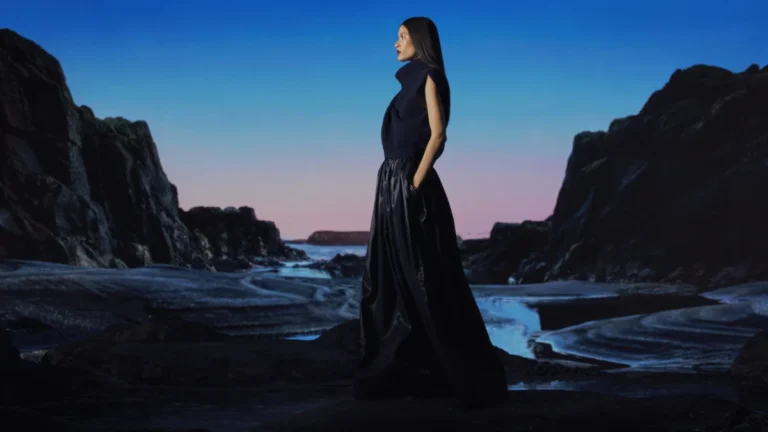
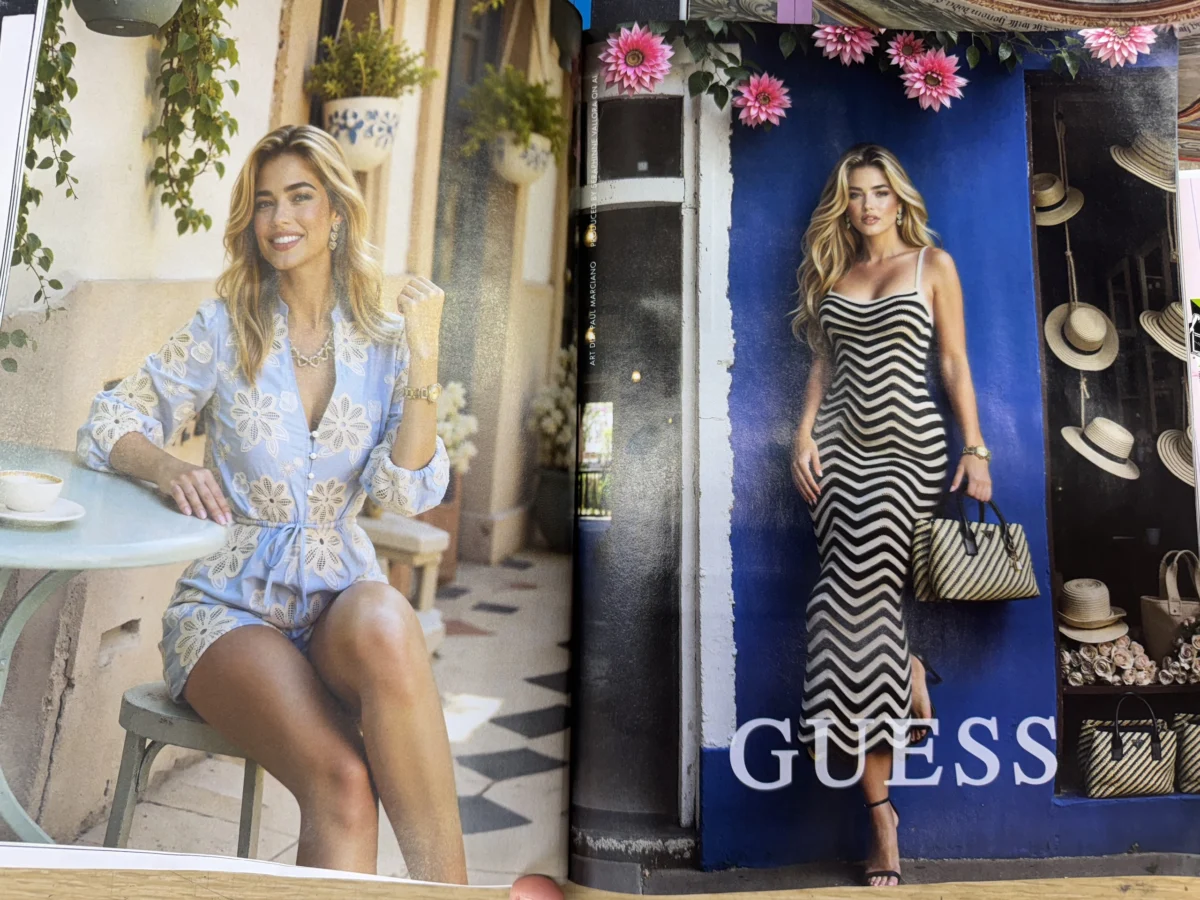
The fashion industry is currently navigating a transformative period as generative artificial intelligence moves from experimental novelty to a foundational tool for global brands. While the integration of AI promises unprecedented efficiency and cost savings, it has ignited a fierce debate regarding labor rights, the authenticity of diversity, and the future of human creativity. The tension reached a fever pitch in mid-2024 following the publication of Vogue’s July print edition, which featured an advertisement for Guess. The ad showcased a model possessing the brand’s signature aesthetic—glossy blonde hair, rose-pout lips, and a specific "North American" standard of beauty—who was entirely AI-generated. The inclusion of such technology in the pages of Vogue, often cited as the industry’s "fashion bible," signaled a tacit approval of a shift that many professionals fear will render human talent obsolete.
A Chronology of the Digital Shift
The journey toward the "silicon catwalk" has been a decade in the making. As early as 2013, the French retailer Veepee began utilizing virtual mannequins to display apparel, a move driven by the logistical nightmare of photographing thousands of individual items. However, the technology remained largely utilitarian until the late 2010s. In 2018, the emergence of Shudu Gram, dubbed the world’s first "digital supermodel," proved that virtual entities could command social media influence and high-fashion interest.

By 2023, the narrative shifted from artistic experimentation to corporate strategy. Levi’s partnership with Lalaland.ai was framed as an effort to increase "diversity and inclusion" by allowing customers to see clothing on a wider range of body types and skin tones. The backlash was immediate. Critics, including New York Magazine, labeled the initiative "artificial diversity," arguing that the company was using algorithms to bypass the actual hiring of marginalized human models.
In 2024, the momentum accelerated. Major retailers including H&M, Mango, and Calvin Klein began integrating AI-generated imagery into their e-commerce and social media feeds. The Guess ad in Vogue represented the latest milestone in this timeline, marking the transition of AI models from the "low-stakes" environment of online product grids to the prestigious, high-visibility world of print advertising.
The Economic Imperative: Scaling Beyond Human Limits
The primary driver behind the adoption of AI models is a stark economic reality. The modern fashion marketing ecosystem was designed for an era when brands produced four major seasonal campaigns per year. Today, the rise of social media platforms like TikTok and Instagram, combined with the rapid turnover of e-commerce, requires brands to produce hundreds, or even thousands, of pieces of content every month.
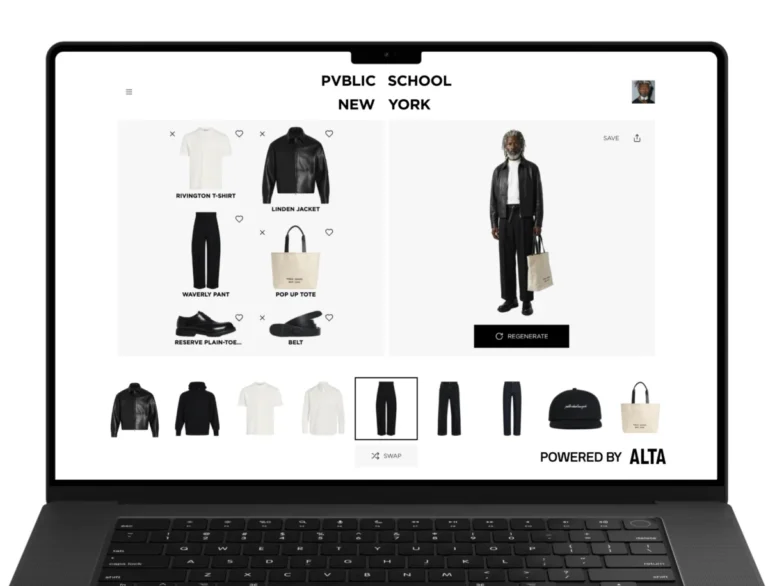
According to industry experts, the cost of a traditional photo shoot—including the model’s fee, photographer, stylists, makeup artists, set designers, and post-production—can range from several thousand to tens of thousands of dollars per day. In contrast, AI tools allow brands to take a "flat-lay" photo of a garment and wrap it around a photorealistic virtual model in a variety of poses and settings for a fraction of the cost.

PJ Pereira, co-founder of the AI advertising firm Silverside AI, notes that the demand for content has scaled by orders of magnitude. Small-to-medium-sized brands, in particular, find it impossible to keep up with the 400 to 400,000 assets required for a modern "always-on" marketing strategy using traditional methods. For these entities, AI is not just a cost-saving measure; it is a survival tool. Data suggests that the click-through rates for AI-generated content can be significantly higher than traditional ads, even when the comments sections are filled with criticism. Pereira observed one instance where an AI-generated product video saw 20 times the engagement of traditional media and a 30-fold increase in click-through rates, despite a vocal minority of negative feedback.
Labor Rights and the Fashion Workers Act
For human models, the economic benefits for brands translate into a direct threat to financial security. Sinead Bovell, a model and founder of the WAYE organization, points out that e-commerce modeling is the "bread and butter" of the profession. While runway shows and editorial spreads provide prestige, it is the repetitive, high-volume work of posing for online catalogs that provides models with a stable income.
The threat is not limited to job displacement; it also involves the appropriation of likeness. Sarah Murray and other industry professionals have raised alarms over new language appearing in modeling contracts. Many fear these clauses are designed to trick talent into signing away the rights to their physical likeness, allowing brands to train AI systems on their faces and bodies to create "synthetic" versions of them for future use without additional compensation.
In response, advocates like Sara Ziff, founder of the Model Alliance, are championing the Fashion Workers Act in the New York State Legislature. This proposed legislation (Senate Bill S2477C) seeks to establish basic labor protections for models and content creators. A key provision of the act would require brands to obtain clear, written consent and provide fair compensation whenever a model’s digital replica or AI-generated likeness is used. The goal is to ensure that if technology is used to enhance a brand’s efficiency, it does not do so by cannibalizing the rights of the workers who built the industry’s aesthetic foundation.

The Ethical Dilemma of "Artificial Diversity"
One of the most contentious aspects of AI in fashion is the concept of "robot cultural appropriation." This term, popularized by Bovell, describes the practice of brands using AI to generate diverse identities—different ethnicities, body types, and ages—to tell a brand story without actually employing individuals from those communities.
The Levi’s controversy of 2023 remains the primary case study for this issue. By choosing to "supplement" their human casting with AI-generated models of color, the brand was seen as sidestepping the systemic work of fostering an inclusive workplace. Critics argue that diversity is not just an aesthetic "look" to be generated by an algorithm; it is about providing economic opportunity and representation to actual people. When a brand uses AI to create a "diverse" image, the financial benefit goes to the technology provider and the brand, while the community being "represented" receives nothing.
Furthermore, there is a growing concern regarding the homogeneity of AI beauty standards. Many AI-generated models, such as those produced by the agency Seraphinne Vallora for the Guess ad, tend to adhere to a very narrow, symmetrical, and "perfected" version of beauty. This digital perfection can exacerbate existing body image issues among consumers and create an unattainable standard that even human models cannot meet.
The Rise of "AI Artisans" and Ethical Niches
Despite the widespread concern, some segments of the industry see a path for ethical AI integration. Sandrine Decorde, CEO of the creative studio Artcare, refers to her team as "AI artisans." They use sophisticated tools like Flux from Black Forest Labs to fine-tune digital models, intentionally adding "human" imperfections—asymmetrical features or unique gazes—to avoid the "uncanny valley" effect.

Decorde highlights a specific niche where AI may actually be more ethical than human labor: children’s fashion. The employment of minors in fashion has long been a gray area fraught with potential for exploitation and long hours that interfere with education. Artcare focuses heavily on creating AI-generated infants and children for brands, arguing that using digital constructs for high-volume children’s retail is a safer and more ethical alternative to putting real children through the rigors of commercial shoots.
Future Outlook: A Hybrid Industry
The consensus among experts like Claudia Wagner, founder of the booking platform Ubooker, is that the fashion industry is currently in an experimental "testing phase." While the Vogue/Guess advertisement was a significant cultural marker, it was technically an advertisement rather than an editorial piece. Vogue has maintained that the ad met its existing advertising standards, but the magazine has yet to fully embrace AI-generated models for its own editorial storytelling.
The future likely holds a hybrid model. High-fashion heritage brands, which rely on "human connection" and the "sensual reality" of luxury, are expected to remain the last holdouts for human talent. For these brands, the imperfections and unique "attitude" of a human model are essential to their identity. However, for the vast middle market and fast-fashion sectors, the transition to AI-generated e-commerce imagery appears inevitable.
The ultimate impact of AI on fashion will likely depend on how the industry balances efficiency with empathy. As Amy Odell, fashion historian and biographer, suggests, the "Vogue stamp of approval" is a powerful force. If the industry’s gatekeepers eventually normalize AI in editorial content—much as they once normalized the transition from professional models to celebrities—the silicon catwalk may become the new standard. For now, the human elements of the industry—the Sarah Murrays and Sinead Bovells—continue to argue that while an algorithm can mimic a face, it can never replicate a human story.